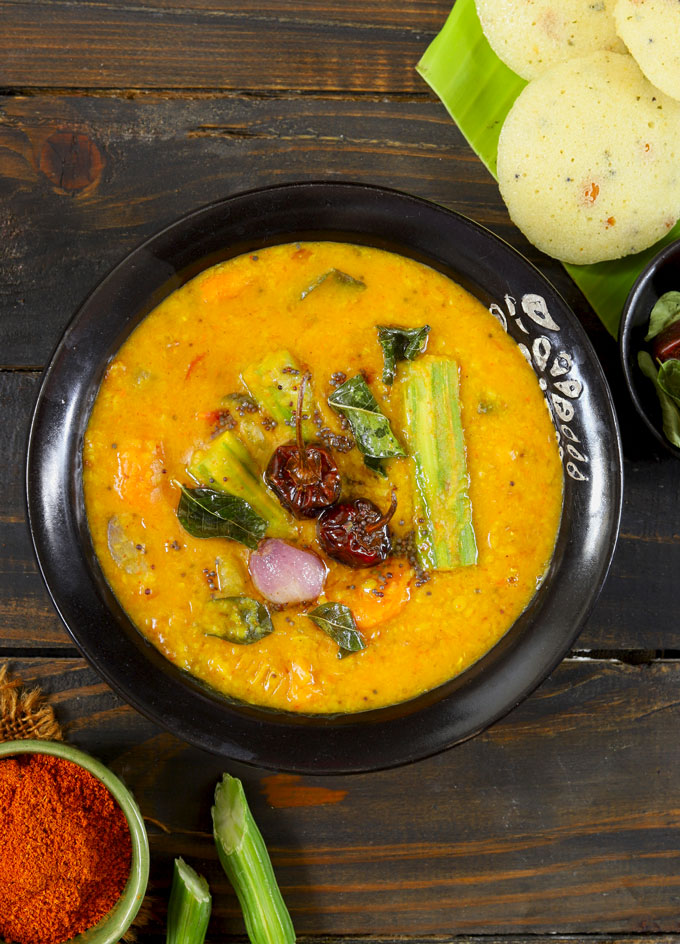
Sambar is a wholesome, vegetarian stew from South India. I am sharing an easy and tasty vegetable sambar recipe for idli, dosa, or vada.
About Sambar
Sambar is the flag bearer of South Indan Cuisine. A sweet, spicy, sour stew of lentils, vegetables, and spices.
While living in South India, I discovered one secret about sambar; every family has its special sambar recipe passed on from generation to generation. Also, when it comes to sambar, the possibilities are endless. There is a radish sambar, drumstick sambar, Tamil style sweet spicy sambar, Udipi style sambar, Karanataka style slightly sweet sambar or Kerala style coconut sambar and so on.
Vegetable Sambar is a fridge forage kind of stew where you can put lentils and all the vegetables in the fridge.
What I LOVE about sambar is:
- healthy
- fulfilling
- gluten-free
- rich in fibre
- easy to customize
- protein-packed
- meal prep friendly
- …….comforting!
Ingredients Required
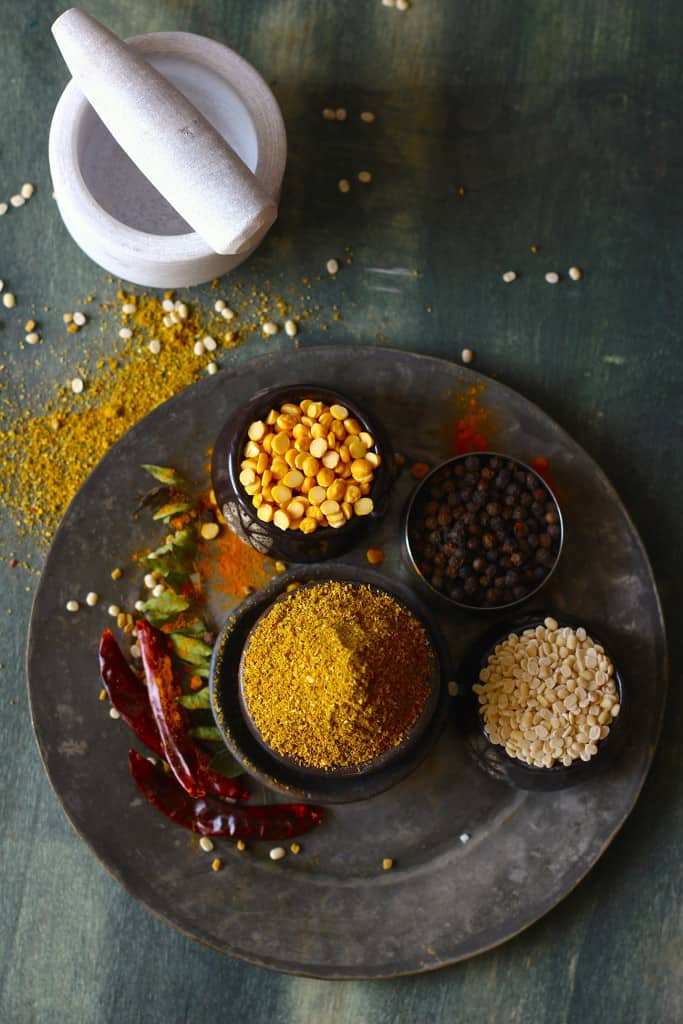
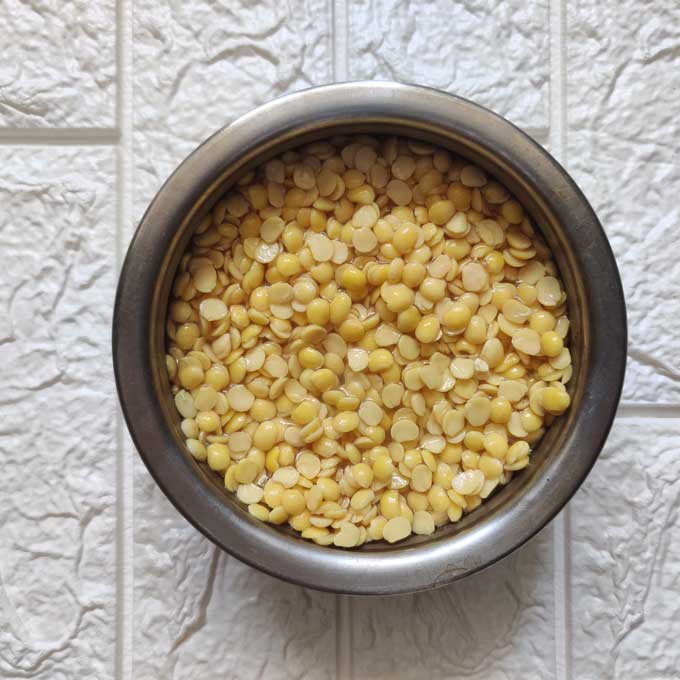
Dal: Usually, split pigeon pea (toor or arhar dal ) is used for making sambar. You can also make it with split red lentils (masoor dal).
Vegetables: Onion and tomato are the two essentials for making vegetable sambar. You can also add bottle gourd, ridge gourd, squash, pumpkin, carrot, radish and eggplant.
Onion: Traditionally, a sambar is made only with shallots or, as we call them, sambar onion . The tiny, round onion. They have a slightly sweeter taste. Substitute them with chopped red onion.
Drumsticks : It is an essential ingredient for making sambar. Drumsticks are the fruits of the moringa tree, also known as Sahjan Ki Fali in Hindi. It is a plant-based vegan ingredient and has nothing to do with chicken drumsticks. You can get them fresh or frozen at Indian grocery stores.
Sambar Powder: It is a spice blend used for flavouring the stew. It is best to use good quality sambar masala for the perfect taste and colour. Either use a readymade masala or follow my homemade sambar masala powder recipe.
Tamarind: The sourness in the vegetable sambar comes from the tamarind paste. I use the readymade tamarind paste of Mother’s Recipe. You can use homemade tamarind paste also.
Jaggery: I add a tablespoon of jaggery to my sambar. It helps in balancing the sourness and spiciness of the stew. You can substitute it with dark brown sugar.
Oil: You can cook sambar with ghee, vegetable oil, coconut oil, or Gingelly oil (local sesame oil). I use ghee for tempering (tadka) as it makes vegetable sambar extra delicious and aromatic.
Other Ingredients: Salt, Red Chilli Powder, Turmeric Powder, Garlic, Dried Red Chillies, Mustard Seeds (rai), Curry Leaves, Asafoetida
What Vegetables I Can Add To Sambar?
A vegetable sambar is made with a variety of local and seasonal vegetables. You can choose a combination of vegetables as per your taste and preference.
- Carrot
- Spinach
- Eggplant
- Potato
- Tomatoes
- Drumsticks
- Snake Gourd
- Bottle Gourd
- White Radish
- Yellow Pumpkin
- French Beans
How To Make
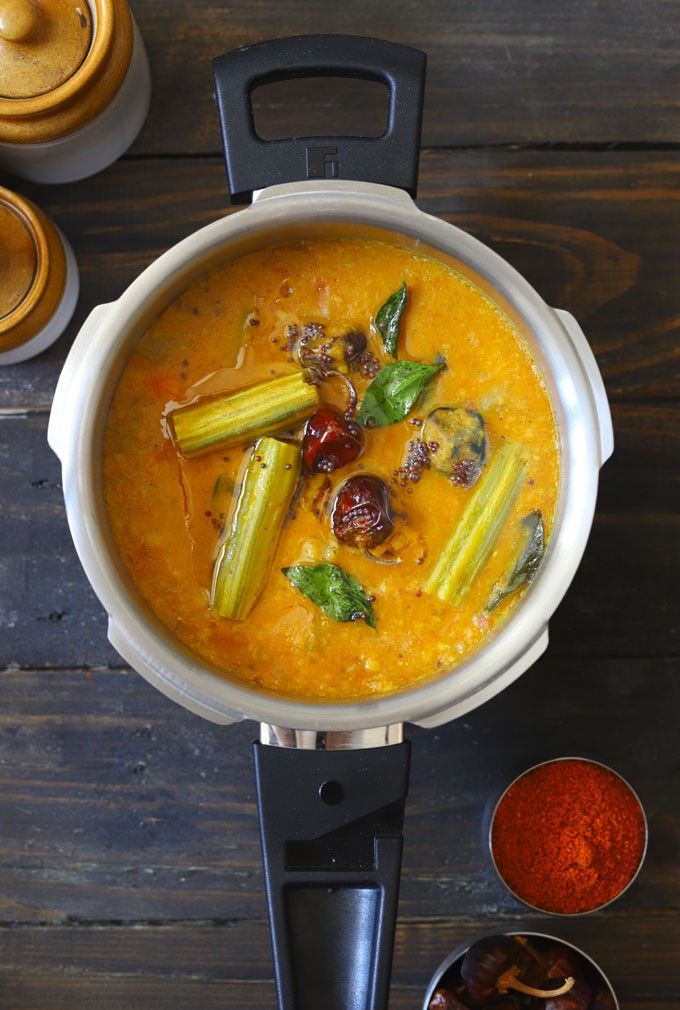
This is a pressure cooker method to make vegetable sambar. You can get the instant pot method to make vegetable sambar in my debut cookbook The 100 Best Curries .
Step 1) Clean, wash and soak dal in water for 15 minutes. At the same time, the dal is soaked; clean and chop the vegetables (bottle gourd, carrot, pumpkin, drumstick) for the sambar.
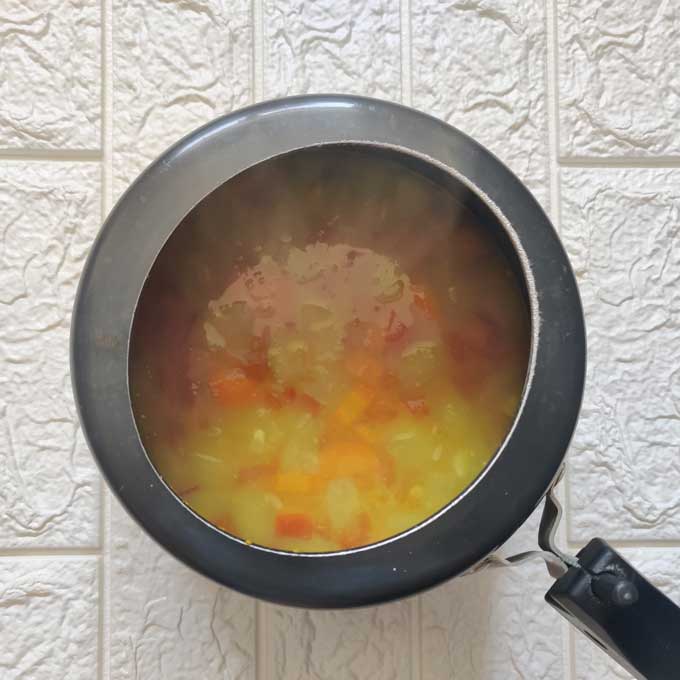
Step 2) Transfer dal to a pressure cooker with chopped vegetables, tomato, turmeric powder, red chilli powder, garlic, salt and water. Stir to mix. Pressure Cook for 3 whistles over medium heat. The dal should become soft and mushy.
Step 3) Heat ghee in a kadhai. Once hot, add mustard seeds, red chillies, asafoetida, and curry leaves. Saute for 30 to 40 seconds or till seeds start spluttering.
Step 4) Add onion (shallots) and drumsticks. Fry till onions are translucent and drumsticks are tender. Add boiled sambar over the tadka ( be cautious as there will be sizzling ). Stir to combine.
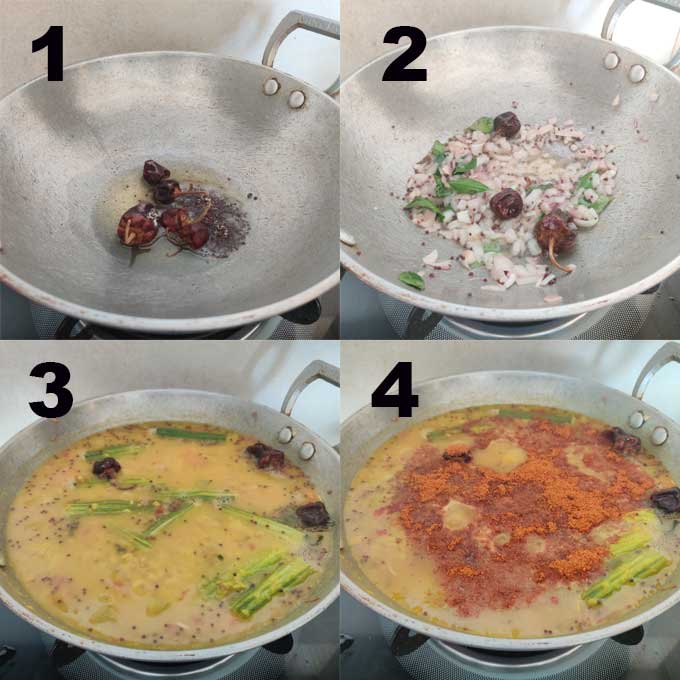
Step 5) Add tamarind paste, jaggery, and sambar powder. Allow the vegetable sambar to simmer over low heat for 15 minutes. Keep stirring at regular intervals. You can taste and add more seasoning or spices to your sambar at this stage.
Serve vegetable sambar warm.
Serving Suggestion
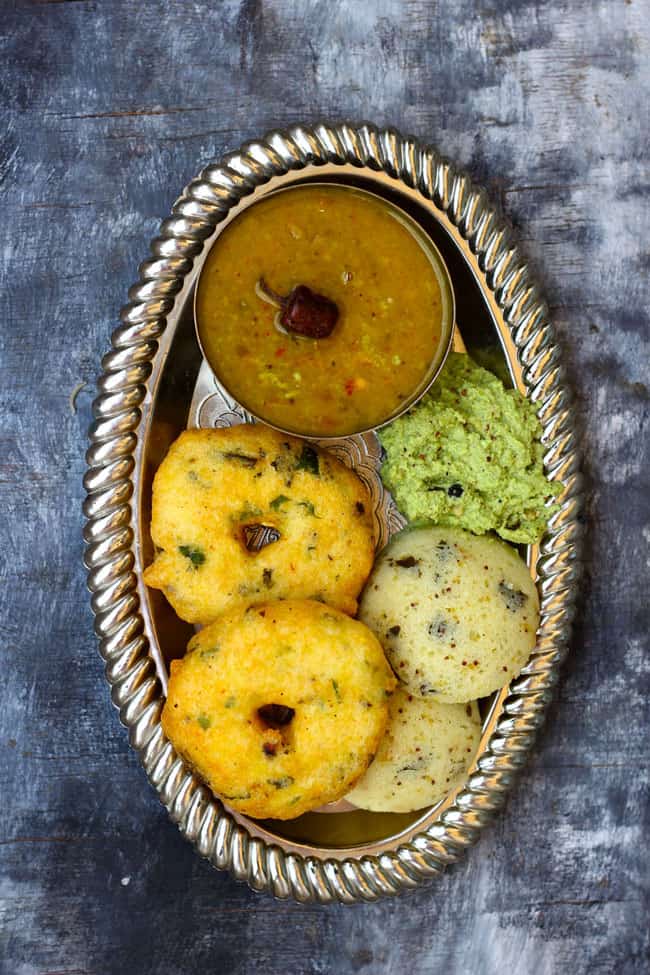
Sambar is a main course dish. In South India, for breakfast, it is served with idli , dosa, or medu vada and coconut chutney on the side. Idli Sambar or Vada Sambar are among the most popular South Indian breakfast combinations.
For lunch, you can serve it with plain rice. Sambar Rice is a delicious and comforting meal.
Whether it is a plate of piping hot idli, crispy dosa, or a typical South Indian meal, it’s incomplete without a bowl of vegetable sambar.
More South Indian Recipes
Curd Rice
Rava Upma
Lemon Rice
Maddur Vada
Rava Paniyaram
Tomato Garlic Rasam
If you try this recipe and love it, please leave a comment and a rating. This helps us grow and reach other food lovers like you.
Ingredients
- ▢ 1 Cup split pigeon peas (toor dal)
- ▢ 4 garlic cloves
- ▢ ½ Cup chopped tomato
- ▢ ¼ Cup carrot, peeled and diced
- ▢ ⅓ Cup bottle gourd, peeled and diced
- ▢ ¼ Cup yellow pumpkin, peeled and cut into cubes
- ▢ 1 drumstick, peeled and cut into one inch pieces
- ▢ 1 tablespoon tamarind paste
- ▢ 1 tablespoon jaggery powder
- ▢ 2 teaspoon salt or to taste
- ▢ 2 teaspoon turmeric powder
- ▢ 1 teaspoon red chili powder
- ▢ 1 tablespoon Sambar Powder ( see recipe )
- ▢ 3 Cup water
Ingredients for tempering
- ▢ 4 tablespoon ghee (clarified butter)
- ▢ 1 teaspoon mustard seeds (rai)
- ▢ ¼ teaspoon asafoetida (hing)
- ▢ ½ Cup shallots or chopped onion
- ▢ 6 curry leaves
- ▢ 4 dried red chillies
Instructions
- To prepare vegetable sambar, clean, wash and soak dal in water for 15 minutes. While the dal is soaked, clean and chop the vegetables (bottle gourd, tomato, carrot, drumstick).
- Transfer dal to a pressure cooker with the chopped carrot, pumpkin, bottle gourd, tomato, turmeric powder, red chilli powder, garlic, salt and water. Stir to mix. Pressure Cook for 3 whistles over medium heat. The dal should become soft and mushy.
- Turn off the heat and release the steam manually from the pressure cooker.
- Heat ghee in a kadhai. Once hot, add mustard seeds, red chillies, asafoetida, and curry leaves. Saute for 30 to 40 seconds or till seeds start spluttering.
- Add onion (shallots) and drumsticks. Fry till onions are translucent and drumsticks are tender. Add boiled sambar over the tadka ( be cautious as there will be sizzling ). Stir to combine.
- Add tamarind paste, jaggery, and sambar powder. Allow the vegetable sambar to simmer over low heat for 15 minutes. Keep stirring at regular intervals. At this stage, you can taste and add more seasoning or spices to your sambar.
- Serve Vegetable Sambar warm with idli, dosa or rice.
Recipe Notes:
- There could be infinite combinations of vegetables in vegetable Sambar. But I always prefer using easy-to-cook vegetables that do not have an overpowering taste like bitter gourd.
- If you do not like overcooked vegetables in sambar, fry them with onion and drumsticks, cover and cook before adding the boiled dal.
- Adjust the consistency of the sambar by adding more water.
- While simmering, the sambar keeps on stirring at regular intervals. This process of simmering and stirring gives sambar a great depth of flavour.
- If you want to make vegan sambar, skip using ghee for tempering. Use coconut oil or sesame oil.
Nutrition
We follow a strict NO SPAM Policy
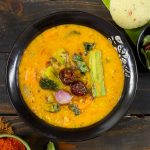
Vegetable Sambar Recipe
Equipment
- Pressure Cooker
- Heavy Bottom Kadhai
Ingredients
- 1 Cup split pigeon peas (toor dal)
- 4 garlic cloves
- ½ Cup chopped tomato
- ¼ Cup carrot, peeled and diced
- ⅓ Cup bottle gourd, peeled and diced
- ¼ Cup yellow pumpkin, peeled and cut into cubes
- 1 drumstick, peeled and cut into one inch pieces
- 1 tablespoon tamarind paste
- 1 tablespoon jaggery powder
- 2 teaspoon salt or to taste
- 2 teaspoon turmeric powder
- 1 teaspoon red chili powder
- 1 tablespoon Sambar Powder ( see recipe )
- 3 Cup water
Ingredients for tempering
- 4 tablespoon ghee (clarified butter)
- 1 teaspoon mustard seeds (rai)
- ¼ teaspoon asafoetida (hing)
- ½ Cup shallots or chopped onion
- 6 curry leaves
- 4 dried red chillies
Instructions
- To prepare vegetable sambar, clean, wash and soak dal in water for 15 minutes. While the dal is soaked, clean and chop the vegetables (bottle gourd, tomato, carrot, drumstick).
- Transfer dal to a pressure cooker with the chopped carrot, pumpkin, bottle gourd, tomato, turmeric powder, red chilli powder, garlic, salt and water. Stir to mix. Pressure Cook for 3 whistles over medium heat. The dal should become soft and mushy.
- Turn off the heat and release the steam manually from the pressure cooker.
- Heat ghee in a kadhai. Once hot, add mustard seeds, red chillies, asafoetida, and curry leaves. Saute for 30 to 40 seconds or till seeds start spluttering.
- Add onion (shallots) and drumsticks. Fry till onions are translucent and drumsticks are tender. Add boiled sambar over the tadka ( be cautious as there will be sizzling ). Stir to combine.
- Add tamarind paste, jaggery, and sambar powder. Allow the vegetable sambar to simmer over low heat for 15 minutes. Keep stirring at regular intervals. At this stage, you can taste and add more seasoning or spices to your sambar.
- Serve Vegetable Sambar warm with idli, dosa or rice.
Notes
- There could be infinite combinations of vegetables in vegetable Sambar. But I always prefer using easy-to-cook vegetables that do not have an overpowering taste like bitter gourd.
- If you do not like overcooked vegetables in sambar, fry them with onion and drumsticks, cover and cook before adding the boiled dal.
- Adjust the consistency of the sambar by adding more water.
- While simmering, the sambar keeps on stirring at regular intervals. This process of simmering and stirring gives sambar a great depth of flavour.
- If you want to make vegan sambar, skip using ghee for tempering. Use coconut oil or sesame oil.
Nutrition
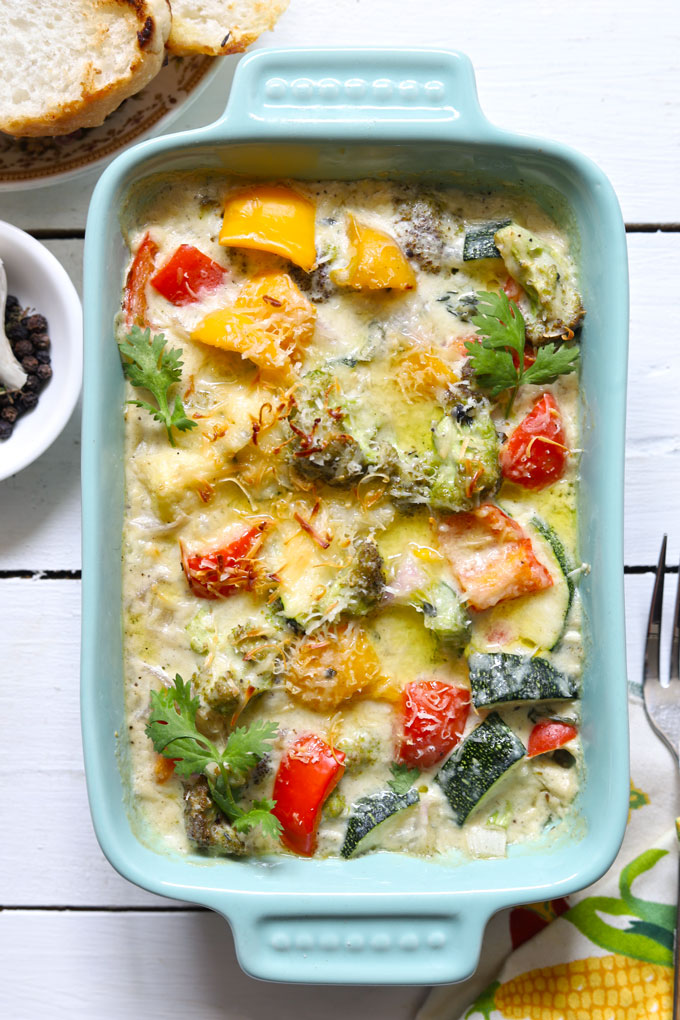
Vegetable Bake is a medley of oven-baked vegetables in a creamy white sauce. It is an all-time classic continental-style vegetarian main course.
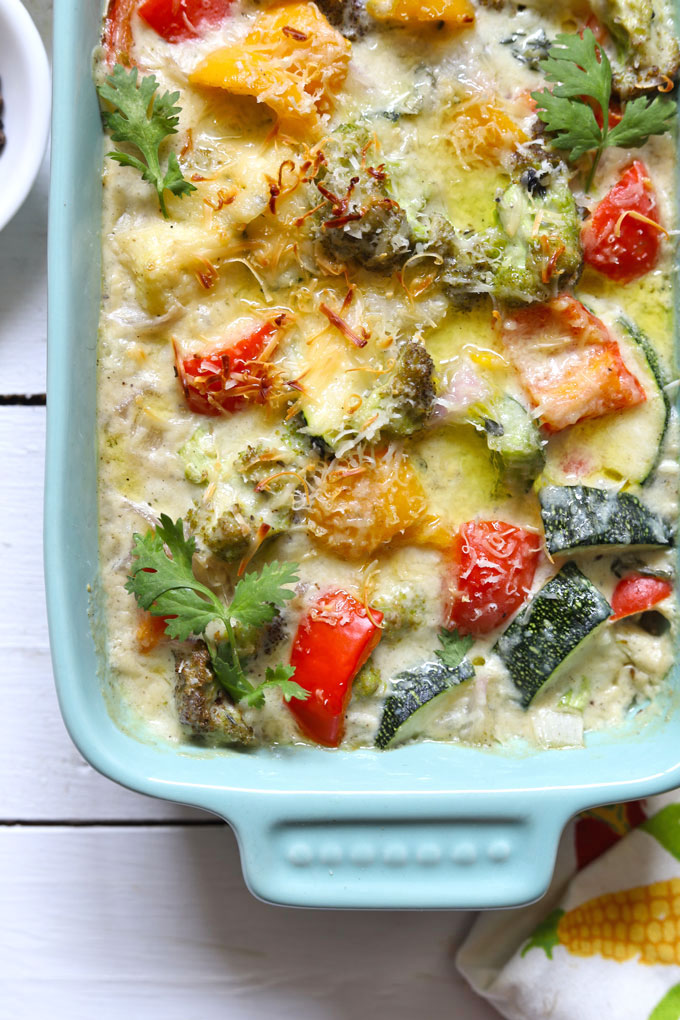
Vegetable Bake Nostalgia
Creamy Baked Vegetables were the only continental dish in my Indian household while I was growing up. In other words, vegetable bake in a thick white sauce was the only continental dish in my mother’s cooking repertoire.
She got the recipe from an American cookbook and changed it to suit our Indian tastebuds.
Hence, the dish holds a special place in my food memoirs.
Over the years, I have made additions and subtractions to the recipe, like regular béchamel sauce replaced with whole wheat white sauce. And, off-course, more vegetables and cheese are added.
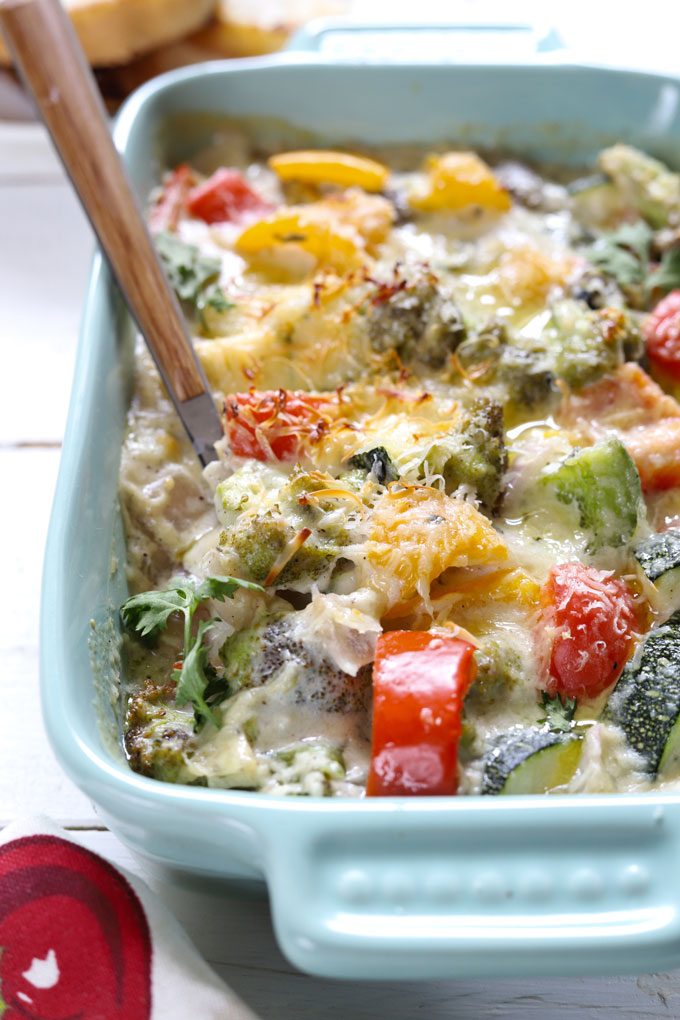
The crusty layer of cheese on top make baked vegetable in white sauce my absolute favourite.
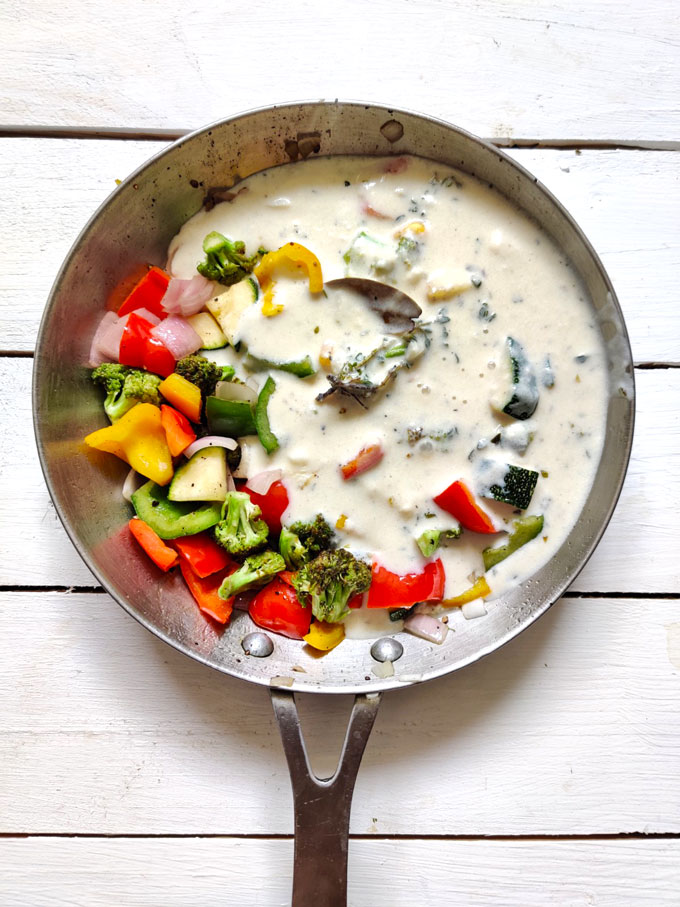
What You Need To Make Vegetable Bake
There are three key components in the making of baked vegetables.
creamy white sauce
sauteed vegetables
crusty topping
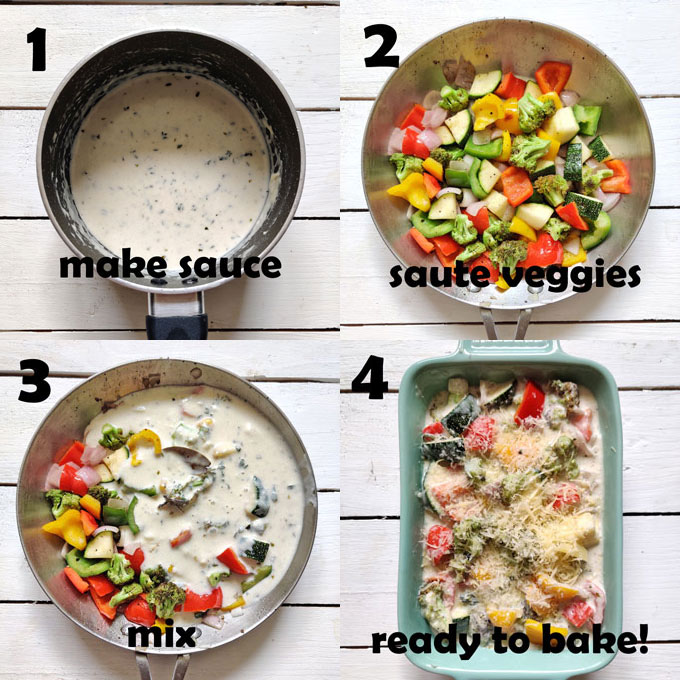
- Creamy White Sauce: This is my multi-purpose whole wheat white sauce for everything. From pasta and creamy mushrooms to vegetarian casseroles, I use them for all.
The USP of this white sauce is it does not have any cream or all-purpose flour. It is made with whole wheat flour and milk.
The first step in making a baked vegetable casserole is the white sauce. The sauce only adds creaminess and flavour to the vegetables.
- Sauteed Vegetables: The best part of this vegetarian casserole is the truckload of veggies. It is one of those fridge forage meals where you can use all the leftover vegetables.
A few vegetables that work well in this baked casserole:
- zucchini
- mushrooms
- green beans
- cauliflower or broccoli
- pumpkin or squash
- potato or sweet potato
- baby corn or sweet corn
- bell peppers or capsicum
The second step in this recipe is to saute vegetables. Sauteeing makes them crunchy, and they do not leech water when baked.
Hence, it is highly recommended to saute vegetables before combining them with white sauce.
- Crusty Topping: The most delicious part of a vegetable bake is the golden, cheesy, crusty layer on top. And that, my friend, you can achieve by adding a generous layer of cheese.
I use a mix of cheddar and parmesan for the topping. You can combine bread crumbs and cheese to make the top layer more crusty.
This is the third and final step before baking the casserole.
Serving Suggestion
To serve vegetable bake as a main course, you can complement it with focaccia bread , any other artisanal bread, a bowl of soup , roasted potatoes , or a hearty salad.
Vegetable Casserole can also work as a side dish for steak or meat dinners.
Yes, you can. Thaw frozen vegetables, saute them as directed in the recipe, and use them in the baked vegetable casserole. Make sure frozen veggies are not mushy.
Ohh yes. If you want to make this vegetarian casserole more hearty, go ahead, and add – shredded chicken, roasted chicken, bacon, ham, salami, or even shrimp. The meat should be cooked like vegetables before baking.
Cheddar, Parmesan, Gouda, and Mozarella are my top picks for crusty toppings.
Yes, you can. The baking makes the top cheese layer golden, crispy, and gooey if you can achieve that in an air-fryer, instant pot crispy lid, or on a toaster; no need for an oven to make this vegetable casserole.
More Holiday Baking Recipes
Christmas Fruit Cake
Veg Shepherd’s Pie
Cheesy Potato Bake
Cheese Corn Muffin
If you try this recipe and love it, please leave a comment and a rating. This helps us grow and reach other food lovers like you.
Ingredients
- ▢ 1 Cup diced onion
- ▢ 1 Cup broccoli florets
- ▢ 1 Cup diced red bell pepper
- ▢ 1 Cup diced yellow bell pepper
- ▢ 1 Cup diced zucchini
- ▢ Salt and black pepper to taste
- ▢ 4 tablespoon olive oil
Ingredients for the White Sauce
- ▢ 2 tablespoon olive oil
- ▢ 1 tablespoon finely chopped garlic
- ▢ 2 tablespoon whole wheat flour
- ▢ 2 Cup milk
- ▢ ¼ teaspoon nutmeg powder
- ▢ 1 teaspoon thyme
- ▢ Salt and black pepper to taste
Ingredients For Crusty Topping:
- ▢ ½ Cup grated cheddar cheese
- ▢ ¼ Cup grated parmesan cheese
Instructions
Prepare White Sauce:
- To make whole wheat white sauce, heat olive oil in a pan. Add chopped garlic and saute for 10 seconds to release the aroma of garlic.
- Next, add whole wheat flour. Saute over low heat for 1 – 2 minutes to release the aroma and roast the flour. Pour the milk steadily with one hand and stir the flour mixture clockwise continuously to avoid any lump formation. Keep stirring until the sauce thickens.
- Once the sauce thickens, season with salt, pepper, nutmeg powder, and thyme. Stir to combine. taste and adjust the seasoning. The sauce is ready.
Saute Vegetables:
- In a stir fry pan heat oil over medium flame. Add onion and saute till soft but not brown.
- Next, add zucchini and saute for a few seconds, followed by broccoli and bell peppers. Saute the vegetables till they are al dente but not fully cooked. Season with salt and pepper. Turn off the heat.
Assemble The Casserole:
- Grease a large baking dish with olive oil. Preheat oven at 180 degree celsius.
- Now pour half of the white sauce over the sauteed vegetables. Stir to evenly combine.
- Arrange the vegetables in the greased baking dish. Pour remaining white sauce over the vegetables.
- Sprinkle grated cheese evenly over the layer of white sauce.
Bake:
- Bake in the preheated oven for 15 – 20 minutes or till a nice golden own crusty layer of melted cheese is visible on top.
- Serve vegetable bake warm with toasted bread.
Recipe Notes:
- While making the white sauce, do not add salt in the milk until sauce thickens otherwise, it will curdle.
- Sauteeing makes them crunchy and when baked they do not leech water. Hence, it is highly recommended to saute vegetables before combining them in the white sauce.
- You can use frozen vegetables for making this casserole. Read my detailed notes above in the post.
- I use a mix of cheddar and parmesan for the topping. You can combine bread crumbs and cheese to make the top layer more crusty.
Nutrition
We follow a strict NO SPAM Policy
