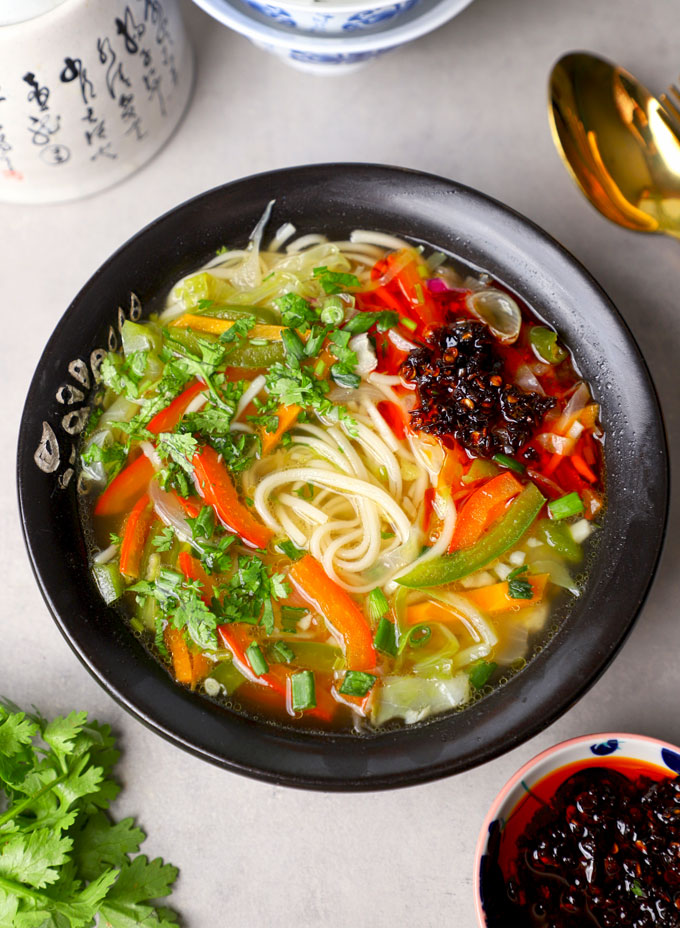
Thukpa is a comforting Tibetan noodle soup. Here is a one pot, veg thukpa recipe to warm you up on cold days.
Estimated reading time: 6 minutes
- The Cultural Essence of Thukpa
- The Secret of Thukpa: Fresh Ingredients
- How To Make Veg Thukpa
- My Tried and True Tips
- Veg Thukpa Recipe
The Cultural Essence of Thukpa
Thukpa, which translates to “noodle” in Tibetan, is a staple dish in the Himalayan regions, including Tibet, Nepal, Bhutan, and parts of India like Sikkim, Uttarakhand, and Arunachal Pradesh. In some regions including Nainital, we call it – Thuppa or Thupka.
In the harsh, cold climates of the Himalayas, Thukpa with meat provides the necessary warmth and sustenance. It’s often enjoyed as a hearty, one pot meal after a long day of hard work.
Thukpa is more than just food; it’s a reflection of the region’s history, climate, and way of life.
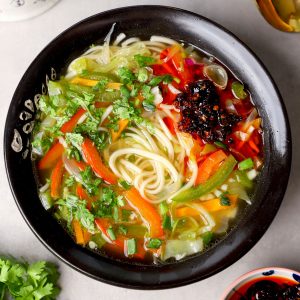
This veg Thukpa recipe from Uttarakhand is an easy, one pot version of the dish with loads of vegetables that you can easily make at home in 30 minutes.
Recipe Highlights
- vegan
- one pot meal
- easy to customize
- gets ready in 30 minutes
- wholesome and nourishing
- does not require too many ingredients
The Secret of Thukpa: Fresh Ingredients
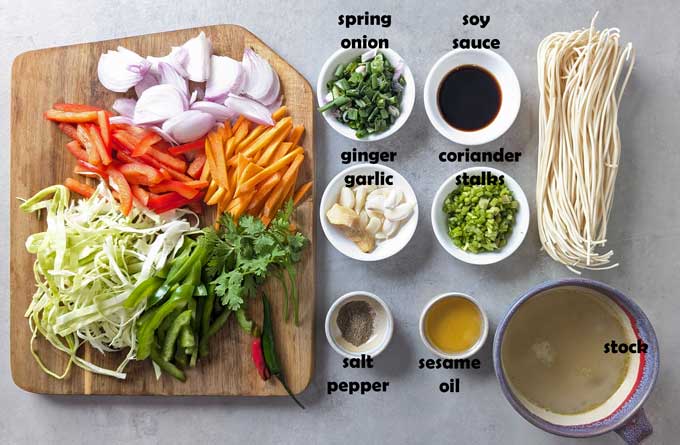
The beauty of Thukpa lies in its simplicity and the use of fresh, wholesome ingredients.
- Noodles: Traditionally, Thukpa is made with hand-pulled noodles, but store-bought Hakka or ramen noodles can also be used. Rice noodles or egg noodles work particularly well.
- Vegetables: The veg Thukpa includes a variety of seasonal vegetables such as onion, carrots, bell peppers, cabbage, and mushrooms. These vegetables add vibrant colours and a range of textures to the soup.
- Broth: A flavoursome vegetable stock forms the base of the soup.
- Aromatics: Ginger, Garlic, Green Chilli, and Coriander Stalks are the three holy grail of veg Thukpa recipe. I highly recommend not missing out either of them.
- Seasoning: Tibetan cuisine is known for its subtle yet impactful flavours. I use medium soy sauce, black pepper, green chilli, and salt to season the thukpa.
- Fresh coriander and spring onion are two essential herbs for Thukpa.
- Proteins: While the focus here is on the vegetables, tofu can be added for an extra protein boost, making it a well-rounded meal.
How To Make Veg Thukpa
Prepare Soup Base:
- Heat oil in a large saucepan or stockpot over medium heat.
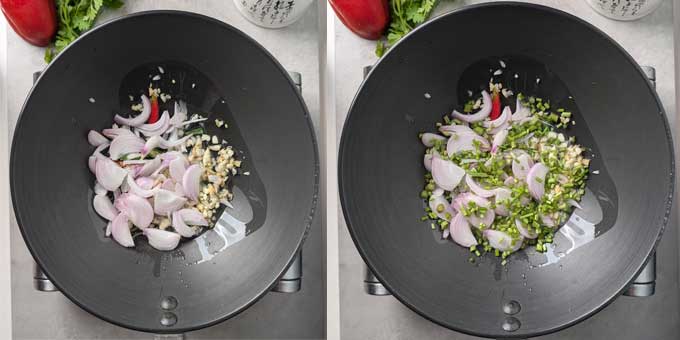
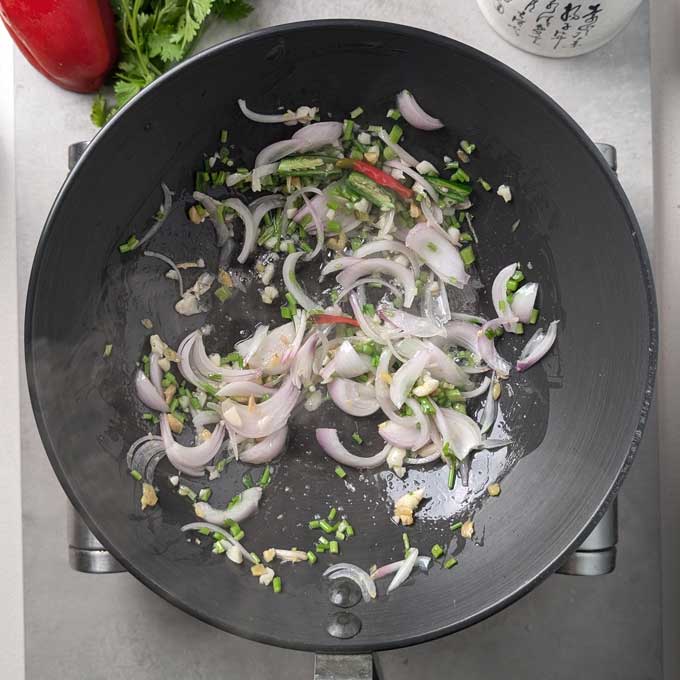
- Add the minced garlic, ginger, coriander stalks, green chilli, and onion.
- Saute for one minute or until aromatic. No need to brown them.
Cook the Noodles and Vegetables:
- Pour in the vegetable stock and bring Thukpa to a gentle boil.
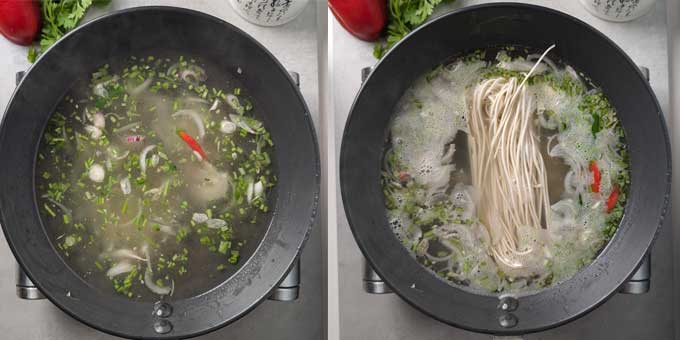
- Add the noodles, julienned vegetables, shredded cabbage, salt, pepper, and soy sauce.
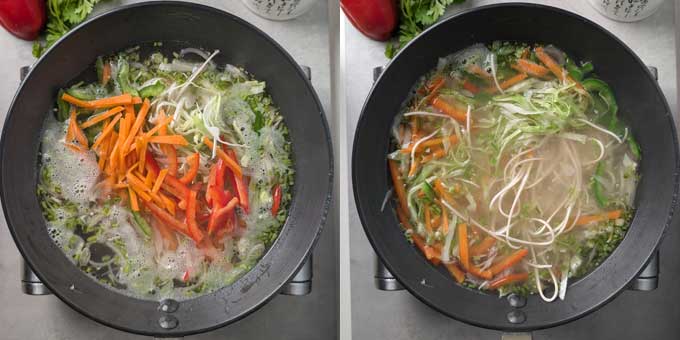
- Simmer over high heat till noodles are cooked and vegetables soften.
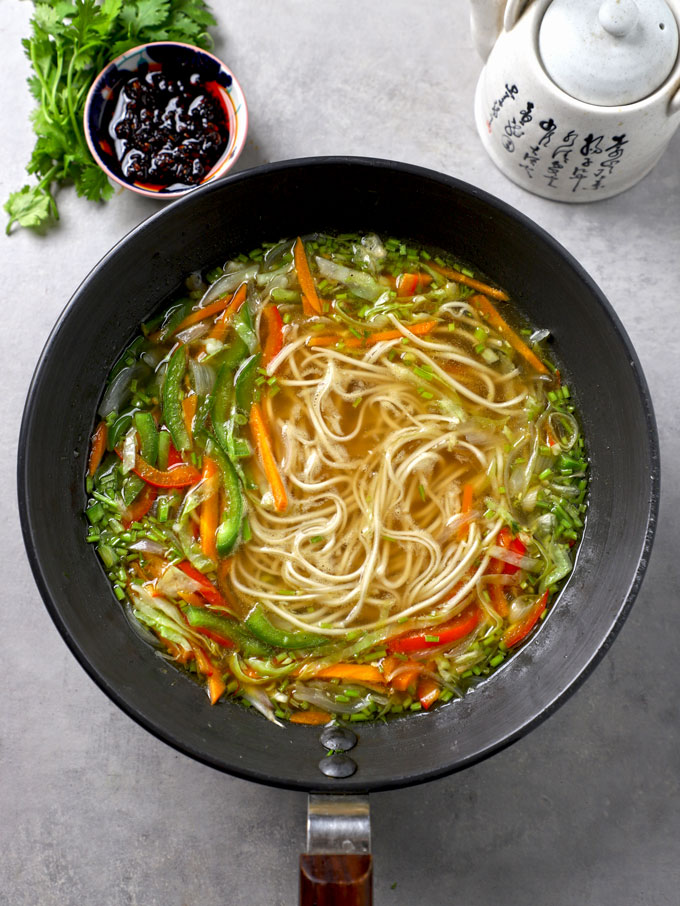
Finishing Touch:
- Add finely chopped spring onion and coriander leaves.
- Taste, and if required add more salt or soy sauce.
- Veg Thukpa is ready to serve.
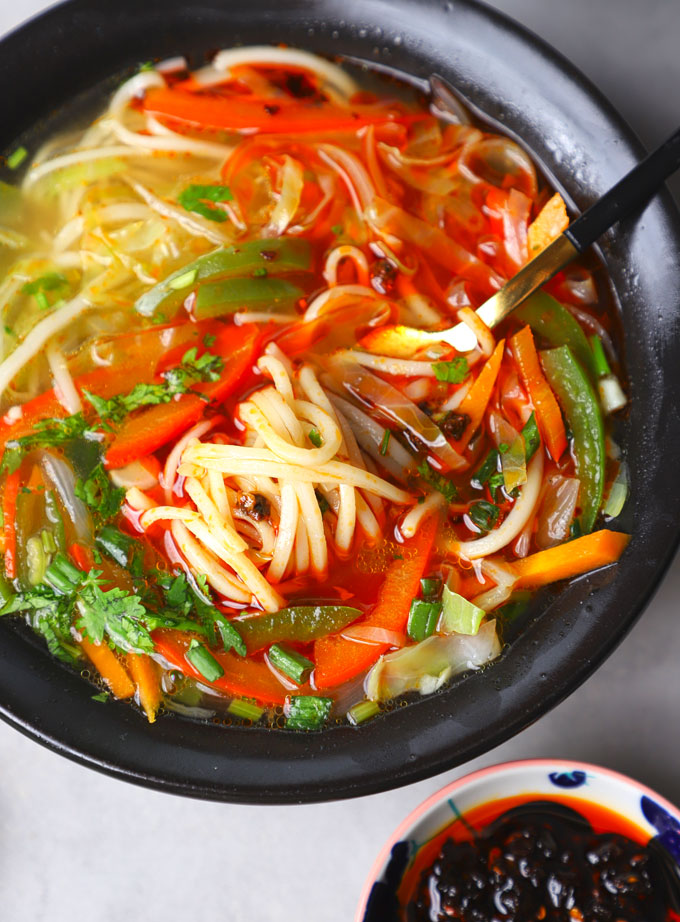
Serving Suggestion
Thukpa is served piping hot then only it tastes best.
Ladle the Thukpa into bowls and add a handful of fresh coriander and green onions in each bowl. Serve it with chilli oil for that garlicky and spicy kick or a squeeze of lemon juice.
Momo – the Tibetan dumpling is one of the best side dishes to serve with Thuppa to make it a complete meal.
My Tried and True Tips
- Not too many sauces. Thukpa is not the kind of noodle soup that requires lot of processed sauces. Hence, for an authentic flavour avoid adding them. I add medium soy sauce for that delicious umami flavour.
- Without stock Thukpa will have no depth of flavour. The original recipes requires meat cooked with hand pulled noodles. Without meat, you need a flavoursome vegetable stock or broth to prepare the base of soup.
- Keep it soupy. Do not add corn starch or any other thickening agent to Thupka. It is supposed to be slurpy and soupy and rustic.
- Too much noodles . Thukpa has the perfect harmony of soup, veggies and the noodles. Hence, do not get carried away and add too much of noodles. They absorb all the soup after a few hours of cooking and you’ll end up with soup noodles not thukpa.
- Cooking noodles separately. Many Thuppa recipes suggest cooking noodles separately and then serving in the bowl. I prefer cooking them in the soup base for an additional layer of flavour and convenience.
- Not a freezer friendly meal. Thukpa is the kind of dish that tastes best fresh and hot. It doesn’t taste good after freezing or storing or reheating.
More Vegetable Soup Recipes
- Oats Soup
- Mushroom Soup
- Green Peas Soup
- Cauliflower Soup
- Minestrone Soup
- Broccoli Almond Soup
- Vegetable Barley Soup
- Tomato Couscous Soup
Ingredients
- ▢ 150 gram Hakka noodles (uncooked)
- ▢ 2 tablespoon vegetable refined oil
- ▢ 1 tablespoon minced garlic
- ▢ 1 tablespoon minced ginger
- ▢ 1 tablespoon coriander stalks, finely chopped
- ▢ 1 medium size red onion, sliced
- ▢ 2 green chillies, sliced
- ▢ ½ Cup cabbage shredded
- ▢ ½ Cup thinly sliced red bell pepper
- ▢ ½ Cup thinly sliced capsicum
- ▢ ½ Cup thinly sliced carrot
- ▢ 1 tablespoon dark soy sauce
- ▢ 1 teaspoon black pepper powder
- ▢ ½ teaspoon salt or to taste
- ▢ 4 Cup vegetable stock ( see recipe )
- ▢ 2 spring onion, finely chopped
- ▢ handful of fresh coriander leaves, chopped
Instructions
- Heat oil in a large saucepan or stockpot over medium heat.
- Add the minced garlic, ginger, green chilli, coriander stalks, and onion. Saute for one minute or until aromatic. No need to brown them.
- Pour in the vegetable stock and bring Thukpa to a gentle boil.
- Add the noodles, julienned vegetables, shredded cabbage, salt, pepper, and soy sauce.
- Simmer over high heat till noodles are cooked and vegetables soften.
- Once noodles are cooked, add finely chopped spring onion and coriander leaves. Taste, and if required add more salt or soy sauce.
- Veg Thukpa is ready to serve.
Recipe Notes:
- Thukpa is not the kind of noodle soup that requires lot of processed sauces. Hence, for an authentic flavour avoid adding them. I add medium soy sauce for that delicious umami flavour.
- Without stock Thukpa will have no depth of flavour.
- Keep it soupy. Do not add corn starch or any other thickening agent to Thupka. It is supposed to be slurpy and soupy and rustic.
- Too much noodles . Thukpa has the perfect harmony of soup, veggies and the noodles. Hence, do not get carried away and add too much of noodles. They absorb all the soup after a few hours of cooking and you’ll end up with soup noodles not thukpa.
- After noodles are cooked do not simmer the soup for too long. Else, it will become more thick.
Nutrition
We follow a strict NO SPAM Policy
Veg Thukpa Recipe
Equipment
- Chinese Wok
Ingredients
- 150 gram Hakka noodles (uncooked)
- 2 tablespoon vegetable refined oil
- 1 tablespoon minced garlic
- 1 tablespoon minced ginger
- 1 tablespoon coriander stalks, finely chopped
- 1 medium size red onion, sliced
- 2 green chillies, sliced
- ½ Cup cabbage shredded
- ½ Cup thinly sliced red bell pepper
- ½ Cup thinly sliced capsicum
- ½ Cup thinly sliced carrot
- 1 tablespoon dark soy sauce
- 1 teaspoon black pepper powder
- ½ teaspoon salt or to taste
- 4 Cup vegetable stock ( see recipe )
- 2 spring onion, finely chopped
- handful of fresh coriander leaves, chopped
Instructions
- Heat oil in a large saucepan or stockpot over medium heat.
- Add the minced garlic, ginger, green chilli, coriander stalks, and onion. Saute for one minute or until aromatic. No need to brown them.
- Pour in the vegetable stock and bring Thukpa to a gentle boil.
- Add the noodles, julienned vegetables, shredded cabbage, salt, pepper, and soy sauce.
- Simmer over high heat till noodles are cooked and vegetables soften.
- Once noodles are cooked, add finely chopped spring onion and coriander leaves. Taste, and if required add more salt or soy sauce.
- Veg Thukpa is ready to serve.
Video
Notes
- Thukpa is not the kind of noodle soup that requires lot of processed sauces. Hence, for an authentic flavour avoid adding them. I add medium soy sauce for that delicious umami flavour.
- Without stock Thukpa will have no depth of flavour.
- Keep it soupy. Do not add corn starch or any other thickening agent to Thupka. It is supposed to be slurpy and soupy and rustic.
- Too much noodles . Thukpa has the perfect harmony of soup, veggies and the noodles. Hence, do not get carried away and add too much of noodles. They absorb all the soup after a few hours of cooking and you’ll end up with soup noodles not thukpa.
- After noodles are cooked do not simmer the soup for too long. Else, it will become more thick.
Nutrition
You will be surprised to know that only 5 – ingredients are required to make this creamy and tasty paneer kheer. Be sure to watch the video!
Estimated reading time: 3 minutes
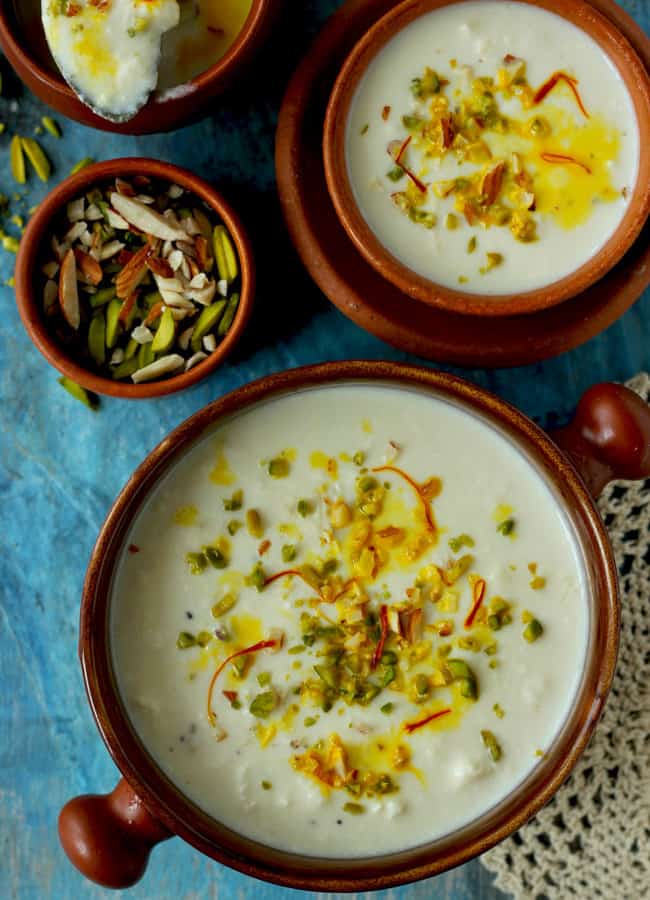
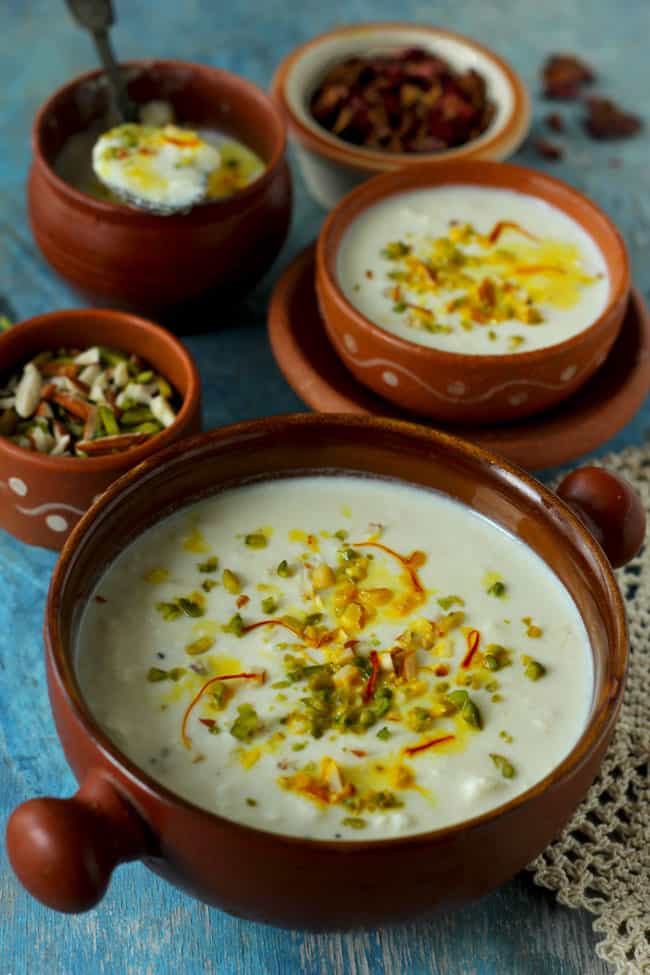
Paneer Ki Kheer is an Indian dessert widely popular in West Bengal. It is also known as chanar payesh.
It is very similar to popular Indian sweet ras-malai in taste and texture. Both are prepared with chenna (cottage cheese) soaked in saffron and cardamom infused milk.
Since I landed on this paneer recipe , it is a regular affair for any festive occasions or family dinner parties. And everybody absolutely loves it to the core.
Recipe Highlights
- one pot recipe
- gluten free dessert
- only 5 ingredients required
- no condensed milk or mawa
- can be made a day or two in advance
Homemade vs Readymade Paneer
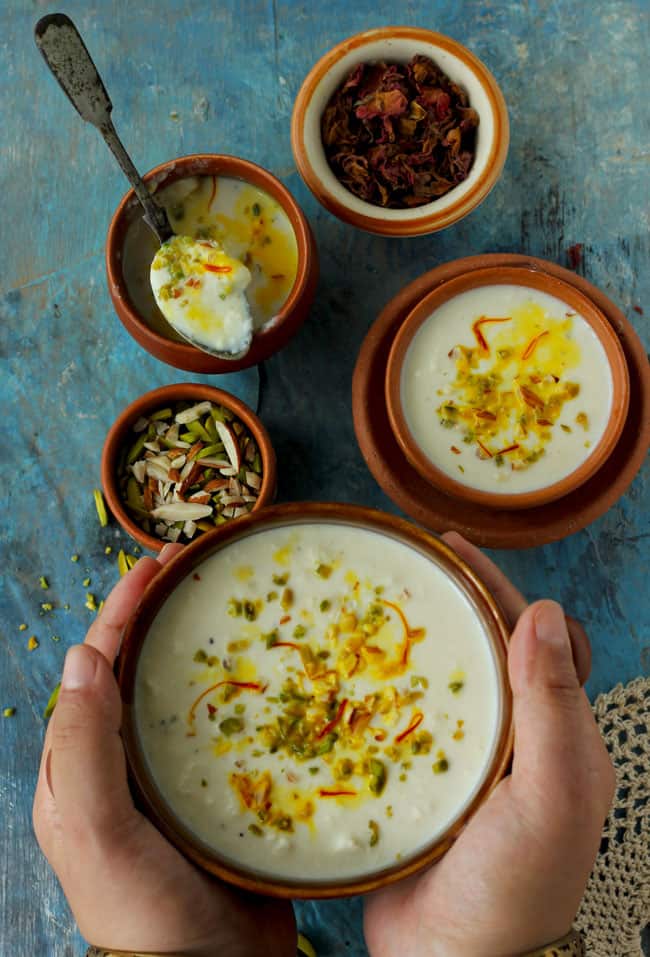
For making paneer kheer you can use either the readymade paneer or the homemade one. Many authentic Bengali Chanar Payesh recipes suggest making paneer from scratch.
The cottage cheese prepared at home has soft, uneven lumps, and tastes absolutely mouth-melting once cooked in the saffron flavoured milk.
Hence, I highly recommend using homemade paneer for this kheer recipe.
My Tried and True Tips
- I prefer using full-fat, organic cow or buffalo milk for making kheer.
- For a delicious tropical flavour, replace regular milk with coconut milk.
- Adjust the sweetness of the kheer according to your taste preferences by adding more or less sugar.
- Keep stirring regularly to prevent the paneer kheer from sticking to the bottom of the pan.
- Paneer Kheer has a liquid-y consistency like ras malai . Hence, do not thicken the kheer too much while cooking.
Watch Paneer Kheer Video
More Indian Kheer Recipes
- Rice Kheer
- Seviyan Kheer
- Lauki Ki Kheer
- Badam Kheer
- Date Apple Kheer
more Indian kheer recipes for all festive celebrations.
Ingredients
- ▢ 1 Cup paneer (cottage cheese)
- ▢ 1 liter full cream milk
- ▢ ⅓ Cup sugar or to taste
- ▢ 1 teaspoon cardamom powder
- ▢ ¼ teaspoon saffron strands
Instructions
- Combine 1 tablespoon of warm milk and saffron strands. Set aside.
- Crumble the paneer using your fingers. Do not make a fine mash of it.
- Heat milk in a heavy bottom saucepan over medium-high heat.
- Add the cardamom powder and allow the milk to simmer until it reduces almost half the original amount.
- Keep on stirring the simmering milk at regular intervals. Collect the cream (malai) from the sides of the pan and add it back to the milk.
- Once the milk has thickened and reduced in quantity, add the sugar and saffron. Stir to mix nicely.
- Now add the grated paneer in the milk and cook for 5 – 10 minutes. Turn off the heat.
- Allow the paneer kheer to cool completely before keeping in the fridge. It is best served chilled.
- Garnish with sliced pistachio and almonds before serving.
- Serve Paneer Kheer chilled.
Recipe Notes:
- Full-fat milk is the best choice for making kheer or any other creamy Indian dessert.
- You can use readymade paneer (cottage cheese) to make the kheer. Make sure it is fresh and soft.
- Crumble the paneer so that it has tiny chunks. Do not grate or mash the paneer.
- Paneer Kheer is best served chilled. Let it sit in the refrigerator for 1 – 2 hours before serving or best overnight.
- You can store the leftover paneer kheer in the refrigerator for 2 – 3 days. No need to reheat it.
- Do not leave paneer kheer at room temperature for more than 2 – 3 hours as it might spoil quickly because of paneer.
Nutrition
We follow a strict NO SPAM Policy
