Coconut chutney is a traditional South Indian side dish packed with the flavour of coconut. It is a fabulous gluten-free and vegan-friendly Indian chutney recipe.
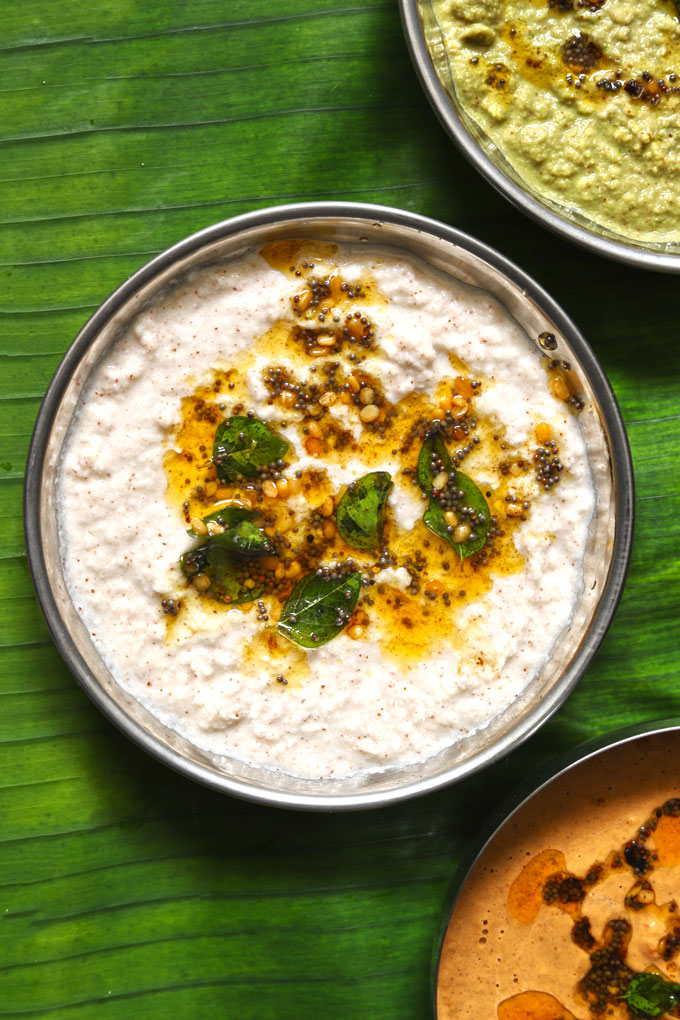
In South Indian Cuisine, the coconut is abundantly used. The reason is the tall, handsome coconut trees standing by the sea coast with utmost pride.
From curries, chutney to poriyal , and desserts , the coconut is omnipresent in the local South Indian and Coastal dishes.
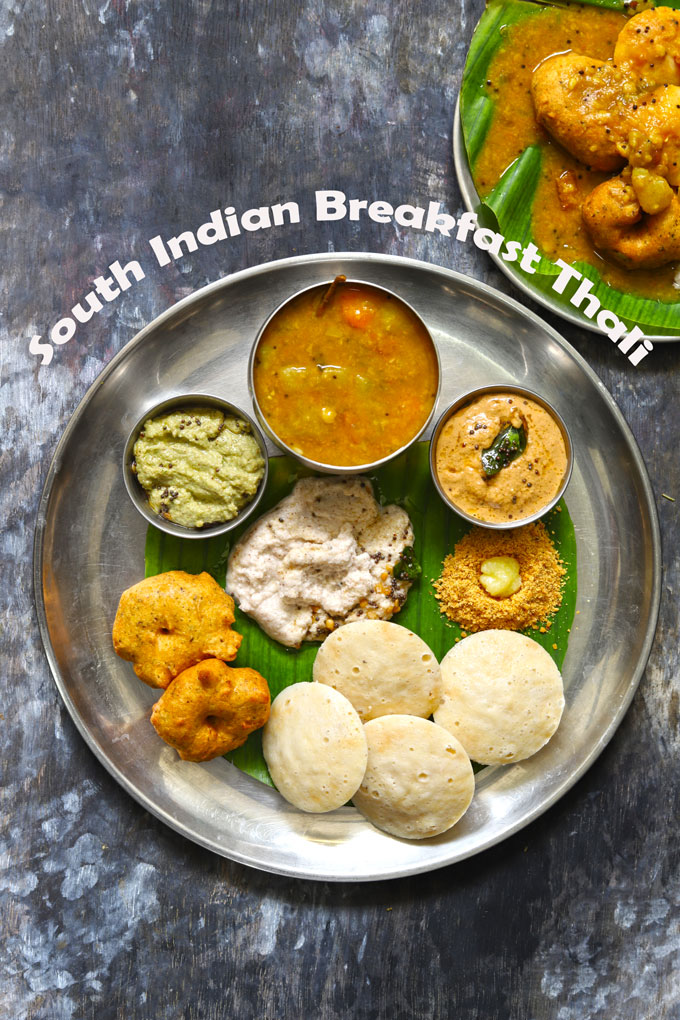
Coconut Chutney is one of the most popular South Indian side dishes . It tastes fabulous with the deep-fried snacks and the South Indian breakfast such as idli, vada, dosa, etc.
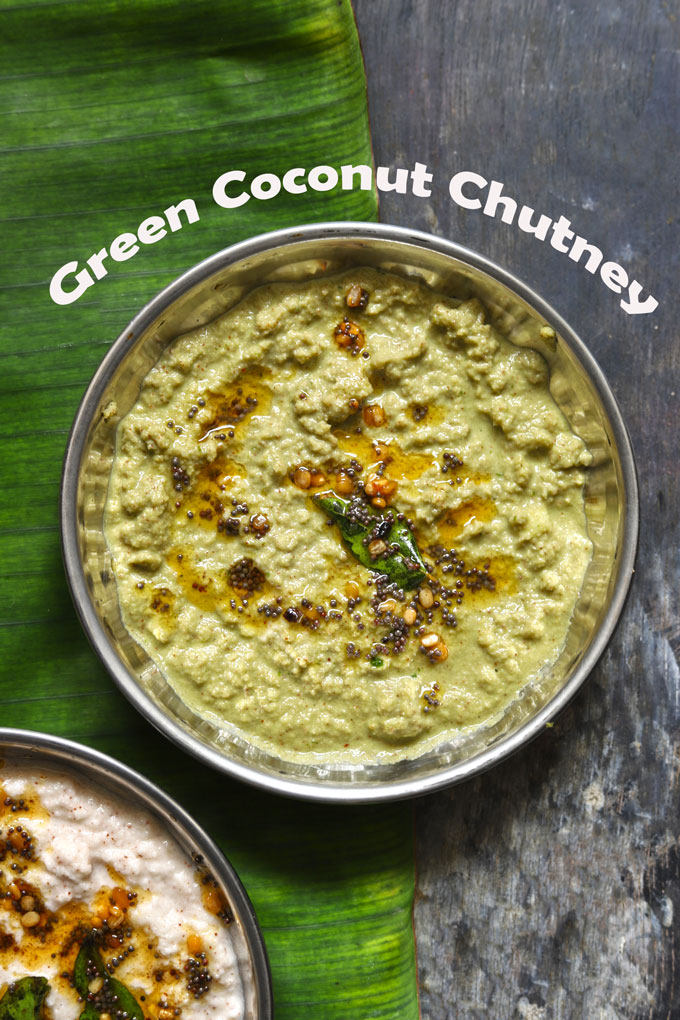
My Green Coconut Chutney
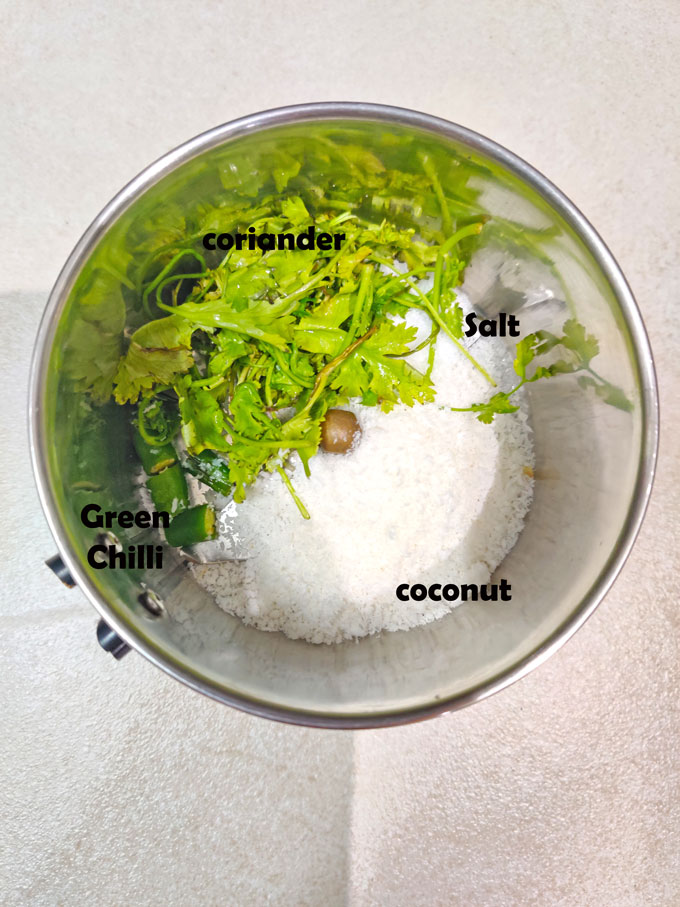
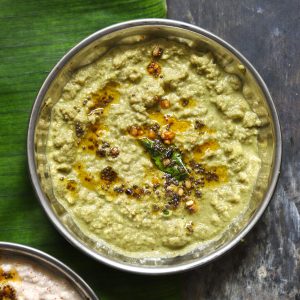
I love the splash of green colour and freshness in my chutney. Hence, I add fresh coriander leaves along with coconut, salt, green chilli, and water while blending. The addition of fresh coriander leaves and green chilli makes this chutney unique.
Unlike North Indian-style coriander chutney , this green chutney is tempered.
The fresh coriander leaves give the chutney a bright green colour, making it taste refreshing and rich in anti-oxidant.
Coconut Chutney Recipe Variations
There are many variations of nariyal chutney followed across South India.
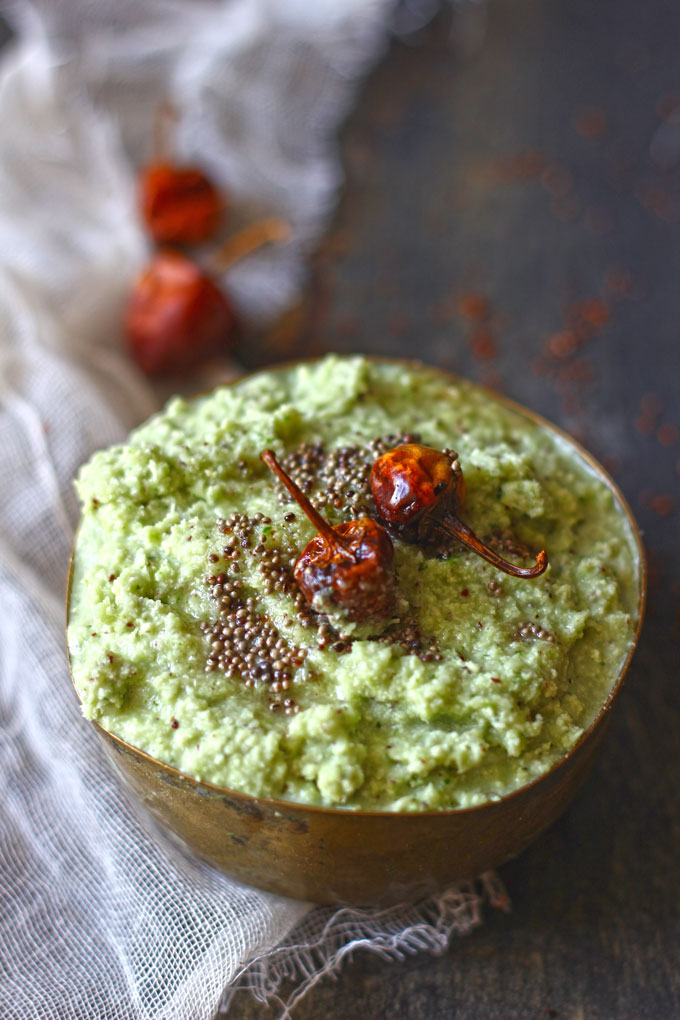
- Traditional Chutney: Blend coconut, green chilli, salt, and water to a smooth paste. Later, temper with whole red chillies, mustard seeds, urad dal, and curry leaves fried in ghee. This is the simplest and the easiest South Indian chutney recipe.
- Red Chutney : Fry onion and tomato in ghee. Blend with the remaining ingredients for the chutney.
- Peanut Chutney: Replace half the coconut with skinned, roasted peanuts for a nutty taste.
- Garlic Chutney: Add garlic cloves according to taste preference while blending the ingredients to give the chutney a garlicky flavour.
The Tadka (Tempering)
The tadka of a South Indian chutney is mainly – ghee, black mustard seeds (rai), white urad dal, curry leaves, and dry red chillies.
The simple but aromatic tempering complements the mild flavour of the chutney and adds a crunchy layer on top.
To make a vegan chutney, you can use coconut, groundnut, or any other vegan oil to fry the tempering ingredients.
How do you store coconut chutney?
Transfer the chutney to a container with a tight-fitting lid and store it in the refrigerator. It remains fresh for 4 – 5 days easily. For freezing the chutney, use a freezer-friendly container or zip lock bag for storing it. You can freeze it for 1 – 2 months. Avoid leaving chutney at room temperature for too long, especially during summer.
Can I use frozen or packaged desiccated coconut?
You can use frozen or packaged desiccated coconut for making the chutney. Defrost the frozen coconut as per packet instructions before making the chutney.
Serving Suggestion
I LOVE coconut chutney with everything and anything. But a few of my favourite combinations are:
- Rava Idli
- Medu Vada
- Moong Dal Chi ll a
- Mix Veg Uttapam
- Rava Paniyaram
- Masala Khara Bath
If you try this recipe and love it, please leave a comment and a rating. This helps us grow and reach other food lovers like you.
Ingredients
- ▢ 1 Cup fresh grated coconut
- ▢ 1 Cup fresh coriander leaves
- ▢ 1 – 2 green chilies or to taste
- ▢ Salt to taste
Ingredients For Tempering:
- ▢ 1 tablespoon ghee or coconut oil
- ▢ 1 – 2 dry red chili, broken into halves
- ▢ 2 tablespoon curry leaves
- ▢ 1 teaspoon mustard seeds (rai)
Instructions
- To prepare the Coconut Coriander Chutney, chop the coconut scrapping into bite-size pieces, or grate the coconut. You can use the readymade desiccated coconut as well.
- Add coconut, coriander, green chili, and salt in a blender and grind till smooth. Add approximately ¼ cup of water to get the smooth consistency of the chutney. Transfer chutney to a bowl.
- To temper the chutney, heat ghee or oil in a tadka pan over medium flame.
- Add mustard seeds. When the seeds crackle, add red chili and curry leaves.
- Once the curry leaves start changing color and the aroma of red chilies is released turn off the heat. Make sure not to heat the tempering for too long else curry leaves and chilies will turn bitter.
- Pour the tempering over the prepared coconut coriander chutney.
- Serve Coconut Coriander Chutney with dosa, idli or pongal.
Recipe Notes:
- If you do not have fresh coconut available, use dried desiccated coconut.
- For a vegan chutney, replace ghee with coconut oil or any other vegan oil.
- Many recipes suggest combining curd or roasted chana dal or peanuts in the coconut chutney. You can try these combinations as well.
- If the coconut chutney seems too thick, add more water while blending.
- You can store this chutney in the refrigerator for 1 week. Or freeze it for a month.
Nutrition
We follow a strict NO SPAM Policy
Coconut Chutney Recipe
Equipment
- Blender
- Stir Fry Pan
- Mixing Bowl
Ingredients
- 1 Cup fresh grated coconut
- 1 Cup fresh coriander leaves
- 1 - 2 green chilies or to taste
- Salt to taste
Ingredients For Tempering:
- 1 tablespoon ghee or coconut oil
- 1 - 2 dry red chili, broken into halves
- 2 tablespoon curry leaves
- 1 teaspoon mustard seeds (rai)
Instructions
- To prepare the Coconut Coriander Chutney, chop the coconut scrapping into bite-size pieces, or grate the coconut. You can use the readymade desiccated coconut as well.
- Add coconut, coriander, green chili, and salt in a blender and grind till smooth. Add approximately ¼ cup of water to get the smooth consistency of the chutney. Transfer chutney to a bowl.
- To temper the chutney, heat ghee or oil in a tadka pan over medium flame.
- Add mustard seeds. When the seeds crackle, add red chili and curry leaves.
- Once the curry leaves start changing color and the aroma of red chilies is released turn off the heat. Make sure not to heat the tempering for too long else curry leaves and chilies will turn bitter.
- Pour the tempering over the prepared coconut coriander chutney.
- Serve Coconut Coriander Chutney with dosa, idli or pongal.
Notes
- If you do not have fresh coconut available, use dried desiccated coconut.
- For a vegan chutney, replace ghee with coconut oil or any other vegan oil.
- Many recipes suggest combining curd or roasted chana dal or peanuts in the coconut chutney. You can try these combinations as well.
- If the coconut chutney seems too thick, add more water while blending.
- You can store this chutney in the refrigerator for 1 week. Or freeze it for a month.
Nutrition
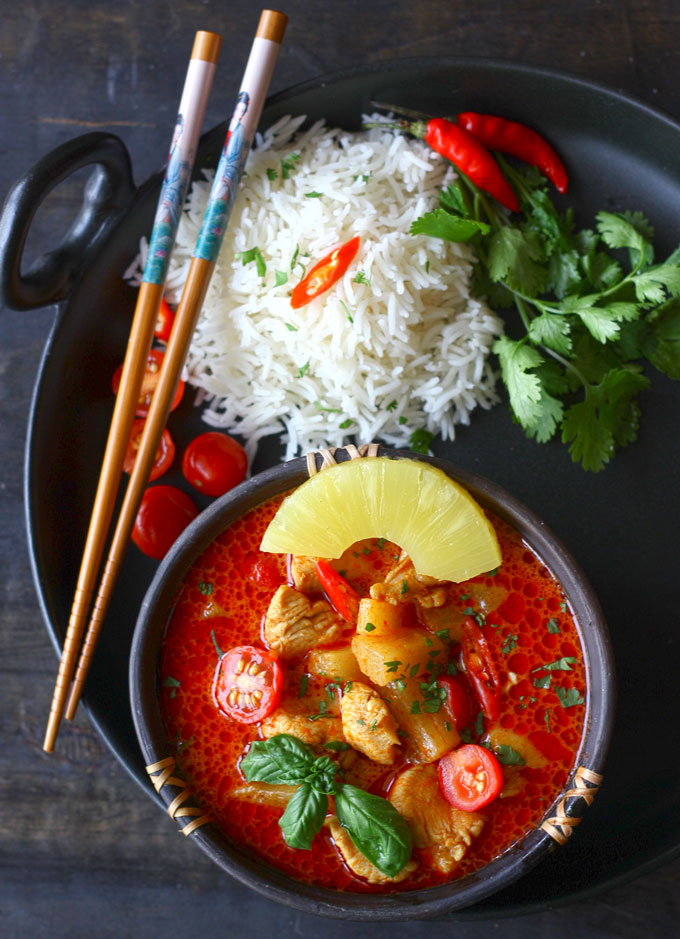
Pineapple Chicken Curry is a sweet and spicy Thai-style main course dish. It is packed with the flavour of pineapple and Thai red curry sauce. It is an easy and delicious curry recipe.
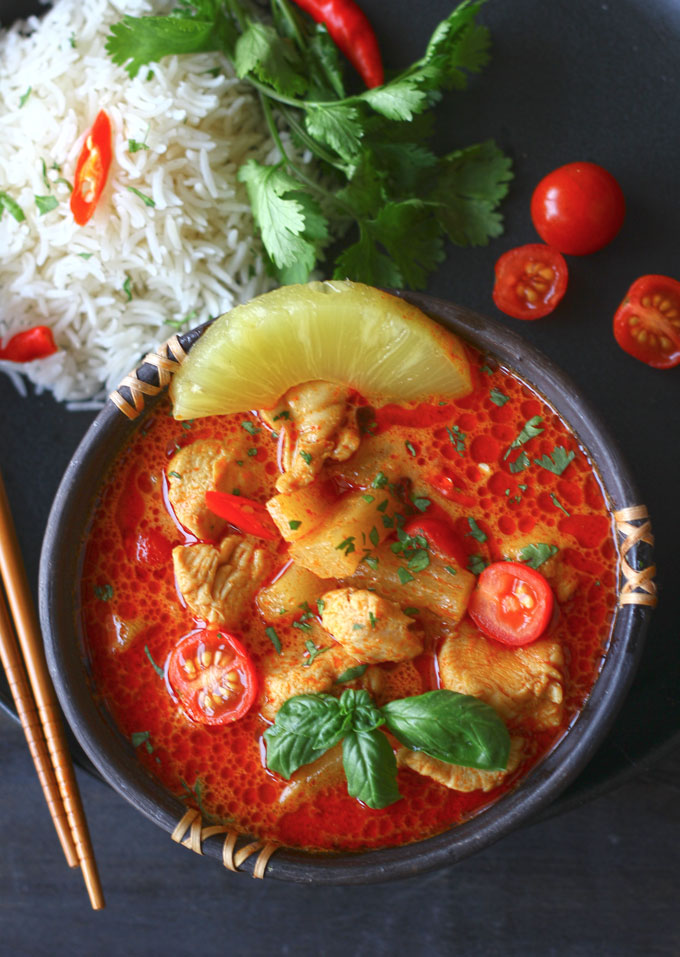
Who doesn’t love a good Thai Red Curry ? I adore it to the core. That is why a bottle of homemade Thai curry paste is always in my refrigerator.
This Pineapple Chicken Curry has been one of the tastiest things in my kitchen recently. There are no words. It has the perfect, bright red colour and a spicy taste and creaminess of coconut, balanced by the sweetness and tanginess of pineapple.
The chicken curry is on the table in 30 minutes with red curry paste in hand. A wholesome, fulfilling, and delicious family dinner is ready quickly.
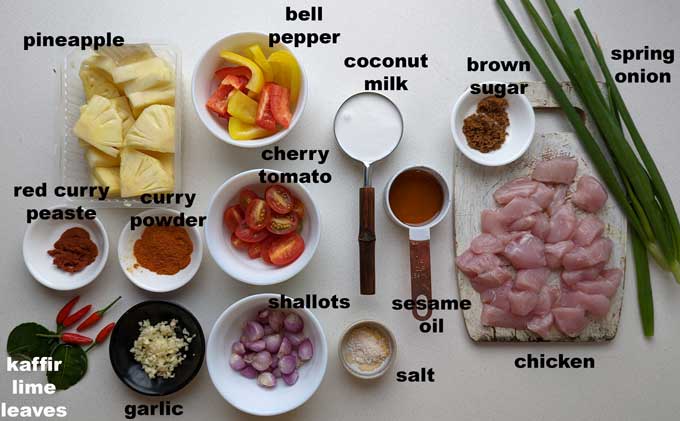
Ingredients Required
Chicken: Use boneless, bite-size chicken pieces for this Thai curry recipe. I prefer boneless chicken thigh meat for the juiciness. Chicken breast is also another good option.
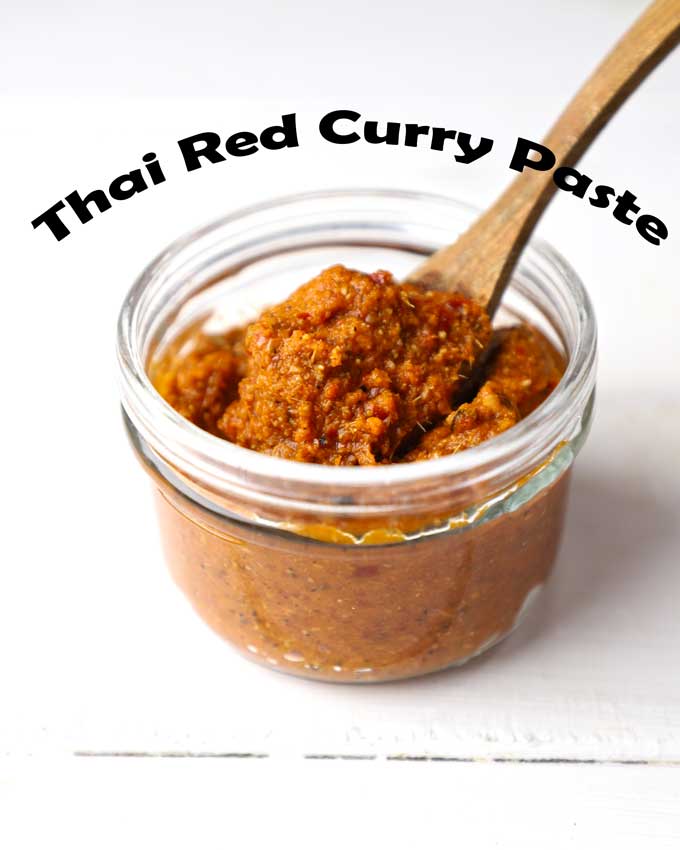
Red Curry Paste: I use homemade Thai Red Curry paste . But you can use a readymade one also. Here are a few of my favourite brands – Real Thai Red Curry Paste, Blue Elephant, Mesri and Ayam.
Pineapple: You can use fresh or canned pineapple to make Thai curry. Avoid adding sugar to the curry when using canned pineapple; the canned fruits are already soaked in sugar syrup.
Vegetables: Mixed Bell Peppers, Turkey Berry, Cherry Tomato, Green Beans
I prefer using shallots (sambar onion) for making this curry. You can use regular red onion also.
Oil: I use roasted sesame oil to cook pineapple chicken curry. Peanut Oil, Coconut Oil, or other vegetable oil are the substitutes.
Herbs & Seasoning: Kaffir Lime Leaves, Bird’s Eye Chilli, Spring Onion, Brown Sugar, Salt, Garlic, Curry Powder or Chilli Powder
Thin Coconut Milk gives a creamy texture and taste to the curry.
How To Make
Step 1: Clean, wash, and pat dry the chicken pieces. Set them aside.
Step 2: Heat oil in a wok. Add finely minced garlic and shallots. Fry them over high heat for less than a minute or till shallots become translucent and the aroma of garlic is released—no need to brown them.
Step 3: Add cleaned chicken pieces and fry them nicely for 2 – 3 minutes. They will become pale white from both sides.
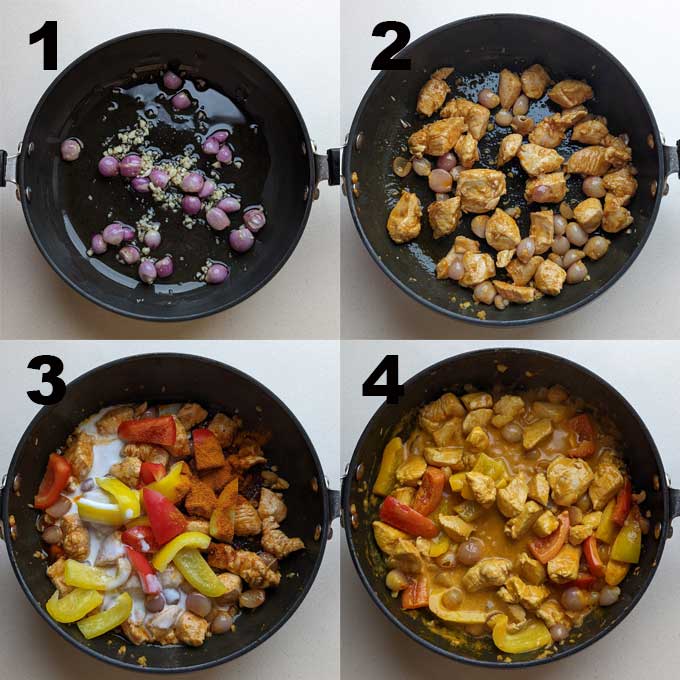
Step 4: Add Thai red curry paste, curry powder, brown sugar, and half of coconut milk. Mix and stir fry for 2 – 3 minutes.
Step 5: Now add cherry tomato, bell peppers, kaffir lime leaves, sliced red chilli, and the remaining coconut milk. Mix nicely.
Step 6: Add pineapple pieces. Cover the wok with a lid. Allow the curry to simmer over low heat for 5 minutes or until the chicken and pineapple become tender.
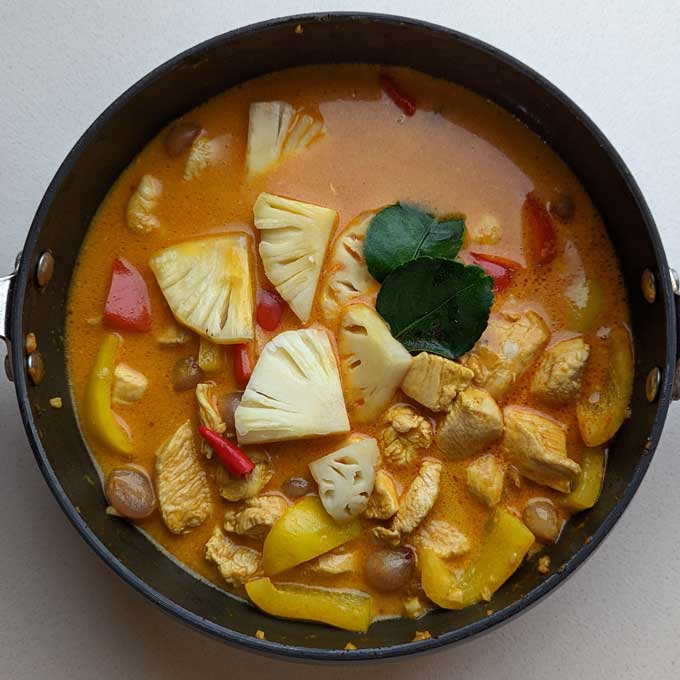
Step 7: Garnish with chopped green onion or Thai basil. Thai Pineapple Chicken Curry is ready to serve.
Serving Suggestion
Pineapple Chicken Curry is a main course dish. Serve it with jasmine rice or any other aromatic short to medium-grain rice. The rice is a perfect side dish to absorb all the curry’s flavour and make a complete meal. You can serve it with rice noodles , also.
I like my Thai Curry with a bowl of plain rice topped with toasted peanuts and shrimp crackers.
More Thai Cuisine Recipes
- Chicken Satay
- Chicken Pad Thai
- Green Papaya Salad
- Pineapple Fried Rice
- Thai Green Curry Soup
- Thai Sweet Chilli Sauce
- Thai Red Curry with Chicken
If you try this recipe and love it, please leave a comment and a rating. This helps us grow and reach other food lovers like you.
Ingredients
- ▢ 500 gram boneless chicken pieces
- ▢ 2 tablespoon sesame oil
- ▢ 1 tablespoon finely minced garlic
- ▢ ½ Cup shallots (sambar onion)
- ▢ 2 tablespoon (approx 50g) Thai red curry paste
- ▢ 1 teaspoon light brown sugar
- ▢ 1 teaspoon Curry Powder or chilli powder
- ▢ 1 teaspoon salt or to taste
- ▢ ½ Cup diced red bell pepper
- ▢ ¼ Cup cherry tomato cut into halves
- ▢ 1 Cup thin coconut milk
- ▢ 2 Bird’s eye chilli diced
- ▢ 2 kaffir lime leaves
- ▢ ½ Cup chicken stock or water
- ▢ 1 cup diced pineapple
- ▢ 2 tablespoon chopped spring onion
Instructions
- Clean, wash, and pat dry the chicken pieces. Set them aside. Make sure they are of equal size for even cooking time.
- Heat oil in a wok. Add finely minced garlic and shallots. Fry them over high heat for less than a minute or till shallots become translucent and the aroma of garlic is released—no need to brown them.
- Add cleaned chicken pieces and fry them nicely for 2 – 3 minutes. They will become pale white from both sides. This step is important to make sure the chicken remains juicy.
- Add Thai red curry paste, curry powder or chilli powder, brown sugar, and half of coconut milk. Mix and stir fry for 2 – 3 minutes.
- Now add cherry tomato, bell peppers, kaffir lime leaves, sliced red chilli, salt, and the remaining coconut milk. Mix nicely.
- Add pineapple pieces, water, and more seasoning if required. Cover the wok with a lid. Allow the curry to simmer over low heat for 5 minutes or until the chicken and pineapple become tender.
- Garnish with chopped green onion or Thai basil.
- Serve Thai Pineapple Chicken Curry with rice.
Recipe Notes:
- My homemade red curry paste is slightly on the robust and spicy flavour side. So I use it cautiously to get the balanced flavours in a curry. If you use store-bought red curry paste, adjust the seasoning according to its taste.
- Use ripe, sweet, tangy, juicy, fresh pineapple for this Thai Curry so that its juices can flavour the curry.
- The consistency of the curry can be adjusted to your liking. Some like it thick and saucy, while others may prefer soupy. Add the stock or water accordingly. I like my curry on a soup side, hence using ½ cup of stock.
- Skip red chilli to the curry if you do not want to make it spicy, as the curry paste has a certain amount of spiciness.
- Always taste the curry and then add salt accordingly. Because curry paste has some amount of salt; otherwise, you might end up with over-salted curry.
- You can substitute Kaffir Lime Leaves with regular lime juice and zest.
Nutrition
We follow a strict NO SPAM Policy
