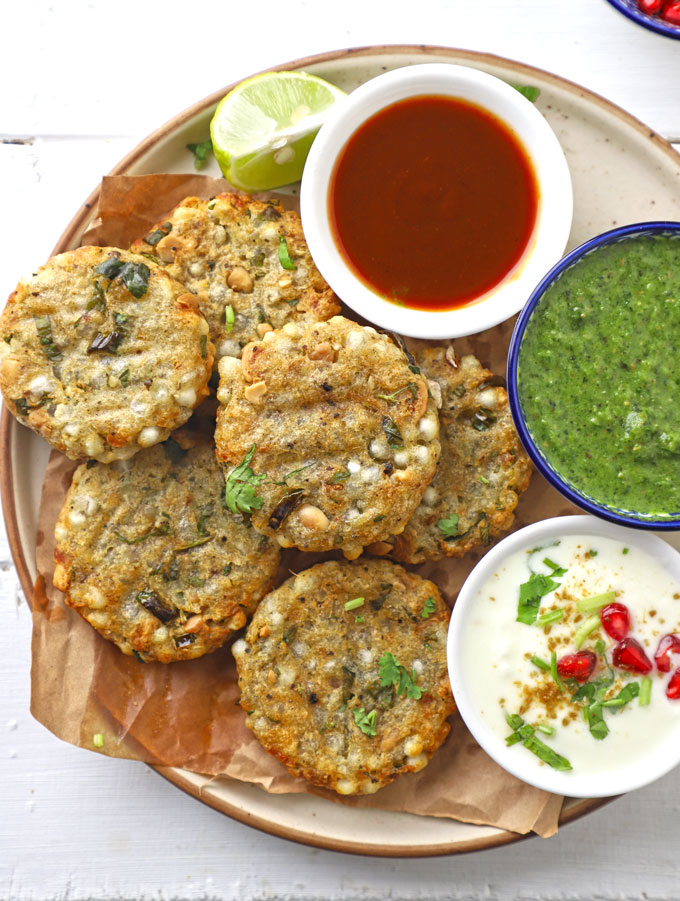
Meet the Sabudana Vada: India’s favourite vegetarian snack made with sago (tapioca pearls) and potatoes.
- What is Sabudana made of?
- What is Sabudana Vada?
- Watch Sabudana Vada Video
- How To Air Fry Sabudana Vada
- Hina’s Tried and True Tips
- Frequently Asked Questions
- Sabudana Vada Recipe
What is Sabudana made of?
Sabudana is the Hindi term for tapioca pearls. It is also known as sago. Sabudana is a plant-based ingredient made with starch from tapioca roots. Later, the starch is processed to form tiny grain-like spherical pearls to make sabudana.
Sago is widely used in Southeast Asian countries to make desserts, pudding, bubble tea, or snacks. In India Cuisine, sago pearls are commonly used to make various dishes. Many people consume it while observing Hindu fasts such as Navratri, Ganesh Chaturthi, because it contains no grains.
What is Sabudana Vada?
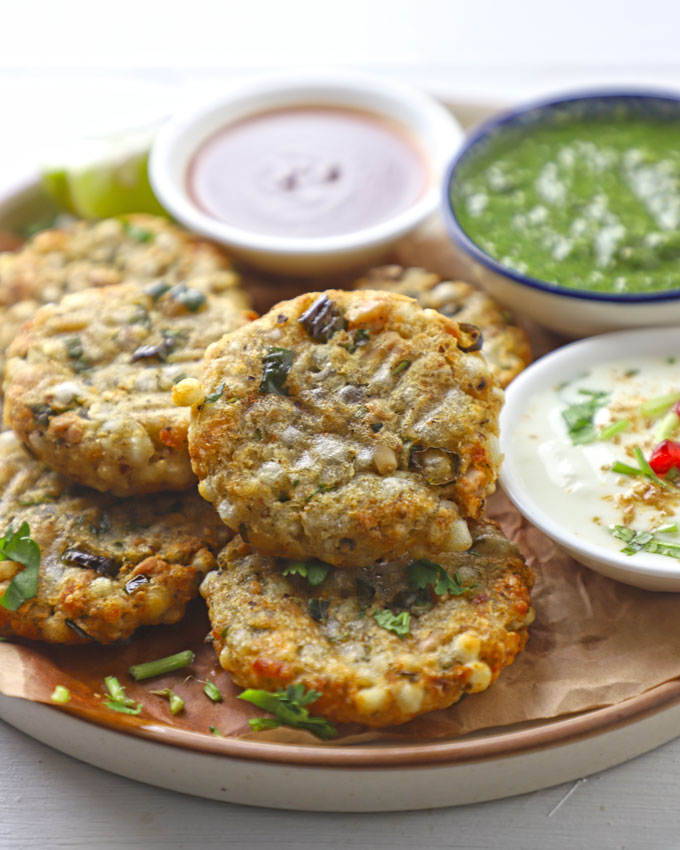
Sabudana cutlet is a widely popular vegetarian Indian snack. It is dairy and gluten free. You can serve it as a teatime snack or for breakfast with spicy green chutney , toasted bread, and a cup of masala tea .
There are many versions of the sabudana vada recipe. In a Marathi Style, sabudana cutlet lot of crushed peanuts, roasted cumin powder, and grated ginger are added.
Whereas, in a typical North Indian style sabudana cutlet, we add loads of chopped onion, spices, and fresh coriander.
Watch Sabudana Vada Video
How To Air Fry Sabudana Vada
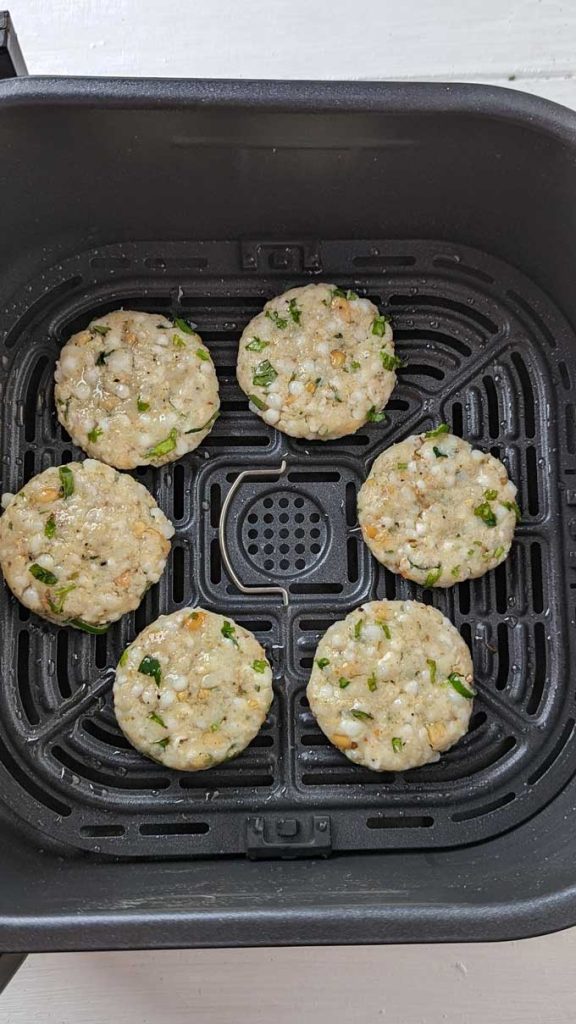
To air fry, the vada, brush the air fryer basket with a teaspoon of ghee.
- Preheat the air fryer to 180-degree celsius. Once the air fryer is ready, arrange sabudana vada on the basket. Do not overcrowd the basket.
- Air Fry the vada for 20 minutes. Flip them after 10 minutes for even browning and cooking.
Once ready, serve farali sabudana vada with chutney.
Hina’s Tried and True Tips
Follow these tried and tested tips to say goodbye to all the woes related to the sabudana cutlet.
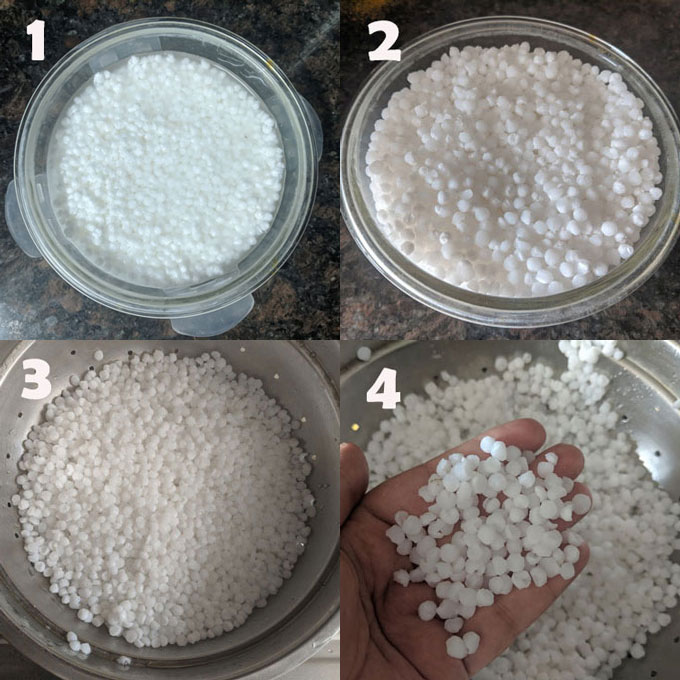
Soaking Sabudana : It is best to soak sago overnight or for at least 5 – 6 hours. The ratio of 1:1 (sago to water) always works for me. Too much water while soaking sago makes it mushy and water clogged, resulting in a not-so-crisp cutlet.
Boiled Potato: I prefer to boil the potatoes well in advance, allow to cool, remove the skin, and keep them in the fridge. The chilled, firm potatoes do some kind of magic to the texture of the cutlet, turning them into crisp goodness.
Peanuts: Use roasted peanuts without skin to add to the vada mixture. Crush the peanut using a rolling pin or mixer to make a coarse powder.
Cutlet Shape: If you are not too keen to shape the cutlet into the perfect round, simply pinch a small portion of the dough mixture using your fingers and gently drop it in hot ghee for frying. The bite-size sabudana pakodi tastes exquisite.
To test if the oil is ready for frying, drop a pinch of the vada mixture into the hot oil. If the oil is hot enough, the vada mixture will immediately float on the surface rather than sticking to the bottom of the pan.
Once you add vada to hot oil , reduce the heat to medium. If the vada is fried at very high heat, they get burnt from the outside instead of turning crisp and remain uncooked from the inside.
Do not overcrowd the pan while frying sabudana vada. Fry them in small batches. I would not suggest flipping vada multiple times while frying. Once it turns crisp from one side, flip it once, and cook from the other side.
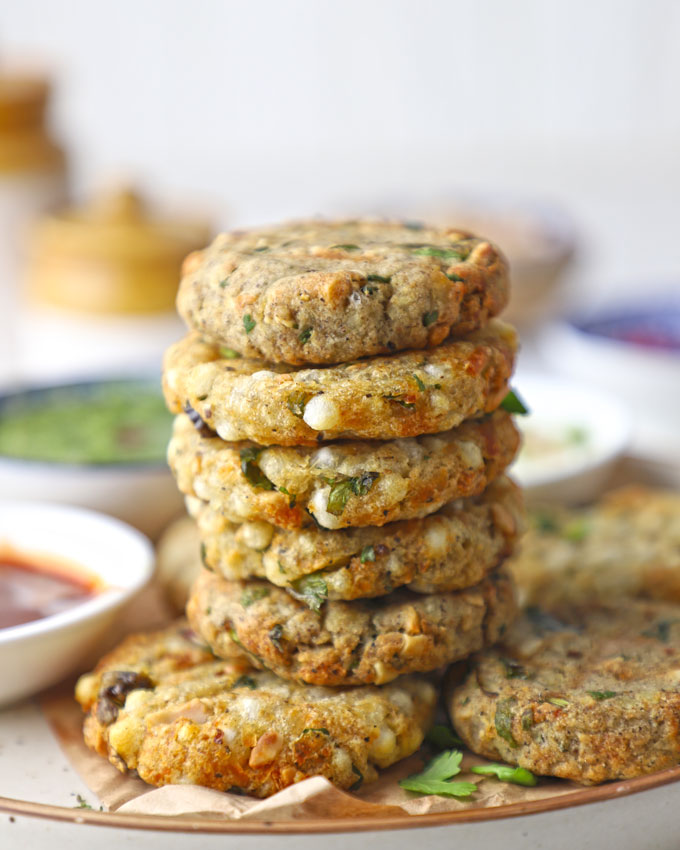
Whenever there is excess moisture in the vada mixture, it has more chances to break while frying. Even if the oil is not heated at the right temperature, vada will absorb more oil and fall apart while frying.
It’s important to soak sabudana with just enough water to cover it. You can soak it for 5 – 6 hours or overnight. After 6 hours, you will find perfectly puffed-up sabudana pearls ready to make vada or sabudana khichdi. Also, ensure to drain all the excess water, if any, from the soaked sago.
Yes, absolutely. You can keep soaked sabudana in the fridge for up to 2 – 3 days in an airtight container.
Looking for more Indian cutlets? Try these classic Vegetable Cutlets , crispy and unique Cheese Rava Cutlet , or the Corn Paneer Cutlet .
follow me on Youtube or Instagram for latest recipes.
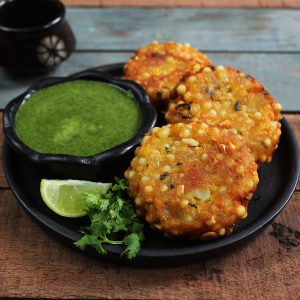
Ingredients
- ▢ 1 Cup sago (sabudana or tapioca pearls)
- ▢ 4 medium-size potato, boiled and mashed
- ▢ ¼ Cup roasted peanuts, crushed
- ▢ 1 tablespoon grated ginger
- ▢ 2 tablespoon chopped coriander
- ▢ 1 green chili, finely chopped
- ▢ Salt to taste
- ▢ 1 teaspoon turmeric powder (optional)
- ▢ 1 teaspoon red chili powder
- ▢ 1 teaspoon cumin powder
- ▢ 2 Cup vegetable oil, for deep frying
Instructions
- To prepare the Sabudana Vada, soak the tapioca pearls (sabudana), in 1 cup of water for about 4 – 5 hours or overnight.
- Next day, transfer the soaked sago into a metal colander to drain all excess water.
- To prepare the mixture for the vada, in a large mixing bowl combine boiled potato, soaked sabudana, ginger, chili, peanuts, coriander, salt, and spices.
- Mix thoroughly while mashing the mixture with your finger to form a smooth non-sticky dough-like mixture for the vada.
- Heat oil for deep frying in a pan over medium flame.
- While the oil is heating, divide the mixture into small sized balls. Next, flatten the balls to half inch or so thickness gently using fingers.
- Shallow fry or deep-fry the vada in small batches in hot oil till golden brown and crisp from both the sides.
- Drain Sabudana Vada on an oil absorbent paper.
- Serve Sabudana Vada with green chutney and a cup of tea.
Recipe Notes:
- It is best to soak sago overnight or for at least 5 – 6 hours. The ratio of 1:1 (sago to water) always works for me.
- Do not overcrowd the pan while frying sabudana vada. Fry them in small batches.
- Do not fry the vada at very high heat. It will burn from the outside and remain uncooked from the inside. Resulting in a chewy, bitter-tasting vada.
- To make a sabudana vada for vrat (fasting), all you need is – sabudana (tapioca pearls), boiled potatoes, green chili, fresh coriander, rock salt/sendha namak (optional), cumin powder, black pepper, crushed peanuts, and ghee .
Nutrition
We follow a strict NO SPAM Policy

Sabudana Vada Recipe
Equipment
- Mixing Bowl
- Frying Pan
Ingredients
- 1 Cup sago (sabudana or tapioca pearls)
- 4 medium-size potato, boiled and mashed
- ¼ Cup roasted peanuts, crushed
- 1 tablespoon grated ginger
- 2 tablespoon chopped coriander
- 1 green chili, finely chopped
- Salt to taste
- 1 teaspoon turmeric powder (optional)
- 1 teaspoon red chili powder
- 1 teaspoon cumin powder
- 2 Cup vegetable oil, for deep frying
Instructions
- To prepare the Sabudana Vada, soak the tapioca pearls (sabudana), in 1 cup of water for about 4 - 5 hours or overnight.
- Next day, transfer the soaked sago into a metal colander to drain all excess water.
- To prepare the mixture for the vada, in a large mixing bowl combine boiled potato, soaked sabudana, ginger, chili, peanuts, coriander, salt, and spices.
- Mix thoroughly while mashing the mixture with your finger to form a smooth non-sticky dough-like mixture for the vada.
- Heat oil for deep frying in a pan over medium flame.
- While the oil is heating, divide the mixture into small sized balls. Next, flatten the balls to half inch or so thickness gently using fingers.
- Shallow fry or deep-fry the vada in small batches in hot oil till golden brown and crisp from both the sides.
- Drain Sabudana Vada on an oil absorbent paper.
- Serve Sabudana Vada with green chutney and a cup of tea.
Video
Notes
- It is best to soak sago overnight or for at least 5 – 6 hours. The ratio of 1:1 (sago to water) always works for me.
- Do not overcrowd the pan while frying sabudana vada. Fry them in small batches.
- Do not fry the vada at very high heat. It will burn from the outside and remain uncooked from the inside. Resulting in a chewy, bitter-tasting vada.
- To make a sabudana vada for vrat (fasting), all you need is - sabudana (tapioca pearls), boiled potatoes, green chili, fresh coriander, rock salt/sendha namak (optional), cumin powder, black pepper, crushed peanuts, and ghee .
Nutrition
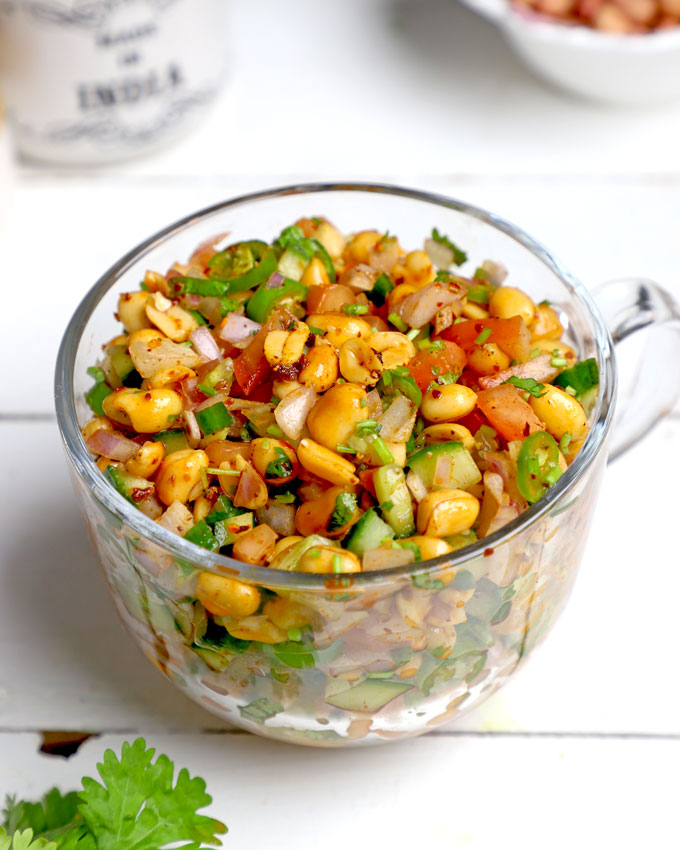
Indian Peanut Chaat (often called Moongphali Chaat ) is the ultimate “crunch factor” snack. It’s a spicy, savoury, and tangy street food.
- What exactly is Peanut Chaat?
- Ingredients You’ll Need
- How To Make Peanut Chaat
- Hina’s Tried and True Tips
- Watch Masala Peanut Chaat Video
- Peanut Chaat Recipe
What exactly is Peanut Chaat?
In India, some traditional bar snacks have become a legend. Peanut Chaat is one such widely popular Indian bar snack. It is also known as moongphalli ki chaat or congress kadlekai in Karnataka. It’s a quick-toss Indian style salad where the protein-packed peanut is the star, dressed up with spices and zingy lime.
From local bars with cheaper eats to higher-end, modern establishments in India, masala peanut chaat is omnipresent and an all-time favourite snack among food lovers.
Why You’ll LOVE This North Style Peanut Chaat
- minimum effort and maximum flavour
- perfectly healthy snack for munching
- its gluten and dairy free
- rich in plant protein
- meal prep friendly
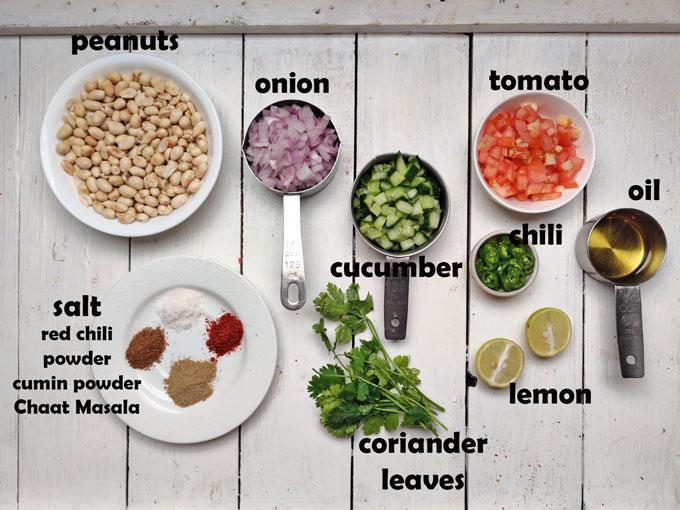
Ingredients You’ll Need
- Peanuts: Use skinless, raw peanuts to make chaat. You can use pre-roasted, salted peanuts as well. The leftover peanuts can be used to make homemade peanut butter .
- Groundnut Oil to roast the peanut. You can substitute it with ghee, coconut oil, or vegetable oil.
- Vegetables: Onion, Tomato (ripe and juicy), Cucumber
- Spices : Red Chili Powder, Cumin Powder, Chaat Masala
- Herbs: Fresh Coriander Leaves or cilantro, Green Chili (medium spicy)
- Salt, Lemon or Lime Juice
How To Make Peanut Chaat
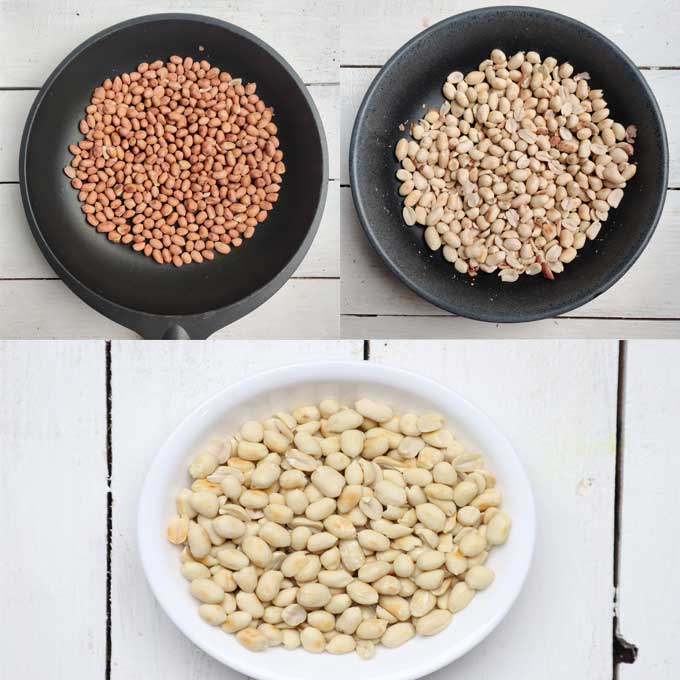
Step 1) Start with Peanuts
- Pick packaged, skinless peanuts for this chaat recipe.
- To remove skin of peanuts: Dry roast them in a pan over high heat for 5 minutes. Keep stirring while roasting to avoid burning the peanuts. Once the nuts are warm, transfer them to a deep bowl and allow them to cool down a bit (so it’s easy to handle). Now vigorously rub the warm peanuts using your fingers to remove the skin or outer peel.
Step 2) Roasting Spices
- Heat oil in a pan. Add spices, salt, and peanuts.
- Fry them for 8 – 10 minutes over low heat. This step wafts away the raw taste of the peanuts, and each piece is nicely coated with masala.
- Transfer masala roasted peanuts to a bowl and allow them to cool down completely.
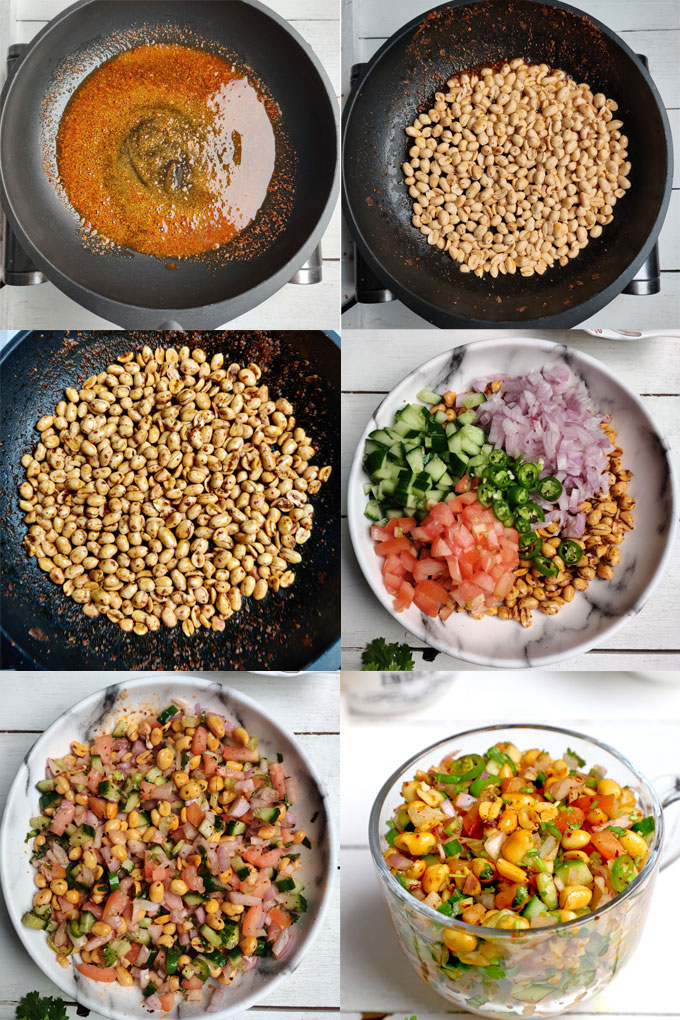
Step 3) Final Toss
- Add chopped vegetables, green chilli, coriander, and lemon juice to roasted masala peanuts. Mix nicely. T
- Taste, and if required, add more salt and spices.
Peanut Chaat is ready to serve!
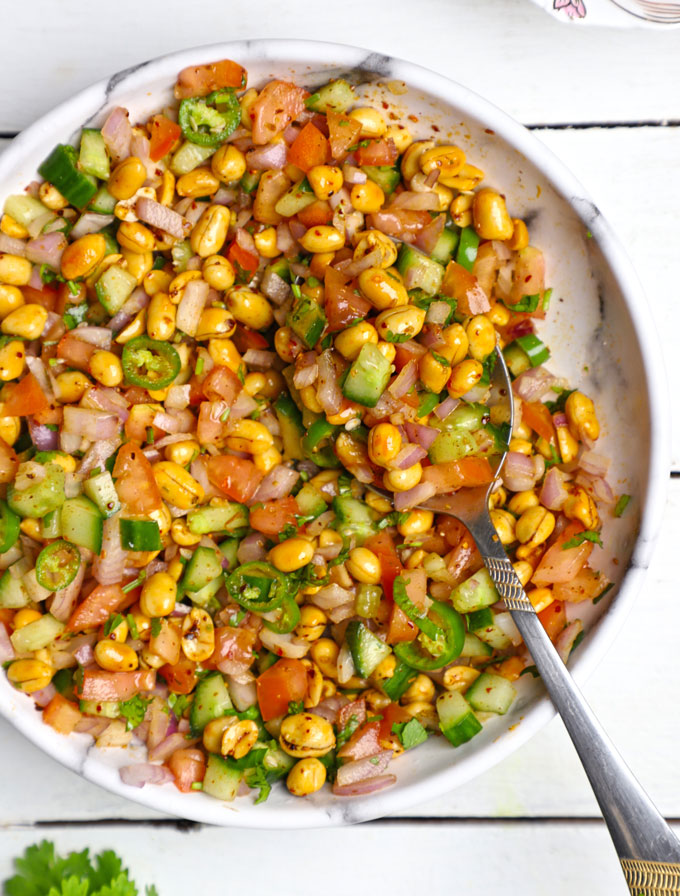
Serve in small individual bowls, or in a big sharing platter like a bar snack. In India, peanut chaat is served as a party or bar snack, light evening tapas, or as a crunchy salad.
Hina’s Tried and True Tips
- There are two ways to make peanut chaat. One by boiling the peanuts with skin and the second by using the skinless, roasted peanuts. You can pick according to personal preference.
- While roasting the peanuts in masala, keep the flame medium-high and continuously stir them to be evenly toasted and coated with the spices.
- You can roast the peanuts in masala a few hours before serving. They remain perfectly crunchy. Last-minute combine vegetables, herbs, and lemon juice, and serve.
- It is best enjoyed immediately, because the longer it sits, the more liquid will be drawn out of the vegetables and they lose the crunch factor.
Watch Masala Peanut Chaat Video
Love Indian Chaats? Here are a few popular ones for you to try – Aloo Tikki Chaat , Sweet Corn Chaat , or the sweet and spicy Dahi Papdi Chaat .
follow me on Youtube or Instagram for latest recipes.
Ingredients
- ▢ 1 Cup peanuts (skinless)
- ▢ 2 tablespoon groundnut oil
- ▢ 1 teaspoon red chili powder
- ▢ 1 teaspoon cumin powder (jeera powder)
- ▢ 1 teaspoon Chaat Masala
- ▢ 1 ¼ teaspoon salt or to taste
- ▢ ¼ Cup onion, finely chopped
- ▢ ¼ Cup tomato, finely chopped
- ▢ ¼ Cup cucumber, finely chopped
- ▢ 1 green chili chopped
- ▢ 2 tablespoon fresh coriander leaves, chopped
- ▢ 2 tablespoon lemon juice
Instructions
- Heat oil in a pan. Add spices, salt, and peanuts. Fry them for 8 – 10 minutes over low heat. This step wafts away the raw taste of the peanuts and each piece is nicely coated with the masala.
- Transfer masala roasted peanuts to a bowl and allow them to cool down completely.
- Add chopped vegetables, green chili, coriander, and lemon juice to the masala roasted peanuts. Mix nicely. Taste and if required, add more salt and spices.
- Peanut Chaat is ready to serve!
Recipe Notes:
- Pick packaged, skinless peanuts for this chaat recipe. You can easily get them in Indian or Asian grocery stores.
- If you are using salted peanuts, make sure to adjust the quantity of the salt in the Chaat accordingly.
- You can roast the peanuts in masala a few hours before serving. Store them in an airtight container. They remain perfectly crunchy.
- Please Note that peanut chaat is a nibbling or munching snack high in protein and fat. Hence, serve it with caution to people with dietary restrictions. However, this chaat is gluten-free and vegan.
Nutrition
We follow a strict NO SPAM Policy
