This Easy Rosemary Garlic Focaccia Recipe is perfect for beginner bakers! The hardest part is waiting for the dough to rise. The ingredients are pantry staples, and you can easily customize the toppings.
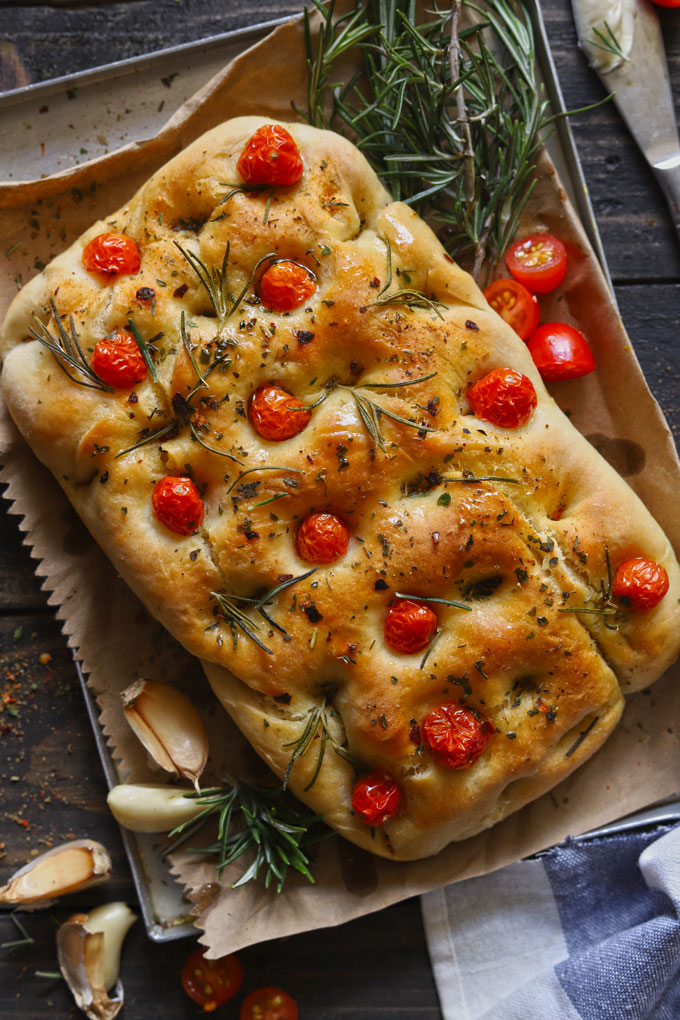
Is there anything that beats the smell of freshly baked bread at home? The answer is no . There is not.
There’s just something about fresh bread that instantly lifts the soul , and you know you’ll have a great meal.
Focaccia bread , in particular, is one of my absolute favourites . Especially this Focaccia Recipe. Why?
- It’s easy! It’s one of the more fail-proof bread recipes I’ve tried – perfect for beginners.
- You can make it your own! Add your favourite toppings – I’ll list some of mine below!
- It tastes amazing! Hands down, one of the best-tasting, easy bread recipes to make!
What exactlyisFocaccia?
Focaccia is a flat, oven-baked Italian bread, very similar to pizza . Focaccia recipes have been used as far back as Ancient Roman times and are created in many ways depending on the region.
Some are cookie-hard , like focaccia di Camogli, while others, like this focaccia recipe, are oily and soft .
Focaccia can also be sweet or savoury . In some regions, it’s more of a cake than bread; the ingredients will include sugar, raisins, honey, and other sweet ingredients.
Venetian Focaccia is even similar to panettone and is traditionally served at Easter.
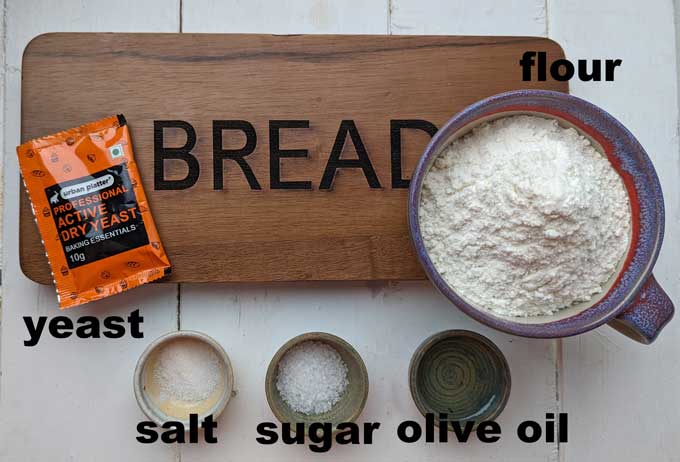
Ingredients Required
- All-purpose Flour : the fountain of all bread recipes!
- Instant Yeast : Yeast is how the bread rises – the difference between flatbread and soft, fluffy bread.
- Sugar : Sugar activates the yeast . If you don’t add some sugar, you’ll have a yeasty-tasting flatbread.
- Extra Virgin Olive Oil : Olive oil adds fat and flavour and helps the dough to become less sticky .
- Salt : Salt enhances the natural bread flavours .
How to Make Focaccia
Activate the instant yeast(Don’t follow this step if you are using instant active dry yeast)
The yeast is responsible for the volume of the bread, but for it to work, we have to activate it. To do this, there are 4 easy steps :
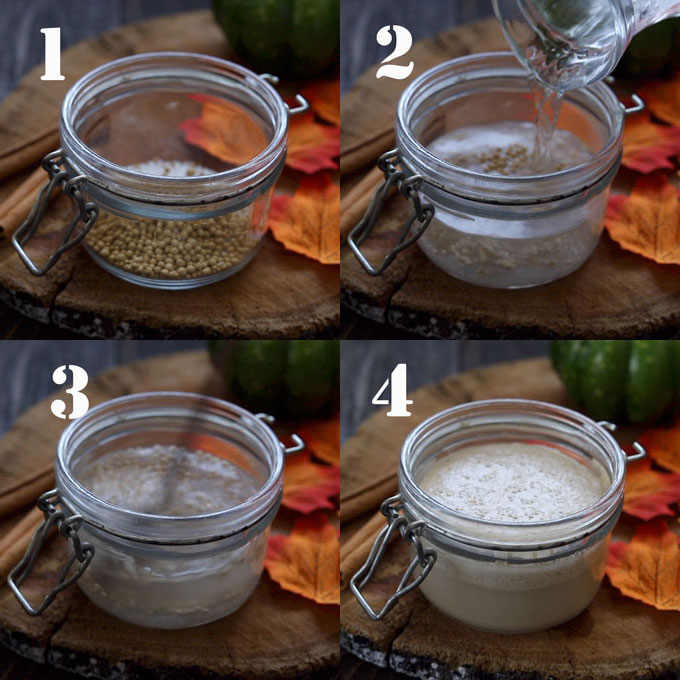
- Combine sugar and water. Bring water to boil until sugar is dissolved completely. Allow water to become lukewarm. It should not be burning hot to the touch but still warm. The temperature needs to be between 105 and 110°F .
- Add instant active dry yeast into the lukewarm water . Stir to combine.
- Let it sit for 10 minutes until a thick layer of foam forms on top.
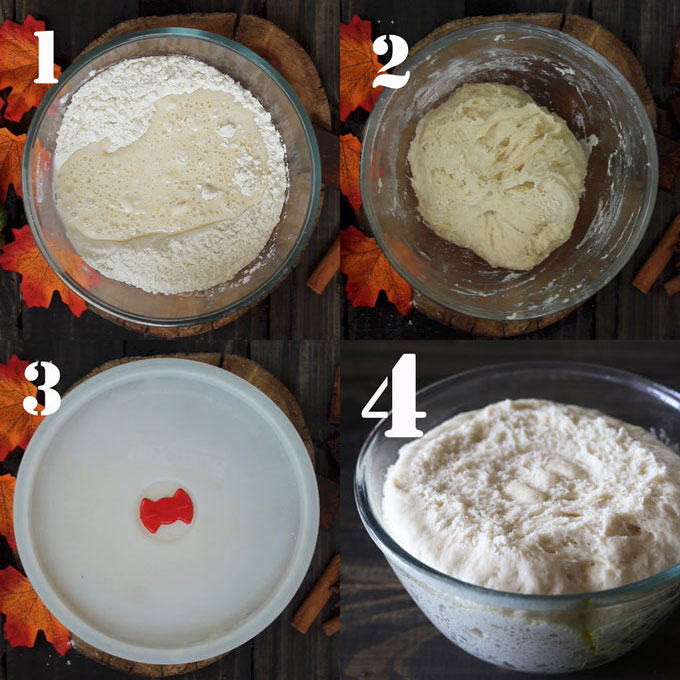
Next, we’llprepare the dough:
- Mix the dry ingredients in a bowl , then add the yeast mixture .
- Once this is combined, add in the olive oil and knead the bread for 3-5 minutes.
- Proofing : Letting the dough rise. To do this, you add the dough to a large, lightly greased mixing bowl, cover it tightly (a lid, plastic wrap or a tea towel, slightly damp with warm water and secured with a rubber band or string will work), and then let it rise for 30 minutes . It would be best to place the bowl somewhere warm with no drafts. Ovens and microwaves are great spots!
- The dough has risen – it’s time for our second proofing!
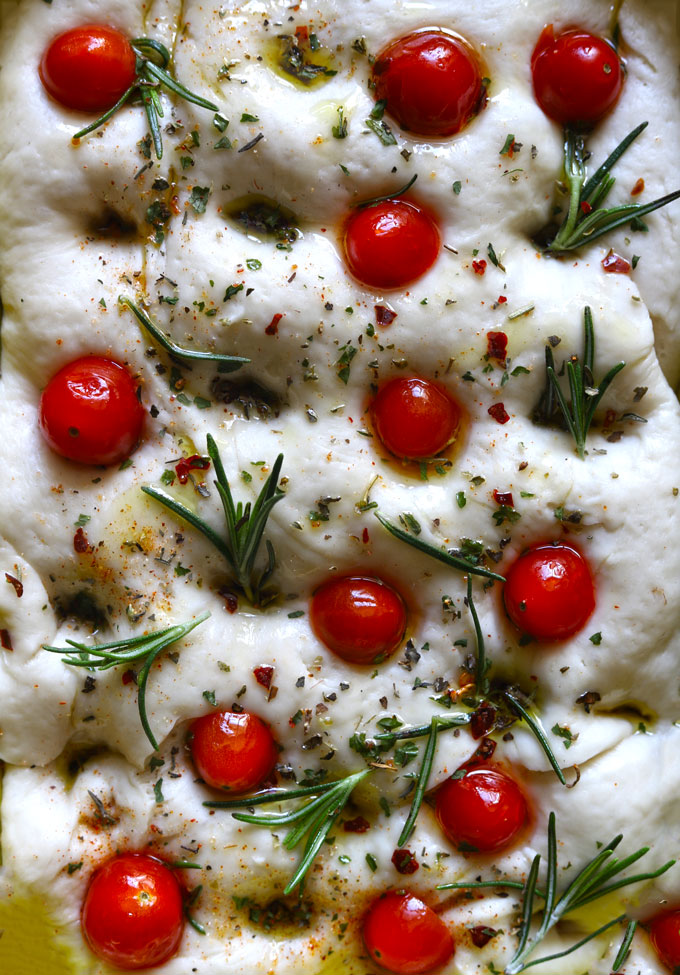
Second Proofing
This is where the dough begins to take on the shape of the finished bread.
- You will knead the dough again for 3-5 minutes and then place it in the baking tray or tin where you’ll be baking it.
- Make sure to grease the tray first before adding the dough!
- Press your finger to make rows of dimples in the dough (about a finger distance apart), and then add one tomato and some rosemary to each dimple .
- Drizzle olive oil over it and some crushed garlic. Leave the dough in a warm place to rise again for 30 minutes .
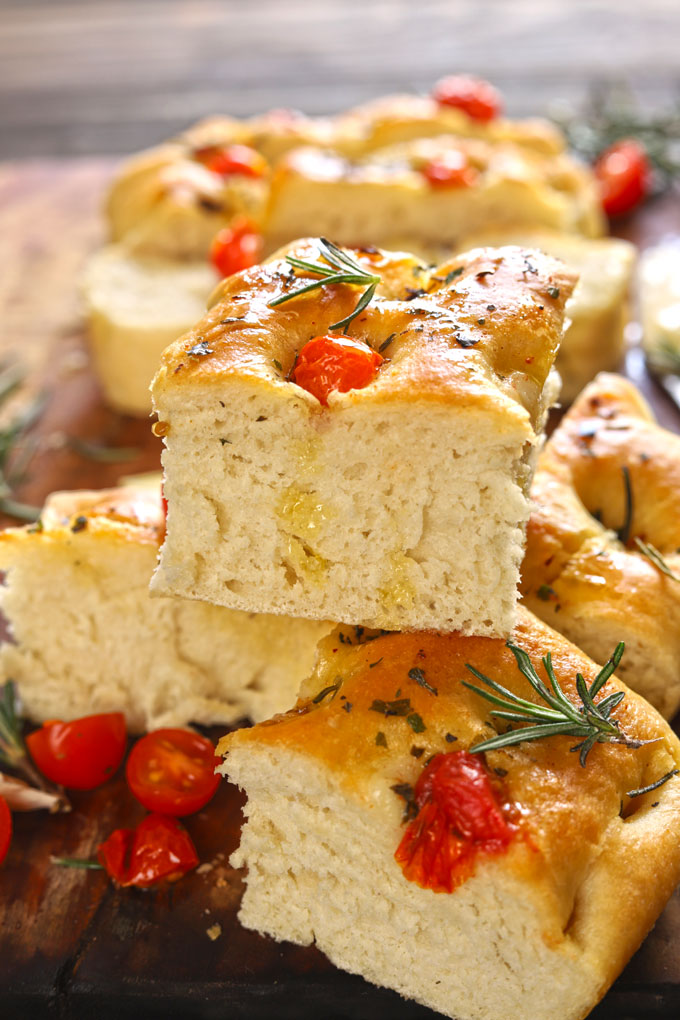
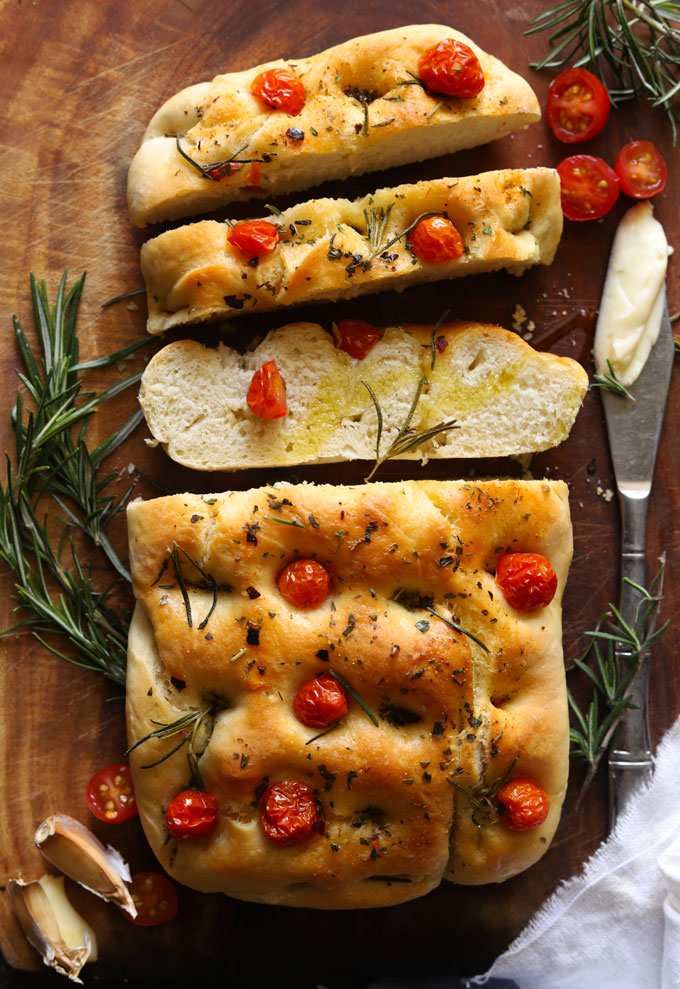
- Bake the Focaccia Bread: The best part! Bake the dough on the middle rack in the oven for 40 minutes at 200°C/ 392°F until golden. Let it cool, add more oil if you’d like, cut it into squares and enjoy!
What other toppings can I add?
There are so many options! Here are 35+ of my favourites :
- Apple Slices
- Artichoke Hearts
- Arugula/Rocket (after baking)
- Bacon
- Basil (after baking if using fresh)
- Bell Peppers
- Cajun Seasoning
- Capers
- Chicken (roasted)
- Fresh Chilis
- Caramelized Onions
- Chives
- Chorizo
- Cilantro (after baking)
- Cheese (goat’s cheese, cheddar, mozzarella, gouda, blue cheese, ricotta)
- Everything Bagel Seasoning
- Garam Masala/ Curry Seasoning
- Ham
- Lemon (freshly squeezed or zest)
- Mushrooms
- Nuts (walnuts, pine nuts, slivered almonds)
- Olives (all kinds!)
- Oregano (after baking if using fresh)
- Pear slices
- Pepperoni
- Pesto
- Prosciutto
- Red Onion
- Red Pepper Flakes
- Salami
- Sausage (sliced links or crumbled)
- Seeds (flax, sesame, sunflower, pumpkin)
- Smoked Salmon
- Spring Onions
- Sun-Dried Tomatoes
- Za’atar Seasoning
How do I store this homemade focaccia bread?
If you’re eating this in the next couple of days, store it at room temperature, covered in plastic wrap, or a container for 2 days. Reheat in a 375-degree oven for 10 minutes.
To freeze, cut the focaccia into individual slices, and wrap each slice in plastic wrap. Freeze for up to 1 month.
More Quick Bread Recipes
Naan Recipe (Without Yeast)
Whole Wheat Pancakes
Eggless Banana Bread
Corn Cheese Muffin
Date Nut Bread
If you try this recipe and love it, please leave a comment and a rating. This helps us grow and reach other food lovers like you.
Ingredients
- ▢ 500 gram all-purpose flour (maida)
- ▢ 10 gram (1 tablespoon) instant yeast
- ▢ 10 gram (1 tablespoon) white granulated sugar
- ▢ 1 tablespoon salt
- ▢ 2 tablespoon (30 ml) extra virgin olive oil
- ▢ 350 ml (approx 1 ⅓ Cup) lukewarm water
Ingredients For Topping:
- ▢ 1 Cup sliced cherry tomato
- ▢ 1 tablespoon fresh rosemary
- ▢ 1 tablespoon crushed garlic
- ▢ 2 tablespoon extra virgin olive oil
Instructions
Activate Yeast:
- Combine sugar and water. Bring water to boil until sugar is dissolved completely. Allow water to become lukewarm. It should not be burning hot to the touch but still warm.
- Add instant dry yeast in water. Mix it nicely to dissolve in water. Set it aside for 10 minutes to foam. Once the foam is formed on top, yeast is activated.
Prepare Dough:
- Combine flour and salt in a mixing bowl or a stand mixer. Now pour the activated yeast mixture into small batches and form a smooth dough.
- The dough will be sticky. Do not add more flour. Add olive oil. Knead the dough for 3 – 5 minutes. It will become non-sticky. In a stand mixer, you can churn it at high speed for 2 – 3 minutes. Focaccia does not require too much kneading.
Proofing:
- Grease a large, spacious bowl with olive oil. Transfer the dough to a bowl. Cover it with a tight fitting lid. Keep the bowl in a warm place, such as inside the oven or microwave for 30 minutes.
- After 30 minutes, the dough will become double in volume. This means it is ready for the next stage. If the dough is not double in volume, keep it a bit longer for like 1 hour for proofing.
Second Proofing:
- Transfer the dough to a lightly greased kitchen counter. Knead the dough for 3 – 5 minutes to punch out all the air.
- Grease a baking tray or a square/rectangular tin with a teaspoon of olive oil. Place the dough on the tray and with greased fingers give it a flat shape. Keep the thickness of not more than half an inch as it will double in height once baked.
- Make dimples in the bread at an equal distance using your finger. Stuck cherry tomato, and rosemary in each dimple. Drizzle olive oil and sprinkle crushed garlic.
- Leave the bread to proof or rise in volume once again in a warm place for 20 – 30 minutes.
Bake Focaccia:
- Preheat oven at 200 degree celcius for 10 minutes.
- Bake the focaccia at 200 degrees Celcius for 40 minutes in the middle rack of the oven until golden on top.
- Transfer to a wire rack to cool down a bit. Brush with olive oil.
- Cut focaccia into squares and enjoy!
Recipe Notes:
Make sure sugar is dissolved in the water.
Water should be lukewarm to the touch and not boiling else. It will kill the yeast instead of activating it.
Wait until the yeast is foamy and a foam layer is formed on top. That is the signal it is fully activated.
Check the date of the yeast before using it. Old or expired yeast will not yield a satisfying texture of the bread.
There are two types of yeast – granular and fine powder. The instant granular yeast requires activation in lukewarm water. In contrast, active dry yeast with a fine powder texture can be mixed directly with flour. Read yeast packet instructions on how to use it.
Do not add more flour if the dough seems sticky. Instead, knead it and apply a little bit of olive oil. The dough for focaccia should be well-hydrated and not dry.
Always seal the dough in an airtight container and keep it in a warm, dry place for proofing, ideally inside the microwave or a preheated oven. In cold climates, proofing usually takes more time.
Sometimes due to the bigger size of the oven, you need to bake focaccia a little longer.
Nutrition
We follow a strict NO SPAM Policy

Rosemary Garlic Focaccia Recipe
Equipment
- Mixing Bowl
- Baking Sheet
- Oven
Ingredients
- 500 gram all-purpose flour (maida)
- 10 gram (1 tablespoon) instant yeast
- 10 gram (1 tablespoon) white granulated sugar
- 1 tablespoon salt
- 2 tablespoon (30 ml) extra virgin olive oil
- 350 ml (approx 1 ⅓ Cup) lukewarm water
Ingredients For Topping:
- 1 Cup sliced cherry tomato
- 1 tablespoon fresh rosemary
- 1 tablespoon crushed garlic
- 2 tablespoon extra virgin olive oil
Instructions
Activate Yeast:
- Combine sugar and water. Bring water to boil until sugar is dissolved completely. Allow water to become lukewarm. It should not be burning hot to the touch but still warm.
- Add instant dry yeast in water. Mix it nicely to dissolve in water. Set it aside for 10 minutes to foam. Once the foam is formed on top, yeast is activated.
Prepare Dough:
- Combine flour and salt in a mixing bowl or a stand mixer. Now pour the activated yeast mixture into small batches and form a smooth dough.
- The dough will be sticky. Do not add more flour. Add olive oil. Knead the dough for 3 - 5 minutes. It will become non-sticky. In a stand mixer, you can churn it at high speed for 2 - 3 minutes. Focaccia does not require too much kneading.
Proofing:
- Grease a large, spacious bowl with olive oil. Transfer the dough to a bowl. Cover it with a tight fitting lid. Keep the bowl in a warm place, such as inside the oven or microwave for 30 minutes.
- After 30 minutes, the dough will become double in volume. This means it is ready for the next stage. If the dough is not double in volume, keep it a bit longer for like 1 hour for proofing.
Second Proofing:
- Transfer the dough to a lightly greased kitchen counter. Knead the dough for 3 - 5 minutes to punch out all the air.
- Grease a baking tray or a square/rectangular tin with a teaspoon of olive oil. Place the dough on the tray and with greased fingers give it a flat shape. Keep the thickness of not more than half an inch as it will double in height once baked.
- Make dimples in the bread at an equal distance using your finger. Stuck cherry tomato, and rosemary in each dimple. Drizzle olive oil and sprinkle crushed garlic.
- Leave the bread to proof or rise in volume once again in a warm place for 20 - 30 minutes.
Bake Focaccia:
- Preheat oven at 200 degree celcius for 10 minutes.
- Bake the focaccia at 200 degrees Celcius for 40 minutes in the middle rack of the oven until golden on top.
- Transfer to a wire rack to cool down a bit. Brush with olive oil.
- Cut focaccia into squares and enjoy!
Notes
Make sure sugar is dissolved in the water.
Water should be lukewarm to the touch and not boiling else. It will kill the yeast instead of activating it.
Wait until the yeast is foamy and a foam layer is formed on top. That is the signal it is fully activated.
Check the date of the yeast before using it. Old or expired yeast will not yield a satisfying texture of the bread.
There are two types of yeast - granular and fine powder. The instant granular yeast requires activation in lukewarm water. In contrast, active dry yeast with a fine powder texture can be mixed directly with flour. Read yeast packet instructions on how to use it.
Do not add more flour if the dough seems sticky. Instead, knead it and apply a little bit of olive oil. The dough for focaccia should be well-hydrated and not dry.
Always seal the dough in an airtight container and keep it in a warm, dry place for proofing, ideally inside the microwave or a preheated oven. In cold climates, proofing usually takes more time.
Sometimes due to the bigger size of the oven, you need to bake focaccia a little longer.
Nutrition
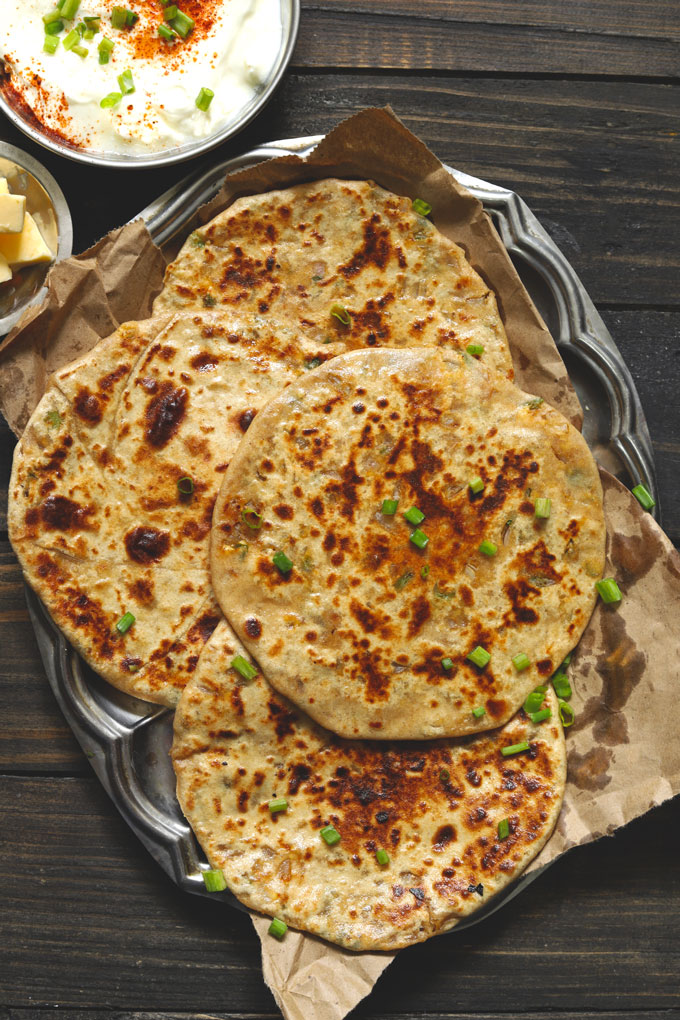
This paneer paratha is packed with the freshness of spring onion. Stuffed, flavoured, layered, may it come in any shape or size, we love to devour these paneer parathas for a hearty Indian breakfast.
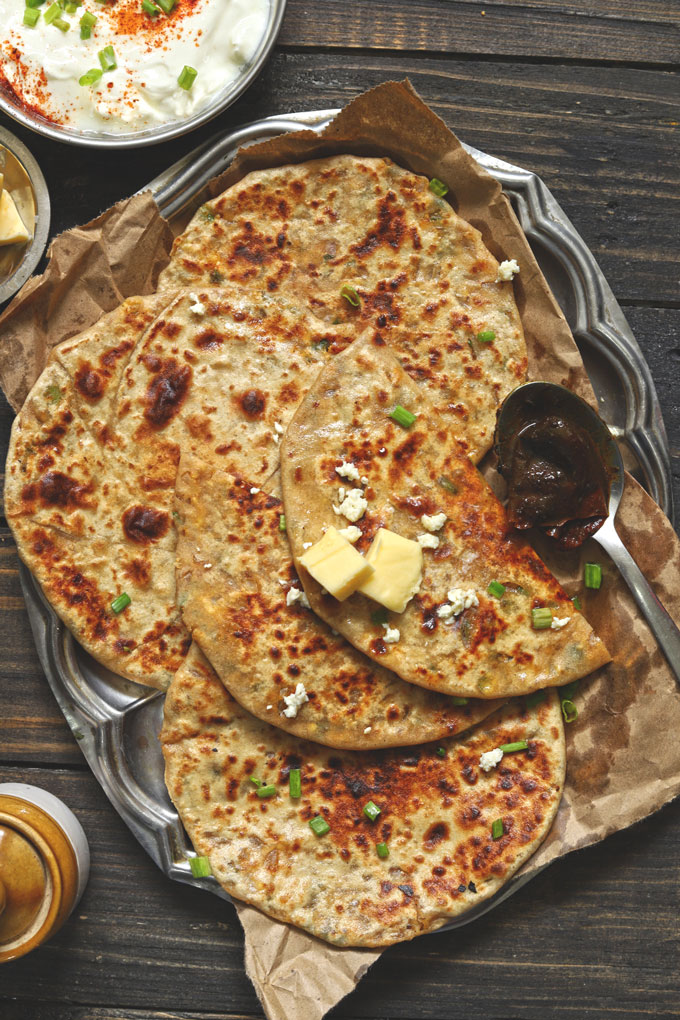
Stuffed Paratha adds great variety to the everyday Indian breakfast menu.
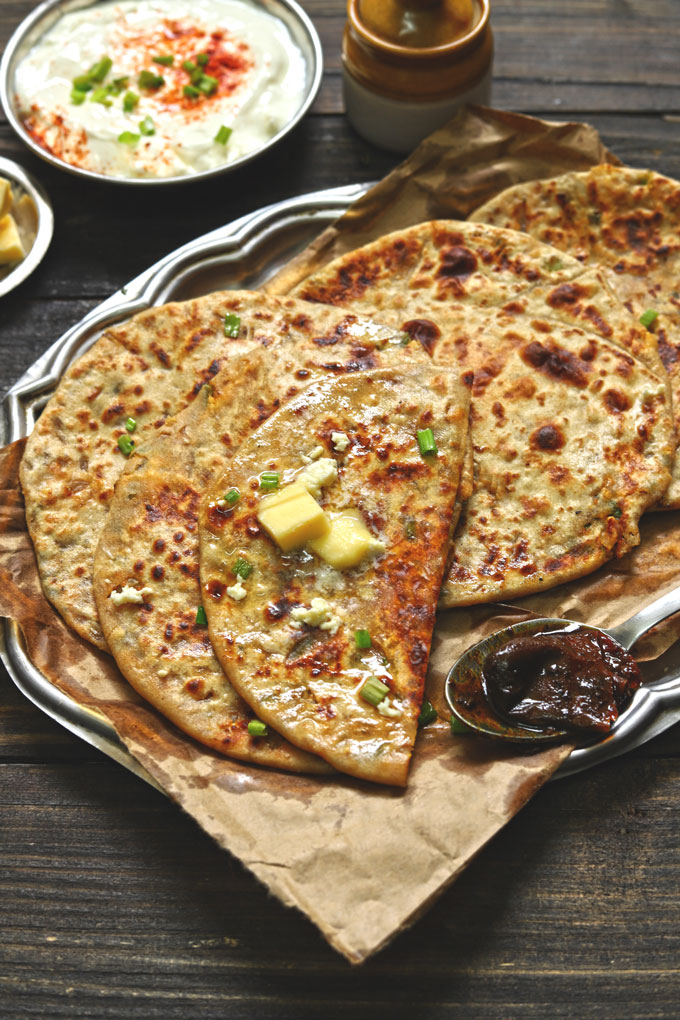
Serve them with chilled curd, raita of your choice, or for an indulgent experience with a dollop of white butter and homemade pickle .
There are hundreds of stuffed paratha recipes widely popular across India. Paneer Paratha is one such stuffed paratha recipe.
Making Paneer Paratha at home is a two-step process – one, make the dough for the outer covering, and second, the stuffing for the paratha.
Making The Paratha Dough
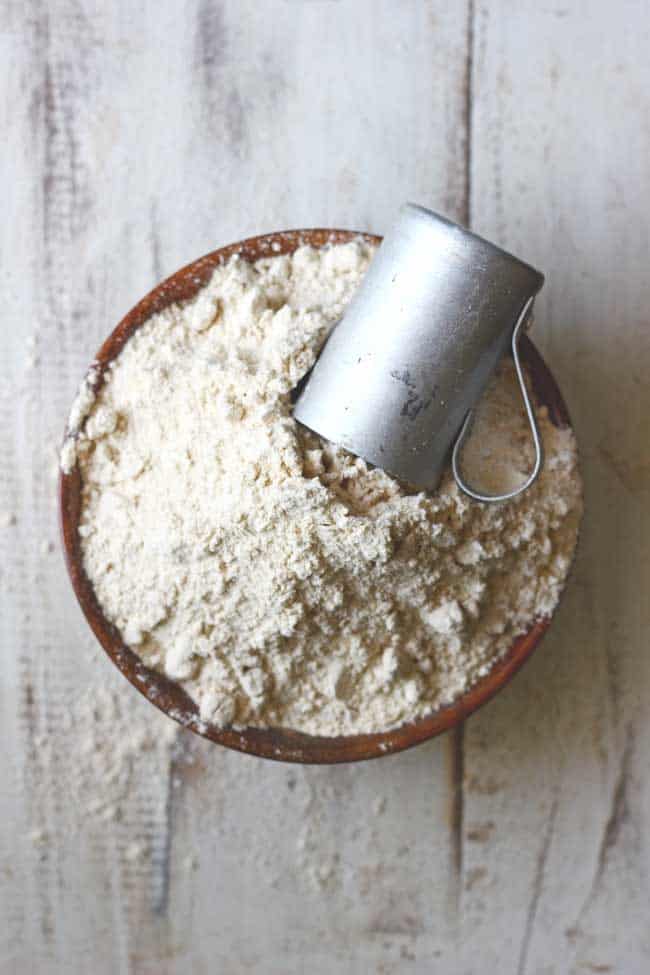
The outer layer of a paneer paratha is made with whole wheat flour (gehun atta).
The dough is similar to the one used for making chapati or roti – soft, pliable, and non-sticky .
You can use a stand mixer or a food processor to bind the dough or do it manually .
- To a large, wide bowl or stand mixer bowl, add atta (whole wheat flour). Start adding ¼ cup of water at a time to bring the flour together.
- Once the dough comes together and starts binding, knead it for 5 – 6 minutes to make it soft and pliable . You might need ¼ cup – ½ cup water, depending upon the quantity of flour.
- Transfer the dough to a container, and apply a teaspoon of ghee or flavourless oil. Cover with a clean muslin cloth and let it rest while you prepare the filling.
You can make the dough a day in advance or the night before . Store it in the refrigerator in an airtight container. Bring it out and rest it at room temperature for 5 – 10 minutes before making the paratha.
Spring Onion Paneer Stuffing
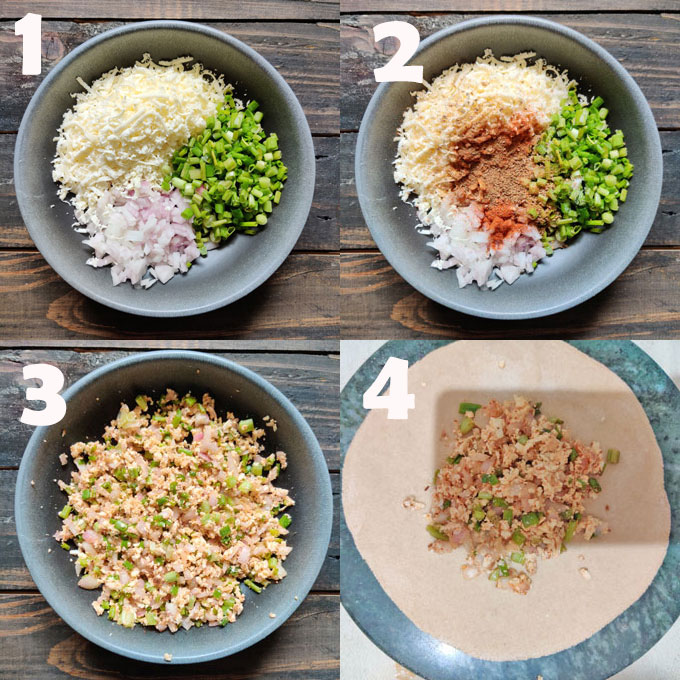
The second key element in making a stuffed paratha is the filling. For making the stuffing for the paneer paratha, you need:
- Paneer (Cottage Cheese): Use the freshest available cottage cheese or make it from scratch at home
- Spring Onion : Use only the green leaves of the spring onion
- Onion : Finely chopped red or white onion
- Carom Seeds : The ajwain (omam) add a strong spicy, earthy flavour to the stuffing and helps in digestion too
- Salt & Spices : I add red chilli powder, cumin powder, and Chaat Masala. Use dry mango powder if Chaat Masala is not available.
To make the filling, crumble or grate the paneer (cottage cheese) in a mixing bowl. Add the remaining ingredients.
Mix all the ingredients—taste and, if required, more salt or seasoning according to your preference. The filling is now ready.
Shaping Of Paneer Paratha
To shape paratha, divide it into equal-sized balls.
- Roll each ball between your hands to make it smooth. Keep the dough balls covered, or else the dough will dry out.
- Now, press one of the dough balls with the pressure of your palm and fingers. Dust the ball with wheat flour so that it’s not sticky.
- Using a rolling pin, roll it into a circle of 5 to 6-inch diameter.
- Add a tablespoon or two of stuffing in the centre of the rolled-out dough. Do not overstuff the paratha.
- Seal the filling by bringing together the edges of the paratha. Then press the dough down with your hands and make it a little smooth.
- Dust the dough with wheat flour and roll once again into a circle of 7 to 8-inch diameter. Apply even pressure while rolling the paratha so it has an even thickness.
Similarly, prepare all the paneer paratha and arrange it on a baking sheet or a large platter. Keep them covered with a muslin cloth until you are ready to cook.
Cooking Paneer Paratha
Preheat a cast iron pan or an Indian roti tawa over medium flame.
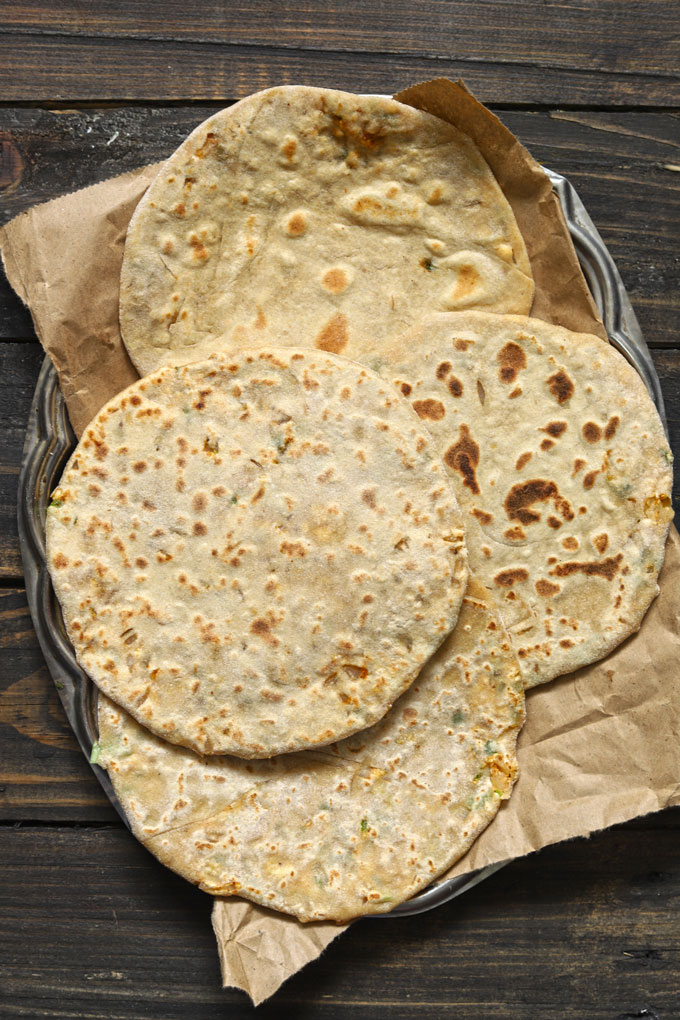
Once preheated, gently place the rolled paratha onto the heated tawa . Cook the paratha on each side until charred brown marks appear on the surface.
Apply a teaspoon of flavourless refined oil or ghee on each side to make the outer dough layer crisp and fully cooked.
Press with a spatula and cook the paratha until it becomes crisp and golden. Cook all the paratha similarly.
Usually, the paneer filling oozes out from the outer layer of the paratha if you stuff too much of it. 1 – 2 tablespoons is enough. Make sure the paneer stuffing is not moist or wet. It should be completely dry. Lastly, do not apply too much pressure while rolling out the paratha.
Yes, you can freeze paneer paratha. After shaping the paratha, brush each piece with a teaspoon of oil on both sides. Pack each paratha neatly in a parchment paper. Stack them and then pack paratha in a ziplock bag. Seal and freeze for a month. Thaw at room temperature before cooking in a pan.
Fry paratha till crisp and fully cooked. Take a square piece of aluminium foil. Cut the paratha into two halves. Stack both pieces of paratha in the centre of the aluminium foil. Seal neatly. Carry around in a lunchbox. Reheat in a microwave before eating.
More Indian Paratha Recipes
- Leftover Dal Paratha
- Cheese Egg Paratha
- Matar Ka Paratha
- Gobi Paratha
- Methi Paratha
Ingredients
Ingredients For Dough:
- ▢ 2 Cup whole wheat flour (gehun atta)
- ▢ ½ Cup water
- ▢ 1 teaspoon ghee or flavorless refined oil
Ingredients For Paneer Stuffing:
- ▢ 1 Cup crumbled or grated paneer (cottage cheese)
- ▢ ½ cup finely chopped spring onion greens
- ▢ ½ Cup finely chopped onion
- ▢ Salt to taste
- ▢ 1 teaspoon carom seeds (ajwain/omam)
- ▢ 1 teaspoon roasted cumin powder (jeera powder)
- ▢ ½ teaspoon red chili powder
- ▢ ½ teaspoon Chaat Masala
- ▢ ¼ Cup cooking oil or ghee
Instructions
Make Dough:
- To a large, wide bowl or stand mixer bowl, add atta (whole wheat flour). Start adding ¼ cup water at a time to bring the flour together.
- Once the dough comes together and starts binding, knead it for 5 – 6 minutes to make it soft and pliable . You might need ¼ cup – ½ cup water depending upon the quantity of flour.
- Transfer the dough to a container, apply a teaspoon of ghee or flavorless oil. Cover with a clean muslin cloth and let it rest while you prepare the filling.
Prepare Spring Onion & Paneer Stuffing:
- To make the filling, crumble or grate the paneer (cottage cheese) in a mixing bowl. Add the remaining ingredients. Mix all the ingredients. Taste and if required more salt or seasoning according to your taste preference. The filling is now ready.
Prepare Paratha:
- To prepare the paratha, heat a Indian roti tawa or cast iron pan over medium flame.
- To shape paratha, divide the dough into 6 equal-sized balls. Roll each ball between your hands to make it smooth. Keep the balls covered else dough will dry out.
- Take one of the dough balls and press it with the pressure of your palm and fingers. Dust the ball with wheat flour so that it’s not sticky. Using a rolling pin, roll it into a circle of 5 to 6-inch diameter.
- Add a tablespoon or two of stuffing in the center of the rolled out dough. Do not overstuff the paratha. Seal the filling by bringing together the edges of the paratha. Then press the dough down with your hands and make it a little smooth.
- Dust the dough with wheat flour and roll once again into a circle of 7 to 8-inch diameter. Apply even pressure while rolling the paratha so that it has even thickness. Similarly, prepare all the paneer paratha.
- Gently place the rolled paratha onto the heated tawa. Cook the paratha on each side till brown charred marks start appearing on the surface.
- Apply a teaspoon of flavorless refined oil or ghee on each side to make the outer dough layer crisp and fully cooked.
- Press with a spatula and cook the paratha until it becomes crisp and golden. Cook all the paratha similarly.
- Serve Spring Onion Paneer Paratha with curd, butter, and pickle.
Recipe Notes:
- The dough is the same as the one used for making chapati or roti – soft, pliable, and non-sticky .
- You can use a stand mixer with paddle or hook attachment, or a food processor to bind the dough .
- You can make the dough a day in advance or the night before . Store it in the refrigerator in an airtight container. Bring out and rest it at room temperature for 5 – 10 minutes before making the paratha.
- Use the freshest available cottage cheese (paneer) or make from scratch at home. make sure cottage cheese it not wet or full of water while making the stuffing.
- Usually, the paneer filling oozes out from the outer layer of the paratha if you stuff too much of it. 1 – 2 tablespoons is enough. Make sure the paneer stuffing is not moist or wet. It should be completely dry.
- Do not apply too much pressure while rolling out the paratha.
- Cooked paneer paratha remains fresh at room temperature for 3 – 4 hours. You can easily reheat them in a microwave or pan.
Nutrition
We follow a strict NO SPAM Policy
