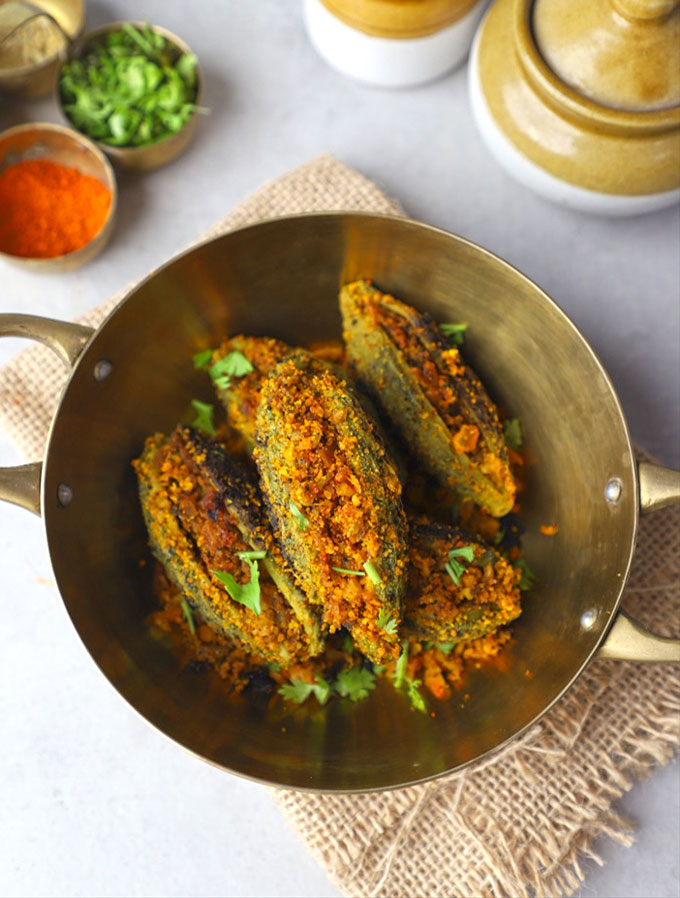
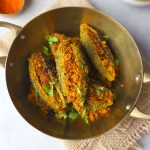
Do you hate bitter gourd? Try this Rajasthani Bharwa Karela recipe, it perfectly balances the bitterness with delicious spicy, tangy flavours, leaving you craving for more.
Estimated reading time: 7 minutes
- Ingredients You’ll Need
- How To Make Bharwa Karela
- Serving Suggestion
- My Tried and True Tips
- Rajasthani Bharwa Karela Recipe
The very mention of “karela” (bitter gourd) often elicits a mixed reaction. While some shy away from its characteristic bitterness, others embrace it for its unique flavour and numerous health benefits.
The Rajasthani method for preparing Bharwa Karela expertly minimizes the bitterness, and the stuffing beautifully clings to the gourd , making it enjoyable even for those who are usually not fond of bitter gourd.
What Makes Rajasthani Bharwa Karela Special?
- Gram Flour (Besan): This is a key ingredient, lending a nutty flavour and binding the spices together. It also absorbs moisture, ensuring a dry and flavourful stuffing.
- Onions form the base of the savoury stuffing.
- Spices like amchur (mango powder), pickle masala , and red chilli powder gives the authentic Rajasthani touch to the dish creating a distinctive tangy and spicy flavour profile.
- Mustard Oil: Often preferred for its pungent flavor, which complements the bitter gourd perfectly.
- Vegan and Gluten Free Indian side dish that is wholesome too.
Ingredients You’ll Need
- Bitter Gourd (Karela) of small to medium size with bright green colour and no yellow blemishes. You can use them to make air fryer chips also.
- Mustard Oil gives a sharp, spicy pickle like taste to the bharwa karela.
- Gram Flour (besan) brings the whole stuffing together and gives it a sticky texture.
- Spices: Red Chilli Powder, Turmeric, Fennel Seeds, Dried Mango Powder (amchur).
- Pickle Masala takes the stuffing up a notch. Substitute it with a combination of chaat masala and garam masala.
- Onion gives a crunchiness to the karela stuffing.
- Salt to apply on bitter gourd and season the stuffing.
How To Make Bharwa Karela
1. Preparing the Karela:
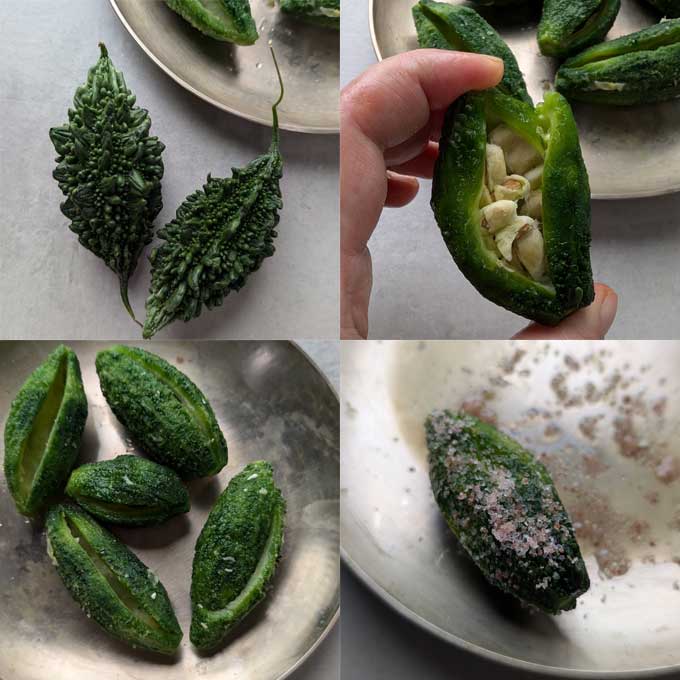
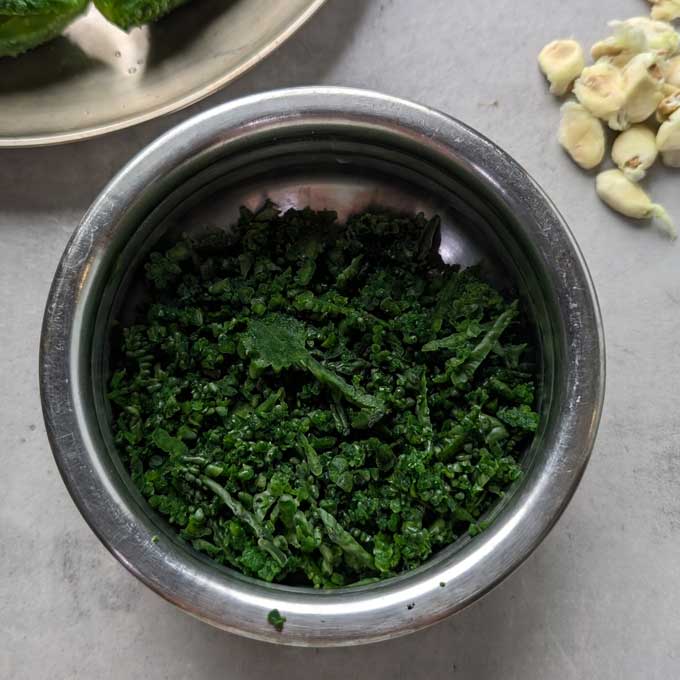
- Wash the karela thoroughly. Using a peeler, lightly scrape off the uneven skin, but don’t peel it completely. Collect it in a bowl.
- Make a slit lengthwise in each karela, but do not cut through completely. Scoop out the seeds and any soft pulp from the inside using a spoon. Discard them. This will create a pocket for the stuffing.
- Rub 1 teaspoon of salt generously all over the karela, both inside and out. Place them in a colander and let them sit for at least 30 minutes. This process helps to draw out the bitterness.
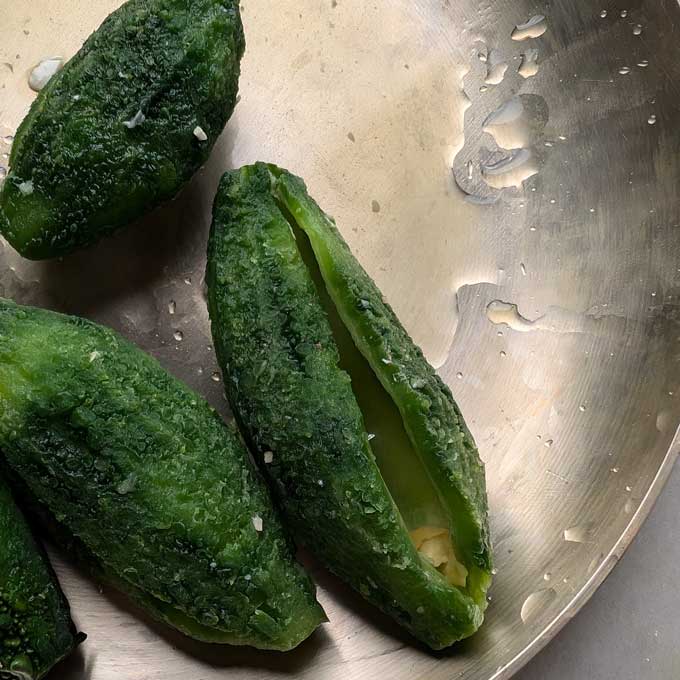
- After 30 minutes, squeeze each bitter gourd nicely to remove excess salt and bitter juices. Pat them dry with a kitchen towel.
2. Preparing the Stuffing:

- Heat 2 tablespoons of mustard oil in a heavy-bottomed pan or kadhai.
- Once hot, add fennel seeds. Let them splutter.
- Add the finely chopped onion and sauté until it turns golden brown.
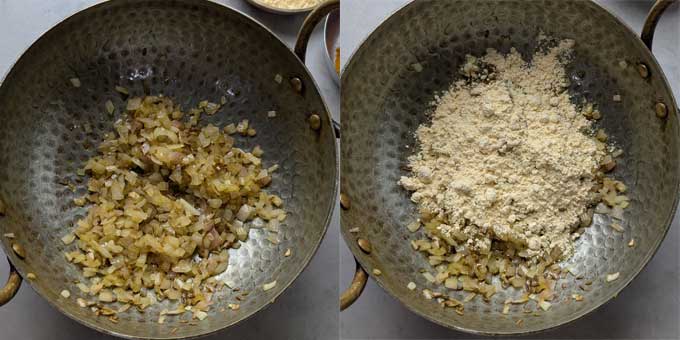
- Reduce the heat to low. Add the gram flour (besan) to the pan and roast it on low heat, stirring continuously, until it turns aromatic and lightly golden. Be careful not to burn it. This step is crucial for a well-cooked stuffing.
- Add all the dry spices, 1 tablespoon of chopped bitter gourd peel, and salt to taste. Mix well and cook for 1-2 minutes, stirring constantly, until the spices are fragrant. If the mixture feels too dry, you can sprinkle 1-2 tablespoons of water to help the spices bind.
- Remove the stuffing from the heat and let it cool down slightly.

3. Stuffing the Bitter Gourd (Karela):
- Once the stuffing has cooled slightly, carefully fill each karela with a generous amount of the prepared mixture. Press the stuffing firmly into the cavity.
- You can secure the karela with a kitchen thread if you are worried about the stuffing coming out while frying, but generally, if you press it firmly, it stays in place.
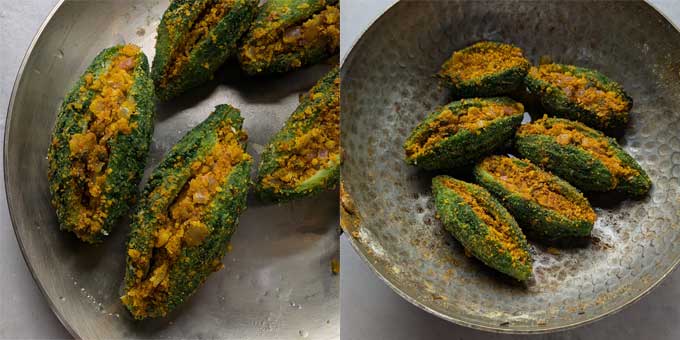
4. Cooking the Bharwa Karela:
- Heat oil for shallow frying in a wide pan or tawa over medium heat. The oil should be enough to cover about a quarter of the karela.
- Once the oil is hot, carefully place the stuffed karela in the pan.
- Cook on medium-low heat, turning occasionally, until all sides are golden brown and the karela is tender. This will take about 20 minutes.
- To ensure even cooking and to make sure the karela cooks through, you can cover the pan with a lid for the last 5 minutes. This helps to steam them from the inside.
- Once cooked, remove the Bharwa Karela from the pan and drain on paper towels to remove excess oil.
Serving Suggestion
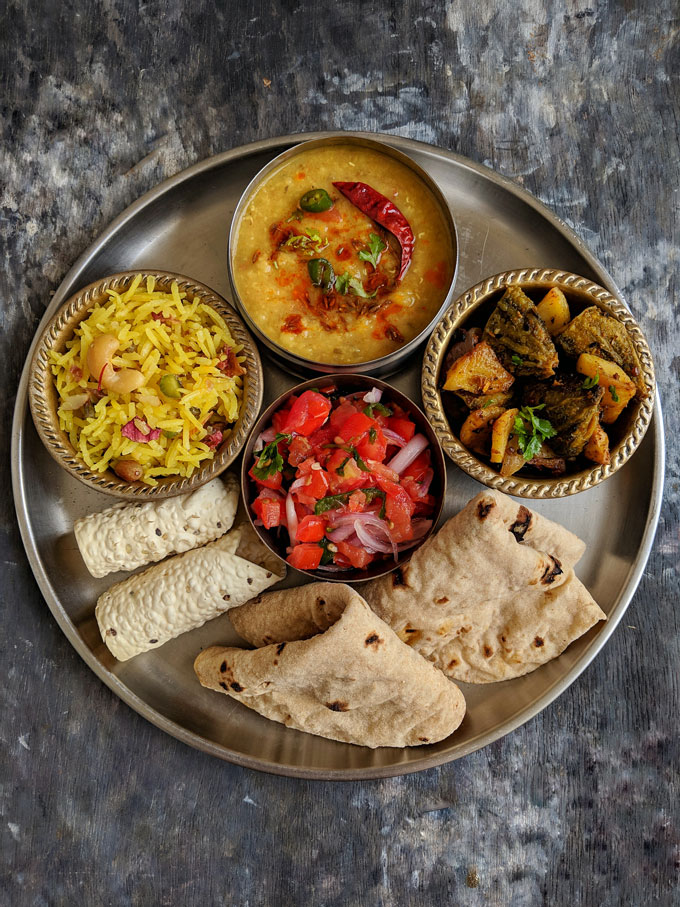
Rajasthani Bharwa Karela is a fantastic accompaniment to a traditional Indian meal. Serve it with:
- Dal-Baati-Churma: A classic Rajasthani combination that truly elevates the experience.
- Rotis or Parathas: The perfect vehicle to scoop up the flavoruful stuffing.
- Simple Rice and Dal like panchmel , arhar , or everyday masoor dal .
- As a side dish with any Indian curry .
- Bharwa Karela makes an excellent travel meal with poori or thepla .
My Tried and True Tips
- Don’t skip the salting step: This is key to reducing the bitterness.
- Don’t throw away the peel: It adds lot of flavour to the stuffing.
- Roast the besan well: This ensures a flavorful and non-sticky stuffing.
- Cook on low heat: Patience is key! Slow cooking ensures the karela is tender and the stuffing is cooked through without burning.
- Add Salt Cautiously to the stuffing as bitter gourd are also seasoned with salt generously.
- Leftovers: Bharwa Karela tastes even better the next day as the flavors meld together. Store in an airtight container in the refrigerator for up to 4 days.
More Indian Sabzi Recipes
- Kathal Ki Sabzi
- Dahi Lauki Ki Sabzi
- Sev Tamatar Ki Sabzi
- Kamal Kakdi Ki Sabzi
- Kacche Kele Ki Sabzi
f ollow us on Youtube or Instagram for video recipes.
Ingredients
- ▢ 500 gram medium sized bitter gourd (karela)
- ▢ 6 tablespoon mustard oil
- ▢ 1 teaspoon fennel seeds (saunf)
- ▢ 1 Cup onion, finely chopped
- ▢ ¼ Cup gram flour (besan)
- ▢ 1 teaspoon red chilli powder
- ▢ 1 teaspoon turmeric powder
- ▢ 1 teaspoon dried mango powder (amchur)
- ▢ 1 tablespoon salt (for applying on bitter gourd and stuffing)
- ▢ 1 tablespoon bitter gourd peel, chopped
- ▢ 2 teaspoon pickle masala ( get recipe )
Instructions
- Wash the karela thoroughly. Using a peeler, lightly scrape off the uneven skin, but don’t peel it completely. Collect it in a bowl.
- Make a slit lengthwise in each karela, but do not cut through completely. Scoop out the seeds and any soft pulp from the inside using a spoon. Discard them. This will create a pocket for the stuffing.
- Rub 1 teaspoon of salt generously all over the karela, both inside and out. Place them in a colander and let them sit for at least 30 minutes. This process helps to draw out the bitterness.
- After 30 minutes, squeeze each bitter gourd nicely to remove excess salt and bitter juices. Pat them dry with a kitchen towel.
- Heat 2 tablespoons of mustard oil in a heavy-bottomed pan or kadhai. Once hot, add fennel seeds. Let them splutter.
- Add the finely chopped onion and sauté until it turns golden brown.
- Reduce the heat to low. Add the gram flour (besan) to the pan and roast it on low heat, stirring continuously, until it turns aromatic and lightly golden. Be careful not to burn it. This step is crucial for a well-cooked stuffing.
- Add all the dry spices, 1 tablespoon of chopped bitter gourd peel, and salt to taste. Mix well and cook for 1-2 minutes, stirring constantly, until the spices are fragrant. If the mixture feels too dry, you can sprinkle 1-2 tablespoons of water to help the spices bind. Remove the stuffing from the heat and let it cool down slightly.
- Once the stuffing has cooled slightly, carefully fill each karela with a generous amount of the prepared mixture. Press the stuffing firmly into the cavity.
- You can secure the karela with a kitchen thread if you are worried about the stuffing coming out while frying, but generally, if you press it firmly, it stays in place.
- Heat oil for shallow frying in a wide pan or tawa over medium heat. The oil should be enough to cover about a quarter of the karela. Once the oil is hot, carefully place the stuffed karela in the pan.
- Cook on medium-low heat, turning occasionally, until all sides are golden brown and the karela is tender. This will take about 20 minutes.
- To ensure even cooking and to make sure the karela cooks through, you can cover the pan with a lid for the last 5 minutes. This helps to steam them from the inside.
- Once cooked, remove the Bharwa Karela from the pan and drain on paper towels to remove excess oil.
- Serve Bharwa Karela warm or at room temperature with chapati.
Recipe Notes:
- Bitter Gourd for this recipe should be tender, small to medium size, and fresh. Avoid using bitter gourd with yellow shade.
- Adding bitter gourd peel to stuffing is optional. I like its bitter taste.
- Substitute mango powder with tiny bit of lemon juice or tamarind paste.
- Substitute pickle masala with a combination of Chaat Masala and Garam Masala.
- Adjust spices to your liking: Feel free to increase or decrease the chilli powder based on your spice preference.
Nutrition
We follow a strict NO SPAM Policy
Rajasthani Bharwa Karela Recipe
Equipment
- Heavy Bottom Kadhai
Ingredients
- 500 gram medium sized bitter gourd (karela)
- 6 tablespoon mustard oil
- 1 teaspoon fennel seeds (saunf)
- 1 Cup onion, finely chopped
- ¼ Cup gram flour (besan)
- 1 teaspoon red chilli powder
- 1 teaspoon turmeric powder
- 1 teaspoon dried mango powder (amchur)
- 1 tablespoon salt (for applying on bitter gourd and stuffing)
- 1 tablespoon bitter gourd peel, chopped
- 2 teaspoon pickle masala ( get recipe )
Instructions
- Wash the karela thoroughly. Using a peeler, lightly scrape off the uneven skin, but don’t peel it completely. Collect it in a bowl.
- Make a slit lengthwise in each karela, but do not cut through completely. Scoop out the seeds and any soft pulp from the inside using a spoon. Discard them. This will create a pocket for the stuffing.
- Rub 1 teaspoon of salt generously all over the karela, both inside and out. Place them in a colander and let them sit for at least 30 minutes. This process helps to draw out the bitterness.
- After 30 minutes, squeeze each bitter gourd nicely to remove excess salt and bitter juices. Pat them dry with a kitchen towel.
- Heat 2 tablespoons of mustard oil in a heavy-bottomed pan or kadhai. Once hot, add fennel seeds. Let them splutter.
- Add the finely chopped onion and sauté until it turns golden brown.
- Reduce the heat to low. Add the gram flour (besan) to the pan and roast it on low heat, stirring continuously, until it turns aromatic and lightly golden. Be careful not to burn it. This step is crucial for a well-cooked stuffing.
- Add all the dry spices, 1 tablespoon of chopped bitter gourd peel, and salt to taste. Mix well and cook for 1-2 minutes, stirring constantly, until the spices are fragrant. If the mixture feels too dry, you can sprinkle 1-2 tablespoons of water to help the spices bind. Remove the stuffing from the heat and let it cool down slightly.
- Once the stuffing has cooled slightly, carefully fill each karela with a generous amount of the prepared mixture. Press the stuffing firmly into the cavity.
- You can secure the karela with a kitchen thread if you are worried about the stuffing coming out while frying, but generally, if you press it firmly, it stays in place.
- Heat oil for shallow frying in a wide pan or tawa over medium heat. The oil should be enough to cover about a quarter of the karela. Once the oil is hot, carefully place the stuffed karela in the pan.
- Cook on medium-low heat, turning occasionally, until all sides are golden brown and the karela is tender. This will take about 20 minutes.
- To ensure even cooking and to make sure the karela cooks through, you can cover the pan with a lid for the last 5 minutes. This helps to steam them from the inside.
- Once cooked, remove the Bharwa Karela from the pan and drain on paper towels to remove excess oil.
- Serve Bharwa Karela warm or at room temperature with chapati.
Notes
- Bitter Gourd for this recipe should be tender, small to medium size, and fresh. Avoid using bitter gourd with yellow shade.
- Adding bitter gourd peel to stuffing is optional. I like its bitter taste.
- Substitute mango powder with tiny bit of lemon juice or tamarind paste.
- Substitute pickle masala with a combination of Chaat Masala and Garam Masala.
- Adjust spices to your liking: Feel free to increase or decrease the chilli powder based on your spice preference.
Nutrition
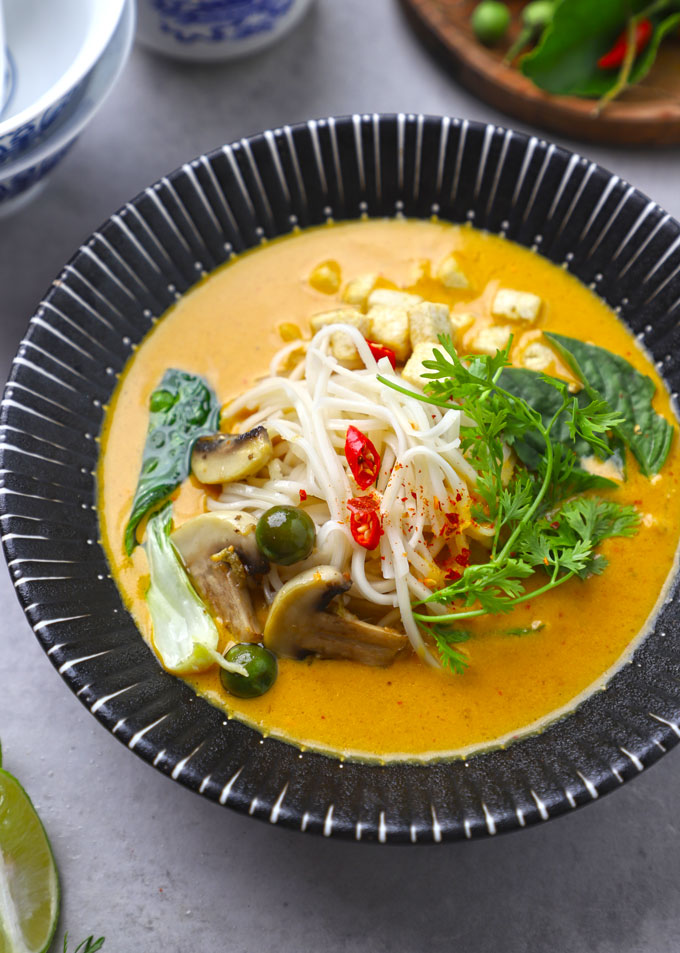
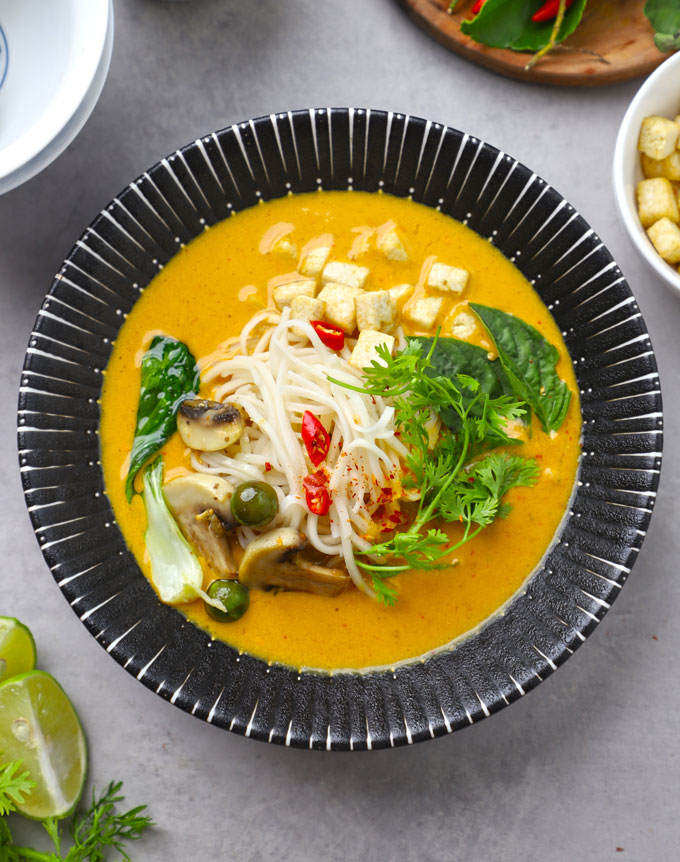
Here is is a Malaysian style Laksa Soup Recipe without meat purely vegetarian proving that it is possible to get authentic taste with plant-based ingredients.
Estimated reading time: 6 minutes
- The Flavourful Broth
- How To Make Laksa Soup
- My Tried and True Tips
- Vegetarian Laksa Soup Recipe
Laksa. Just the name conjures images of steaming bowls, vibrant colours, and an explosion of sweet, spicy, umami flavours.
This iconic noodle soup, deeply rooted in Malaysian and Singaporean culinary traditions, is renowned for its rich, aromatic broth. While often associated with seafood or chicken, the good news for plant-based foodies is that vegetarian Laksa Soup can be just as incredibly satisfying and flavourful.
What makes Laksa so special?
Before we get to the laksa soup recipe, let’s understand there are two versions of this soup.
- Curry Laksa (Laksa Lemak): It features a rich, creamy, and spicy coconut milk-based broth, often with a hint of sourness. It’s incredibly aromatic.
- Asam Laksa: This is a sour and savoury fish-based broth, typically thinner and more tart, with a distinct tamarind flavor.
The Flavourful Broth
The key to an outstanding Laksa Soup, vegetarian or otherwise, lies in its broth. Here’s what goes into our vegetarian Laksa paste:
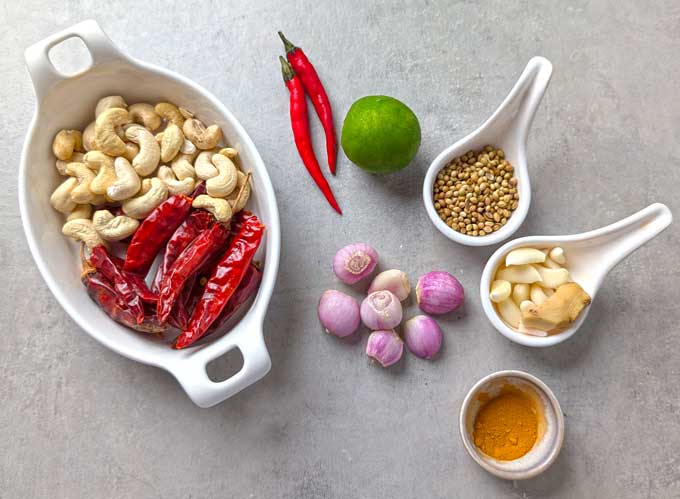
- Aromatics: Shallots, garlic, and ginger form the foundation.
- Spices: Turmeric, coriander seeds, combination of dried red and fresh chilli bring warmth and depth.
- Herbs: Lemongrass, or lime zest are crucial for that citrusy, aroma.
- Cashews give thickness to the soup.
- Sweetness and Acidity: A touch of brown sugar and lime juice.
Beyond the paste, here’s what you’ll need for making vegetarian Laksa:
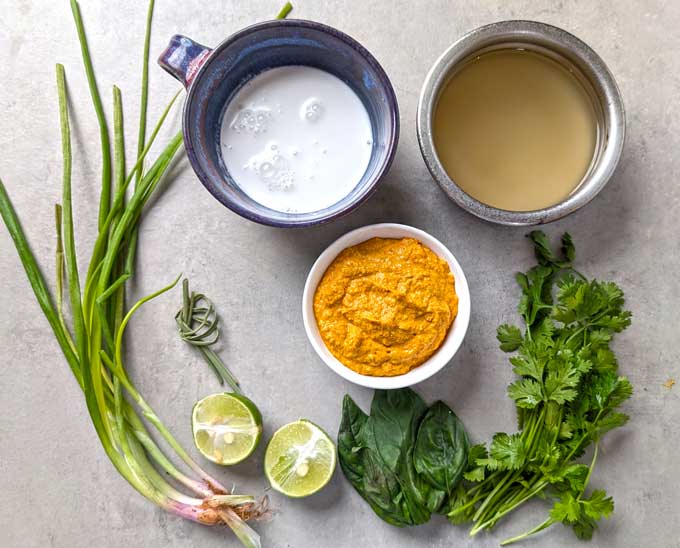
- Noodles: Thick rice vermicelli (laksa noodles) are traditional, but you can also use thin rice vermicelli, shirataki , or ramen noodles.
- Full-fat, thick coconut milk is essential for that rich, creamy texture.
- Vegetable Stock will be the base for your soup.
- Sesame Oil to cook the paste and for that nutty flavour.
- Fried Tofu Puffs (Tau Pok): These spongy tofu squares soak up the broth beautifully and add a delightful texture.
- Bean Sprouts: For freshness and a slight crunch.
- Umami Boosters: Dried shiitake mushrooms (rehydrated), light soy sauce, or even a touch of white miso paste can provide the required depth of flavour.
- Other Vegetables (Optional): Bok choy, snap peas, turkey berry, or mushrooms can also be added.
- Garnishes: Fresh cilantro, fried onion, lime wedges, toasted peanuts, chilli oil .
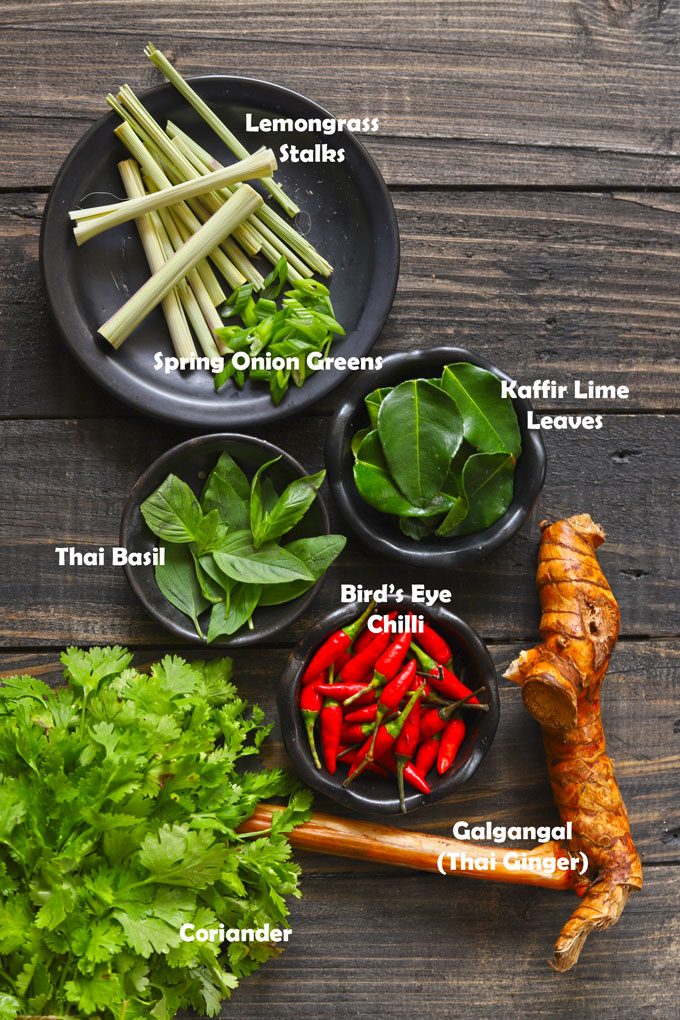
| Ingredients For Laksa | Substitute |
|---|---|
| Shallots | Chopped Red Onion |
| Lemongrass | Lime Zest and Juice |
| Coriander Seeds | Coriander Powder |
| Vegetable Stock | Vegetable Stock Cube or Powder |
| Fried Tofu Puffs | Fried Firm Tofu or Bean curd |
| Umami Flavour | Dried Shitake Mushrooms, Light Soy Sauce, Tamari Sauce, Miso Paste |
How To Make Laksa Soup
1)Prepare the Laksa Paste:
- Soak dried red chillies and cashews in hot water for 15 minutes.
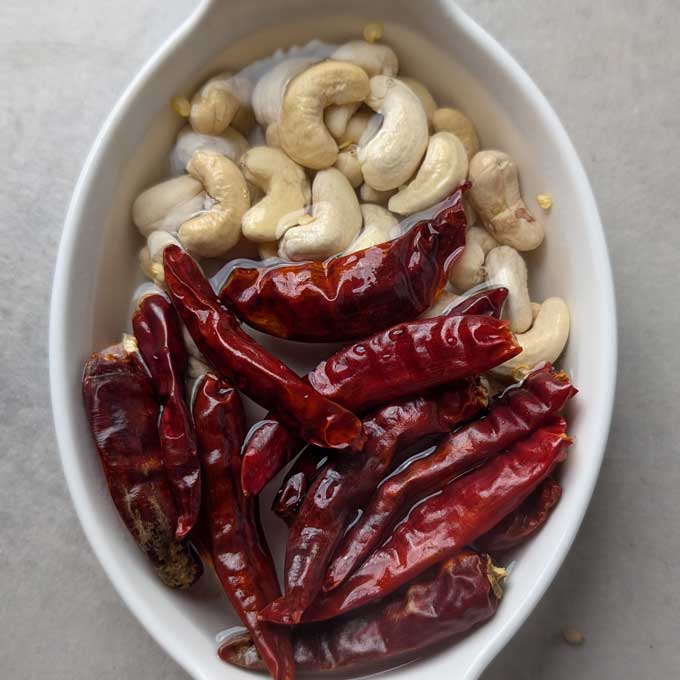
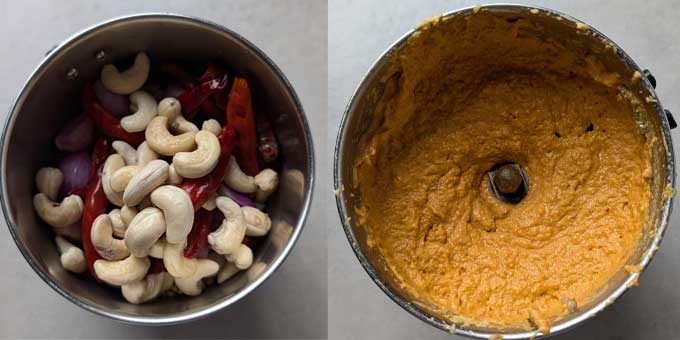
- After 15 minutes, combine the rehydrated chilies, fresh red chilli, shallot, garlic, ginger, lime zest, turmeric powder, and coriander seeds. Add a tablespoon or two to help it blend.
- Blend until you have a smooth, fragrant paste. Keep it aside.
2)Cook the Laksa Paste:
- Heat sesame oil in a large pot or Dutch oven over medium heat.
- Add the prepared laksa paste and sauté for 5 minutes, stirring frequently, until it is very fragrant and the oil separates from the paste (this indicates it’s properly cooked and will prevent a raw taste). Be patient with this step, as it’s crucial for flavour development.
- Pour in the vegetable stock and bring it to a simmer.
- Add the coconut milk and stir well to combine.
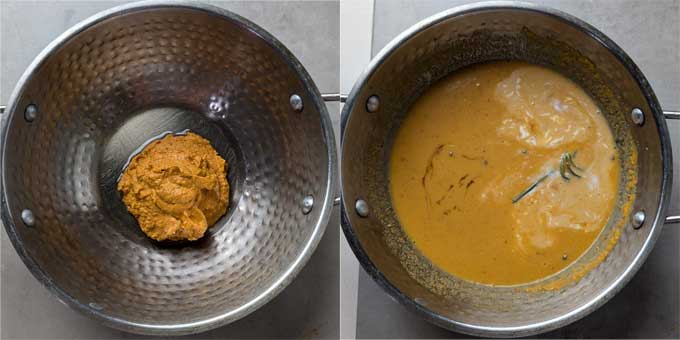
- Bring the soup back to a gentle simmer (do not boil vigorously, as it can cause the coconut milk to split).At this stage, kaffir lime leaves or lemon grass (if you are using).
- Add umami ingredients at this stage like soy sauce or miso paste along with brown sugar. Stir to combine. Taste and season with salt as needed.
- Add the fried tofu puffs and vegetables. Cook until the vegetables are tender and the tofu puffs have softened and absorbed the broth.
- Towards the end add the lime juice.
3)Prepare Noodles and Garnishes:
- While the broth is simmering, cook your chosen noodles according to the package instructions. Drain and set aside.
- Blanch the bean sprouts quickly in boiling water (or simply add them directly to the hot soup in your bowl just before serving).
4)Assemble and Serve:
- Divide the cooked noodles among individual serving bowls.
- Ladle the hot Laksa Soup generously over the noodles.
- Garnish with fresh cilantro, fried onion, a squeeze of lime juice, and a spoonful of chilli oil or sambal for an extra kick if desired.
My Tried and True Tips
- Freshness is Key: Use fresh ingredients for the paste whenever possible. It truly makes a difference in the aroma and flavor.
- Don’t Rush the Paste: Sautéing the laksa paste properly is the most critical step. It ensures all the flavors meld and deepen.
- Pre Cook Vegetables: Saute vegetables separately and add them towards the end of cooking process to retain their crunch and colour.
- Taste as You Go: Always taste your broth and adjust seasonings (salt, sugar, tamarind) as needed.
More Soup Recipes
- Healthy Manchow Soup
- Lemon Coriander Soup
- Thai Green Curry Soup
- Vegetable Rice Soup
- Thai Coconut Soup
- Vegetable Thukpa
Get my guide of 15+ Vegetable Soup Recipes
Ingredients
Ingredients For the Laksa Paste:
- ▢ 4 – 5 dried red chillies
- ▢ 6 cashews
- ▢ 4 – 5 shallots
- ▢ 4 – 5 garlic cloves
- ▢ 1 inch ginger, peeled
- ▢ 1 stalk lemongrass, tough outer layers removed, thinly sliced white part only
- ▢ 2 fresh red chilli
- ▢ 1 tablespoon coriander seeds
- ▢ ½ Cup boiling hot water
Ingredients For Laksa Soup
- ▢ 1 tablespoon sesame oil
- ▢ 2 Cup cooked noodles
- ▢ 1 ½ Cup vegetable stock ( get recipe )
- ▢ 1 Cup thick coconut milk
- ▢ 1 teaspoon light soy sauce
- ▢ 1 tablespoon brown sugar
- ▢ 1 Cup tofu puffs/fried tofu/bean curd
- ▢ 2 Cup vegetables (boy choi, carrot, beans)
- ▢ 1 Cup mung bean sprouts
- ▢ Salt to taste
- ▢ 1 lemon, juiced
Ingredients For Serving
- ▢ Chilli Oil ( get recipe )
- ▢ Fried Onion
- ▢ Toasted Peanuts
- ▢ Chopped Cilantro or Green Onion
Instructions
Prepare the Laksa Paste:
- Soak dried red chillies and cashews in hot water for 15 minutes.
- After 15 minutes, combine the rehydrated chilies, fresh red chilli, shallot, garlic, ginger, lime zest, turmeric powder, and coriander seeds. Add a tablespoon or two to help it blend.
- Blend until you have a smooth, fragrant paste. Keep it aside. You can store it for a week.
Cook the Laksa Soup:
- Heat sesame oil in a large pot or Dutch oven over medium heat.
- Add the prepared laksa paste and sauté for 5 minutes, stirring frequently, until it is very fragrant and the oil separates from the paste (this indicates it’s properly cooked and will prevent a raw taste). Be patient with this step, as it’s crucial for flavour development.
- Pour in the vegetable stock and bring it to a simmer. Add the coconut milk and stir well to combine.
- Bring the soup back to a gentle simmer (do not boil vigorously, as it can cause the coconut milk to split).
- Add umami ingredients at this stage like soy sauce or miso paste along with brown sugar. Stir to combine. Taste and season with salt as needed.
- Add the fried tofu puffs and vegetables. Cook until the vegetables are tender and the tofu puffs have softened and absorbed the broth. Towards the end add lemon juice.
Prepare Noodles and Garnishes:
- While the broth is simmering, cook your chosen noodles according to the package instructions. Drain and set aside.
- Blanch the bean sprouts quickly in boiling water (or simply add them directly to the hot soup in your bowl just before serving).
- Divide the cooked noodles among individual serving bowls.
- Ladle the hot Laksa Soup generously over the noodles.
- Garnish with fresh cilantro, fried onion, a squeeze of lime juice, and a spoonful of chilli oil or sambal for an extra kick if desired. Serve piping hot.
Recipe Notes:
- Dried Shitaki Mushrooms: If you planning to add them to laksa paste for umami flavour. First, soak them in hot water for 10 – 15 minutes. Then blend them with other ingredients to a smooth paste.
- Tofu Puff are a type of fried tofu with crispy exterior and soft, chewy interior. You can buy the readymade tofu puff, or air fry/shallow fry the firm tofu cubes at home. Or use bean curd. Bean curd, commonly known as tofu, is a food made from soybeans that have been soaked, ground, cooked, and then pressed into a solid block.
- Lemon Zest: While making the laksa paste add lemon zest in case you don’t have lemongrass.
- Kaffir Lime Leaves are a delicious addition to the soup. Replace them with lemon juice or lemongrass leaves.
- Adjust Spice Level: Feel free to increase or decrease the amount of chilies in the paste to suit your preference. This is a spicy laksa soup recipe.
- Experiment with Vegetables: While long beans and bean sprouts are traditional, feel free to add other quick-cooking vegetables like carrot, mushrooms, or even spinach.
Nutrition
We follow a strict NO SPAM Policy
