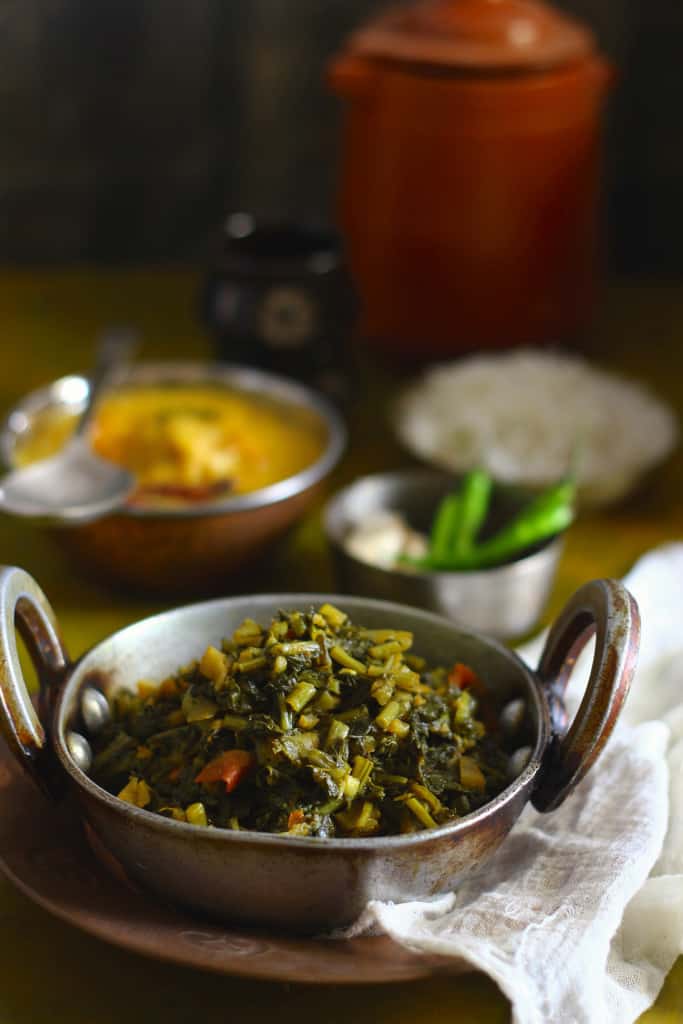
Mooli Ka Saag is a traditional Punjabi recipe. It is a simple, vegan stir fry of radish greens made in winter.
Estimated reading time: 3 minutes
- The Saag Story
- How To Make Mooli Ka Saag
- Serving Suggestion
- Mooli Ka Saag Recipe
The Saag Story
I’m unsure why people think Punjabi Cuisine is only about robust curries. The well-made hearty vegetarian curries like mooli ka saag or adrak lehsun ki chitt are equally delightful. These traditional Punjabi delicacies you will not find on a restaurant menu.
This saag is a cross between mooli ki sabzi and sarson ka saag.
As the summer approaches, the radish greens taste more like pungent grass than juicy leaves. So the peak of the winter season is the right time to try this Punjabi mooli ka saag recipe with radish greens.
How To Make Mooli Ka Saag
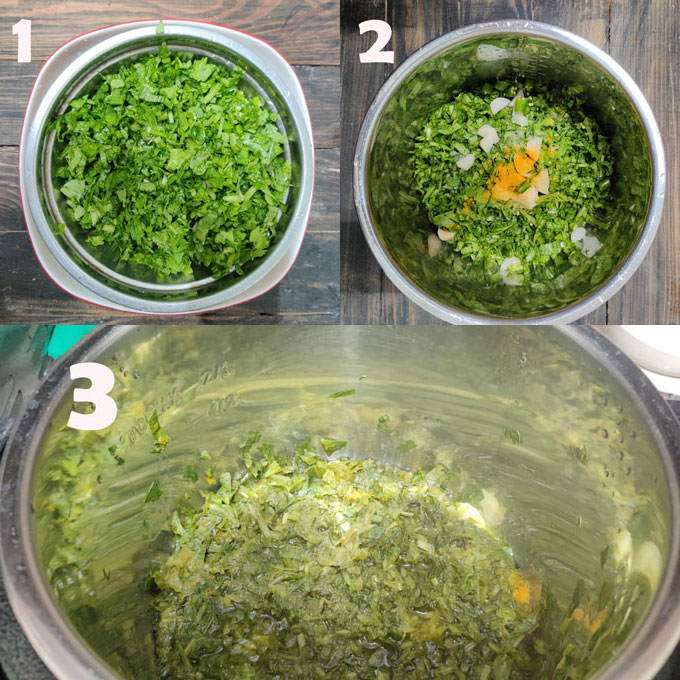
- First, clean and wash the radish leaves to remove dirt. Fine chop the radish leaves into thin threads ( image 1 ).
- Transfer chopped radish greens into a pressure cooker. Add 1 ½ cups of water, salt, turmeric, diced radish, and green chilli ( image 2 ).
- Stir to combine, seal the lid of the pressure cooker, and cook the radish green for 1 whistle over low heat. It takes 5 – 6 minutes. Turn off the heat. Let the steam release naturally from the pressure cooker ( image 3 ).
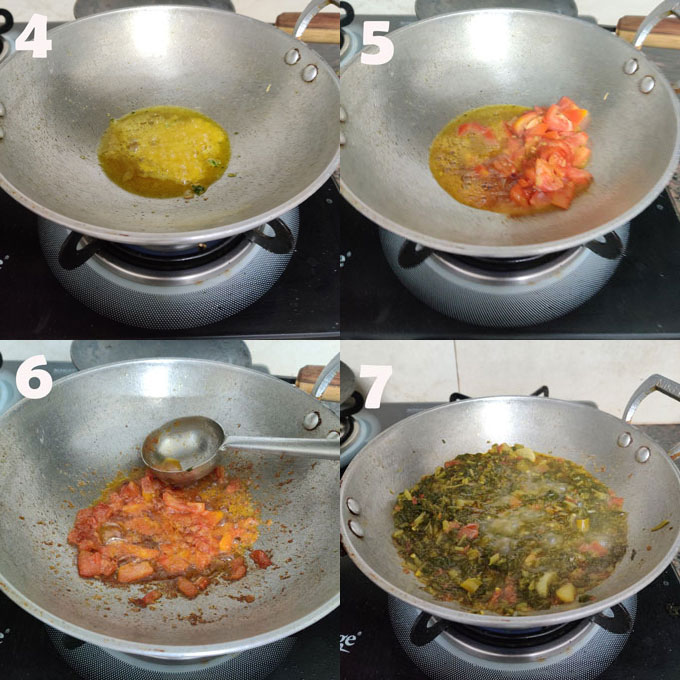
- Heat mustard oil in a heavy bottom kadhai till it starts smoking. Reduce the heat to medium.
- Add ginger-garlic paste and cook for less than 1 minute.
- Next, add chopped tomato and spices. Cook till the tomato turns soft and mushy. This takes 1 – 2 minutes over low – medium heat ( images 5 & 6 ).
- Add the saag from the pressure cooker. Using a vegetable masher or a ladle, gently mash the saag once or twice. Taste and add more salt if required.
- Cook the saag in the saucepan till the excess liquid evaporates, the tomato masala is nicely combined with the radish greens, and the saag thickens a bit. It usually takes 8 – 10 minutes over low heat. Do not rush this process.
Serving Suggestion
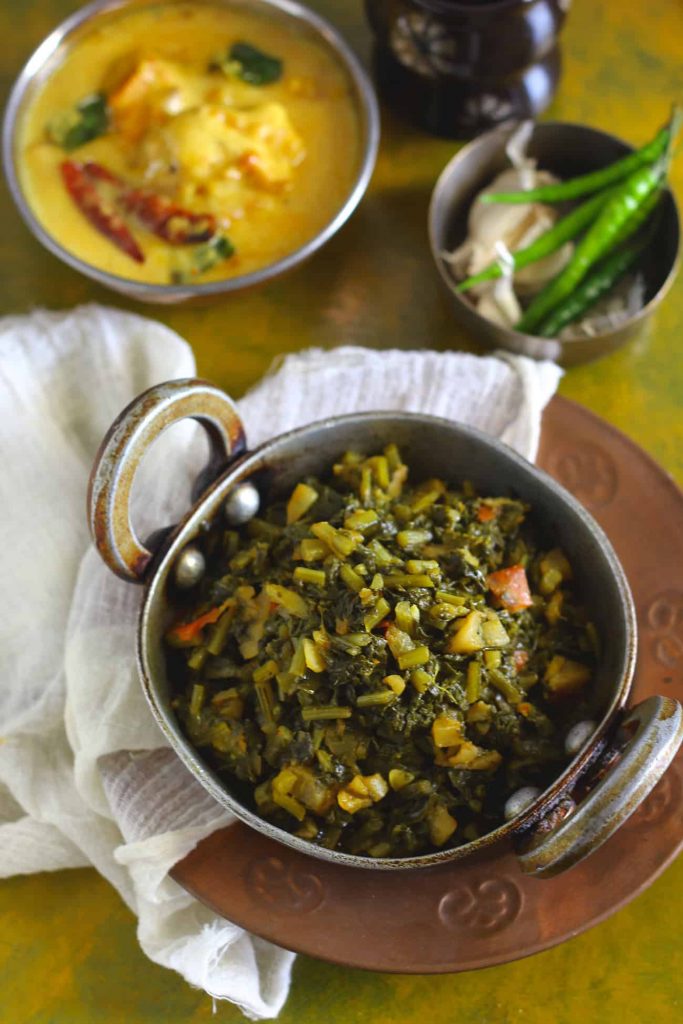
In a Punjabi household, the mooli ka saag is served with chapati or phulka and Kadhi Pakora or Arhar Dal . It is usually a winter season lunchtime affair.
You can serve this saag with Makki ki roti, Dal Paratha , or Tandoori Roti also, either for lunch or dinner.

More Green Leafy Indian Recipes
- Kumaoni Mustard Green Sabzi
- Spinach Egg Curry
- Palak Chana Dal
- Methi Paratha
- Palak Puri

Ingredients
- ▢ 2 (500 gram approx) bunch of radish leaves
- ▢ 1 tablespoon ginger-garlic paste ( get recipe )
- ▢ 1 -2 green chili, chopped
- ▢ 1 Cup white radish, peeled and diced
- ▢ ½ teaspoon turmeric powder
- ▢ Salt to taste
- ▢ ½ Cup tomato, finely chopped
- ▢ 1 teaspoon red chili powder
- ▢ 4 tablespoon mustard oil (sarson oil)
Instructions
- To make the Saag, first clean and wash the radish leaves to remove dirt. Let the washed leaves sit on a metal colander for some time to drain out the excess water. Fine chop the radish leaves into thin threads.
- Transfer chopped radish greens into a pressure cooker. Add 1 ½ cups of water along with salt, turmeric, and diced radish. Stir to combine, seal the lid of the pressure cooker, and cook the radish green for 1 whistle over low heat. It takes 5 – 6 minutes. Turn off the heat. Let the steam release naturally from the pressure cooker.
- Heat mustard oil in a heavy bottom kadhai till it starts smoking. Reduce the heat to medium.
- Add ginger-garlic paste and cook till the raw smell wafts away. It takes less than 1 minute.
- Next, add chopped tomato, spices, cook till tomato turns soft and mushy. This takes 1 – 2 minutes over low – medium heat.
- Add the saag from the pressure cooker. Using a vegetable masher or a ladle gently mash the saag once or twice. Taste and add more salt if required.
- Cook the saag in the saucepan till the excess liquid evaporates, tomato masala is nicely combined with the radish greens, and the saag thickens a bit. It usually takes 8 – 10 minutes over low heat. Do not rush this process.
- Serve Mooli ka Saag warm with phulka and dal for lunch/dinner.
Recipe Notes:
- Do not add too much water to pressure cook the radish leaves.
- Add salt cautiously as radish leaves have a natural salty taste.
- You can cook radish greens in an instant pot at pressure cook mode for 5 minutes. Later, use the saute mode to cook the saag as suggested in the recipe.
Nutrition
We follow a strict NO SPAM Policy

Mooli Ka Saag Recipe
Equipment
- Pressure Cooker
- Heavy Bottom Kadhai
Ingredients
- 2 (500 gram approx) bunch of radish leaves
- 1 tablespoon ginger-garlic paste ( get recipe )
- 1 -2 green chili, chopped
- 1 Cup white radish, peeled and diced
- ½ teaspoon turmeric powder
- Salt to taste
- ½ Cup tomato, finely chopped
- 1 teaspoon red chili powder
- 4 tablespoon mustard oil (sarson oil)
Instructions
- To make the Saag, first clean and wash the radish leaves to remove dirt. Let the washed leaves sit on a metal colander for some time to drain out the excess water. Fine chop the radish leaves into thin threads.
- Transfer chopped radish greens into a pressure cooker. Add 1 ½ cups of water along with salt, turmeric, and diced radish. Stir to combine, seal the lid of the pressure cooker, and cook the radish green for 1 whistle over low heat. It takes 5 - 6 minutes. Turn off the heat. Let the steam release naturally from the pressure cooker.
- Heat mustard oil in a heavy bottom kadhai till it starts smoking. Reduce the heat to medium.
- Add ginger-garlic paste and cook till the raw smell wafts away. It takes less than 1 minute.
- Next, add chopped tomato, spices, cook till tomato turns soft and mushy. This takes 1 - 2 minutes over low - medium heat.
- Add the saag from the pressure cooker. Using a vegetable masher or a ladle gently mash the saag once or twice. Taste and add more salt if required.
- Cook the saag in the saucepan till the excess liquid evaporates, tomato masala is nicely combined with the radish greens, and the saag thickens a bit. It usually takes 8 - 10 minutes over low heat. Do not rush this process.
- Serve Mooli ka Saag warm with phulka and dal for lunch/dinner.
Notes
- Do not add too much water to pressure cook the radish leaves.
- Add salt cautiously as radish leaves have a natural salty taste.
- You can cook radish greens in an instant pot at pressure cook mode for 5 minutes. Later, use the saute mode to cook the saag as suggested in the recipe.
Nutrition
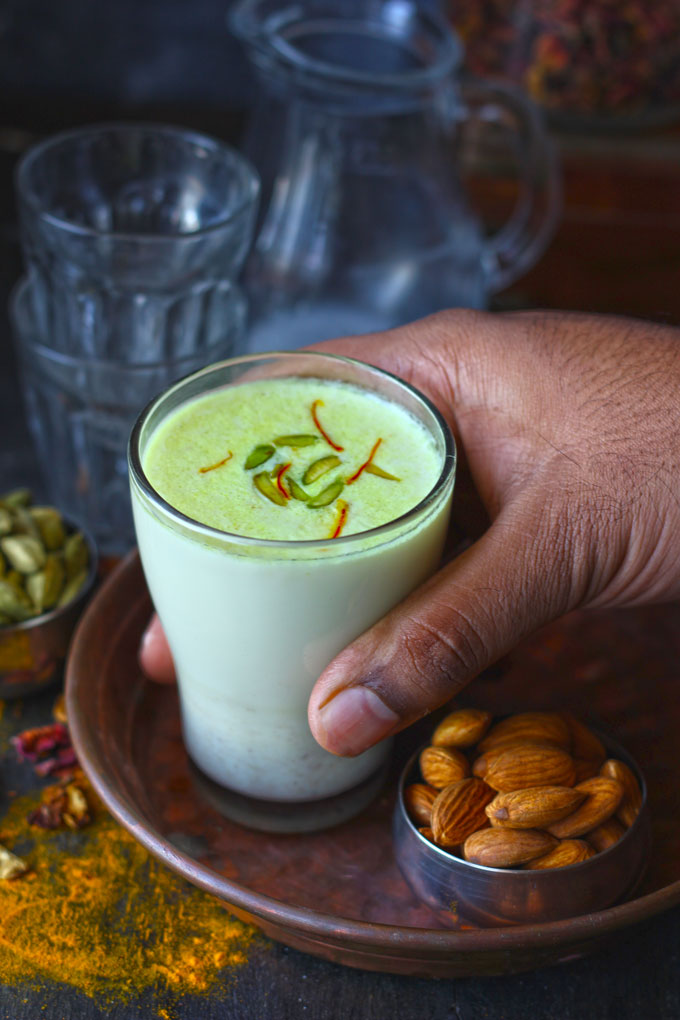
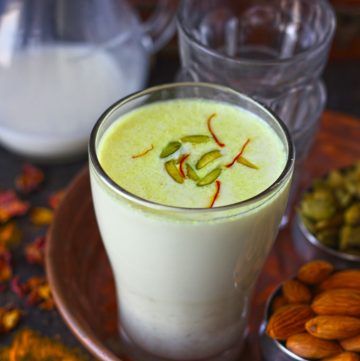
Khas Khas Ka Doodh is a traditional Punjabi winter drink of white poppy seeds, almonds, and milk. It is a comforting nightcap for cold winters, also known as Khus – khaas.
Estimated reading time: 3 minutes
- About Khus Khus (Poppy Seeds)
- Punjabi Khas Khas Ka Doodh
- Ingredients You’ll Need
- Serving Suggestion
- Badam Khas Khas Doodh Recipe
About Khus Khus (Poppy Seeds)
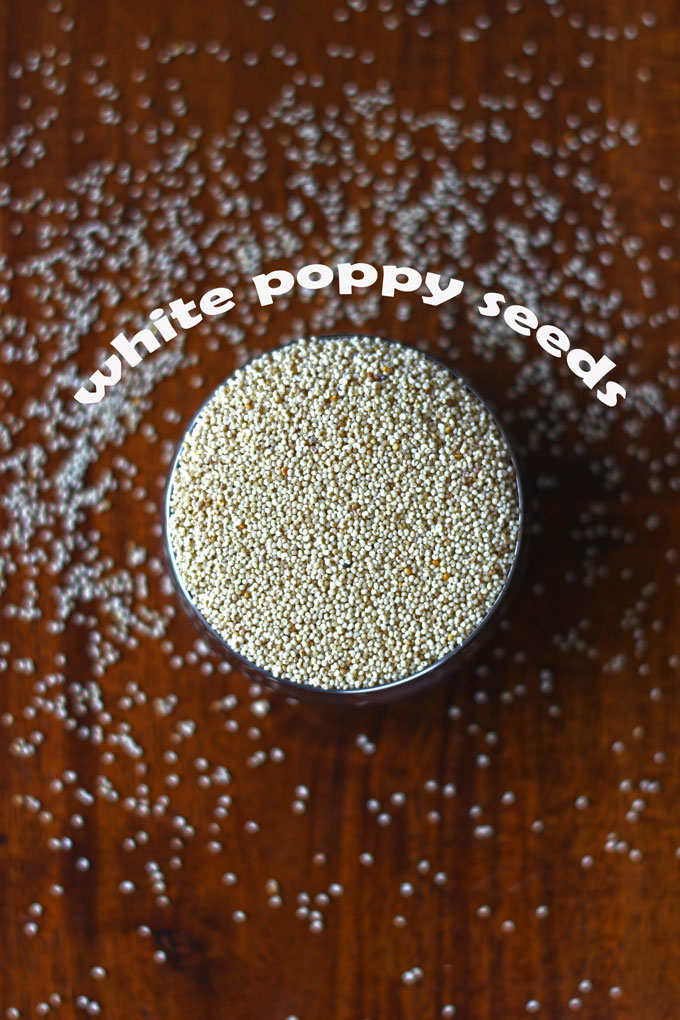
The tiny white poppy seeds are called Khus Khus in Hindi.
In Indian Cuisine, white poppy seeds are used as a paste to make rich, creamy, and indulgent Mughlai-style curries. Along with curries, khus khus is also added to the famous Indian drink – Thandai .
These poppy seeds have tons of health benefits along with a nutty taste. They are well known for their comforting, cooling, and calming effects.
Punjabi Khas Khas Ka Doodh
In a Punjabi household, badam khas khas ka doodh (milk) is a winter nightcap.
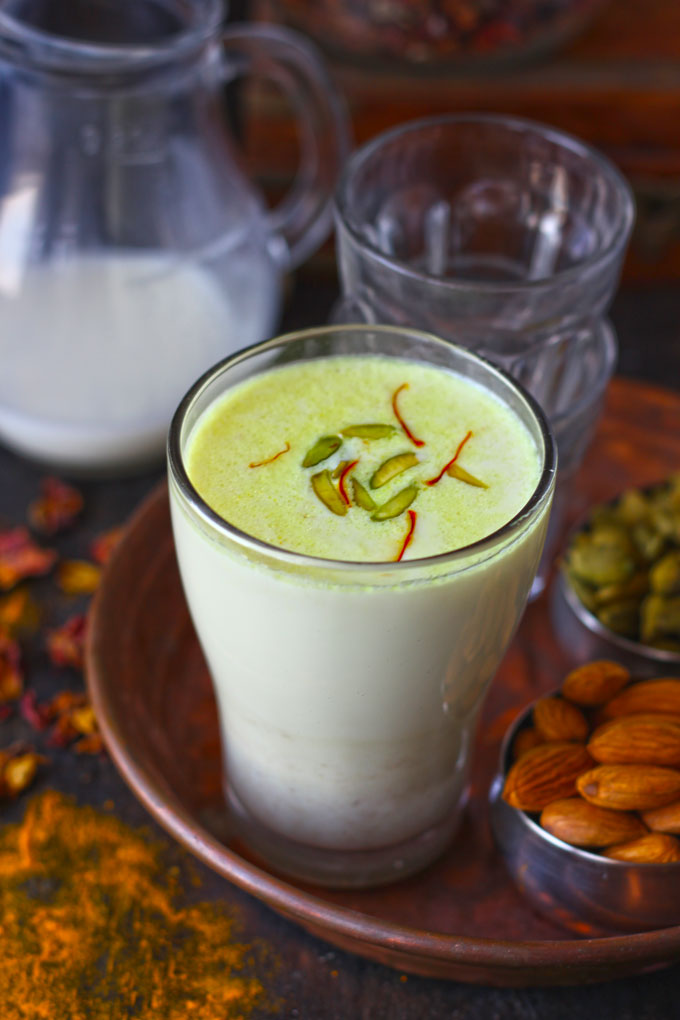
Khas Khas Ka Doodh is quite tasty, distinctly warm, and earthy, with slight notes of sweetness. It is very similar to badam milk with the addition of poppy seeds.
I add a pinch of turmeric and saffron to the khas khas doodh. In a traditional khas khas doodh recipe, neither turmeric nor saffron is listed.
Ingredients You’ll Need
You need a few handfuls of ingredients to make Punjabi khas khas ka doodh.
- White Poppy Seeds: Use clean, dry khus khus (poppy seeds) and soak them in water before grinding.
- Almond: Soaked, peeled almonds help grind poppy seeds easily and give the milk a thick, rich texture.
- Milk: This recipe can use full-fat, toned, or low-fat milk.
- Green Cardamom: It is for the taste and aroma.
- Sugar: From brown sugar and jaggery powder to white sugar, feel free to pick one according to your preference. Adjust the quantity according to taste.
- Optional Ingredients: Saffron or a pinch of organic turmeric powder

Serving Suggestion
Khas Khas Ka Doodh is served fresh and warm.
I would not recommend storing it in the refrigerator or serving it at room temperature. The medicinal benefits and the warming effect are lost after keeping it in the refrigerator/reheating.
However, you can store the poppy seeds and almond paste for 1 – 2 days in the refrigerator. Please do not leave it at room temperature for more than 1 hour, as it spoils quickly.
More Indian Drink Recipes
- Banana Date Milkshake
- Sugarcane Juice
- Paan Thandai
- Kesar Thandai
- Sattu Sharbat
- Mango Lassi
- Badam Milk
- Basundi
Ingredients
- ▢ 1 Tablespoon white poppy seeds (khus khus)
- ▢ ¼ Cup almonds
- ▢ 1 Tablespoon ghee
- ▢ 2 Cup milk, room temperature
- ▢ 1 Teaspoon cardamom powder or 2 – 3 green cardamoms
- ▢ 2 Tablespoon sugar or to taste
- ▢ ¼ Teaspoon turmeric powder or Saffron (optional)
Instructions
Prep Work
- Soak almonds in hot water for 10 – 15 minutes or room temperature water overnight. Remove the skin and collect skinned almonds in a bowl.
- In a separate bowl, soak the khus khus (white poppy seeds) in ¼ Cup of water overnight or 3 – 4 hours.
Make Paste
- Next day, strain the soaked khus khus in a metal strainer. Drain the water.
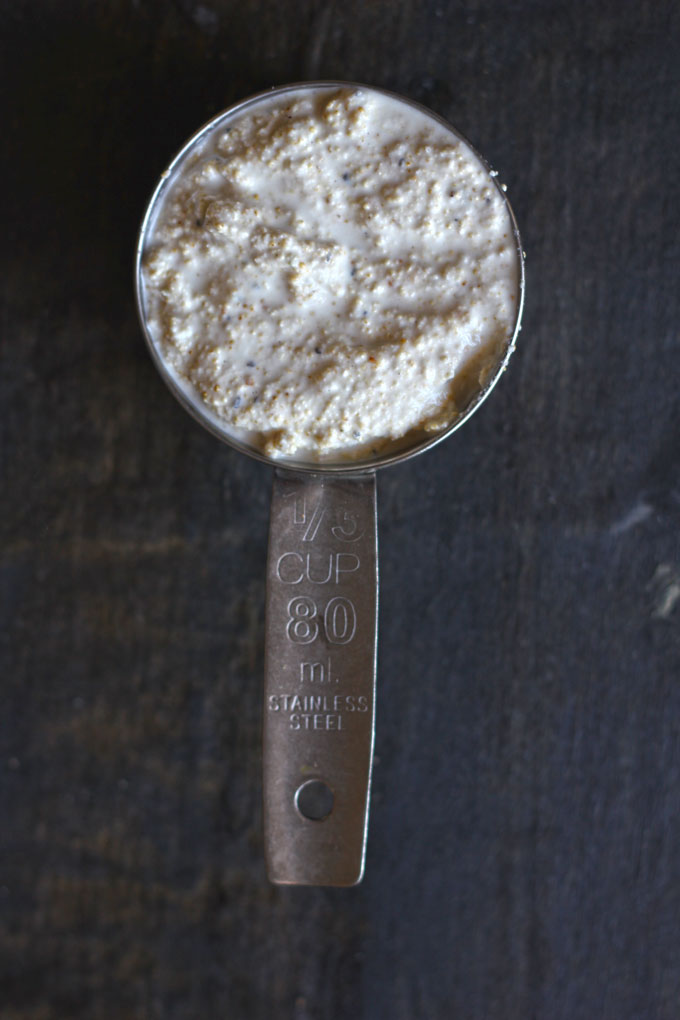
- In a small jar of the blender, combine khus khus and peeled almonds. Grind to a smooth paste. If required, use 1 – 2 tablespoon of water to grind the paste. Transfer the paste to a bowl.
- This might take a while due to the small quantity of the ingredients. Scrape the paste from the sides of the blender, stir and grind is the trick.
Prepare Khus Khus Ka Doodh
- Heat ghee in a heavy bottom saucepan or kadhai. Add the khus khus paste and saute over low heat.
- Keep cooking the paste till it turns light brown in color and starts leaving the sides of the pan. This might take between 5 – 10 minutes over low heat. During all this time, the paste requires stirring at regular intervals.
- Next, add the milk and cardamom powder. Stir and bring to a boil once over high heat. Reduce the heat to low and allow the milk to simmer uncovered for 10 more minutes to thicken a bit.
- Scrape the sides of the pan to collect the thick cream and add it back to the milk.
- Now add sugar to taste and turmeric/saffron to the khas khas doodh. Stir to combine. Taste and adjust the sweetness accordingly. Turn off the heat.
- Serve Khas Khas Ka Doodh warm.
Recipe Notes:
- Soaking white poppy seeds softens them and makes them easy to grind.
- Use a heavy bottom saucepan to prepare khas khas ka doodh. Else, while frying and simmering the paste might get burnt.
- It is optional to add turmeric or saffron to the milk.
- For a Vegan Khas Khas Doodh , use almond milk instead of regular dairy milk. And use vegan fat to fry the poppy seeds paste.
- I would not suggest reheating, storing, or serving cold khas khas doodh.
Nutrition
We follow a strict NO SPAM Policy
