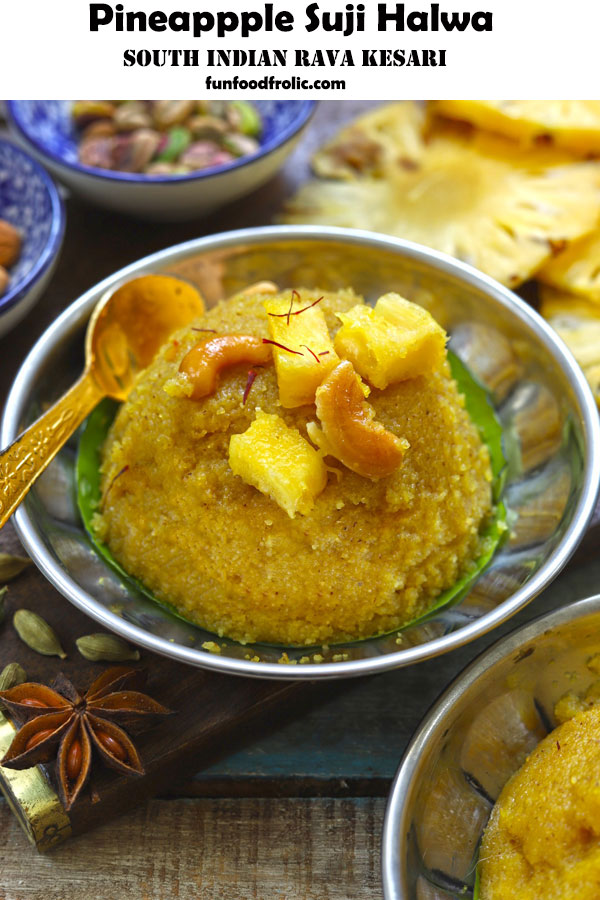
Pineapple Rava Kesari is a delicious suji ka halwa flavored with pineapple. In South India, it is known as pineapple kesari. Truly one of the best fruity Indian desserts I have ever tried. Be sure to watch the video!
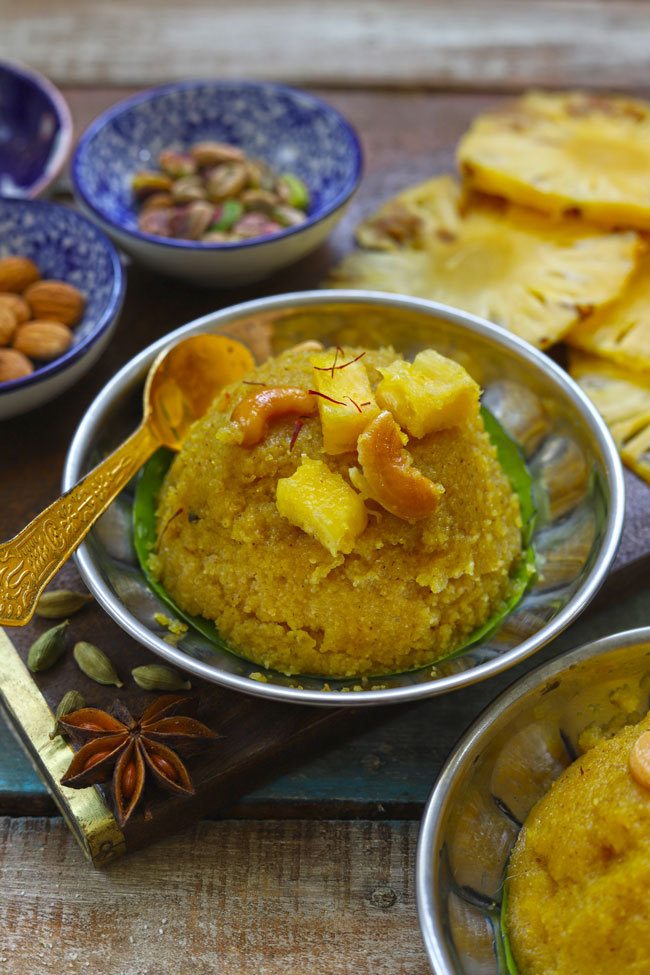
What is Rava Kesari?
Rava Kesari is a popular South Indian sweet dish having its original roots in Karnataka, where it is also known as Kesari Baath .
‘Rava’ is the local term for semolina, whereas the term ‘kesari’ refers to the yellow color of the halwa and the aroma of kesar i.e saffron.
The dish shares similar nature with the famous North Indian sweet suji ka halwa .
Pineapple Kesari Baath
Across South India, many local eateries serve kesari baath flavored with pineapple.
It is cooked in flavorsome syrup consisting of saffron, pineapple cubes, sugar, cardamom, and pineapple juice simmered over low heat to get the golden liquid.
Later, the roasted semolina (rava) is cooked in this sweet pineapple-flavored syrup. Hence, resulting in pineapple halwa.
With each spoonful of pineapple halwa melody of flavors is created in the palate. The tropical freshness of pineapple is melted with the sweetness of sugar, ghee, and semolina building layers of extraordinary flavor.
And not to forget the pleasing aroma of saffron, cardamom, and pineapple which filled senses with a long-lasting memory of this dessert.
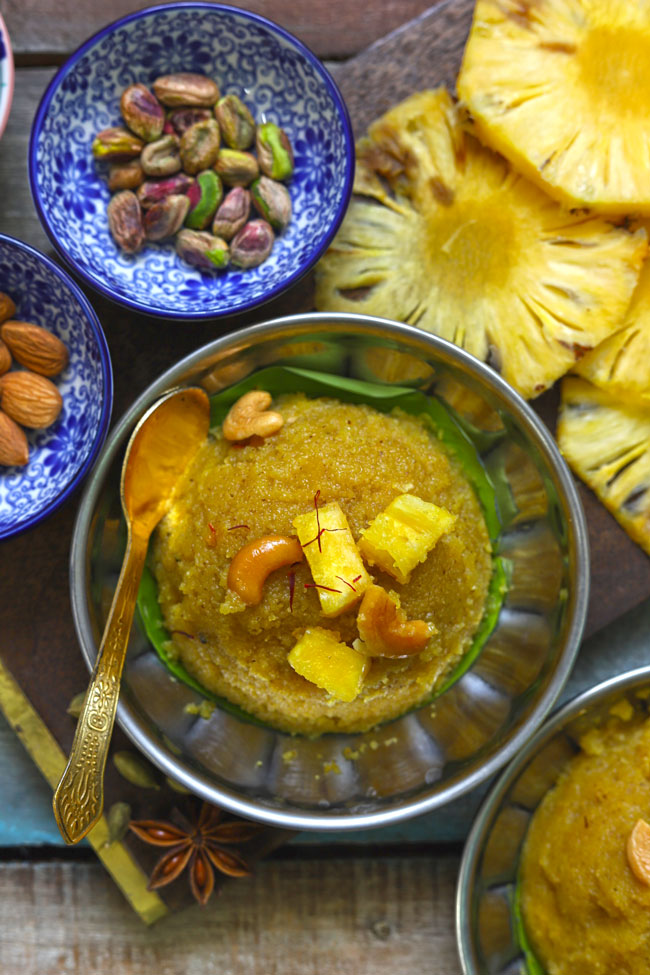
Ingredients Required
Semolina: It is best to use fine rava (semolina) to make any kind of halwa. It is quick to cook and gives a nice, mouth-melting texture to the halwa. Thick or coarse semolina is not an ideal choice.
Pineapple: Always use a fresh, juicy, ripe, and sweet pineapple for making the rava kesari. A slightly sour, bitter, or unripened pineapple is a BIG NO.
Cashews: Use unsalted cashew. An authentic rava kesari always has cashews.
Golden Syrup: The yellow color of the kesari baath comes from this golden syrup. It consists of – pineapple juice, white sugar, saffron strands, and cardamom powder. These ingredients together create that yellow hue.
Watch Pineapple Halwa Video
My Tried & True Tips
Tip 1: Slow Roasting Semolina
The secret to making a spoon-licking halwa is slow roasting the rava over low heat till it changes the color to light brown. Keep stirring it while roasting for even browning.
Tip 2: The Right Pineapple
If you can get your hands on a good quality canned/tinned pineapple then nothing like it. I do not prefer adding any artificial color or flavor essence to the halwa. But it is a matter of personal choice.
Tip 3: The Sweetness
The quantity of sugar required to make kesari baath depends on many factors. If you are using a canned sweetened pineapple along with a packaged pineapple juice then taste the golden syrup and add sugar accordingly.
Tip 4: The Right Ratio
Always remember, semolina absorbs a lot of liquid and has a bland taste. Hence, the sugar syrup should be sweet enough to give halwa a sugary taste and cut down the acidity of pineapple.
Tip 5: How To Store
You can store leftover halwa in the refrigerator for 1 – 2 days . Reheat in a microwave or stovetop over low heat.
More Pineapple Recipes
Creamy Pasta Salad With Pineapple
Mint Pineapple Popsicles
Tropical Pineapple Salad
Pineapple Fried Rice
Pineapple Raita
If you try this recipe and love it, please leave a comment and a rating. This helps us grow and reach many other food lovers like you, who are looking for a perfect tried and tested recipe.
Ingredients
Ingredient For Golden Syrup:
- ▢ 2 Cup pineapple juice
- ▢ 1 Cup water, at room temperature
- ▢ 1 Cup granulated white sugar
- ▢ 1 Cup bite-size pineapple cubes
- ▢ 1 teaspoon saffron strands (kesar)
- ▢ 1 teaspoon cardamom powder (elaichi powder)
Other Ingredients:
- ▢ 1 Cup semolina (rava/sooji)
- ▢ ¼ Cup ghee (clarified butter)
- ▢ ¼ Cup sliced cashews
Instructions
Prepare Golden Syrup:
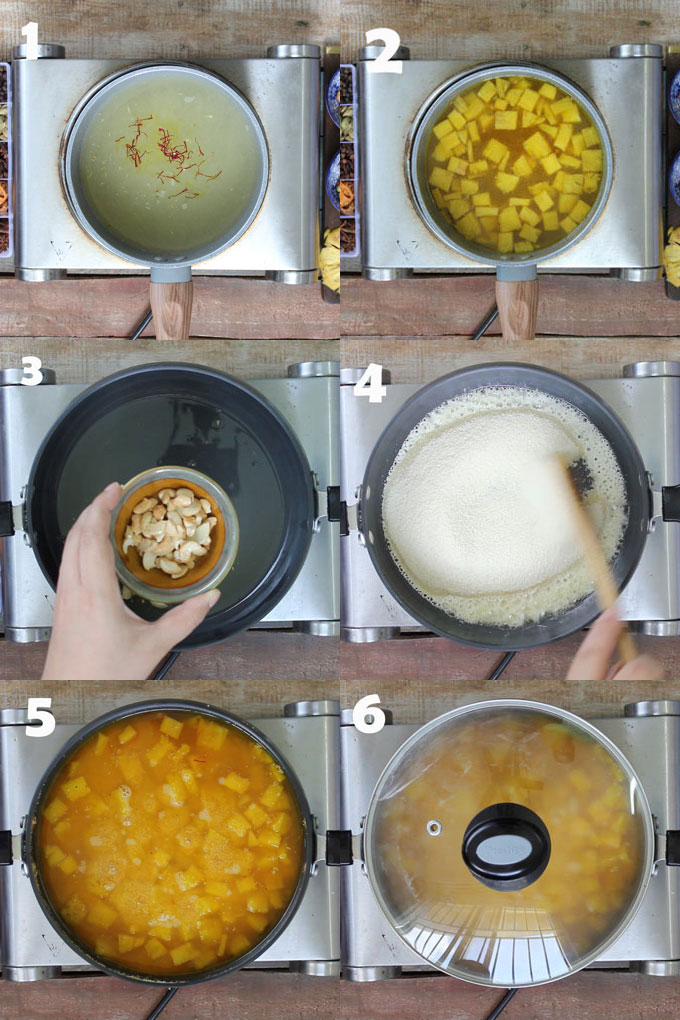
- In a large deep saucepan bring water, juice, pineapple cubes, saffron, sugar, and cardamom powder to a boil over high heat. Reduce the heat to medium and let the liquid simmer. Keep stirring at regular intervals.
- The sugar should dissolve completely, and the liquid should turn golden in color. The pineapple pieces should become soft. Taste and adjust the sweetness accordingly.
Roast Semolina (Suji):
- Meanwhile, start roasting semolina — heat ghee in a heavy-bottomed pan over medium flame. Fry sliced cashew till light brown and transfer to a plate. Keep aside.
- Next, add semolina and roast over medium heat until it changes color to light brown. Continuously stir semolina while roasting else it might get burnt.
Prepare Halwa:
- Now, slowly add hot golden syrup to the roasted semolina. Add half amount of water at a time and continuously stir semolina to avoid lump formation. Gradually, add the remaining liquid. Stir continuously in one direction.
- Once the semolina starts bubbling, cover and cook for 3 – 5 minutes over low heat. Do not cook for too long.
- Turn off the heat. Open the lid and add fried cashews. Mix nicely.
- Serve pineapple rava kesari warm garnished with pineapple cubes and cashews.
Recipe Notes:
- Use only fine semolina or rava for making the halwa.
- It is best to roast semolina over low heat for a good taste and color.
- Make sure the syrup is warm while adding in the roasted semolina.
- Taste the syrup and adjust the amount of sugar as per your preference.
Nutrition
We follow a strict NO SPAM Policy
Pineapple Rava Kesari Recipe
Equipment
- Heavy Bottom Kadhai
- Saucepan
Ingredients
Ingredient For Golden Syrup:
- 2 Cup pineapple juice
- 1 Cup water, at room temperature
- 1 Cup granulated white sugar
- 1 Cup bite-size pineapple cubes
- 1 teaspoon saffron strands (kesar)
- 1 teaspoon cardamom powder (elaichi powder)
Other Ingredients:
- 1 Cup semolina (rava/sooji)
- ¼ Cup ghee (clarified butter)
- ¼ Cup sliced cashews
Instructions
Prepare Golden Syrup:
- In a large deep saucepan bring water, juice, pineapple cubes, saffron, sugar, and cardamom powder to a boil over high heat. Reduce the heat to medium and let the liquid simmer. Keep stirring at regular intervals.
- The sugar should dissolve completely, and the liquid should turn golden in color. The pineapple pieces should become soft. Taste and adjust the sweetness accordingly.
Roast Semolina (Suji):
- Meanwhile, start roasting semolina — heat ghee in a heavy-bottomed pan over medium flame. Fry sliced cashew till light brown and transfer to a plate. Keep aside.
- Next, add semolina and roast over medium heat until it changes color to light brown. Continuously stir semolina while roasting else it might get burnt.
Prepare Halwa:
- Now, slowly add hot golden syrup to the roasted semolina. Add half amount of water at a time and continuously stir semolina to avoid lump formation. Gradually, add the remaining liquid. Stir continuously in one direction.
- Once the semolina starts bubbling, cover and cook for 3 - 5 minutes over low heat. Do not cook for too long.
- Turn off the heat. Open the lid and add fried cashews. Mix nicely.
- Serve pineapple rava kesari warm garnished with pineapple cubes and cashews.
Video
Notes
- Use only fine semolina or rava for making the halwa.
- It is best to roast semolina over low heat for a good taste and color.
- Make sure the syrup is warm while adding in the roasted semolina.
- Taste the syrup and adjust the amount of sugar as per your preference.
Nutrition
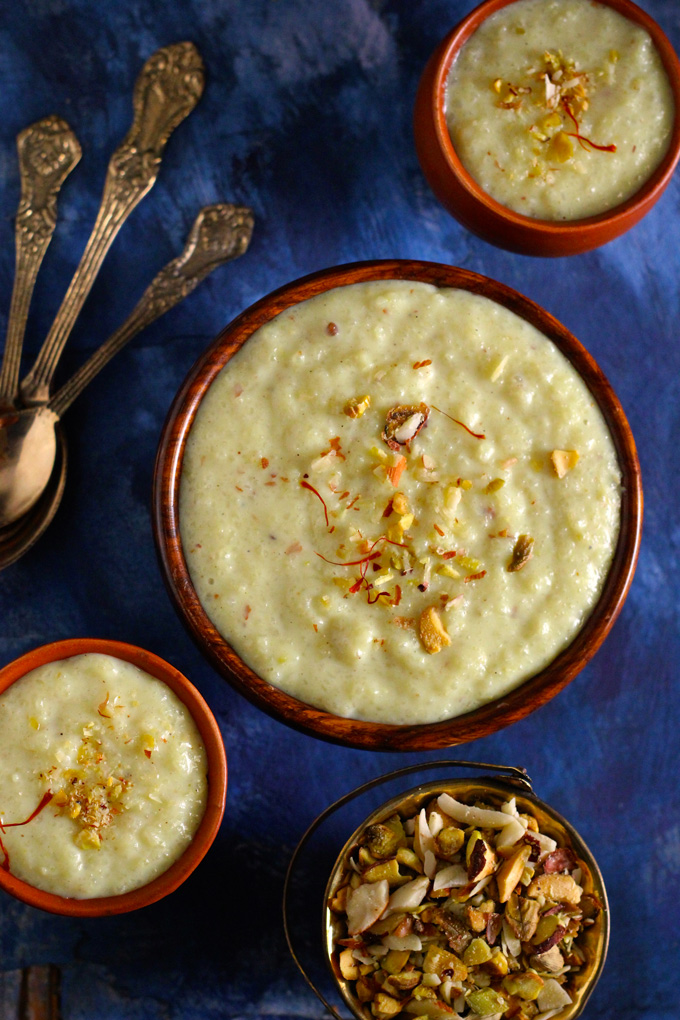
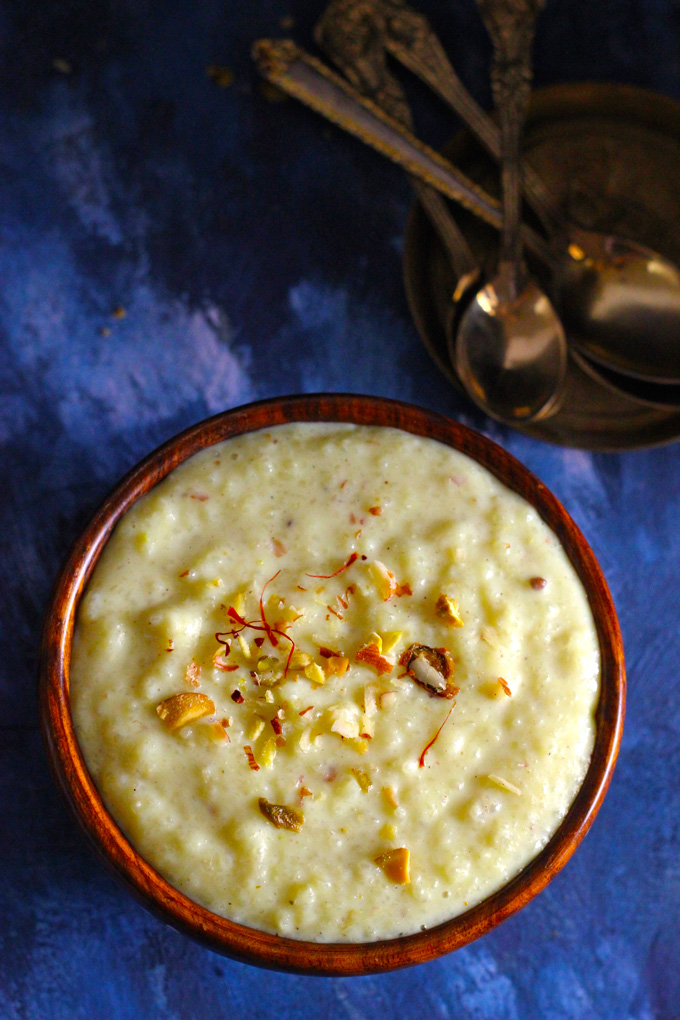
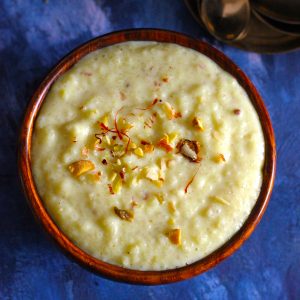
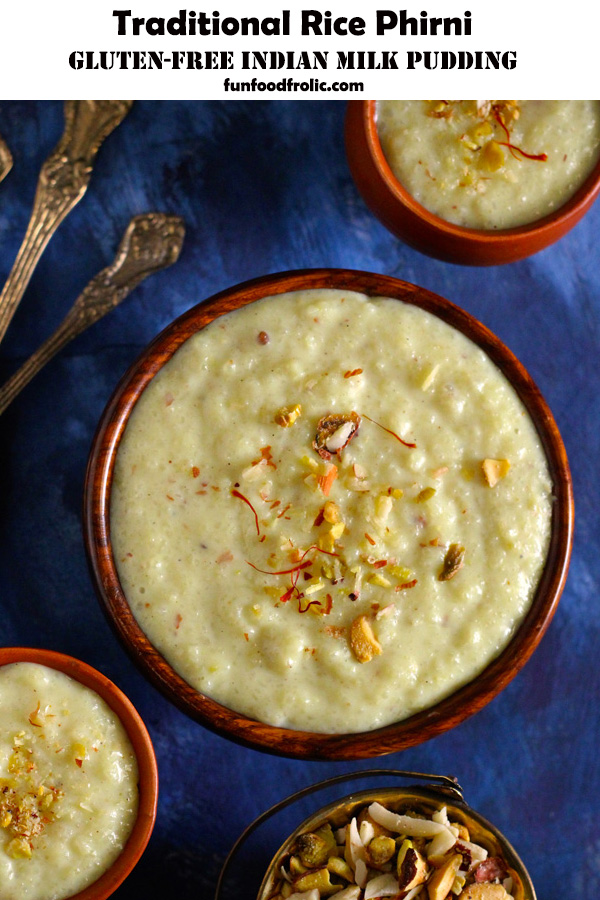
Phirni is a popular Indian sweet dish made with rice, milk, and sugar. This is a tried and tested Mughlai-style traditional phirni recipe.
About ‘Phirni’
There are different stories about the origin of Phirni. It is believed this rich and creamy milk pudding came into existence during the Mughal era as a royal desert.
Today Phirni is a popular sweet dish across the Indian subcontinent.
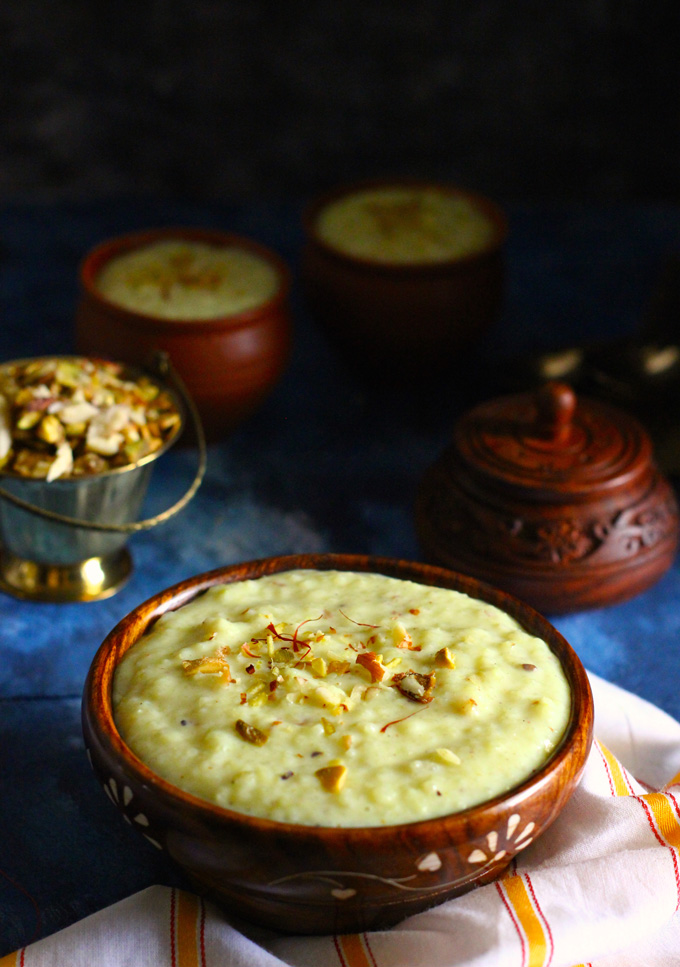
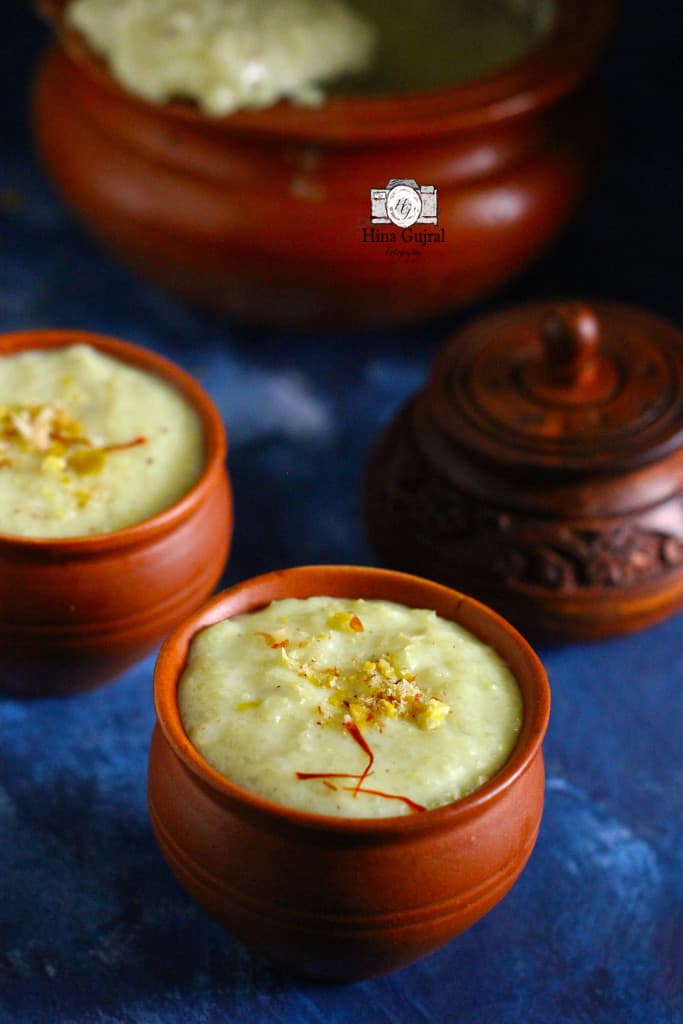
Usually, it is served in traditional, eco-friendly earthen pots ( Mitti Ke Kulhad or Matki ). In ancient times refrigerators were not invented, so serving Phirni in earthen vessels had a purpose; it remains chilled for a longer duration and has a particularly pleasing taste.
Phirni vs. Kheer
Many food lovers confuse phirni with kheer. These two are different types of Indian milk pudding.
The common ingredients between both dessert recipes are – milk, sugar, cardamom powder, saffron, and rice (if it is rice kheer ) .
The phirni is more creamy and thick in texture than kheer.
Kheer can be served warm or cold, but a phirni tastes best when chilled.
Ingredients Required
For this classic phirni recipe, you need a handful of staple ingredients.
Milk: Use full-fat dairy milk for a rich and creamy phirni.
Rice: Usually, long-grain basmati rice is used for making phirni. But you can make it with brown rice as I do for badam phirni or foxnuts (makhana) to keep it low in calories.
Sugar : Use granulated white sugar
Saffron: It gives a golden color, intense aroma, and sweet taste to the firni.
Cardamom Powder: Elaichi (green cardamom powder) gives a sweet aroma and taste.
Nuts: Almonds and pistachio are best friends of a phirni. You can skip adding nuts if you are allergic.
Step-By-Step Process
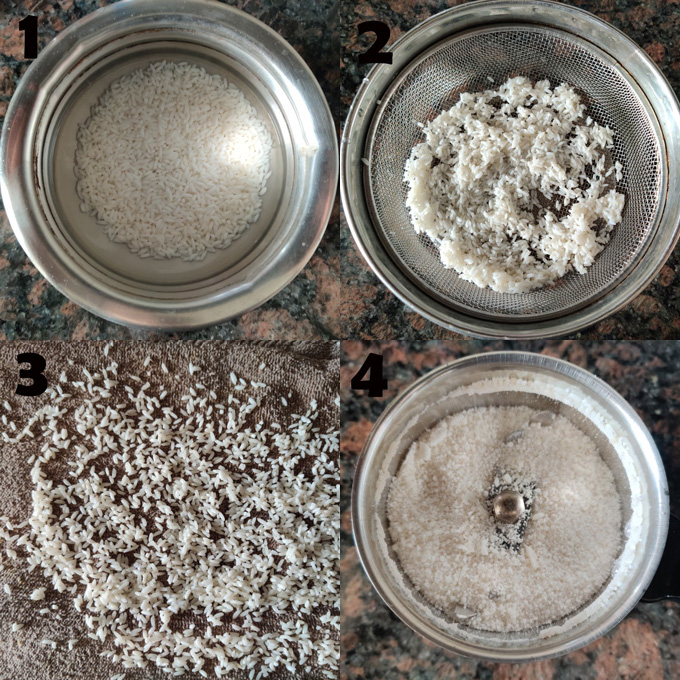
Prepare Rice Powder: Clean, wash, and soak rice in water for 15 minutes. Next, drain water, and spread soaked rice on a metal strainer or dry kitchen towel.
Allow the rice to become completely dry. It should not be wet or moist.
Make a coarse powder (you should feel the rice texture) of rice in the blender. DO NOT make a fine powder. Keep aside.
Dry Fruits Powder: Grind almonds and pistachio to a coarse powder. Set aside. You can grind green cardamom as well with them.
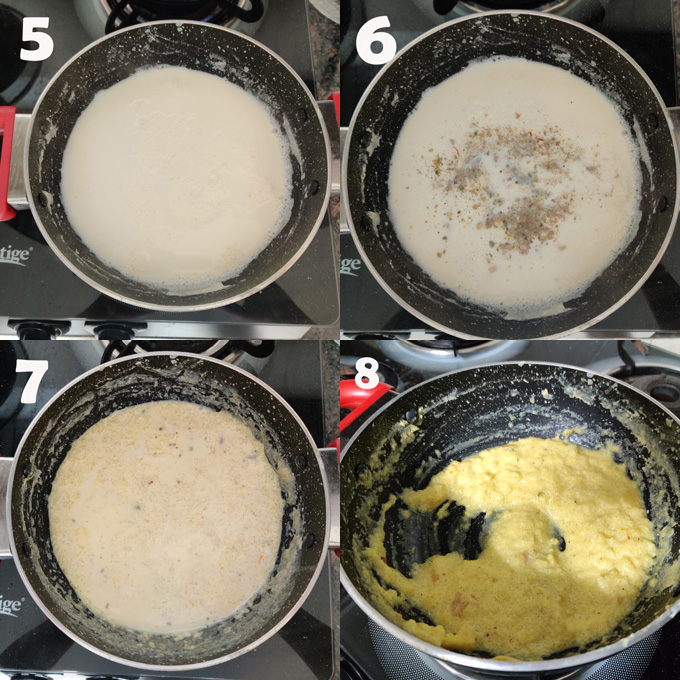
Make Phirni: Boil milk in a heavy-bottom saucepan. Add dry fruit powder and saffron, stir to combine, and simmer the milk over low heat.
Add rice powder once the milk is reduced to almost half the original quantity. Stir continuously to avoid any lump formation.
Cook till rice is soft and mushy and the texture of phirni is thick.
Once phirni is thick, add sugar and stir to combine nicely. Cook for a few more minutes for the sugar to dissolve. Turn off the heat.
Allow the phirni to cool down entirely before keeping it in the refrigerator.
My Tried & True Tips
It is best to use full-fat milk for this phirni recipe.
Stir the milk at regular intervals while simmering to avoid burning. Use a wooden spoon to stir the milk and phirni.
The rice should not be wet/moist while grinding; it will form lumps once added to milk.
Do not make a fine powder of dry fruit or rice. Instead, keep it coarse in texture. One pulse in a food processor or blender is enough.
Make sure to add sugar only after the phirni is thickened.
Phirni thickens more in texture after cooling. Hence, adjust the consistency accordingly.
Allow phirni to chill in the fridge for 1 – 2 hours or overnight before serving.
Serving and Storing Suggestions
A firni is best-served cold in earthen pots ( mitti ke kulhad ). I prefer making it a day before serving and chilling it in the refrigerator overnight.
Suppose you are not keen on serving it chilled. Instead, serve firni at room temperature.
Store the leftover phirni in an airtight container in the refrigerator for 3 – 5 days. No need to reheat. Serve at room temperature or cold.
Watch Phirni Video
More Indian Dessert Recipes
Jalebi
Rice Kheer
Mawa Barfi
Besan Laddo
Paneer Kheer
If you try this recipe and love it, please leave a comment and a rating. This helps us grow and reach other food lovers like you.
Ingredients
- ▢ 1- lite full fat milk
- ▢ ¼ Cup rice
- ▢ ½ Cup granulated white sugar
- ▢ 1 teaspoon green cardamom powder
- ▢ ½ teaspoon saffron
- ▢ 2 tablespoon almonds
- ▢ 2 tablespoon pistachio
Instructions
- To prepare the Phirni, wash and soak rice in water for about 15 minutes. Next, drain water, and spread soaked rice on a metal strainer or dry kitchen towel. Allow the rice to become completely dry. It should not be wet or moist.
- Make a coarse powder (you should feel the rice texture) of rice in the blender. DO NOT make a fine powder. Keep aside in a bowl.
- Grind almonds and pistachio to a coarse powder. Set aside. You can grind green cardamom as well with them.
- Boil milk in a heavy bottomed pan, reduce the heat to low once the milk starts bubbling. Add saffron, cardamom powder, and dry fruits powder. Stir to combine.
- Simmer the milk over low heat and stir at regular intervals until milk is reduced to almost half from the original quantity.
- Add rice powder. Stir continuously to avoid any lump formation. Cook till rice is soft, mushy, and the texture of phirni is thick.
- Once phirni is thick, add sugar and stir to combine nicely. Taste and add more sugar if required. After cooling down, the phirni taste less sweet. Cook for few more minutes for the sugar to dissolve. Turn off the heat.
- Let Phirni cool down for some time. Once Phirni has cooled down transfer it into earthenware containers. Keep in the fridge for at least 1 hour before serving.
- Serve Phirni chilled garnished with chopped nuts and saffron strands.
Recipe Notes:
- Never add sugar before milk is thickened. It prevents milk from thickening.
- After adding rice powder continuously stir the phirni else there is lump formation.
- After cooling down firni becomes thicker. Hence, adjust the consistency accordingly.
Nutrition
We follow a strict NO SPAM Policy
