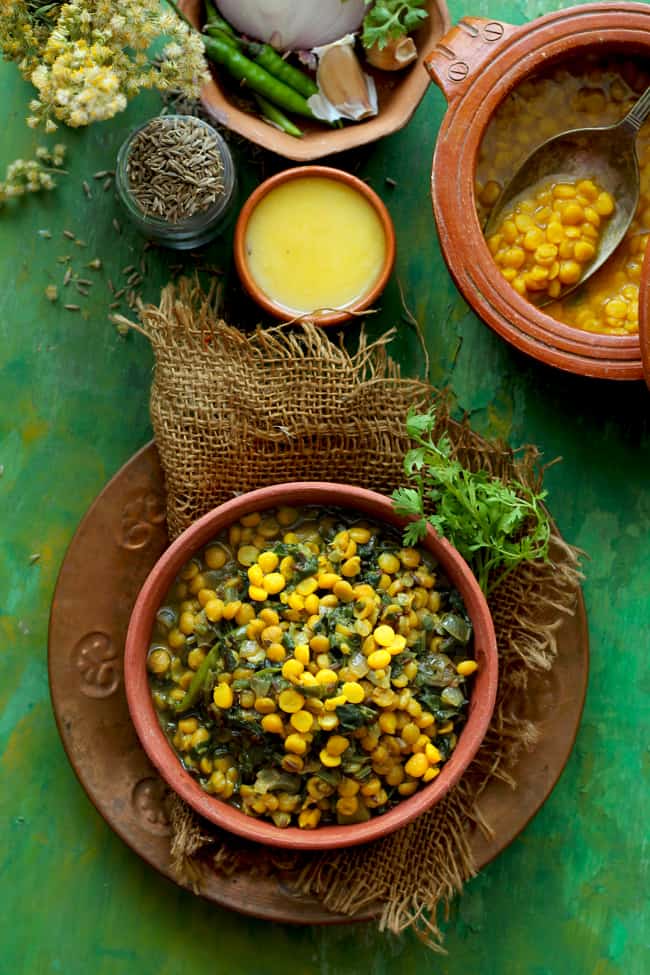
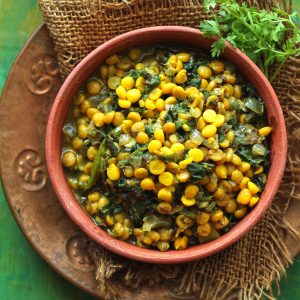
Palak Chana Dal: a popular dal recipe from North India packed with the goodness of Bengal Gram and spinach. It is nutritious and delicious! Be sure to watch the video!
- Healthy Benefits Of Palak Chana Dal
- Dal Palak Recipe Variations
- Watch Dal Palak Video
- My Tried and True Tips
- Palak Chana Dal Recipe
Palak Chana Dal is a popular dal recipe from North India. It is also known as dal palak. In Hindi, spinach is known as ‘palak’. Dal Palak is easy and quick to prepare in a pressure cooker.
Healthy Benefits Of Palak Chana Dal
- Bengal Gram and spinach are the powerhouses of nutrients. Combining these two into a single curry is smart to include the right amount of iron in our everyday diet.
- On a busy weekday , we get so much lost in the chaos of life that the nutrient part of any meal is almost neglected.
- I try to include simple yet nutritious dishes like dal palak or chana dal khichdi in my everyday meal .
- Due to improper diet, pregnancy, monthly periods, and many other zillion reasons, we women are mostly iron deficient. What could be a tastier way than this dal palak to regulate our daily iron intake?
Dal Palak Recipe Variations
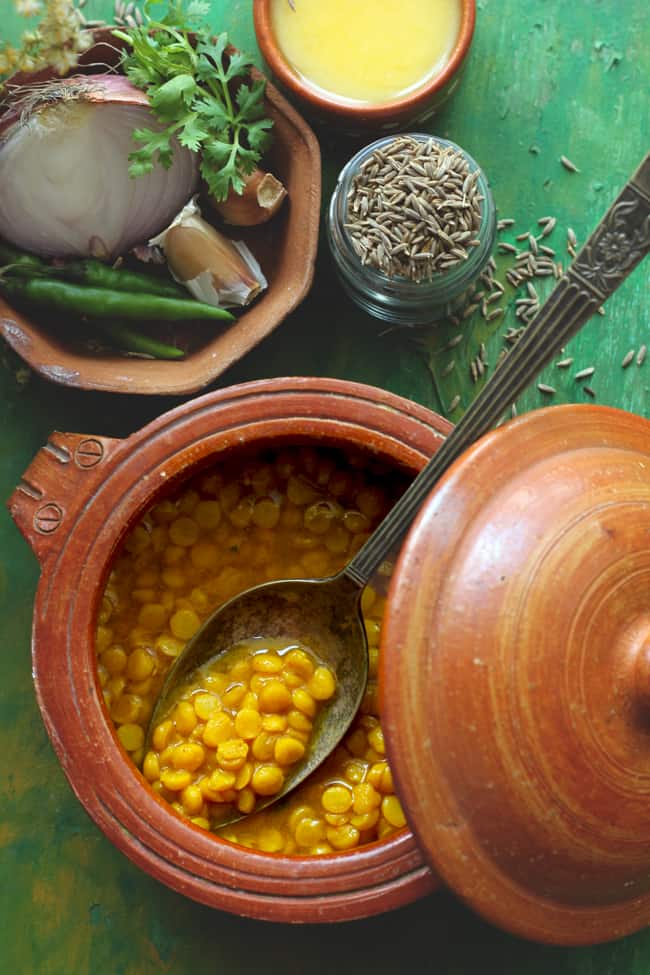
Lentils: You can use any easy-to-cook lentil to make dal palak. From yellow moong dal, green moon , and pink masoor to pigeon peas , any of these lentils can easily substitute Bengal gram in this healthy palak chana dal recipe.
Greens: If you are in the mood to experiment, combine tender radish leaves, kale or methi leaves, and spinach in the dal. The addition of a variety of greens makes dal even more nutritious.
Vegan: To make vegan dal palak, you must skip ghee to temper the dal. Substitute ghee with any other vegan cooking oil or coconut oil.
Instant Pot: Dal Palak is an instant pot -friendly dish. Or you can use an electric pressure cooker to make it ( check recipe notes ).
Watch Dal Palak Video
Serving Suggestion
I LOVE to enjoy chana dal palak with:
- Jeera Rice
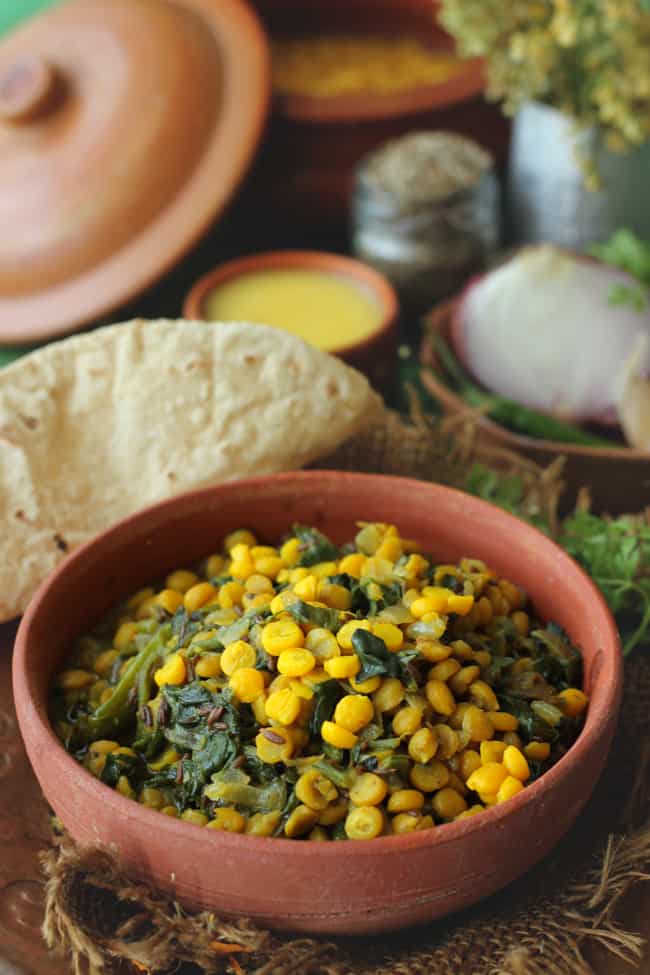
- Chapati or Roti
- Steamed Basmati Rice
Adding toppings like – chopped onion, tomato, fried egg, and coriander transforms this dal into a tasty one-pot meal .
My Tried and True Tips
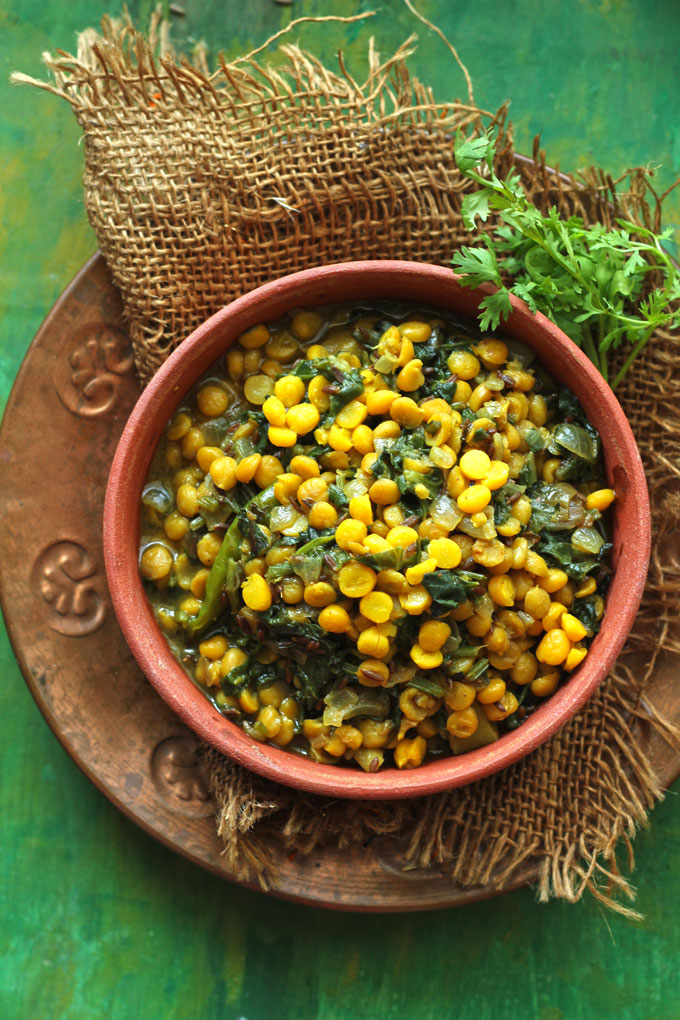
- Ensure you soak the chana dal for at least 15 – 20 minutes before cooking. This ensures even and quick cooking of the lentil.
- Do not pressure cook the chana dal for too long and with too much water. It might turn mushy.
- Ghee not only provides a flavour to the dal it is also good fat.
- Spinach should not be cooked for too long as its nutrients get wasted during the long cooking process. Once leaves turn soft, add the dal.
- Lastly, serve and enjoy dal palak while it is warm and fresh because fresh food is always healthier than stale meals the next day.
More Indian Dal Recipes
- Dal Makhani
- Gahat Ki Dal
- Lobia Masala
- Arhar Dal Fry
- Panchmel Dal
- Langar Wali Dal
- Moong Dal Chaat
- Everyday Masoor Dal
Ingredients
- ▢ 1 Cup Chana Dal (Bengal Gram)
- ▢ 1 green chili, sliced
- ▢ 1 tablespoon grated ginger
- ▢ 1 inch cinnamon stick
- ▢ 1 star anise
- ▢ Salt to taste
- ▢ 2 tablespoon ghee
- ▢ 2 whole dry red chilies
- ▢ 1 teaspoon cumin seeds (jeera)
- ▢ 1 Cup finely chopped onion
- ▢ 2 Cup finely chopped spinach
- ▢ 1 teaspoon turmeric powder
- ▢ 1 teaspoon red chilli powder
Instructions
Pressure Cook Dal:
- Clean, wash and soak the chana dal in water for 10 – 15 minutes. After 15 minutes, drain water from the soaked dal.
- Transfer chana dal to a pressure cooker along with ginger, green chili, cinnamon stick, star anise, salt and 2 cups of water. Stir to mix and close the lid of the pressure cooker.
- Pressure cook the dal over low heat till it is soft or al-dente but not mushy. This usually takes 10 minutes. Allow the steam to release naturally from the pressure cooker. Open the lid and check the lentil for doneness.
Prepare Tempering:
- Heat ghee in a heavy bottom pan.
- Add the cumin seeds and dry red chilies. Saute for 10 seconds.
- Next, add the chopped onion and fry till they turn light brown.
- Add the chopped spinach and spices. Stir to combine and cook for 1 – 2 minutes or till the leaves become soft.
- Now add the pressure cooked dal and mix nicely. Cove and cook the day for 5 minutes over low heat.
- Serve Palak Chana Dal warm with chapati and mint raita .
Recipe Notes:
Nutrition
We follow a strict NO SPAM Policy
Palak Chana Dal Recipe
Equipment
- Pressure Cooker
Ingredients
- 1 Cup Chana Dal (Bengal Gram)
- 1 green chili, sliced
- 1 tablespoon grated ginger
- 1 inch cinnamon stick
- 1 star anise
- Salt to taste
- 2 tablespoon ghee
- 2 whole dry red chilies
- 1 teaspoon cumin seeds (jeera)
- 1 Cup finely chopped onion
- 2 Cup finely chopped spinach
- 1 teaspoon turmeric powder
- 1 teaspoon red chilli powder
Instructions
Pressure Cook Dal:
- Clean, wash and soak the chana dal in water for 10 - 15 minutes. After 15 minutes, drain water from the soaked dal.
- Transfer chana dal to a pressure cooker along with ginger, green chili, cinnamon stick, star anise, salt and 2 cups of water. Stir to mix and close the lid of the pressure cooker.
- Pressure cook the dal over low heat till it is soft or al-dente but not mushy. This usually takes 10 minutes. Allow the steam to release naturally from the pressure cooker. Open the lid and check the lentil for doneness.
Prepare Tempering:
- Heat ghee in a heavy bottom pan.
- Add the cumin seeds and dry red chilies. Saute for 10 seconds.
- Next, add the chopped onion and fry till they turn light brown.
- Add the chopped spinach and spices. Stir to combine and cook for 1 - 2 minutes or till the leaves become soft.
- Now add the pressure cooked dal and mix nicely. Cove and cook the day for 5 minutes over low heat.
- Serve Palak Chana Dal warm with chapati and mint raita .
Video
Notes
Nutrition
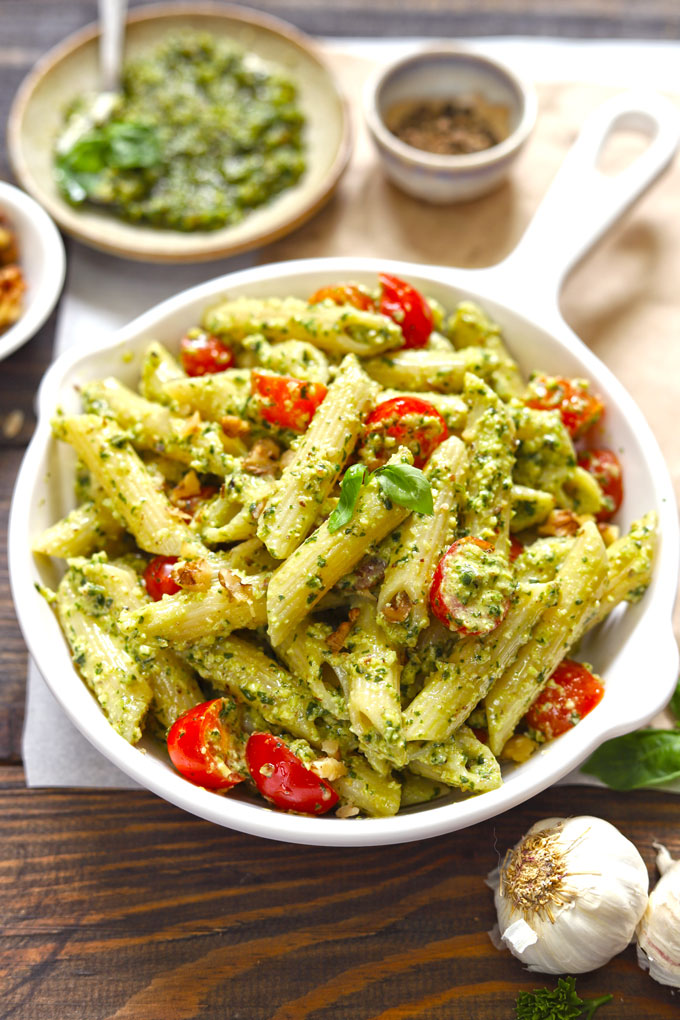
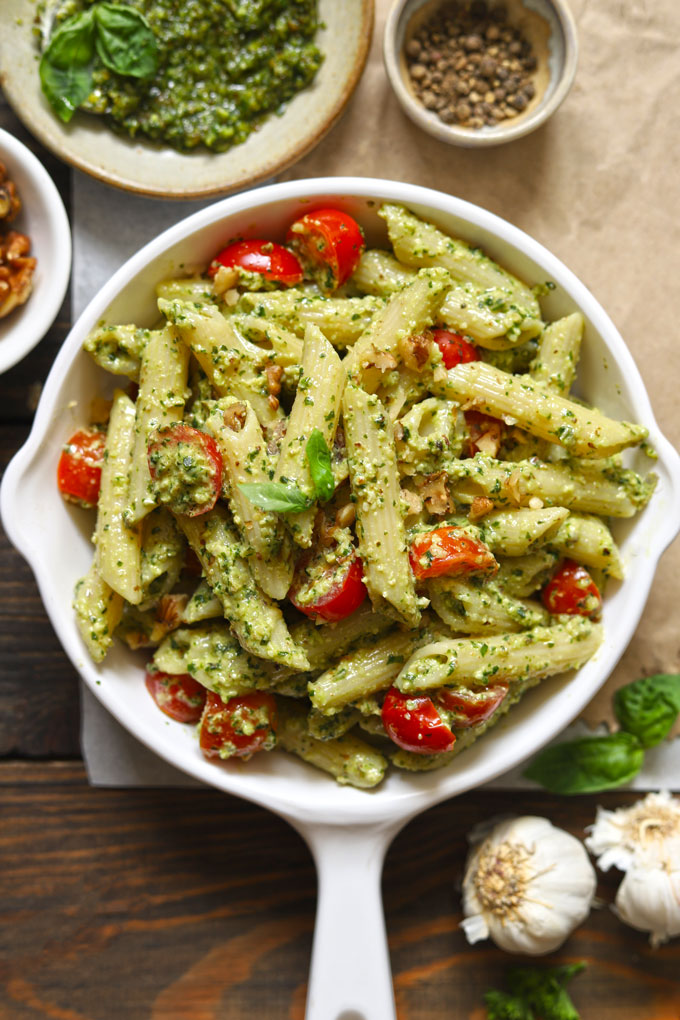
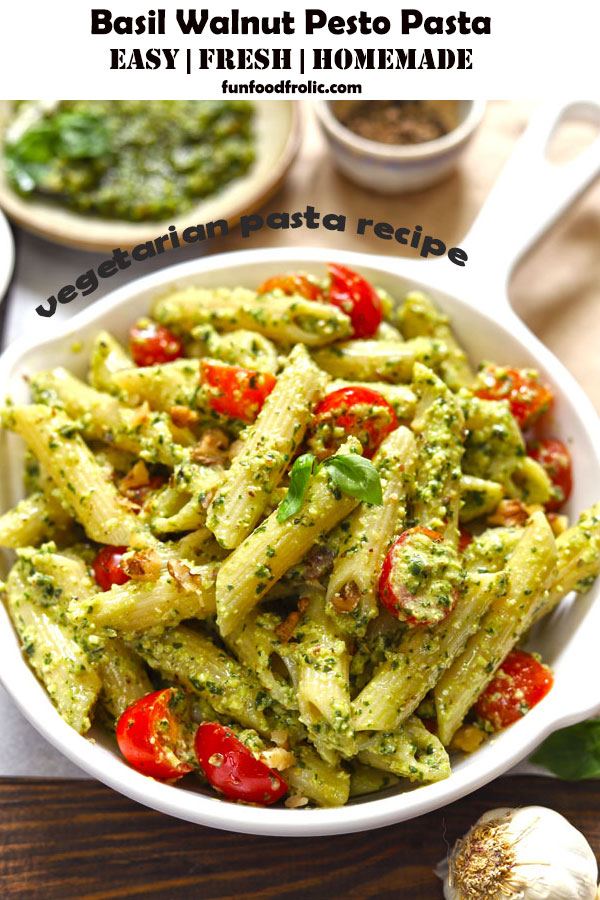
This is a delicious, vegetarian pasta recipe packed with the flavour of fresh basil and walnut pesto. Follow my tried and true tips to make a perfect pesto pasta that won’t turn black or bitter.
- About Basil Walnut Pesto
- Ingredients You’ll Need For Pesto
- Tips to Avoid Black & Bitter Pesto
- Best Pasta For the Pesto Sauce
- How To Make Basil Pesto Pasta
- FAQ’s Related To Basil Pesto Pasta
- More Pasta Recipes
- Basil Pesto Pasta Recipe
About Basil Walnut Pesto
Pesto or the pesto alla genovese is a traditional Italian sauce made with fresh basil leaves, pine nuts, garlic, salt, Parmesan cheese, and olive oil.
Homemade Pesto Sauce is the best use for all the fresh summer basil growing in your herb garden. It has a coarse, rustic texture, the freshness of basil leaves, and the nuttiness of pine nuts.
I am using a basil and walnut pesto sauce for this pasta recipe. The walnuts give an earthy, robust taste to the pesto sauce.
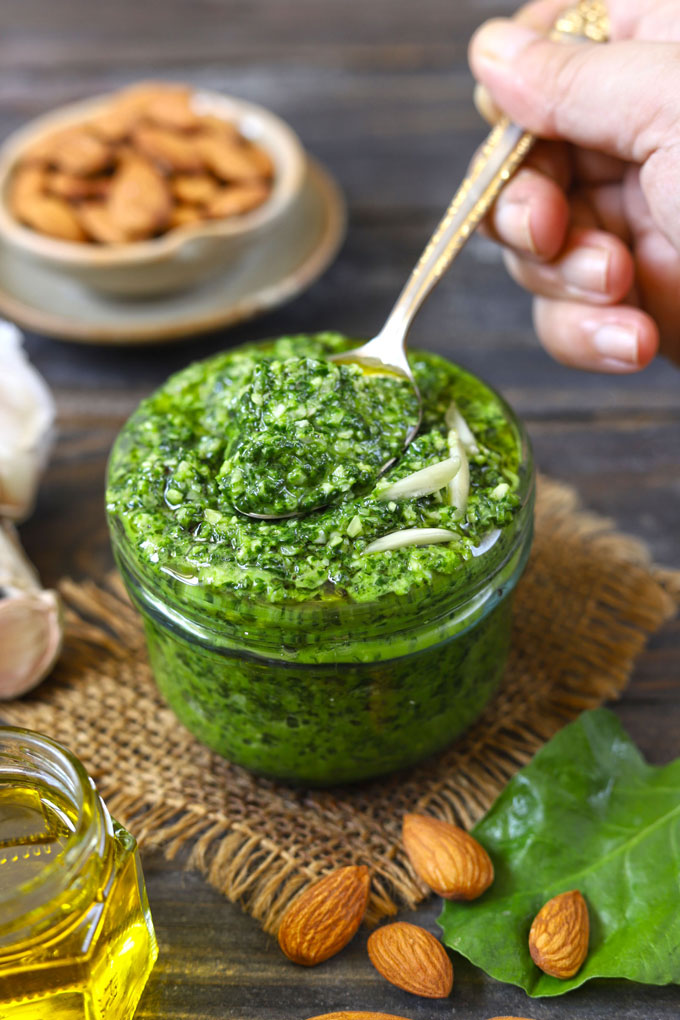
You can combine broccoli with the basil to make a unique broccoli pesto pasta or almonds and spinach for a vegan pesto sauce .
Ingredients You’ll Need For Pesto
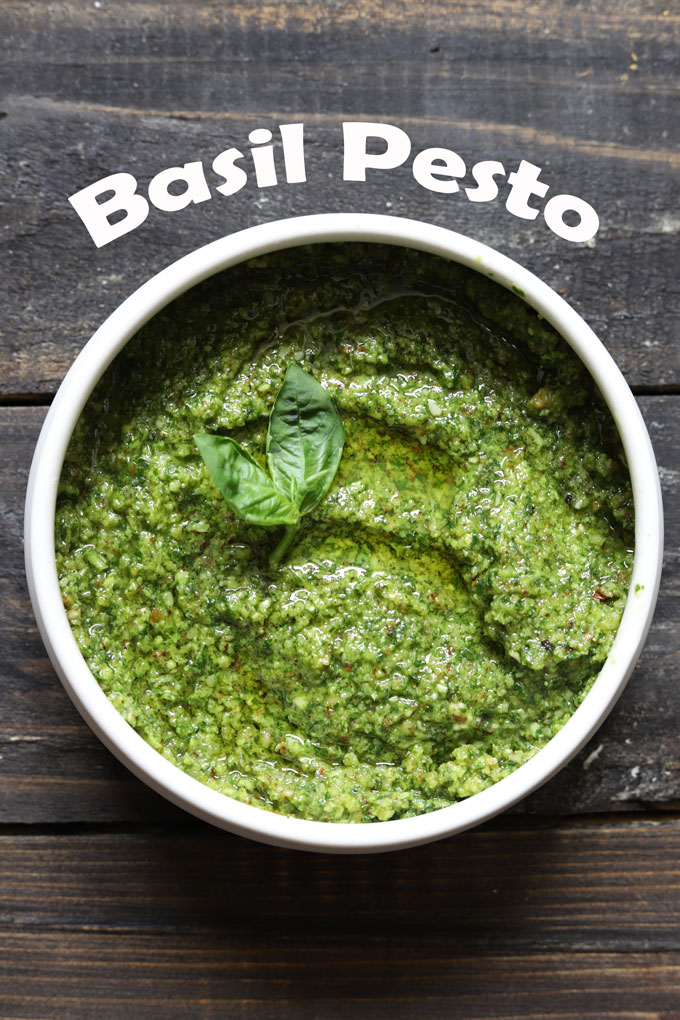
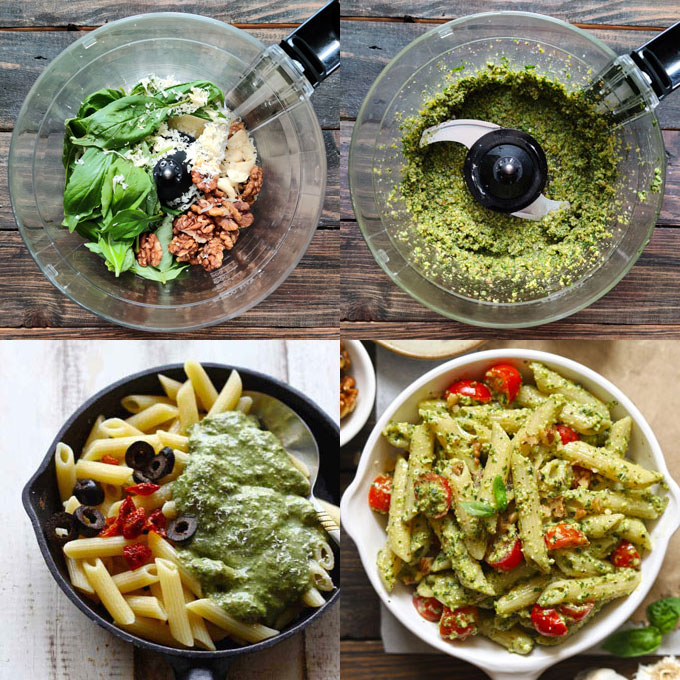
You need only 7 ingredients and a food processor to make this pesto sauce . It is a no-cook sauce. Blitz the ingredients and the pesto sauce is ready.
- Fresh Basil : Use only fresh basil leaves for making pesto. Italian Basil will be a perfect choice.
- Walnuts : You can use pine nuts or cashews as well instead of walnuts.
- Cheese : Grated or shredded Parmesan cheese works for this sauce
- Garlic : Adjust the number of garlic cloves according to personal preference
- Olive Oil : Use a good quality extra virgin olive oil
- Salt & Pepper to taste
Tips to Avoid Black & Bitter Pesto
Nothing is more satisfying than preparing a batch of pesto sauce at home with handpicked basil leaves from the kitchen garden.
But the biggest challenge with the basil pesto is at times – it turns black and bitter. I am sharing a few tips and tricks to avoid black and bitter pesto sauce:
- Pesto Sauce is not meant for robust cooking. In fact, the pesto hates the heat. The more you cook the sauce, the more it loses nutrients, freshness, and colour.
My Tip: Combine pesto sauce while the pasta is hot in a mixing bowl and not on the stovetop. Serve immediately.
- Pesto turns black when exposed to air for a longer duration due to oxidation.
My Tip: This can be prevented by pouring a thin layer of olive oil on top of the pesto and by storing it in an airtight container.
- Often pesto tastes bitter. Usually, there are two reasons responsible for the same. First, nuts or olive oil has gone rancid. Second, the sauce blended for too long leading to the release of bitter juices of basil leaves.
My Tip: Ensure that you are using quality ingredients and specifically check that the nuts or the olive oil. Second, one or two blitzes in a food processor are enough to make pesto sauce. Or use the traditional mortar and pestle to make the sauce.
Spinach Pesto
Best Pasta For the Pesto Sauce
Feel free to pick pasta of your choice to coat in the green pesto sauce.
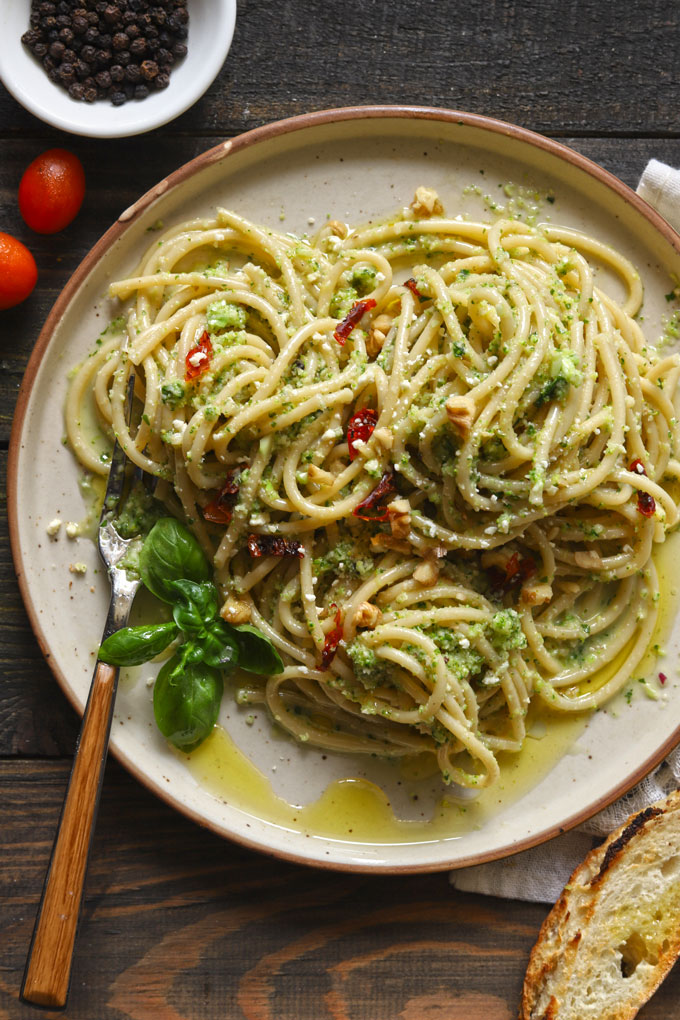
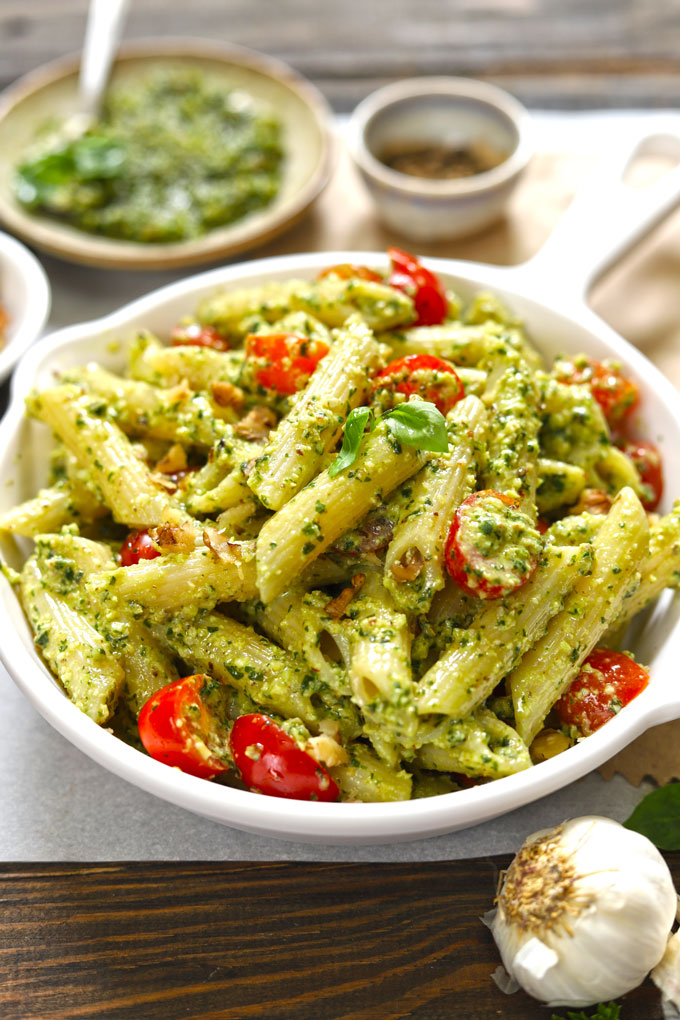
- My personal favourites are either spaghetti (long noodle shape) or penne (the tubular shape) . The thick and luscious pesto sauce clings nicely to these shapes of pasta.
- I feel the delicate texture of pasta like angel hair also works perfectly to make basil pesto pasta.
Spaghetti
How To Make Basil Pesto Pasta
It is a very simple, straightforward process that requires minimal cooking.
- Cook Pasta: Boil water in a saucepan with salt. Add the desired shape of pasta and cook till al-dente. Reserve 1 cup of boiled pasta water. Drain the remaining water. Transfer the cooked pasta to a mixing bowl
- Make Pesto Sauce: Start with blending the ingredients in a food processor to make the pesto sauce.
- Combine: Add pesto sauce to the cooked pasta. Mix nicely, add ¼ cup of reserved pasta water to make it saucy. Add the remaining ¼ cup of water, cream, cherry tomato, mix, and the basil pesto pasta is ready to serve.
Transfer the pesto to an airtight container, drizzle some olive oil to cover the top, place a cling foil to cover the layer of olive oil. Close the lid of the container and store it in the refrigerator for 2 – 3 days. The colour of the sauce might change after a day or so.
Pesto sauce can be consumed either raw or cooked. It can be used as a dip, salad dressing, or as a gluten-free sandwich spread.
You can re-heat the pesto pasta on a stove-top or microwave. However, this may impact the taste, and colour of the pasta. It will not be as fresh and flavourful. It is best to cook and serve immediately.
More Pasta Recipes
- Tomato Sauce Pasta
- Fusilli Pasta Caprese
- Makhani Sauce Pasta
- Chicken Broccoli Pasta
- Greek Orzo Pasta Salad
- Pasta with Cherry Tomato
- Creamy White Sauce Pasta
- Instant Pot Spaghetti Aglio Olio
Ingredients
Ingredients For Cooking Pasta:
- ▢ 200 gram penne pasta (approx 2 Cups)
- ▢ 6 Cup water
- ▢ 1 tablespoon salt
Ingredients For Basil Pesto:
- ▢ 2 Cup fresh basil leaves
- ▢ ½ Cup walnuts
- ▢ ¼ Cup grated parmesan cheese
- ▢ ¼ Cup extra virgin olive oil
- ▢ 4 – 6 garlic cloves
- ▢ Salt and pepper to taste
Other Ingredients:
- ▢ 1 Cup cherry tomato, cut into halves
- ▢ 2 – 4 tablespoon heavy cream (optional)
- ▢ 1 tablespoon coarsely chopped walnuts
Instructions
Cook Pasta:
- Boil water in a saucepan with salt. Add the desired shape of pasta and cook till al-dente. Reserve 1 cup of boiled pasta water. Drain the remaining water. Transfer the cooked pasta to a mixing bowl. Set aside.
Make Basil Pesto:
- While the pasta is cooking, start making pesto sauce.
- Add all the pesto ingredients except olive oil in a food processor with the blade attachment. Seal the lid of the food processor. Start blending the ingredients while slowly and steadily pouring the olive oil. You may need to stop. scrape, and again blend the ingredients. But do not blend more than 1 minute.
- Store pesto sauce in an airtight conatiner in the refrigerator or use it immediately.
Assemble:
- Transfer cooked pasta to a mixing bowl. Add pesto sauce, cherry tomato, cream, and ¼ cup of reserved boiled pasta water. Toss to evenly coat pasta with the sauce. The sauce should cling to the pasta.
- If the pasta dries up or soak the sauce, add ¼ cup remaining boiled pasta water and toss once again.
- Garnish basil pesto pasta with chopped walnut and cheese.
- Serve Basil Pesto Pasta immediately with focaccia bread .
Recipe Notes:
- Pesto Sauce is not meant for robust cooking. Combine pesto sauce while the pasta is hot in a mixing bowl and not on the stovetop.
- Pesto turns black when exposed to air for a longer duration due to oxidation.
- Do not blend the pesto sauce for too long in the food processor as it might turn bitter.
- Feel free to pick pasta of your choice to coat in the green pesto sauce. My personal favorites are either spaghetti (long noodle shape) or penne (the tubular shape) .
- To make the pesto pasta saucy and juicy use the boiled pasta water.
- Adding heavy cream is optional. It makes pesto pasta creamy and rich.
Nutrition
We follow a strict NO SPAM Policy
