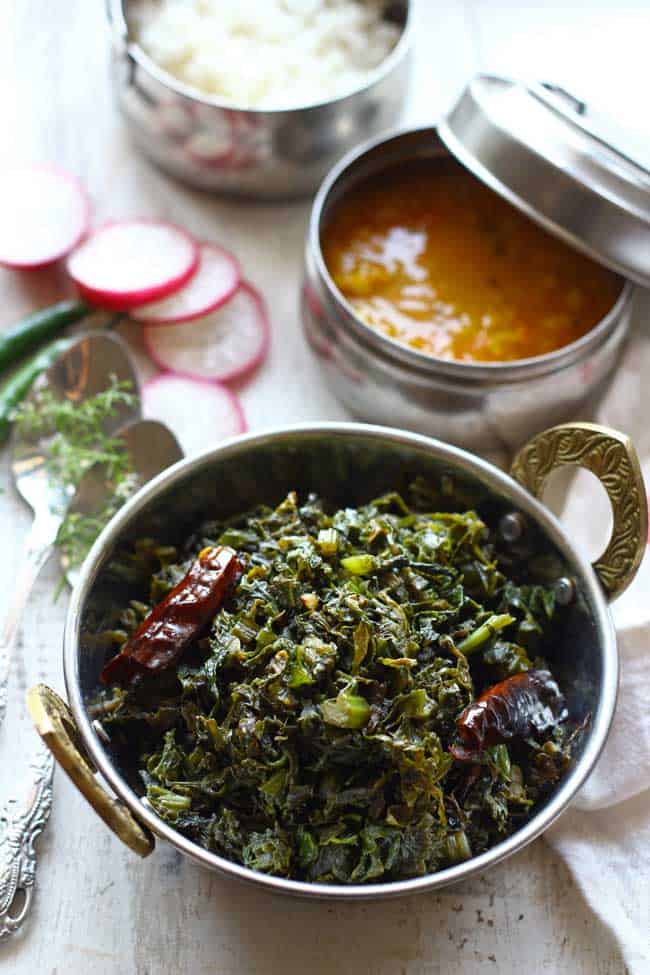
Pahadi Lai Ki Sabzi is a healthy and tasty Kumaoni-style stir fry of a local variety of red mustard greens. It is a sattvic sabzi made without onion, garlic, ginger or tomato.
Estimated reading time: 4 minutes
- About Pahadi Mustard Greens
- Ingredients You’ll Need
- How To Make
- Serving Suggestion
- Pahadi Lai Ki Sabzi
About Pahadi Mustard Greens
Uttarakhand, nestled in the Himalayas, boasts a cuisine that is simple, rustic, and highly nutritious. One such humble yet flavorful dish is Lai ki Sabzi, a stir-fry made from a local variety of mustard leaves.
The colour of Pahadi mustard leaves has shades of red, crimson, and dark green. The broad and curled leaves look very similar to Kale and have a peculiarly sharp aroma like mustard seeds/oil.
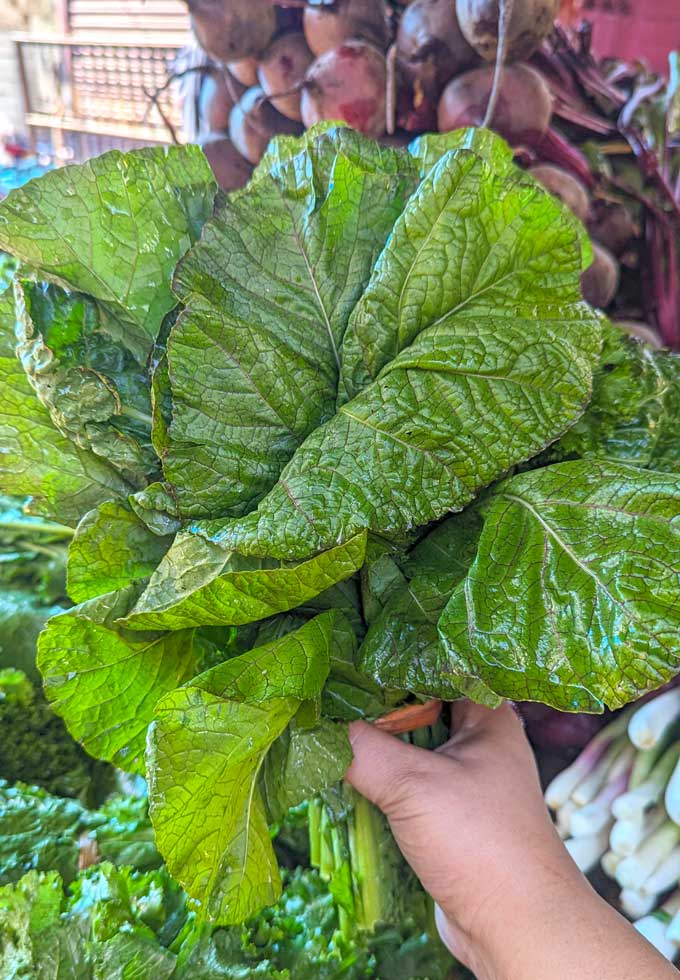
In the local Kumaoni dialect, we call this variety of mustard greens Lai or Lai Ki Sabzi or Lai Ka Saag. It is available from autumn to winter season. And disappears with the spring.
Known for its earthy flavours and packed with nutrients, this lai ki sabzi perfectly reflects the essence of Pahadi (mountain) cuisine, which focuses on fresh ingredients and minimal spices.
Why You’ll Love Pahadi Lai Ki Sabzi
- low-calorie but nutrition-dense
- vegan, plant-based dish
- easy, healthy and tasty
- gluten and nut-free
- sattvic recipe
Ingredients You’ll Need
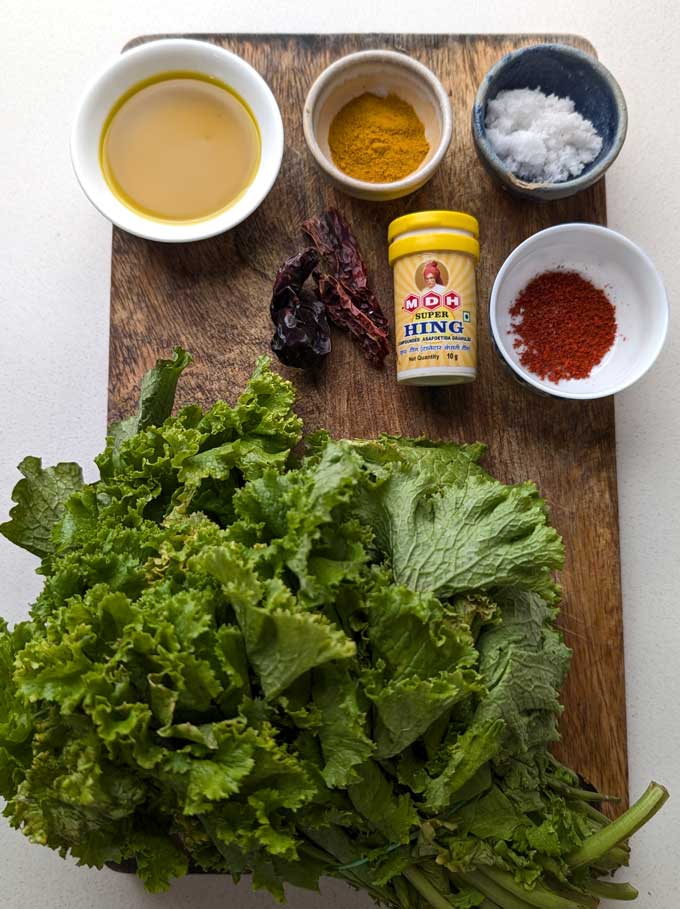
- Pahadi Lai or mustard greens are the key ingredients in this Kumaoni recipe. You can make it with regular sarson leaves but the taste is way different.
- Mustard Oil is used to cook lai ki sabzi. You can substitute it with neutral-tasting vegetable refined oil.
- Salt, Turmeric Powder, Red Chilli Powder, Hing (Asafoetida), Dried Red Chillies
How To Make
Prep Greens:
- Remove the tough stem from the base of the greens. Wash the leaves in water twice or thrice to make sure they are clean and free of dirt.
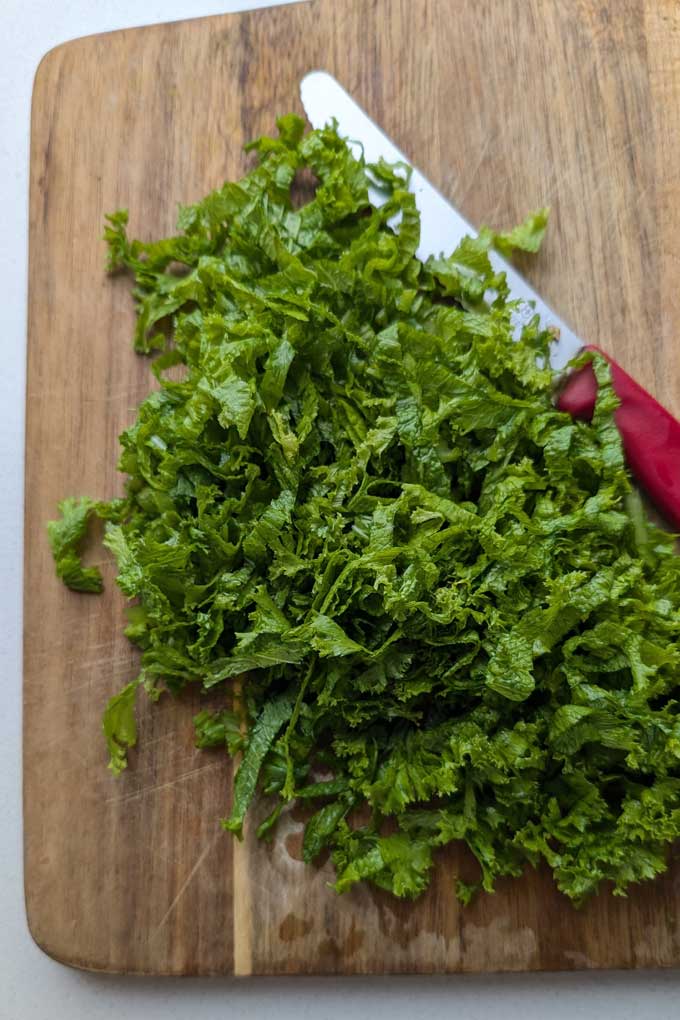
- Chop the greens into fine threads. The finer they are cut the better they taste.
Cooking Lai :
- Heat oil in a thick bottom wok over high heat. Once the oil reaches the smoking point, reduce the heat to low.
- Add the dry red chillies and asafoetida. Cook for a few seconds.
- Now add the chopped mustard greens, salt, turmeric, and red chili powder. Mix well, and cover the wok with a lid.
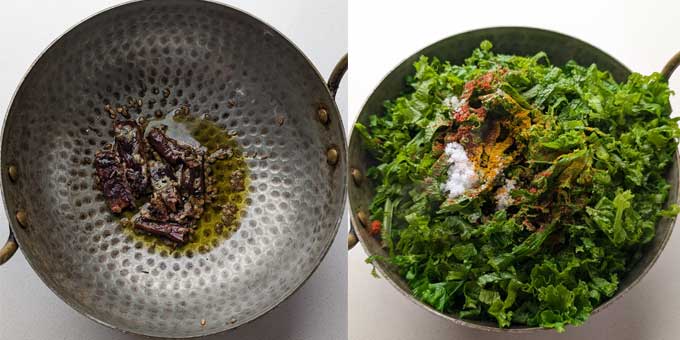
- Allow the greens to cook on low flame. It takes 10 -12 minutes. Stir the sabzi at regular intervals to avoid scorching.
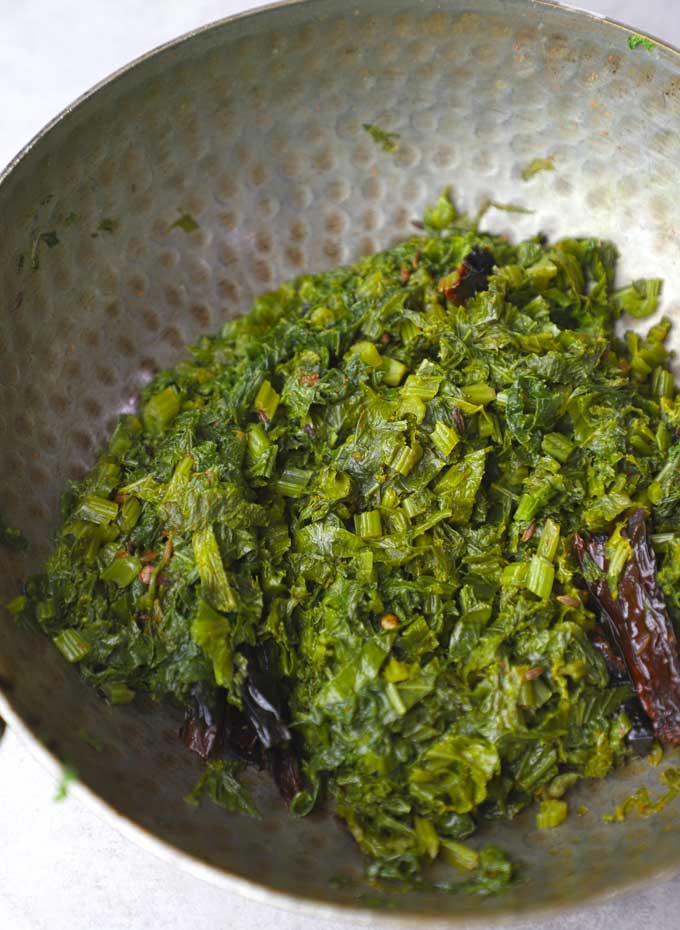
- Do not cook the greens for too long otherwise, they will become bitter.
Serving Suggestion
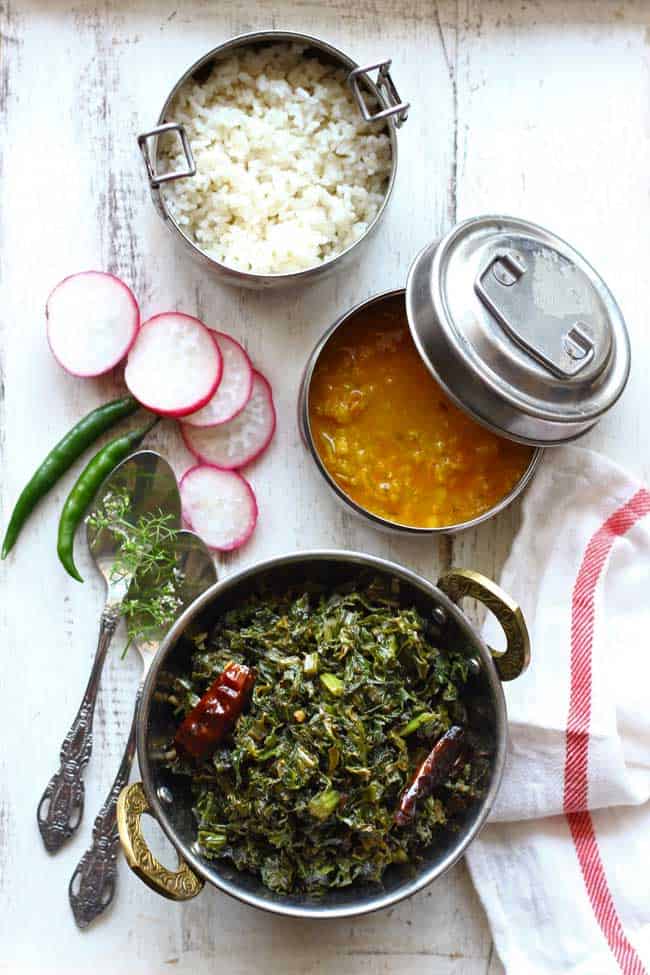
There is a kind of unsaid comfort in relishing lai ki sabzi with pahadi gahat ki dal or arhar ki dal and bhaat (rice). It’s fresh, filling, flavoursome, and a nourishing winter meal.
At my home, we enjoy Pahadi lai ki sabzi with paratha for breakfast or a quick lunch at times.
More Uttarakhand Recipes
- Pahadi Pua
- Aloo Ke Gutke
- Kheere Ka Raita
- Pahadi Badi Bhaat
- Pahadi Aloo Paani
- Kumaoni Dal Bada
- Pahadi Gahat Ki Dal
- Pahadi Mooli Ki Jholi
Ingredients
- ▢ 2 bunch Pahadi mustard leaves (lai)
- ▢ 2 tablespoon mustard oil
- ▢ 2 dried red chillies, broken
- ▢ ¼ teaspoon hing (asafoetida)
- ▢ Salt to taste
- ▢ ¼ teaspoon red chili powder
- ▢ ¼ teaspoon turmeric powder
Instructions
- Remove the tough stem from the base of the greens. Wash the leaves in water twice or thrice to make sure they are clean and dirt-free.
- Chop the greens into fine threads. The finer they are cut the better they taste.
- Heat oil in a thick bottom wok over high heat. Once the oil reaches the smoking point, reduce the heat to low.
- Add the dry red chillies and asafoetida. Cook for a few 10 seconds.
- Now add the chopped mustard greens with salt, turmeric and red chilli powder. Mix nicely and cover the wok with a lid.
- Allow the greens to cook on low flame. It takes 10 -12 minutes. Stir the sabzi at regular intervals to avoid scorching.
- Do not cook the greens for too long otherwise, they will become bitter.
- There should not remain any liquid of the greens in the kadhai.
- Serve Lai Ki Sabzi warm with arhar ki dal and rice.
Recipe Notes:
- Red Mustard Greens already have some sort of saltiness to them. It is recommended to use less than usual salt to season the vegetables.
- Best taste the vegetable while cooking and add more salt if required.
- You can season the oil with cumin seeds, or finely minced garlic.
- There should not remain any liquid of the greens in the kadhai.
Nutrition
We follow a strict NO SPAM Policy
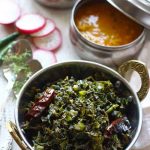
Pahadi Lai Ki Sabzi
Equipment
- Heavy Bottom Kadhai
Ingredients
- 2 bunch Pahadi mustard leaves (lai)
- 2 tablespoon mustard oil
- 2 dried red chillies, broken
- ¼ teaspoon hing (asafoetida)
- Salt to taste
- ¼ teaspoon red chili powder
- ¼ teaspoon turmeric powder
Instructions
- Remove the tough stem from the base of the greens. Wash the leaves in water twice or thrice to make sure they are clean and dirt-free.
- Chop the greens into fine threads. The finer they are cut the better they taste.
- Heat oil in a thick bottom wok over high heat. Once the oil reaches the smoking point, reduce the heat to low.
- Add the dry red chillies and asafoetida. Cook for a few 10 seconds.
- Now add the chopped mustard greens with salt, turmeric and red chilli powder. Mix nicely and cover the wok with a lid.
- Allow the greens to cook on low flame. It takes 10 -12 minutes. Stir the sabzi at regular intervals to avoid scorching.
- Do not cook the greens for too long otherwise, they will become bitter.
- There should not remain any liquid of the greens in the kadhai.
- Serve Lai Ki Sabzi warm with arhar ki dal and rice.
Notes
- Red Mustard Greens already have some sort of saltiness to them. It is recommended to use less than usual salt to season the vegetables.
- Best taste the vegetable while cooking and add more salt if required.
- You can season the oil with cumin seeds, or finely minced garlic.
- There should not remain any liquid of the greens in the kadhai.
Nutrition
Learn how to make Moong Dal Samosa, a traditional Indian snack filled with a unique dal filling. Perfect for festive celebration! Be sure to watch the video!
Estimated reading time: 3 minutes
- My Tried and True Tips
- Watch Dal Samosa Video
- Serving Suggestion
- Moong Dal Samosa Recipe
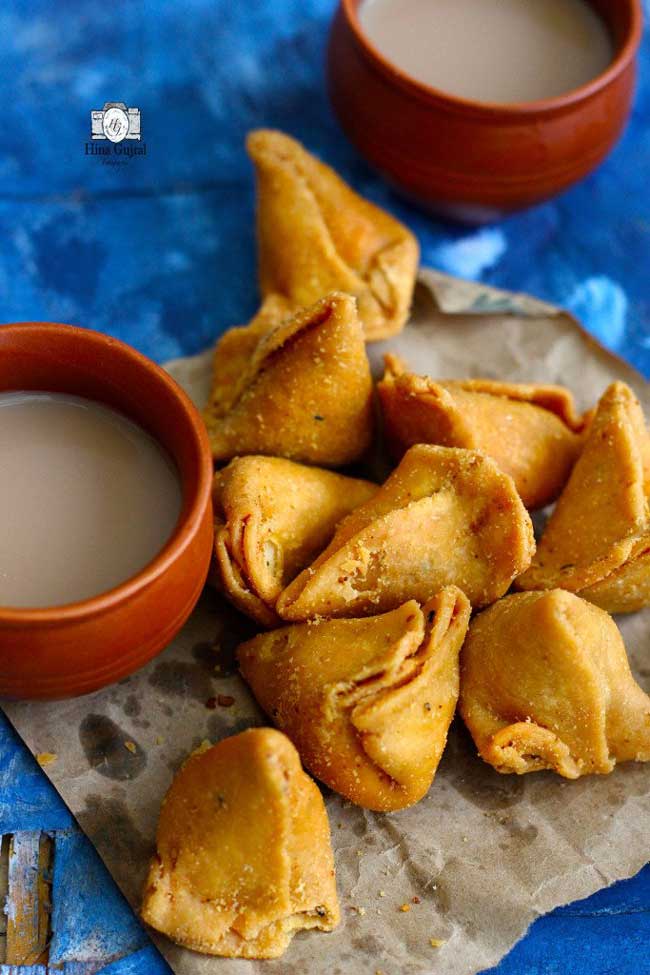
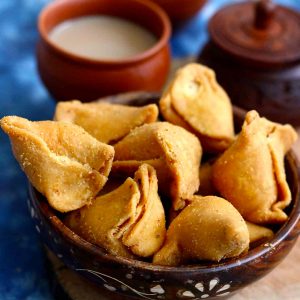
Moong Dal Samosa is a vegetarian and vegan Indian snack. This bite-size samosa is stuffed with a unique dal filling. They are the perfect pre-make snack for the Indian festival celebration .
I was born and brought up in the small town of Uttarakhand, which was part of Uttar Pradesh earlier, where every lady is an expert in making tea-time snacks, chips, sweetmeats at home.
As a kid, I used to help my mom in making all the Holi and Diwali Snacks .
My Tried and True Tips
Dal Samosa Dough:
- Make sure to rub oil and flour nicely before adding water. This process needs most of your time and attention if you want a sweetshop like dal samosa. Both (flour and oil), when combined, must look like bread crumbs.
- Next, add only one tablespoon of ice-cold water at a time to bind the dough. Again, we want a stiff dough and not a soft one. Finally, knead the dough for 5 – 10 minutes.
- Rest the dough covered at room temperature for at least 30 minutes. Resting is essential for the samosa dough.
- After 30 minutes, again knead the dough for 5 – 10 minutes . This time, it will become a bit soft and pliable.
Dal Samosa Filling:
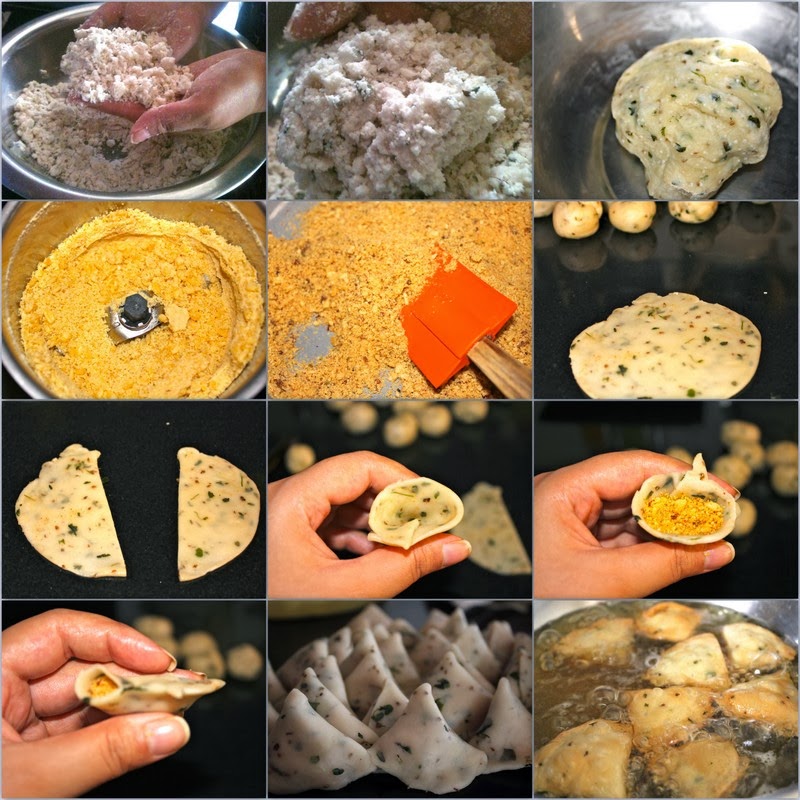
- Many moong dal samosa recipes talk about using fresh moong dal for the filling. Our family secret is using moong dal namkeen for the purpose. It saves a lot of time, adds much more flavour to the filling, and super easy to handle.
- Do not make a fine powder of the filling. A bit coarse or rough texture is ideal for the samosa stuffing.
Perfect Colour:
- Always fry samosa over low heat. If you fry the samosa over high heat, they will become dark brown (burnt) from the outside but uncooked from the inside.
- Make sure to seal the edges of the samosa very nicely. They tend to open while frying, and even if one samosa opens, it will spoil the entire batch of oil.
Watch Dal Samosa Video
Serving Suggestion
Dal Samosa is a delicious and fulfilling, bite-size snack or finger food that does not require side dishes.
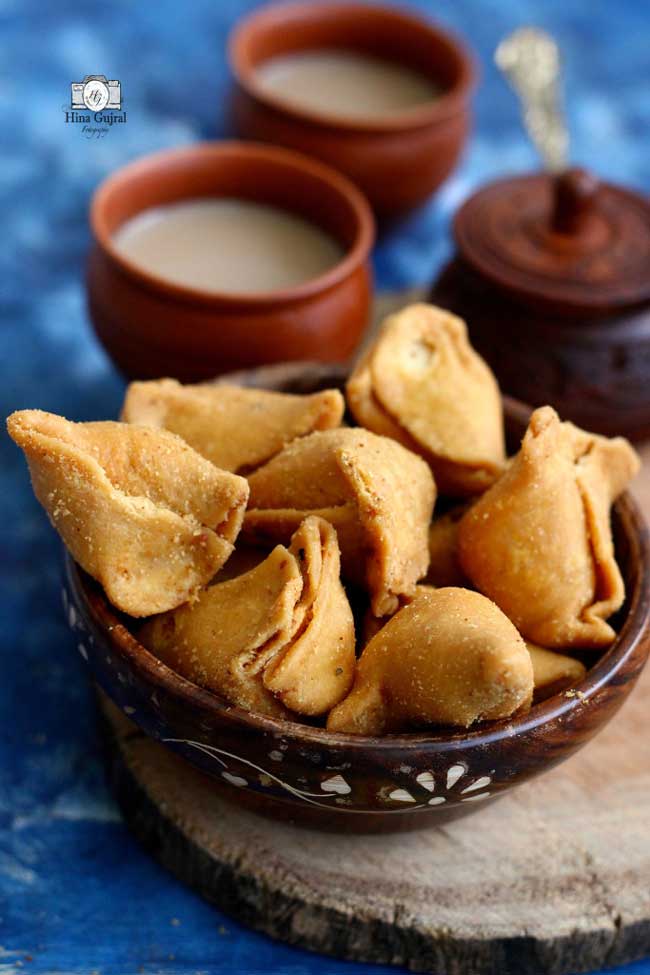
You can serve moong dal samosa as a snack with mint chutney or any other sweet and spicy sauce . A cup of Indian masala tea is the perfect drink to accompany a bowl of homemade mini samosa.
Store dal samosa at room temperature in an airtight container for 10 – 20 days. It remains fresh and crisp. They are a fantastic dry snack to carry around while traveling or pack in the office lunchbox .
More Festive Snack Recipes
- Cheese Rava Cutlet
- Nimki (Savory Crackers)
- Roasted Nuts (4 Flavours)
- Methi Wali Mathri
- Dahi Vada Chaat
- Matar Kachori
- Papdi Chaat
Ingredients
For Samosa Dough:
- ▢ 1 Cup all-purpose flour (maida)
- ▢ ¼ Cup refined oil
- ▢ Salt to taste
- ▢ ¼ Cup ice cold water
For Samosa Filling
- ▢ 1 Cup Moong Dal Namkeen
- ▢ ¼ teaspoom Asafoetida (hing)
- ▢ 1 teaspoon cumin powder (jeera powder)
- ▢ 1 teaspoon Chaat Masala
- ▢ 1 teaspoon red chili powder
- ▢ 1 teaspoon mango powder (amchur)
- ▢ Salt to taste
- ▢ 1 teaspoon kasuri methi (dried fenugreek leaves)
- ▢ 1 teaspoon fennel seeds (sabut saunf)
- ▢ 1 tablespoon corn flour
- ▢ oil for deep-frying
Instructions
How To Make Samosa Dough:
- Combine flour and oil. Rub in oil with your fingers into the flour. Mix in salt. Knead the flour with ice cold water for 5 – 10 minutes. The dough should be firm and not moist or soft. Cover the dough with the moist muslin cloth and keep it aside for 30 minutes.
- After 30 minutes, again knead the dough for 5 – 10 minutes. This time it will be soft and pliable.
How To Make Samosa Filling:
- To prepare the filling, combine moong dal mixture, salt, and spices in a pan.
- Dry roast for 3 – 4 minutes or till the aroma of spices is released. Turn off the heat. Grind the filling to a coarse powder. Transfer to a bowl and set aside.
How To Make Samosa:
- Combine cornflour with 2 tablespoons of water and make a thick paste.
- Make small sized balls (like Poori) of the entire dough.
- Grease rolling pin with little oil and roll out each ball into small size circular shape like Poori.
- Cut the disc into 2 equal parts with the knife in the shape of half moon.
- Take one part and stick it from the corners with the help of water and cornflour mix forming a cone shape. Fill this cone with 1 teaspoon of moong dal filling.
- After filling the cone with the mixture, apply cornflour mix with fingers on the edges and seal both the corners. Press the corners with hands gently and close the corners.
- Prepare all the other samosas in the same manner and keep them on a plate.
How To Deep-Fry Samosa:
- To fry samosa, heat oil for deep frying in a heavy bottomed pan.
- To test, if the oil is hot enough add one samosa first, if it comes to the surface and starts turning golden, oil is ready, also you can be assured about the sealing of the samosa.
- Put samosa in small batches into the hot oil and fry the samosas on the medium flame till they turn colour. Take them out of the pan and keep them on the plate. Fry all the other samosas in the same manner.
- To increase the shelf life store in a clean airtight container at room temperature.
Recipe Notes:
- Rest the dough covered at room temperature for at least 30 minutes.
- Do not make a fine powder of the filling. A bit coarse or rough texture is ideal for the samosa stuffing.
- Always fry samosa over low heat. If you fry the samosa over high heat, they will become dark brown (burnt) from the outside but uncooked from the inside.
- Also, make sure oil is heated at a high temperature, and while adding samosa reduce the flame to low.
- Before air-frying, brush each piece of samosa with flavourless oil. Air-fry at 180-degree celsius for 20 – 30 minutes. But let me warn you, the baked or air-fried samosa colour might not be the same as the deep-fried one. Also, they might be a little less crisp.
- Samosa is an indulgent Indian snack. Hence, it tastes best when deep-fried conventionally.
Nutrition
We follow a strict NO SPAM Policy
