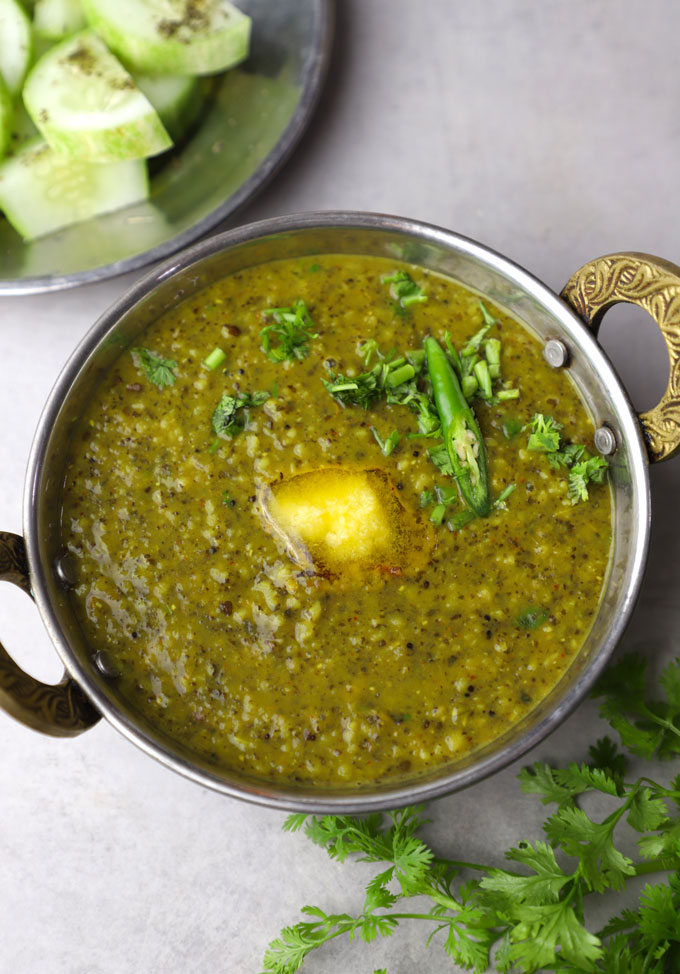
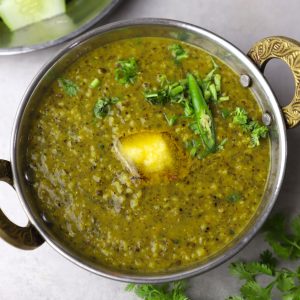
Pahadi Chainsa Bhaat is a quintessential Uttarakhand dish made with urad dal. It is healthy and wholesome, a fitting ode to the region.
Estimated reading time: 5 minutes
- Ingredients You’ll Need
- How To Make Chainsa
- Tips for Authentic Flavor
- Pahadi Chainsa Bhaat Recipe
Pahadi Chainsa Bhaat is more than just food; it’s a cultural experience. It is also known as Chainsoo or Chainsu in many regions. Chainsa is the name of the dish and hence it is served with rice (bhaat), often the combo is called Chainsa Bhaat.
It’s often prepared for lunch during the winter season, family gatherings, or even as a comforting meal.
The dish embodies the warmth and simplicity of Uttarakhand’s Cuisine, reflecting the region’s emphasis on locally sourced ingredients and earthy flavours.
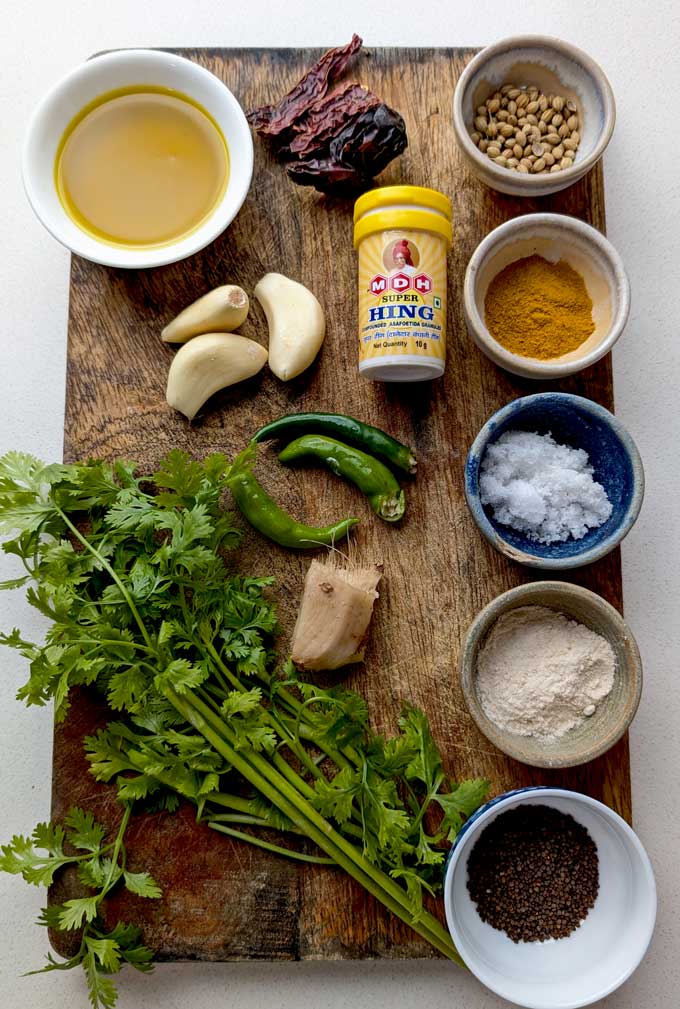
Ingredients You’ll Need
- Split Urad Dal (chilka urad) cleaned, washed and roasted
- Paste of garlic, ginger, green chilli, coriander stalks, and seeds
- Seasoning of salt, turmeric, red chilli and coriander powder
- For Tadka , ghee, asafoetida (hing), black mustard seeds, dried red chillies
- Jumboo is an aromatic herb from Uttarakhand. It gives a strong flavour, and aroma to Chainsa and also makes it easy to digest. It is an optional ingredient.
- Wheat Flour slurry gives a thick consistency to Chainsa. But I prefer a slow cooking method to get that creamy consistency.
- Fresh coriander leaves and green chilli for garnishing
How To Make Chainsa
Step 1: Prepare the Urad Powder
- Clean and wash urad thoroughly under running water until the water runs clear.
- Soak for 10 minutes and drain.
- Now air/sun dry it on a clean muslin cloth. No moisture should remain.
- Dry roast the dried urad in a pan over low heat, till it becomes slightly brown and a nutty/roasted aroma, is released.
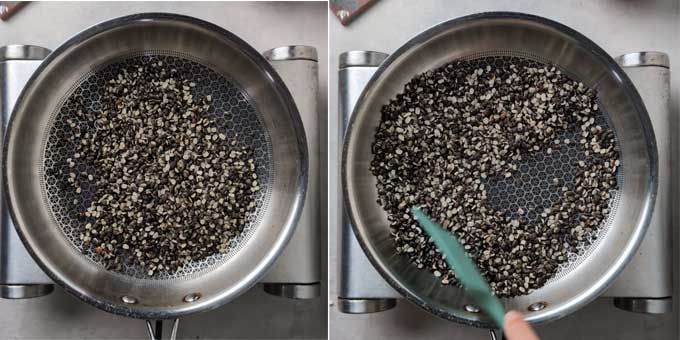
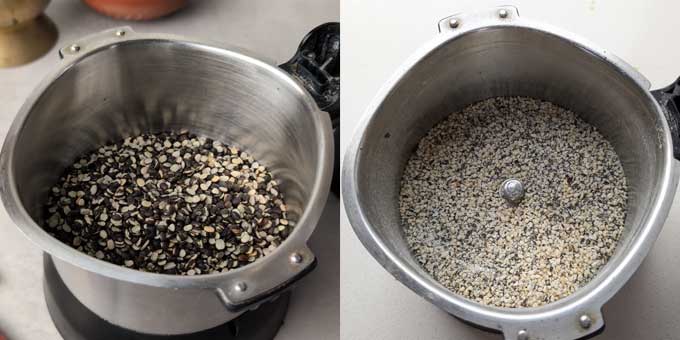
- Allow to cool down a bit. Grind to a coarse powder.
Step 2: Make fresh paste
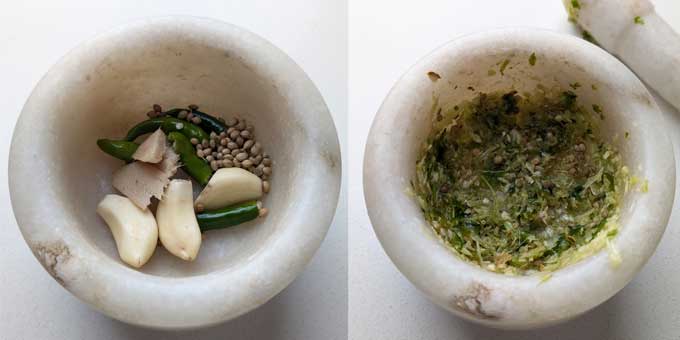
- In a mortar and pestle make a coarse paste of garlic, ginger, green chilli, coriander seeds and stalks using ⅛ teaspoon of salt and water.
Step 3: Cook Chainsa
- In a heavy bottom kadhai, heat mustard oil.
- Add asafoetida and mustard seeds.
- Once seeds start spluttering, add fresh paste and fry for 1 – 2 minutes.
- Next, add urad powder, stir to combine, and fry for 2 – 3 minutes.
- Add water. Continuously stir to avoid lump formation.
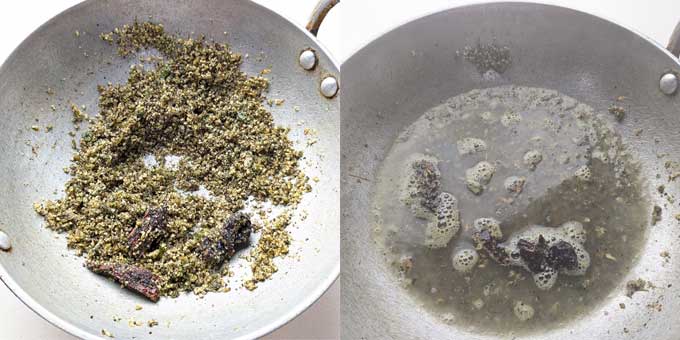
- Bring the chainsa to boil while continuously stirring.
- Now reduce the heat, and add salt, turmeric, chilli, and coriander powder.
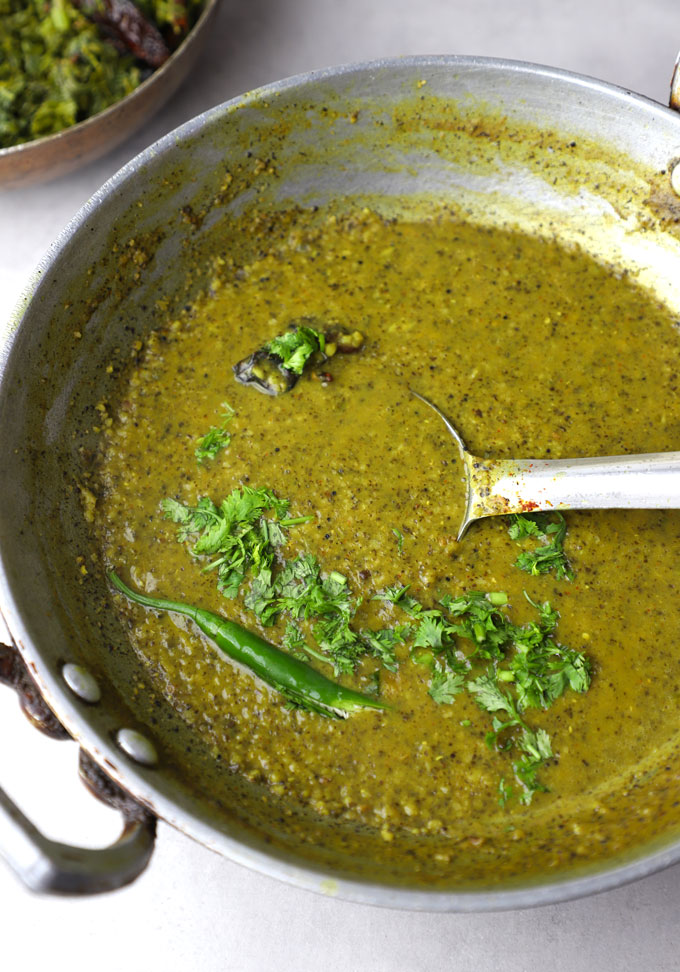
- Now let chainsa simmer and cook over low heat till it is thick and creamy, and the dal is nicely cooked. This takes 20 minutes.
Step 4: Tempering (Tadka)
- Heat ghee in a small pan.
- Add dried red chillies and jumboo. Cook for 10 – 20 seconds.
- Pour this sizzling tadka over the Chainsa.
- Cover and let Chainsa sit for 5 minutes before serving.
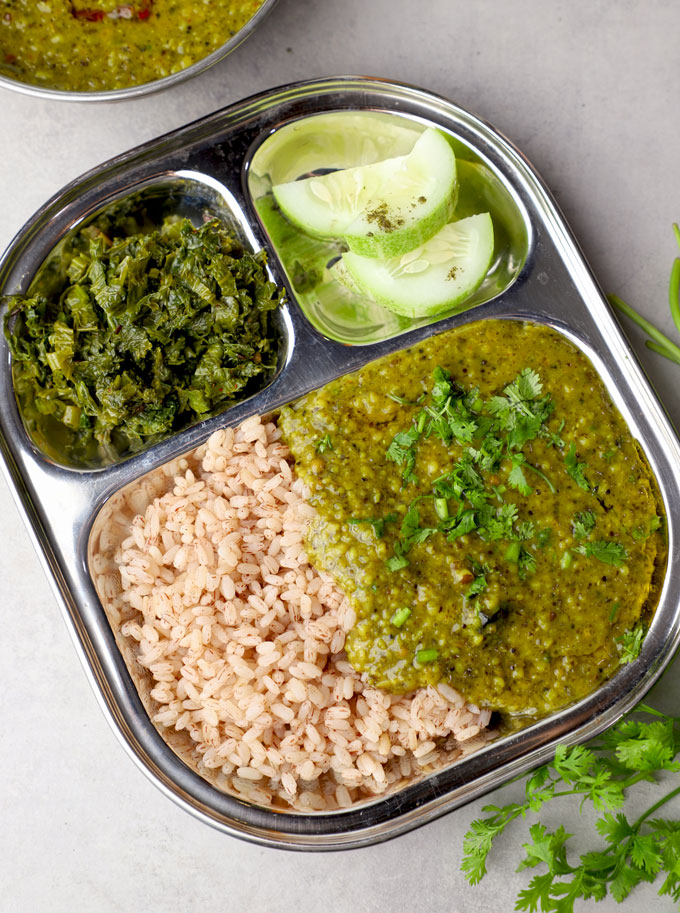
Add freshly chopped coriander and green chilli. Serve Pahadi Chainsa warm with bhaat (cooked rice), lai ki sabzi , and mooli ka thechua.
Tips for Authentic Flavor
- Use Ghee liberally in tadka. It adds richness and depth, making the dish authentic. Also, helps in digesting the protein.
- Stick to simple spices . Avoid overpowering the dish with garam masala, excessive chillies, or readymade pastes. The simplicity is what makes the dish stand out.
- Cook Slowly : If time permits, slow-cook dal in a heavy bottom kadhai instead of adding wheat/rice flour slurry.
- Wash the Urad. Many chainsa recipes suggest making the dish without washing the lentils. It is very harmful and makes the dish difficult to digest. I usually wash a big batch of urad, dry it out nicely, roast it and store it.
More Pahadi Recipes
- Mooli Ki Jholi
- Aloo Ke Gutke
- Kheere Ka Raita
- Pahadi Aloo Paani
- Pahadi Lai Ki Sabzi
- Kumaoni Badi Bhaat
- Pahadi Gahat Ki Dal
Ingredients
- ▢ ⅓ Cup split urad (chilka urad)
- ▢ 1 tablespoon mustard oil
- ▢ ½ teaspoon mustard seeds (rai)
- ▢ ⅛ teaspoon hing (asafoetida)
- ▢ ¼ teaspoon turmeric powder
- ▢ ¼ teaspoon red chilli powder
- ▢ ¼ teaspoon coriander powder
- ▢ 1 teaspoon salt or to taste
- ▢ 3 Cup water
Ingredients For Paste
- ▢ 2 garlic cloves
- ▢ 2 green chilli
- ▢ 1 inch ginger
- ▢ 5 – 6 fresh coriander stalks
- ▢ 1 teaspoon coriander seeds (sabut dhaniya)
Ingredients For Tadka
- ▢ 1 tablespoon ghee
- ▢ 2 dried red chilies
- ▢ 1 tablespoon Jumboo (optional)
Ingredients For Garnish
- ▢ handful of fresh coriander leaves, chopped
Instructions
- Clean and wash urad thoroughly under running water until the water runs clear.
- Soak for 10 minutes and drain. Now air/sun dry it on a clean muslin cloth. No moisture should remain.
- Dry roast the dried urad in a pan over low heat, till it becomes slightly brown and a nutty/roasted aroma, is released.
- Allow to cool down a bit. Grind to a coarse powder.
- In a mortar and pestle make a coarse paste of garlic, ginger, green chilli, coriander seeds and stalks using ⅛ teaspoon of salt and water.
- In a heavy bottom kadhai, heat mustard oil. Add asafoetida and mustard seeds.
- Once seeds start spluttering, add fresh paste and fry for 1 – 2 minutes.
- Next, add urad powder, stir to combine, and fry for 2 – 3 minutes. Add water. Continuously stir to avoid lump formation.
- Bring the chainsa to boil while continuously stirring. Now reduce the heat, add salt, turmeric, chilli and coriander powder.
- Now let chainsa simmer and cook over low heat till it is thick and creamy, and the dal is nicely cooked. This takes 20 minutes. At this stage, if you think its not creamy enough, add wheat flour slurry. And if it’s too thick add little hot water.
- For tadka, Heat ghee in a small pan. Add dried red chillies and jumboo. Cook for 10 – 20 seconds. Pour this sizzling tadka over the Chainsa. Cover and let Chainsa sit for 5 minutes before serving.
- Add freshly chopped coriander and green chilli.
- Serve Pahadi Chainsa warm with bhaat (cooked rice), lai ki sabzi , and mooli ka thechua.
Recipe Notes:
Nutrition
We follow a strict NO SPAM Policy
Pahadi Chainsa Bhaat Recipe
Equipment
- Mixer Grinder
- Heavy Bottom Kadhai
- Tadka Pan
Ingredients
- ⅓ Cup split urad (chilka urad)
- 1 tablespoon mustard oil
- ½ teaspoon mustard seeds (rai)
- ⅛ teaspoon hing (asafoetida)
- ¼ teaspoon turmeric powder
- ¼ teaspoon red chilli powder
- ¼ teaspoon coriander powder
- 1 teaspoon salt or to taste
- 3 Cup water
Ingredients For Paste
- 2 garlic cloves
- 2 green chilli
- 1 inch ginger
- 5 - 6 fresh coriander stalks
- 1 teaspoon coriander seeds (sabut dhaniya)
Ingredients For Tadka
- 1 tablespoon ghee
- 2 dried red chilies
- 1 tablespoon Jumboo (optional)
Ingredients For Garnish
- handful of fresh coriander leaves, chopped
Instructions
- Clean and wash urad thoroughly under running water until the water runs clear.
- Soak for 10 minutes and drain. Now air/sun dry it on a clean muslin cloth. No moisture should remain.
- Dry roast the dried urad in a pan over low heat, till it becomes slightly brown and a nutty/roasted aroma, is released.
- Allow to cool down a bit. Grind to a coarse powder.
- In a mortar and pestle make a coarse paste of garlic, ginger, green chilli, coriander seeds and stalks using ⅛ teaspoon of salt and water.
- In a heavy bottom kadhai, heat mustard oil. Add asafoetida and mustard seeds.
- Once seeds start spluttering, add fresh paste and fry for 1 – 2 minutes.
- Next, add urad powder, stir to combine, and fry for 2 – 3 minutes. Add water. Continuously stir to avoid lump formation.
- Bring the chainsa to boil while continuously stirring. Now reduce the heat, add salt, turmeric, chilli and coriander powder.
- Now let chainsa simmer and cook over low heat till it is thick and creamy, and the dal is nicely cooked. This takes 20 minutes. At this stage, if you think its not creamy enough, add wheat flour slurry. And if it’s too thick add little hot water.
- For tadka, Heat ghee in a small pan. Add dried red chillies and jumboo. Cook for 10 – 20 seconds. Pour this sizzling tadka over the Chainsa. Cover and let Chainsa sit for 5 minutes before serving.
- Add freshly chopped coriander and green chilli.
- Serve Pahadi Chainsa warm with bhaat (cooked rice), lai ki sabzi , and mooli ka thechua.
Video
Notes
Nutrition
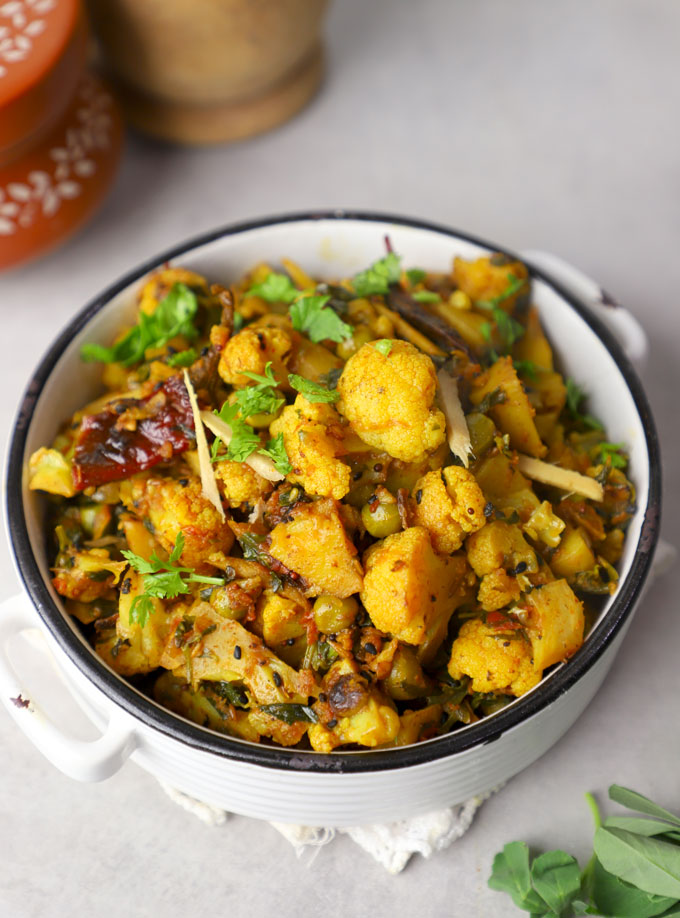
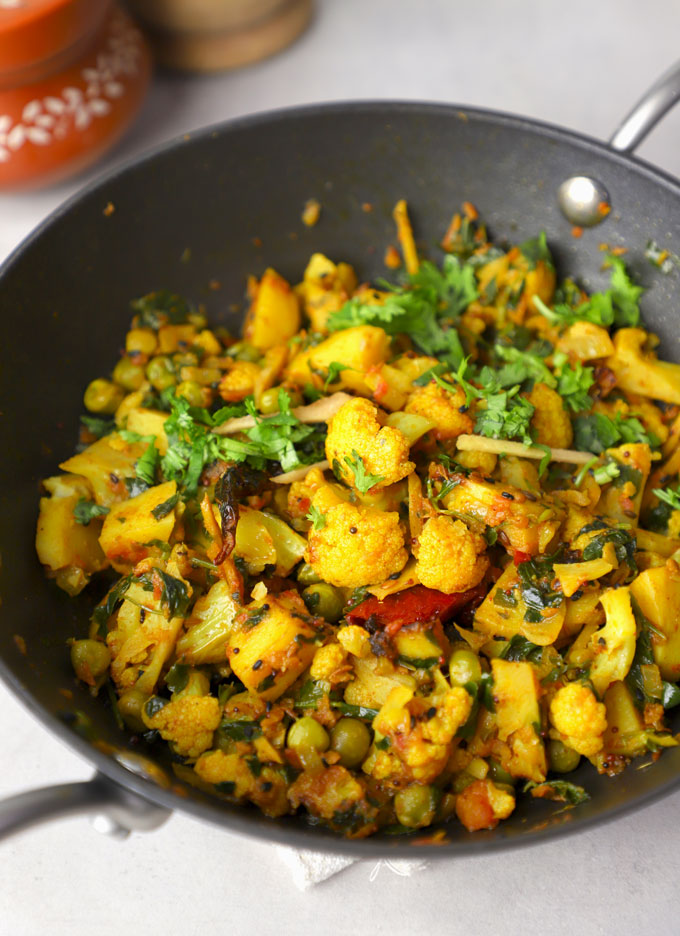
This aloo gobi recipe combines potatoes (aloo) and cauliflower (gobi) in a spicy Punjabi-style masala. It is not just a dish; it’s an emotion for many who grew up enjoying it.
Estimated reading time: 5 minutes
- Ingredients You’ll Need
- How To Make Gobi Aloo Sabzi
- Punjabi Aloo Gobi Recipe
Aloo Gobi is a beloved dish in Indian households, known for its comforting texture and vibrant colours. Whether served with roti, paratha, or dal rice, it’s one vegetarian dish that always evokes the warmth of home.
Its simplicity, flavour, and delicious texture make it an evergreen favourite.
Why You’ll Love Aloo Gobi
- vegan
- one pot recipe
- meal prep friendly
- gluten and nut free
- wholesome and filling
- easy to cook and customize
Ingredients You’ll Need
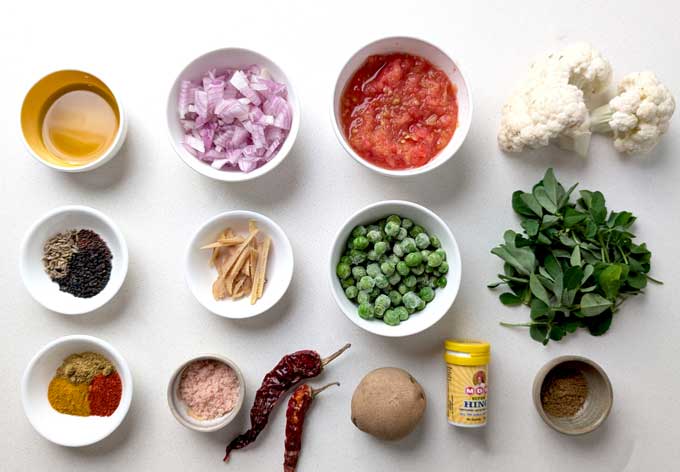
- Cauliflower florets fresh or frozen (small-medium size). You can make soup , mash , or fried rice with leftover cauliflower.
- Other Vegetables: Potato, Green Peas , Onion, Tomato
- Fresh Fenugreek Leaves (Methi) give a delicious taste to aloo gobi. If not available, add kasuri methi or dried fenugreek leaves.
- Ginger thinly sliced, adds a lot of texture and a deliciously spicy, rustic flavour.
- Spice Powders: Turmeric, Chilli Powder, Coriander Powder, Dried Mango Powder (Amchur), Garam Masala
- Whole Spices: Cumin (Jeera), Nigella Seeds (kalonji, Mustard Seeds, Dried Red Chillies , Asafoetida (hing)
- Mustard Oil is my first choice for cooking this Punjabo sabzi. Substitute it with vegetable refined oil.
- Salt, Green Chilli, and Fresh Coriander Leaves
How To Make Gobi Aloo Sabzi
1. Prep Work
- Wash and cut the potatoes into medium-sized cubes.
- Finely chop the onion.
- If using fresh methi leaves, wash and finely chop them.
- Grate or make a paste of tomato in a blender.
- Cut ginger and green chilli into thin slices.
- Soak the cauliflower florets in hot water with a pinch of salt for 2–3 minutes to remove any impurities. Drain and set aside. Skip this step if your florets are clean and pre-washed.
2. Make Masala
- Heat mustard oil in a large, heavy-bottomed pan or kadhai until it begins to smoke lightly (this reduces its pungency). Reduce the heat to medium.
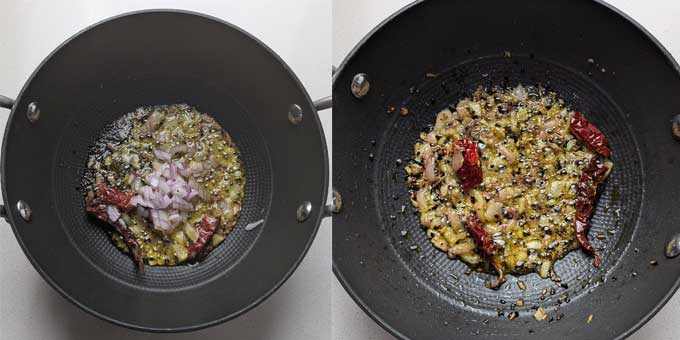
- Add cumin, nigella, mustard seeds, dried red chillies and asafoetida. Let them sizzle until aromatic, about 30 seconds.
- Add finely chopped onions. Cook until golden brown, stirring occasionally, about 5 – 6 minutes.
- Add the grated/pureed tomatoes, turmeric powder, coriander powder, red chilli powder, and salt.
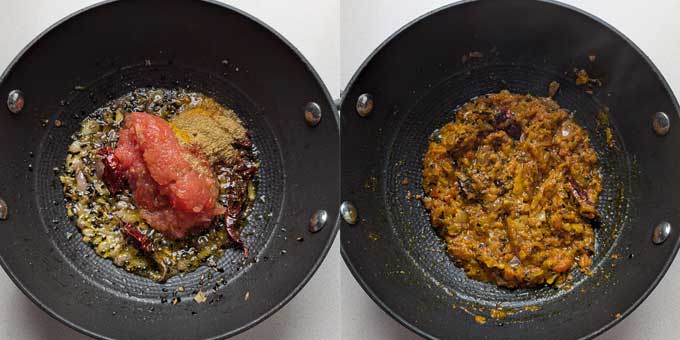
- Cook the masala until the tomatoes break down and the oil separates from the masala, about 5 – 6 minutes.
3. Add Vegetables
- Add the cubed potatoes, green peas, and cauliflower to the masala. Stir to combine nicely.
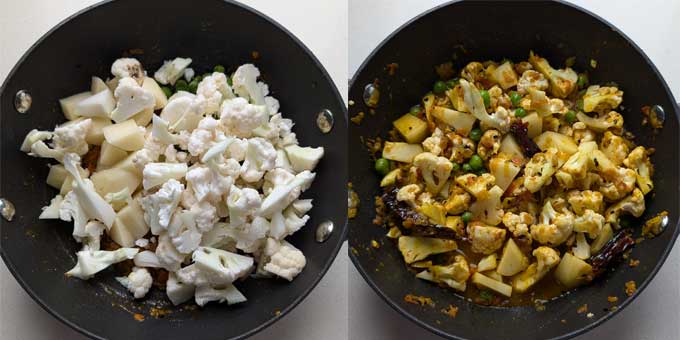
4. Cook Aloo Gobi
- Add ¼ cup of water. Cover the pan with a lid and reduce the heat to low.
- Allow the vegetables to cook, stirring occasionally to prevent sticking or burning. This should take about 15–20 minutes, depending on vegetables.
5. The Final Touches
- Once the potatoes and cauliflower are cooked, add fresh methi leaves, sliced ginger and green chilli.
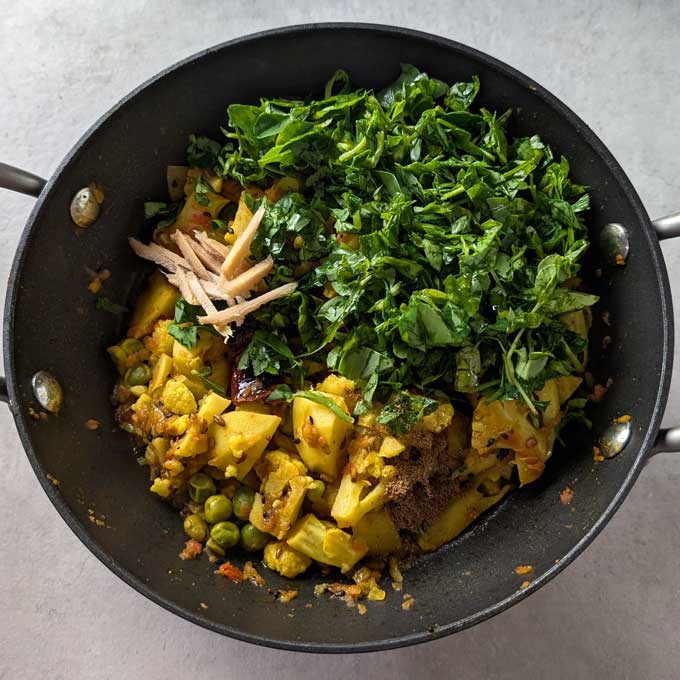
- Sprinkle garam masala and amchur powder. Mix gently
- Cook for 5 minutes over low heat without cover. Garnish with freshly chopped coriander leaves before serving.
Recipe Variations
- Make it Gravy-Based like my cauliflower curry recipe with coconut milk.
- Add Achari Flavour with the Indian pickle masala .
- South Indian Twist: Add curry leaves and mustard seeds.
More Indian Sabzi Recipes
- Sev Tamatar Ki Sabji
- Kamal Kakdi Ki Sabji
- Beetroot Poriyal
- Kathal Ki Sabzi
- Kaddu Ki Sabzi
- Aloo Ki Sabzi
Ingredients
- ▢ 1 medium size (approx 500 gram) cauliflower, cut into florets
- ▢ 2 tablespoon mustard oil
- ▢ 1 teaspoon cumin seeds (jeera)
- ▢ ½ teaspoon nigella seeds ( kalonji)
- ▢ ½ teaspoon mustard seeds (rai)
- ▢ ⅛ teaspoon hing (asafoetida)
- ▢ 2 dried red chilies
- ▢ 1 medium size onion, finely chopped
- ▢ 2 medium size tomatoes, grated
- ▢ 1 teaspoon turmeric powder
- ▢ 1 teaspoon coriander powder
- ▢ ½ teaspoon red chilli powder
- ▢ ½ teaspoon dried mango powder (amchur)
- ▢ ½ teaspoon Garam Masala Powder ( get recipe )
- ▢ 1 medium size potato, diced
- ▢ ¼ Cup green peas
- ▢ ¼ Cup water
- ▢ 1 Cup fresh fenugreek leaves, chopped
- ▢ 1 inch ginger, thinly sliced
- ▢ 1 green chillies sliced
Instructions
- Soak the cauliflower florets in hot water with a pinch of salt for 2–3 minutes to remove any impurities. Drain and set aside. Skip this step if your florets are clean and pre-washed.
- Heat mustard oil in a large, heavy-bottomed pan or kadhai until it begins to smoke lightly (this reduces its pungency). Reduce the heat to medium.
- Add cumin, nigella, mustard seeds, dried red chillies and asafoetida. Let them sizzle until aromatic, about 30 seconds.
- Add finely chopped onions. Cook until golden brown, stirring occasionally, about 5 – 6 minutes.
- Add the grated/pureed tomatoes, turmeric powder, coriander powder, red chilli powder, and salt.
- Cook the masala until the tomatoes break down and the oil separates from the masala, about 5 – 6 minutes.
- Add the cubed potatoes, green peas, and cauliflower to the masala. Stir to combine nicely.
- Add ¼ cup of water. Cover the pan with a lid and reduce the heat to low.
- Allow the vegetables to cook, stirring occasionally to prevent sticking or burning. This should take about 15–20 minutes, depending on vegetables.
- Once the potatoes and cauliflower are cooked, add fresh methi leaves, sliced ginger and green chilli. Sprinkle garam masala and amchur powder. Mix gently. Cook for 5 minutes over low heat without cover.
- Garnish with freshly chopped coriander leaves before serving.
- Serve aloo gobi warm with chapati/roti/paratha.
Recipe Notes:
- Choose Fresh Vegetables: They cook more evenly and retain their flavour better.
- Blanch Cauliflower: This step helps clean the cauliflower and ensures it cooks evenly without turning mushy.
- Adjust the amount of chillies , chilli powder and garam masala as per your taste preference.
- Canned Tomatoes or Puree works perfectly for this recipe.
- Low and Slow Cooking: Cooking aloo gobi on low heat allows the spices to infuse deeply into the vegetables.
- Avoid Overmixing: Be gentle while stirring to maintain the texture of the cauliflower florets.
Nutrition
We follow a strict NO SPAM Policy
