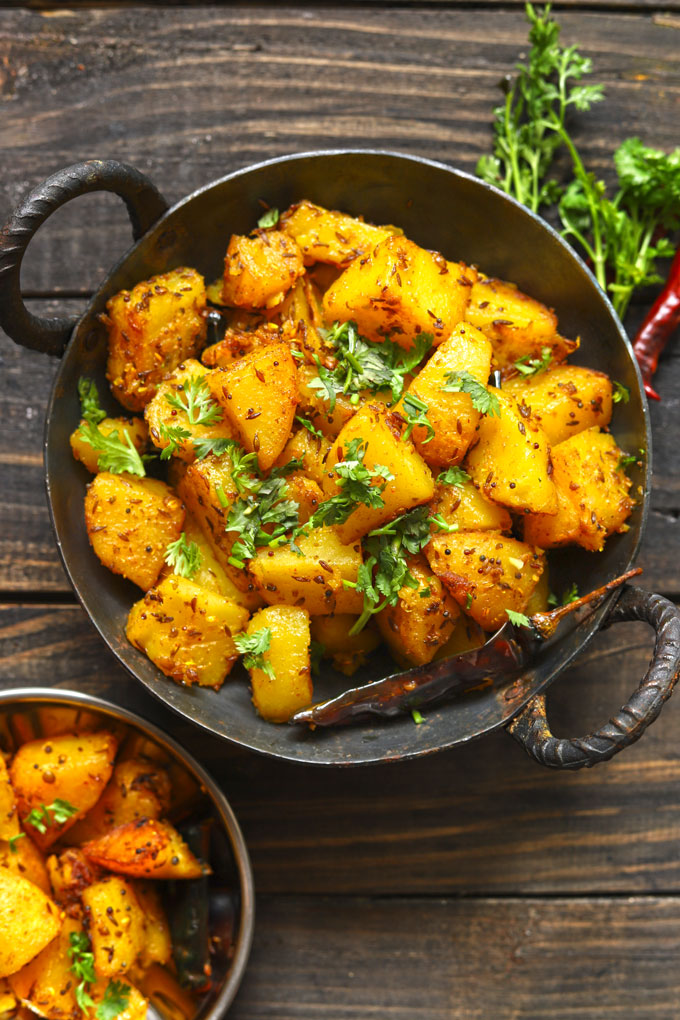
Aloo Ke Gutke is a Pahadi-style jeera aloo. A regional dish from the state of Uttarakhand, India. It is a simple potato fry recipe without onion, garlic, or ginger. Be sure to watch the video!
The Story Of Aloo Ke Gutke
Aloo ke Gutke is the Kumaoni name for the simple stir-fry potato in spices. The word ‘ Gutke ‘ in the Kumaoni dialect means pieces.
If you visit the Kumaon hills of Uttarakhand, aloo gutuk is the most common snack and street food served at most roadside eateries.
There are two reasons this particular potato dish is so prevalent in Kumaon hills – the abundance of potatoes. Second, Aloo Ke Gutke is the easiest and quickest dish made with minimum available local resources.
More Reasons To LOVE Aloo Gutke
- perfect for the lunchbox or travel meals
- easy to cook and store
- vegan and vegetarian
- gluten and nut free
- meal prep friendly
- one pot dish
The Potato
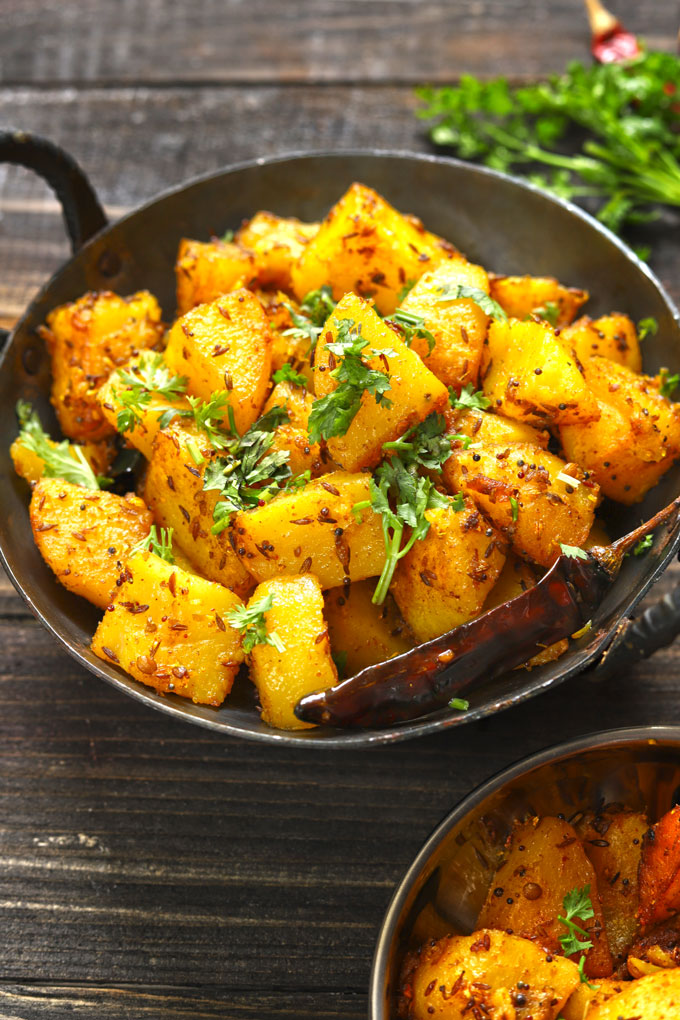
The potato of Uttarakhand has a naturally sweet taste, which gives humble potato recipes such as Pahadi Aloo Paani or Gutuk a unique flavour.
The Pahadi variety of potatoes cooks very fast, even without a pressure cooker. This potato from Uttarakhand is sold as Pahadi Aloo across India.
But you can make aloo ke gutuk with any available variety of potatoes.
Other Ingredients Required
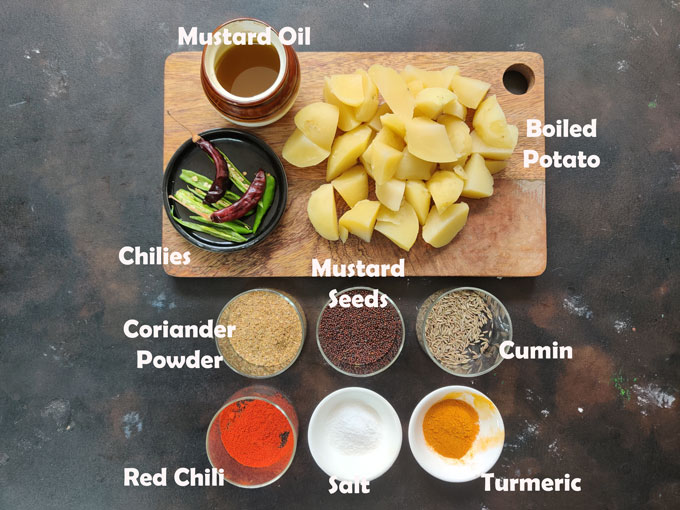
Mustard Oil : Pahadi style all fry is cooked only in mustard oil for its smokey, pungent, bold flavour. Avoid using refined or vegetable oil.
Chillies : Traditionally, a combination of dry red chillies and green chilli is used. You can use either of them.
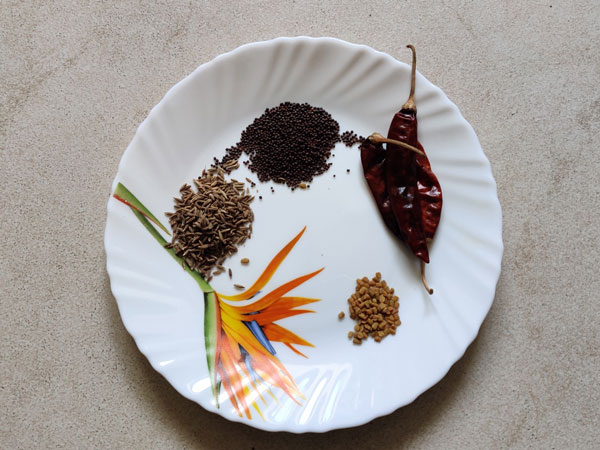
Mustard and Cumin Seeds: The tiny black mustard seeds and the cumin seeds are used to temper the potatoes. In the authentic Kumaoni aloo ke gutke, a special variety of local mustard seeds known as lai or bachha rai is used.
Spices : Turmeric Powder, Red Chili Powder, Coriander Powder, Salt. Apart from these two, no other spice powder is added.
Watch Aloo Gutke Video
Serving Suggestion
Aloo Ke Gutke is served as a snack in most Kumaoni households, along with a cup of hot tea.
Or it is usually served with a spicy, pungent Pahadi Kheere ka Raita (Cucumber Raita). Once you taste this unusual combination, you will love the rustic flavours.
On certain festive occasions or for a hearty family breakfast, aloo gutuk is served with poori and raita. You can eat it with paratha also for lunch or breakfast.
More Potato Recipes
- Dum Aloo
- Potato Salad
- Potato Bread Roll
- Crispy Aloo Pakora
- Baby Potato Curry
- Masala Potato Fry
- Potato Cheese Balls
If you try this recipe and love it, please leave a comment and a rating. This helps us grow and reach other food lovers like you.
Ingredients
- ▢ 5 potato
- ▢ 4 tablespoon mustard oil
- ▢ 1 tablespoon mustard seeds (Pahadi rai or black rai)
- ▢ 1 tablespoon cumin seeds (jeera)
- ▢ 2 dry red chiles
- ▢ 2 green chili, sliced
- ▢ 1 teaspoon turmeric powder
- ▢ 1 teaspoon red chili powder
- ▢ 1 teaspoon coriander powder (dhaniya powder)
- ▢ Salt to taste
- ▢ 2 tablespoon chopped coriander leaves
Instructions
- Parboil potatoes in a pressure cooker for 2 whistles. Remove the skin and roughly dice the potatoes. Aloo Ke Gutke requires chunky and bigger in size potato pieces than regular jeera aloo.
- Heat oil in a cast iron skillet until fuming hot, reduce the heat. Add mustard seeds, cumin seeds, red chili, green chili, and fry for a minute.
- Once seeds start popping add add diced potatoes and mix well.
- Add spices, salt, and mix well. Cover the skillet with a tight-fitting lid. Let potato cook over low heat until fully cooked, tender, and brown charred marks appear on them. By slow cooking, the masala flavors penetrat within the layers of potato.
- Turn off the heat. Garnish the potatoes with fresh coriander leaves.
- Serve Aloo ke Gutke hot with a cup of tea or kheere ka raita .
Recipe Notes:
- It is highly recommended to use mustard oil for cooking potatoes. It gives an authentic taste to the dish.
- The aloo ke gutke are best cooked in a cast-iron skillet or a heavy bottom Indian Kadhai.
- Keep checking and stirring the potatoes while cooking else they might get burnt.
- The aloo ke gutke are charred and crisp from the outside while mouth-melting soft from inside. Hence, keep adjusting the heat while cooking them.
- Spices like Chaat masala, Garam Masala, or cumin powder are not added to the gutke.
Nutrition
We follow a strict NO SPAM Policy

Pahadi Aloo Ke Gutke Recipe
Equipment
- Heavy Bottom Kadhai
- Pressure Cooker
Ingredients
- 5 potato
- 4 tablespoon mustard oil
- 1 tablespoon mustard seeds (Pahadi rai or black rai)
- 1 tablespoon cumin seeds (jeera)
- 2 dry red chiles
- 2 green chili, sliced
- 1 teaspoon turmeric powder
- 1 teaspoon red chili powder
- 1 teaspoon coriander powder (dhaniya powder)
- Salt to taste
- 2 tablespoon chopped coriander leaves
Instructions
- Parboil potatoes in a pressure cooker for 2 whistles. Remove the skin and roughly dice the potatoes. Aloo Ke Gutke requires chunky and bigger in size potato pieces than regular jeera aloo.
- Heat oil in a cast iron skillet until fuming hot, reduce the heat. Add mustard seeds, cumin seeds, red chili, green chili, and fry for a minute.
- Once seeds start popping add add diced potatoes and mix well.
- Add spices, salt, and mix well. Cover the skillet with a tight-fitting lid. Let potato cook over low heat until fully cooked, tender, and brown charred marks appear on them. By slow cooking, the masala flavors penetrat within the layers of potato.
- Turn off the heat. Garnish the potatoes with fresh coriander leaves.
- Serve Aloo ke Gutke hot with a cup of tea or kheere ka raita .
Video
Notes
- It is highly recommended to use mustard oil for cooking potatoes. It gives an authentic taste to the dish.
- The aloo ke gutke are best cooked in a cast-iron skillet or a heavy bottom Indian Kadhai.
- Keep checking and stirring the potatoes while cooking else they might get burnt.
- The aloo ke gutke are charred and crisp from the outside while mouth-melting soft from inside. Hence, keep adjusting the heat while cooking them.
- Spices like Chaat masala, Garam Masala, or cumin powder are not added to the gutke.
Nutrition
This Kaddu Ki Sabzi is also known as khatta meetha kaddu. It is my family’s favourite no onion, no garlic, gluten-free, vegan sabzi recipe. Be sure to watch the video!
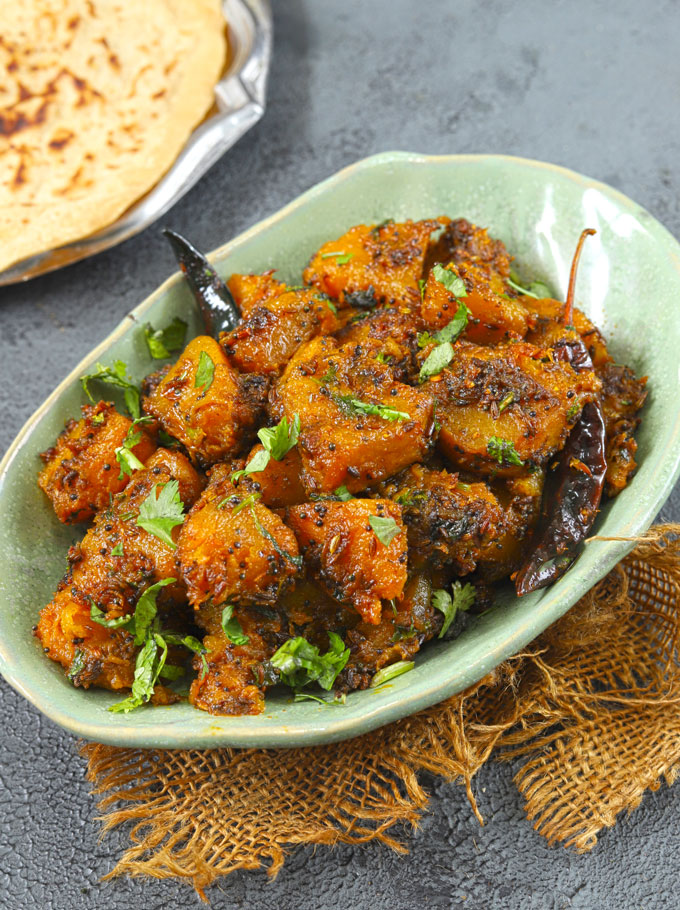
What is khatta meetha kaddu?
The khatta meetha kaddu is a popular pumpkin sabzi recipe across North India. It is a sattvic style Indian sabji mainly prepared for festive feasts or with a traditional meal of aloo ki sabzi, poori, and raita.
In Northern India, it is popularly known as pethe ki sabzi or Bhandara style kaddu ki sabzi .
The combination of sweet, spicy, and savoury flavours makes this pumpkin sabzi unique.
The heat of red chillies and the warmth of spices are balanced by the sourness of mango powder and the sweetness of sugar. ‘Khatta’ is the Hindi term for sour, and ‘meetha’ is for sweetness. Hence this pumpkin sabzi got its name because of its sour and sweet flavors.
More Reasons to LOVE Kaddu Ki Sabzi
- sattvic style (no onion/garlic/tomato/ginger)
- mildly spicy ( perfect for kids )
- perfect for a packed meal
- vegan and vegetarian
- one-pot dish
- easy to digest
- gluten-free
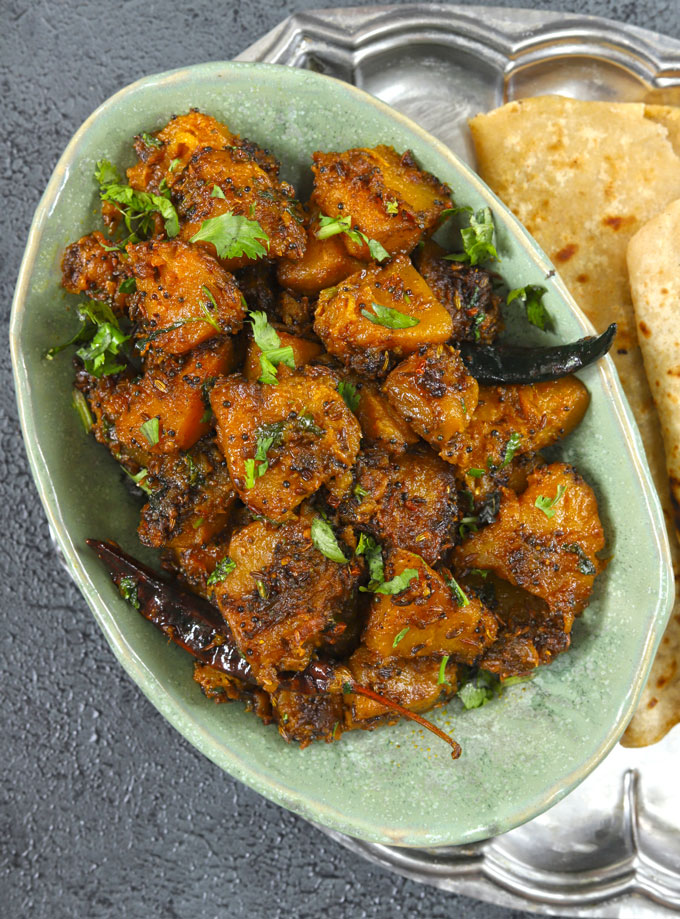
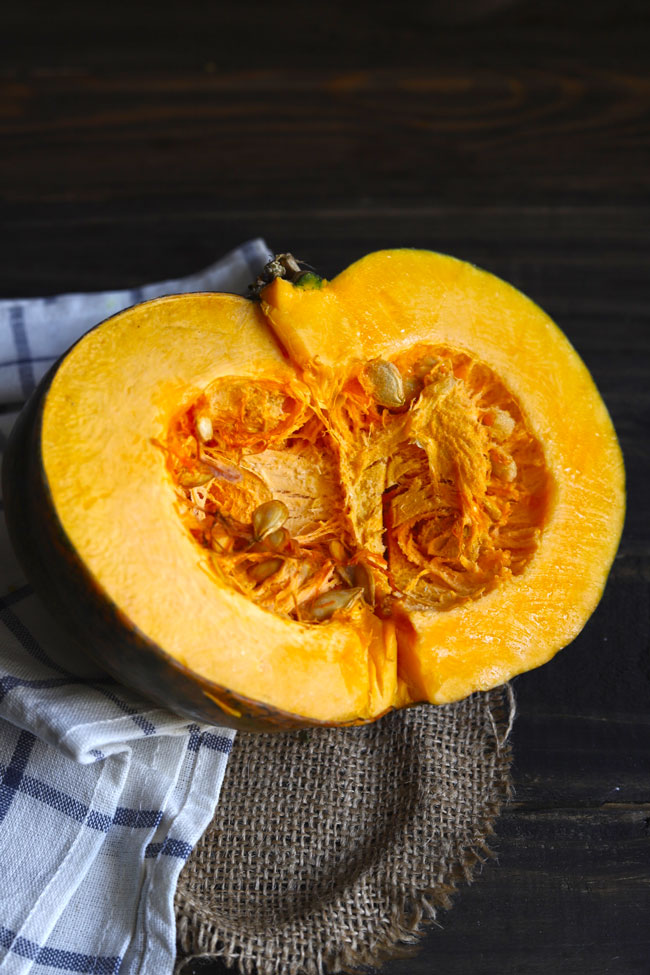
The Right Pumpkin For Sabzi
A green skin pumpkin with deep yellow pulp makes this pumpkin sabzi perfectly. Or you can pick any other ripe and yellow variety of pumpkin .
The yellow pumpkin has a natural sweetness, and with the addition of sugar, it caramelizes perfectly.
The pumpkin has to be tender and fully ripe, so it does not take too long to cook. Usually, the yellow pumpkin takes less time to cook than other varieties.
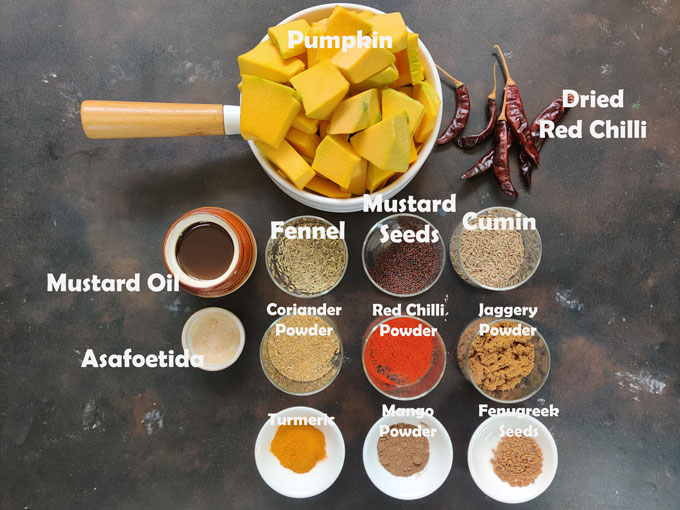
Other Ingredients For Sabzi
Apart from picking the right pumpkin, you need a few basic Indian pantry staples to make this pumpkin sabzi.
- Mustard Oil: For its pungent taste and aroma. You can use ghee as well instead of mustard oil.
- Tempering (Tadka): Mustard Seeds, Cumin Seeds, Fennel Seeds, Fenugreek Seeds, Asafoetida, and Dry Red Chilies
- Spices: Red Chili Powder, Turmeric Powder, Coriander Powder, Salt
- Sugar: I use jaggery powder for the nutty taste and sweetness. You can substitute it with granulated white sugar or brown sugar.
- Sourness: I use dry mango powder for the sour flavour. If that is not available, use tamarind paste or extract. Avoid using lemon juice as it does not blend with the flavours of this sabzi recipe.
- Additional Ingredients: Dried Fenugreek Leaves (kasuri methi) give the sabzi a subtle aroma and warmth. Fresh coriander leaves to garnish.
How To Make Pumpkin Sabzi
Step 1) In a heavy bottom pan, heat oil till it starts smoking. Add tadka (cumin, mustard seeds, fennel, fenugreek, asafoetida, and red chillies). Fry till the seeds start spluttering.
Step 2) Add pumpkin along with the salt and spices. Stir to combine.
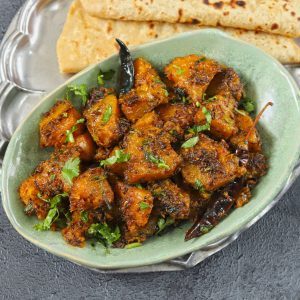
Step 3) Cover and cook the pumpkin over low heat for 20 – 25 minutes or until tender. Stir occasionally in between.
Step 4) Once the pumpkin turns soft, add mango powder, sugar, and Kasuri methi. Stir to combine. Let the pumpkin pieces caramelize over low heat for 5 – 10 minutes. Stir occasionally in between.
Watch Kaddu Ki Sabz Video
Serving Suggestion
The best way to enjoy kaddu ki sabzi is with spicy, soupy Mathura style potato curry , piping hot poori , and chilled mint pomegranate raita or my special boondi raita .
Even without curry, the khatta meetha kaddu tastes delicious with simple palak puri or paratha.
Here are a few other main-course dishes to serve with kaddu ki sabzi in an Indian thali – Dhaba Style Matar Paneer , Arbi Ki Sabji , or Makhana Sabji .
You can store this kaddu ki sabzi in the refrigerator for 1 week . Reheat in a microwave or over the stovetop in a pan.
More Pumpkin Recipes
- Chai Spiced Pumpkin Cake
- Roasted Pumpkin Soup
- One-Pot Pumpkin Pasta
- Curried Pumpkin Soup
- Pumpkin Salad
If you try this recipe and love it, please leave a comment and a rating. This helps us grow and reach other food lovers like you.
Ingredients
- ▢ 500 gram yellow pumpkin, peeled and cut into cubes
- ▢ ¼ cup mustard oil
- ▢ 1 tablespoon mustard seeds (rai)
- ▢ 1 tablespoon cumin seeds (jeera)
- ▢ 1 teaspoon fennel seeds (saunf)
- ▢ ¼ teaspoon asafoetida (hing)
- ▢ ½ teaspoon fenugreek seeds (methi dana)
- ▢ 4 dry red chilies, broken into halves
- ▢ 1 teaspoon turmeric powder
- ▢ 1 teaspoon red chilli powder
- ▢ 1 teaspoon coriander powder (dhaniya powder)
- ▢ Salt to taste
- ▢ ⅛ cup water
- ▢ ¼ cup jaggery powder or white granulated sugar
- ▢ 1 tablespoon dried mango powder (amchur)
- ▢ 1 tablespoon kasuri methi (dry fenugreek leaves)
- ▢ 2 tablespoon fresh coriander, chopped
Instructions
- In a heavy bottom pan, heat mustard oil. Once the oil starts smoking, add cumin seeds, mustard seeds, fennel seeds, methi dana, asafoetida, and dry red chilli. Fry till seeds start spluttering.
- Add pumpkin along with the salt, turmeric powder, red chilli powder, coriander powder, and salt. Stir to combine.
- Cover and cook the pumpkin cubes over low heat for 20 – 25 minutes or till pumpkin is tender. Stir occasionally in between.
- Once the pumpkin turns soft, add jaggery powder, mango powder, and kasuri methi. Stir to combine.
- Let the pumpkin pieces cook over low heat for next 5 minutes. Stir occasionally in between.
- Serve Kaddu Ki Sabzi warm with poori .
Recipe Notes:
- For making kaddu ki sabzi, cut or dice the pumpkin into chunky squares.
- Always add sugar and mango powder after the pumpkin is tender or almost cooked. Adding them before might increase the cooking time.
- Add sugar and mango powder once pumpkin is cooked.
- Once the sabzi is ready, you can slightly mash it using the back of a ladle or spoon.
Nutrition
We follow a strict NO SPAM Policy
