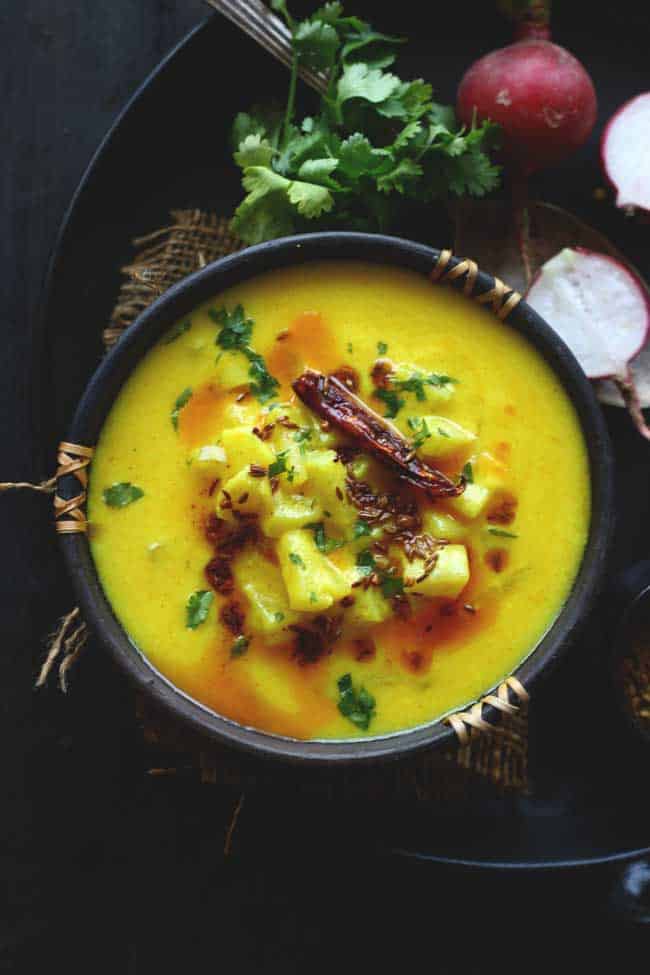
Mooli Ki Kadhi is a variety of kadhi from the hills of Uttarakhand, also known as jholi or jhoi in the region. It is light on the stomach and big on flavours.
Estimated reading time: 5 minutes
- About Pahadi Jholi
- Ingredients You’ll Need
- How To Make Pahadi Jholi
- Serving Suggestion
- Mooli Ki Kadhi Recipe
About Pahadi Jholi
In our Kumaoni dialect, we use the term jholi for kadhi. The consistency of Kumaoni jholi is on the thinner side, like a shorba or jhol. Perfect for mopping steamed rice using your fingers.
The flavours of mooli ki kadhi are intriguing. There is a slight pungent tone of radish, a hint of bitterness from fenugreek seeds, curd sourness, and green chillies’ spiciness.
Unlike Punjabi Kadhi Pakora or Rajasthani Kadhi , Pahadi Jholi is made without gram flour, onion, ginger, garlic, or tomato. Instead, rice paste is used to thicken the kadhi.
In most traditional Kumaoni dishes, processed ingredients like gram flour (besan) or ginger garlic paste are not used. Everything is prepared from scratch, like in this kadhi recipe; instead of rice flour, we use soaked rice combined with green chilli and coriander stalks to make the paste.
Ingredients You’ll Need
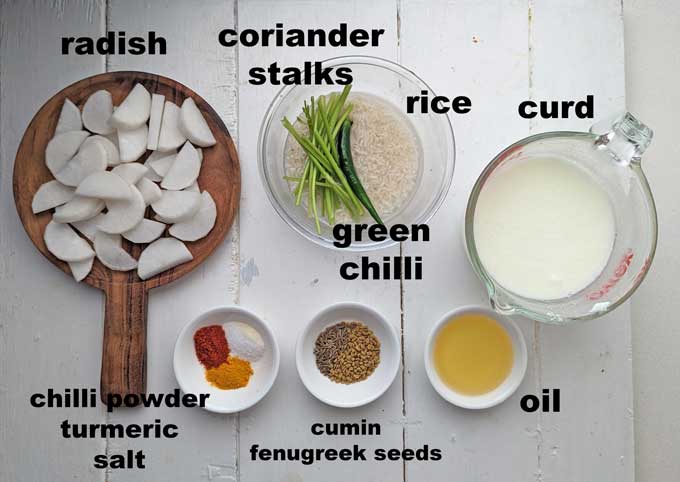
- Radish: If you can get your hands on Pahadi radish, nothing like it. If not, then use the regular white radish for making the kadhi. Ensure the radish is fresh, blemish-free, and has a crunch.
- Rice: You need short to medium-grain white rice to make the paste. This paste in the local dialect is called bis waar .
- Curd: For mooli ki kadhi, use sour curd. It should be more like buttermilk or chaas with a thin consistency. Do not use thick, set curd.
- Oil: Use either ghee or flavourless refined oil to make mooli ki kadhi.
- Spices: Cumin Seeds (Jeera), Fenugreek Seeds (Methi Dana), Turmeric Powder, Chilli Powder
- Other Ingredients: Green Chilli, Coriander Stalks, Coriander Leaves, Salt, Water
How To Make Pahadi Jholi
Step 1) Start by soaking rice in water for 15 – 20 minutes.
Step 2) After 15 minutes, make a smooth paste of soaked rice, green chilli, and coriander stalks in a blender. Keep it aside.
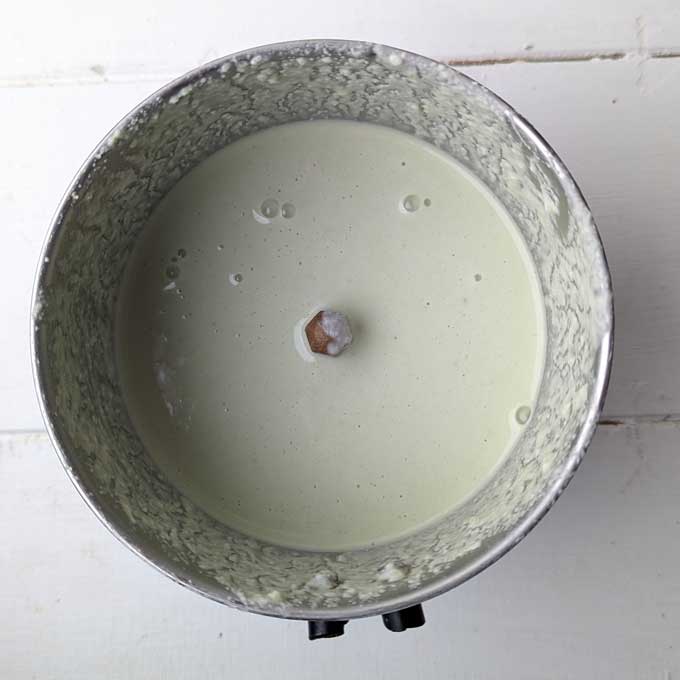
Step 3) Whisk curd nicely using a wire whisk or churner to a smooth, lump-free consistency.
Step 4) Remove the skin of the radish. Rinse it with water. Cut radish into square pieces or thin slices.
Step 5) Heat oil in a heavy bottom kadhai. Once the oil is hot, add cumin, fenugreek seeds, and dried red chillies (optional). Fry for 10 – 20 seconds.
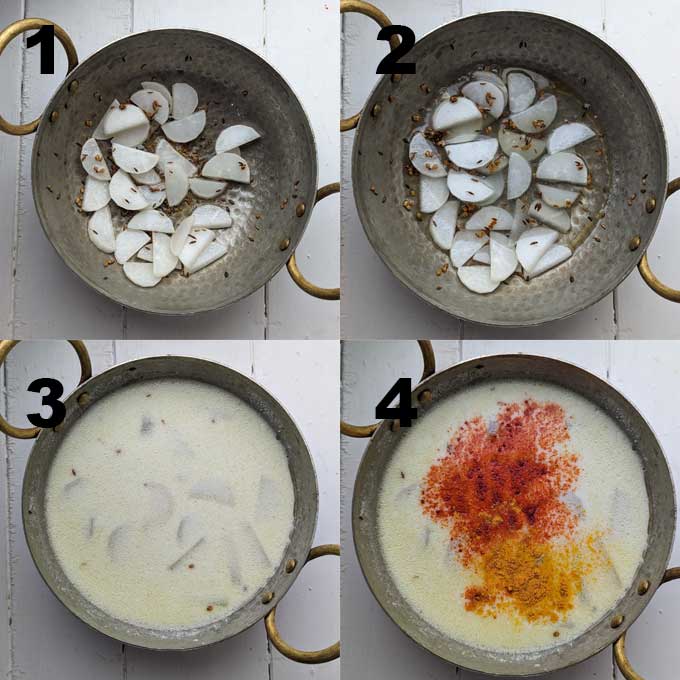
Step 6) Add radish. Fry over low heat for 20 – 30 seconds. Once the radish becomes translucent, add ¼ Cup of water, and cover the kadhai with a lid. Cook over low heat till the radish is 80% cooked.
Step 7) Add rice paste and whisked curd, salt, turmeric, and chilli powder. Mix nicely. Stir continuously to avoid lump formation.
Step 9) Simmer mooli ki kadhi over low heat for 15 – 20 minutes or until the radish and the rice paste are cooked. Keep stirring at regular intervals to avoid forming lumps.
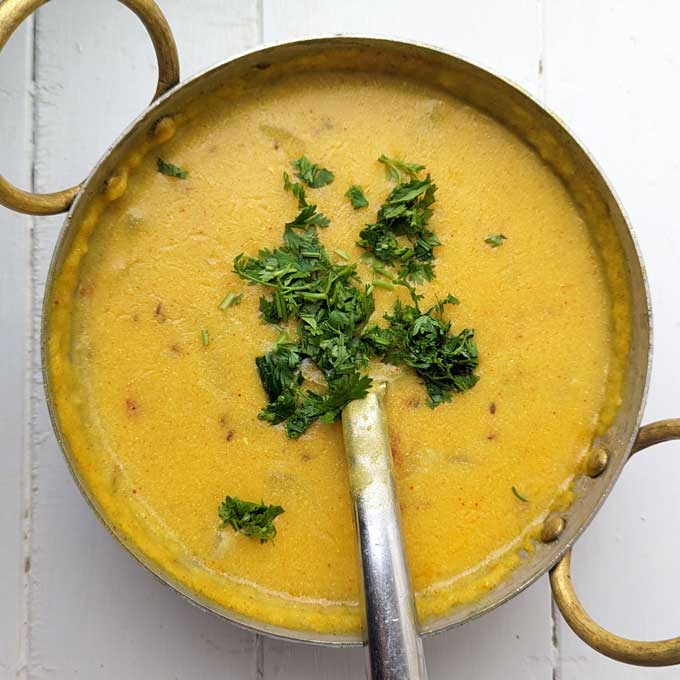
Garnish mooli ki kadhi with chopped coriander leaves.
Serving Suggestion
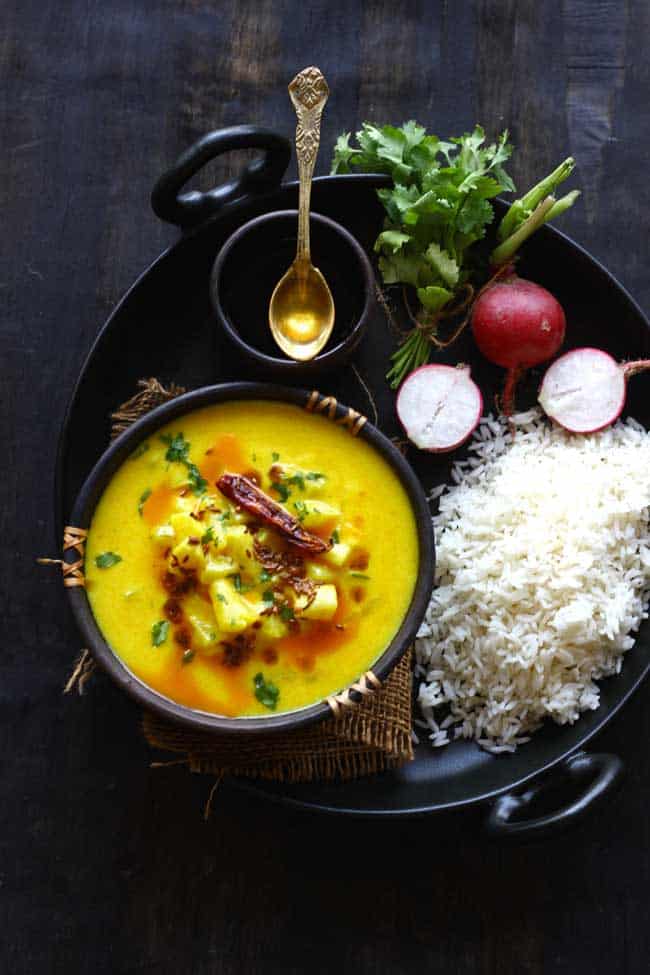
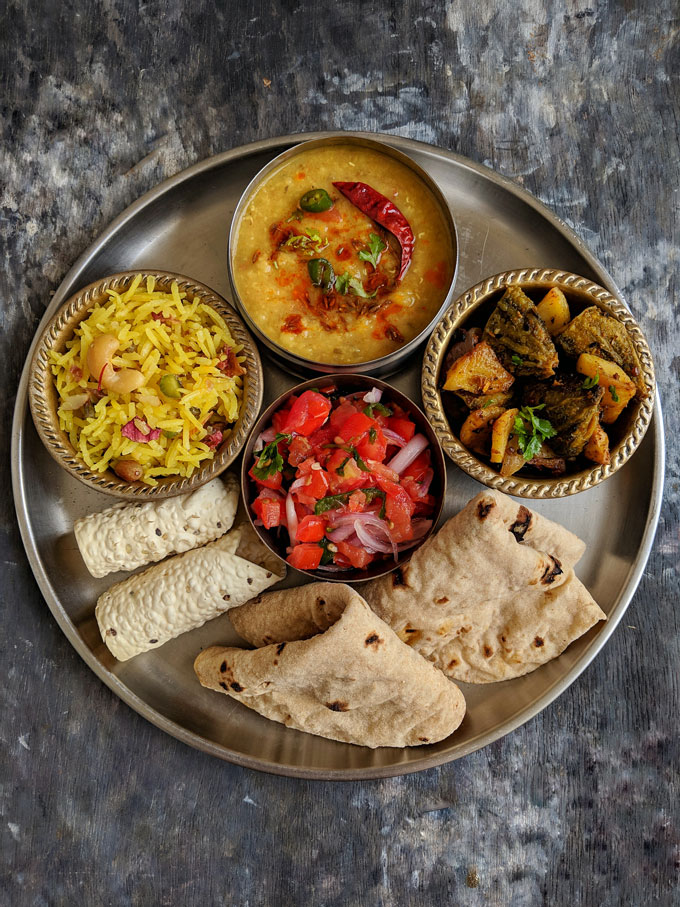
Traditionally, mooli ki kadhi is served with short-grain white rice. No phulka or chapati. The slightly starchy, sticky short-grain rice absorbs the flavour of the kadhi nicely. In Kumaoni language we call this combination, jholi – bhaat .
During winter, green vegetable stir fries like Pahadi lai ki sabzi or Pahadi Palak Ki Sabji are served with jholi bhaat to make everyday meals more nourishing and nutritious.
More Kumaoni Recipes
- Aloo Paani
- Gahat Ki Dal
- Aloo Ke Gutke
- Urad Dal Khichdi
- Pahadi Lai Ki Sabzi
- Pahadi Badi Ki Sabji
- Pahadi Chainsa Bhaat
- Kumaoni Cucumber Raita

Ingredients
- ▢ 200 gram white radish peeled and diced
- ▢ 4 tablespoon refined oil
- ▢ 1 teaspoon cumin seeds (jeera)
- ▢ ½ teaspoon fenugreek seeds methi dana
- ▢ a pinch of asafoetida
- ▢ 2 dried red chillies (optional)
- ▢ 1 Cup curd
- ▢ 1 ¼ teaspoon salt or to taste
- ▢ 1 teaspoon turmeric powder
- ▢ 1 teaspoon red chili powder
- ▢ 4 Cup water
Ingredients for Rice Paste (Biswaar)
- ▢ 2 tablespoon short to medium grain white rice besan
- ▢ 2 green chilli chopped
- ▢ ¼ Cup fresh coriander stalks
Instructions
- Start by soaking rice in water for 15 – 20 minutes. After 15 minutes, make a smooth paste of soaked rice, green chilli, and coriander stalks in a blender. Keep it aside. Biswaar is ready for kadhi.
- Whisk curd nicely using a wire whisk or churner to a smooth, lump-free consistency. If the curd is thick add 1 Cup of water and whisk it to a buttermilk or chaas like thin consistency.
- Remove the skin of the radish. Rinse it with water. Cut radish into square pieces or thin slices.
- Heat oil in a heavy bottom kadhai. Once the oil is hot, add cumin, fenugreek seeds, asafoeida, and dried red chillies (optional). Fry for 10 – 20 seconds.
- Add radish. Fry over low heat for 20 – 30 seconds. Once the radish becomes translucent, add ¼ Cup of water, and cover the kadhai with a lid. Cook over low heat till the radish is 80% cooked.
- Add rice paste and whisked curd, water, salt, turmeric, and chilli powder. Mix nicely. Stir continuously to avoid lump formation.
- Simmer mooli ki kadhi over low heat for 20 minutes or until the radish and the rice paste are cooked. Keep stirring at regular intervals to avoid forming lumps.
- Garnish Mooli Ki Kadhi with chopped coriander leaves. Taste and if required, add more seasoning.
- Serve Mooli Ki Kadhi warm with white rice.
Recipe Notes:
- Mooli Ki Kadhi has a thin, drinking consistency, unlike the creamy Punjabi Kadhi.
- After adding the rice paste, immediately add curd and water else; there will be a lump formation.
- Make sure the radish is cooked before adding rice paste and curd.
Nutrition
We follow a strict NO SPAM Policy

Mooli Ki Kadhi Recipe
Equipment
- Blender
- Heavy Bottom Kadhai
Ingredients
- 200 gram white radish peeled and diced
- 4 tablespoon refined oil
- 1 teaspoon cumin seeds (jeera)
- ½ teaspoon fenugreek seeds methi dana
- a pinch of asafoetida
- 2 dried red chillies (optional)
- 1 Cup curd
- 1 ¼ teaspoon salt or to taste
- 1 teaspoon turmeric powder
- 1 teaspoon red chili powder
- 4 Cup water
Ingredients for Rice Paste (Biswaar)
- 2 tablespoon short to medium grain white rice besan
- 2 green chilli chopped
- ¼ Cup fresh coriander stalks
Instructions
- Start by soaking rice in water for 15 - 20 minutes. After 15 minutes, make a smooth paste of soaked rice, green chilli, and coriander stalks in a blender. Keep it aside. Biswaar is ready for kadhi.
- Whisk curd nicely using a wire whisk or churner to a smooth, lump-free consistency. If the curd is thick add 1 Cup of water and whisk it to a buttermilk or chaas like thin consistency.
- Remove the skin of the radish. Rinse it with water. Cut radish into square pieces or thin slices.
- Heat oil in a heavy bottom kadhai. Once the oil is hot, add cumin, fenugreek seeds, asafoeida, and dried red chillies (optional). Fry for 10 – 20 seconds.
- Add radish. Fry over low heat for 20 – 30 seconds. Once the radish becomes translucent, add ¼ Cup of water, and cover the kadhai with a lid. Cook over low heat till the radish is 80% cooked.
- Add rice paste and whisked curd, water, salt, turmeric, and chilli powder. Mix nicely. Stir continuously to avoid lump formation.
- Simmer mooli ki kadhi over low heat for 20 minutes or until the radish and the rice paste are cooked. Keep stirring at regular intervals to avoid forming lumps.
- Garnish Mooli Ki Kadhi with chopped coriander leaves. Taste and if required, add more seasoning.
- Serve Mooli Ki Kadhi warm with white rice.
Video
Notes
- Mooli Ki Kadhi has a thin, drinking consistency, unlike the creamy Punjabi Kadhi.
- After adding the rice paste, immediately add curd and water else; there will be a lump formation.
- Make sure the radish is cooked before adding rice paste and curd.
Nutrition
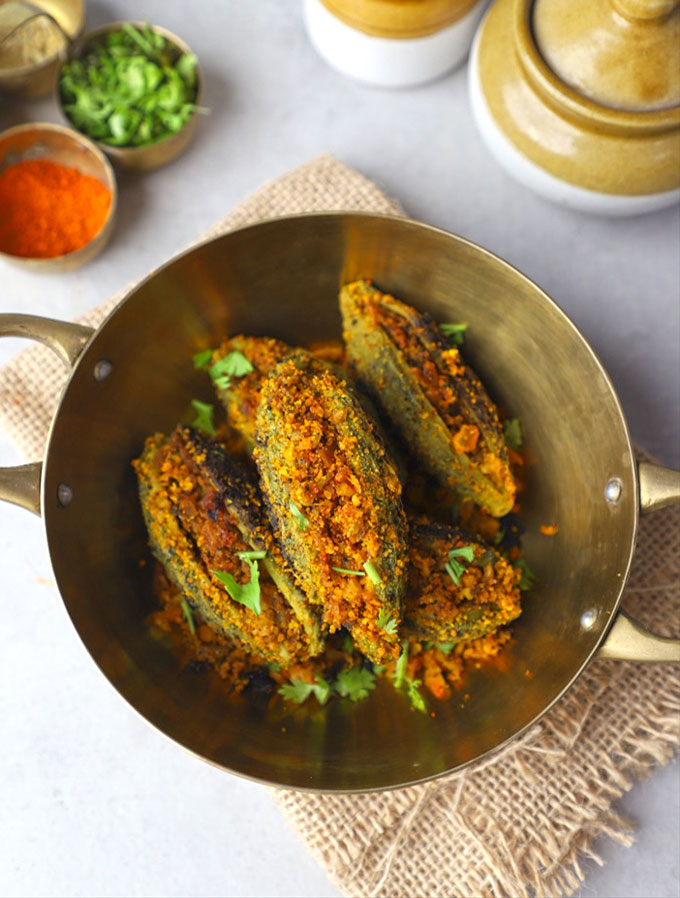
Do you hate bitter gourd? Try this Rajasthani Bharwa Karela recipe, it perfectly balances the bitterness with delicious spicy, tangy flavours, leaving you craving for more.
Estimated reading time: 7 minutes
- Ingredients You’ll Need
- How To Make Bharwa Karela
- Serving Suggestion
- My Tried and True Tips
- Rajasthani Bharwa Karela Recipe
The very mention of “karela” (bitter gourd) often elicits a mixed reaction. While some shy away from its characteristic bitterness, others embrace it for its unique flavour and numerous health benefits.
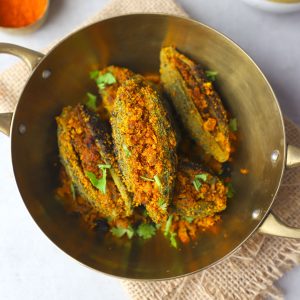
The Rajasthani method for preparing Bharwa Karela expertly minimizes the bitterness, and the stuffing beautifully clings to the gourd , making it enjoyable even for those who are usually not fond of bitter gourd.
What Makes Rajasthani Bharwa Karela Special?
- Gram Flour (Besan): This is a key ingredient, lending a nutty flavour and binding the spices together. It also absorbs moisture, ensuring a dry and flavourful stuffing.
- Onions form the base of the savoury stuffing.
- Spices like amchur (mango powder), pickle masala , and red chilli powder gives the authentic Rajasthani touch to the dish creating a distinctive tangy and spicy flavour profile.
- Mustard Oil: Often preferred for its pungent flavor, which complements the bitter gourd perfectly.
- Vegan and Gluten Free Indian side dish that is wholesome too.
Ingredients You’ll Need
- Bitter Gourd (Karela) of small to medium size with bright green colour and no yellow blemishes. You can use them to make air fryer chips also.
- Mustard Oil gives a sharp, spicy pickle like taste to the bharwa karela.
- Gram Flour (besan) brings the whole stuffing together and gives it a sticky texture.
- Spices: Red Chilli Powder, Turmeric, Fennel Seeds, Dried Mango Powder (amchur).
- Pickle Masala takes the stuffing up a notch. Substitute it with a combination of chaat masala and garam masala.
- Onion gives a crunchiness to the karela stuffing.
- Salt to apply on bitter gourd and season the stuffing.
How To Make Bharwa Karela
1. Preparing the Karela:
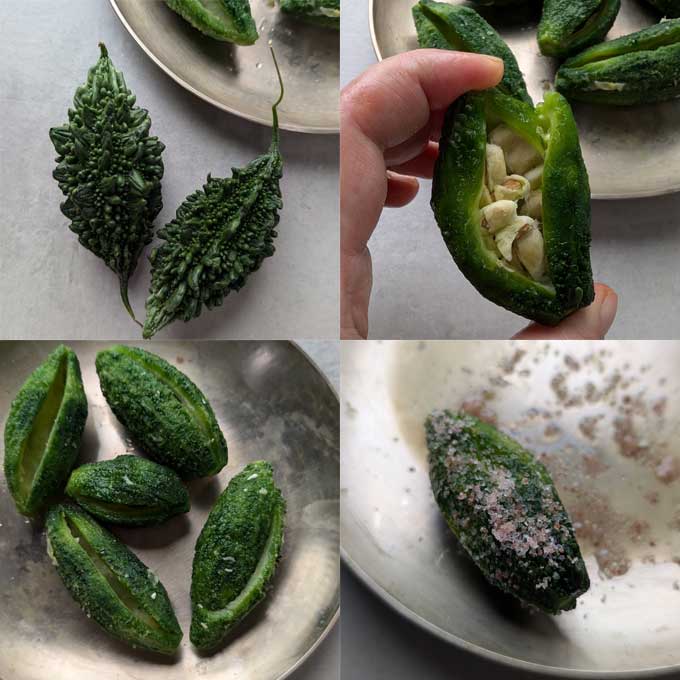
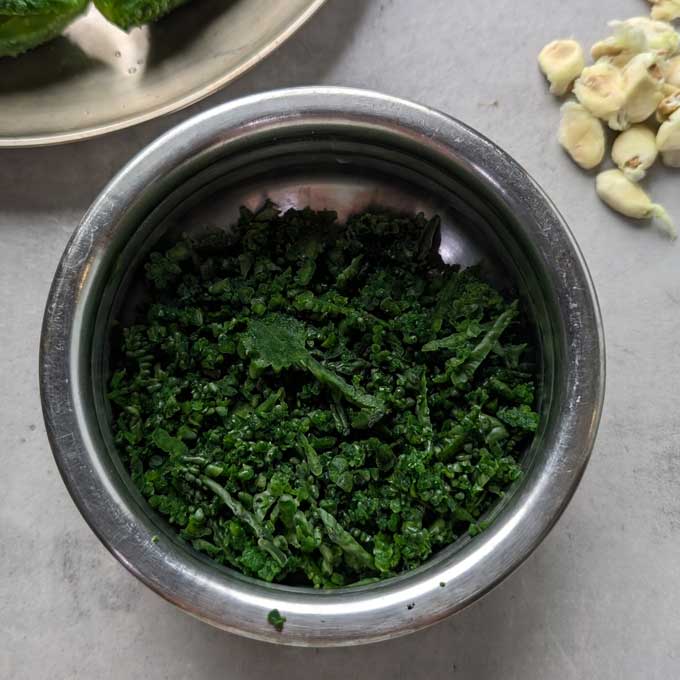
- Wash the karela thoroughly. Using a peeler, lightly scrape off the uneven skin, but don’t peel it completely. Collect it in a bowl.
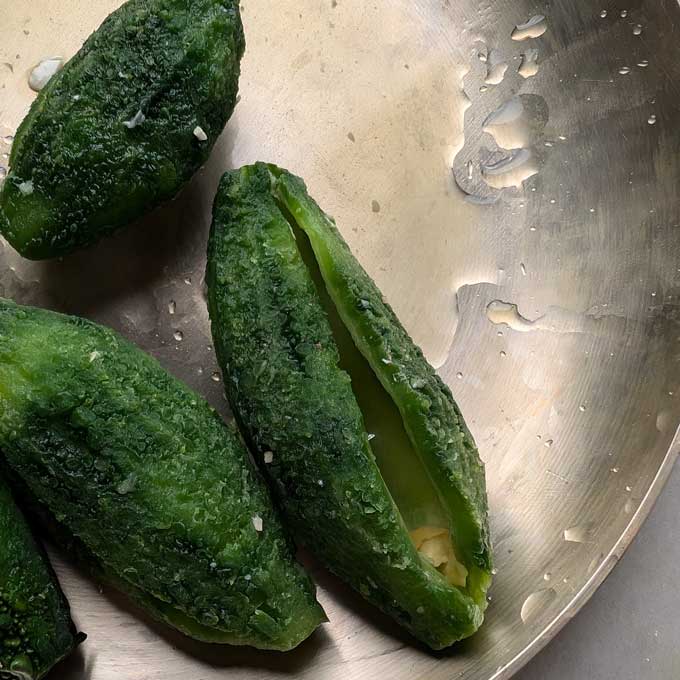
- Make a slit lengthwise in each karela, but do not cut through completely. Scoop out the seeds and any soft pulp from the inside using a spoon. Discard them. This will create a pocket for the stuffing.
- Rub 1 teaspoon of salt generously all over the karela, both inside and out. Place them in a colander and let them sit for at least 30 minutes. This process helps to draw out the bitterness.
- After 30 minutes, squeeze each bitter gourd nicely to remove excess salt and bitter juices. Pat them dry with a kitchen towel.
2. Preparing the Stuffing:

- Heat 2 tablespoons of mustard oil in a heavy-bottomed pan or kadhai.
- Once hot, add fennel seeds. Let them splutter.
- Add the finely chopped onion and sauté until it turns golden brown.
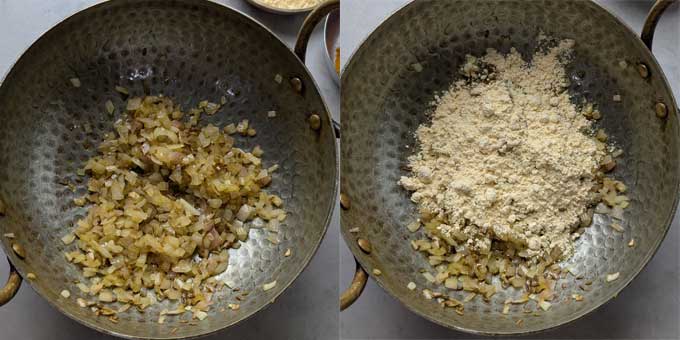
- Reduce the heat to low. Add the gram flour (besan) to the pan and roast it on low heat, stirring continuously, until it turns aromatic and lightly golden. Be careful not to burn it. This step is crucial for a well-cooked stuffing.
- Add all the dry spices, 1 tablespoon of chopped bitter gourd peel, and salt to taste. Mix well and cook for 1-2 minutes, stirring constantly, until the spices are fragrant. If the mixture feels too dry, you can sprinkle 1-2 tablespoons of water to help the spices bind.
- Remove the stuffing from the heat and let it cool down slightly.

3. Stuffing the Bitter Gourd (Karela):
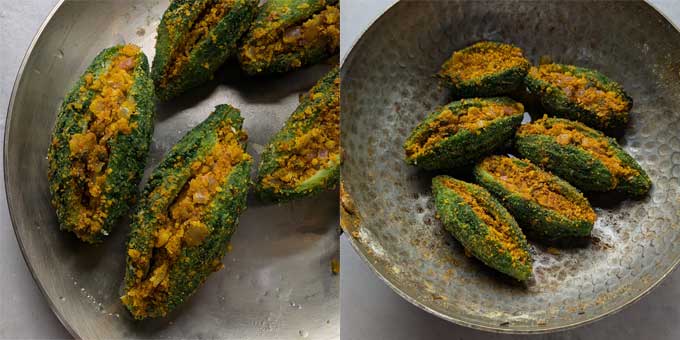
- Once the stuffing has cooled slightly, carefully fill each karela with a generous amount of the prepared mixture. Press the stuffing firmly into the cavity.
- You can secure the karela with a kitchen thread if you are worried about the stuffing coming out while frying, but generally, if you press it firmly, it stays in place.
4. Cooking the Bharwa Karela:
- Heat oil for shallow frying in a wide pan or tawa over medium heat. The oil should be enough to cover about a quarter of the karela.
- Once the oil is hot, carefully place the stuffed karela in the pan.
- Cook on medium-low heat, turning occasionally, until all sides are golden brown and the karela is tender. This will take about 20 minutes.
- To ensure even cooking and to make sure the karela cooks through, you can cover the pan with a lid for the last 5 minutes. This helps to steam them from the inside.
- Once cooked, remove the Bharwa Karela from the pan and drain on paper towels to remove excess oil.
Serving Suggestion
Rajasthani Bharwa Karela is a fantastic accompaniment to a traditional Indian meal. Serve it with:
- Dal-Baati-Churma: A classic Rajasthani combination that truly elevates the experience.
- Rotis or Parathas: The perfect vehicle to scoop up the flavoruful stuffing.
- Simple Rice and Dal like panchmel , arhar , or everyday masoor dal .
- As a side dish with any Indian curry .
- Bharwa Karela makes an excellent travel meal with poori or thepla .
My Tried and True Tips
- Don’t skip the salting step: This is key to reducing the bitterness.
- Don’t throw away the peel: It adds lot of flavour to the stuffing.
- Roast the besan well: This ensures a flavorful and non-sticky stuffing.
- Cook on low heat: Patience is key! Slow cooking ensures the karela is tender and the stuffing is cooked through without burning.
- Add Salt Cautiously to the stuffing as bitter gourd are also seasoned with salt generously.
- Leftovers: Bharwa Karela tastes even better the next day as the flavors meld together. Store in an airtight container in the refrigerator for up to 4 days.
More Indian Sabzi Recipes
- Kathal Ki Sabzi
- Dahi Lauki Ki Sabzi
- Sev Tamatar Ki Sabzi
- Kamal Kakdi Ki Sabzi
- Kacche Kele Ki Sabzi
f ollow us on Youtube or Instagram for video recipes.
Ingredients
- ▢ 500 gram medium sized bitter gourd (karela)
- ▢ 6 tablespoon mustard oil
- ▢ 1 teaspoon fennel seeds (saunf)
- ▢ 1 Cup onion, finely chopped
- ▢ ¼ Cup gram flour (besan)
- ▢ 1 teaspoon red chilli powder
- ▢ 1 teaspoon turmeric powder
- ▢ 1 teaspoon dried mango powder (amchur)
- ▢ 1 tablespoon salt (for applying on bitter gourd and stuffing)
- ▢ 1 tablespoon bitter gourd peel, chopped
- ▢ 2 teaspoon pickle masala ( get recipe )
Instructions
- Wash the karela thoroughly. Using a peeler, lightly scrape off the uneven skin, but don’t peel it completely. Collect it in a bowl.
- Make a slit lengthwise in each karela, but do not cut through completely. Scoop out the seeds and any soft pulp from the inside using a spoon. Discard them. This will create a pocket for the stuffing.
- Rub 1 teaspoon of salt generously all over the karela, both inside and out. Place them in a colander and let them sit for at least 30 minutes. This process helps to draw out the bitterness.
- After 30 minutes, squeeze each bitter gourd nicely to remove excess salt and bitter juices. Pat them dry with a kitchen towel.
- Heat 2 tablespoons of mustard oil in a heavy-bottomed pan or kadhai. Once hot, add fennel seeds. Let them splutter.
- Add the finely chopped onion and sauté until it turns golden brown.
- Reduce the heat to low. Add the gram flour (besan) to the pan and roast it on low heat, stirring continuously, until it turns aromatic and lightly golden. Be careful not to burn it. This step is crucial for a well-cooked stuffing.
- Add all the dry spices, 1 tablespoon of chopped bitter gourd peel, and salt to taste. Mix well and cook for 1-2 minutes, stirring constantly, until the spices are fragrant. If the mixture feels too dry, you can sprinkle 1-2 tablespoons of water to help the spices bind. Remove the stuffing from the heat and let it cool down slightly.
- Once the stuffing has cooled slightly, carefully fill each karela with a generous amount of the prepared mixture. Press the stuffing firmly into the cavity.
- You can secure the karela with a kitchen thread if you are worried about the stuffing coming out while frying, but generally, if you press it firmly, it stays in place.
- Heat oil for shallow frying in a wide pan or tawa over medium heat. The oil should be enough to cover about a quarter of the karela. Once the oil is hot, carefully place the stuffed karela in the pan.
- Cook on medium-low heat, turning occasionally, until all sides are golden brown and the karela is tender. This will take about 20 minutes.
- To ensure even cooking and to make sure the karela cooks through, you can cover the pan with a lid for the last 5 minutes. This helps to steam them from the inside.
- Once cooked, remove the Bharwa Karela from the pan and drain on paper towels to remove excess oil.
- Serve Bharwa Karela warm or at room temperature with chapati.
Recipe Notes:
- Bitter Gourd for this recipe should be tender, small to medium size, and fresh. Avoid using bitter gourd with yellow shade.
- Adding bitter gourd peel to stuffing is optional. I like its bitter taste.
- Substitute mango powder with tiny bit of lemon juice or tamarind paste.
- Substitute pickle masala with a combination of Chaat Masala and Garam Masala.
- Adjust spices to your liking: Feel free to increase or decrease the chilli powder based on your spice preference.
Nutrition
We follow a strict NO SPAM Policy
