Karonde Mirch Ki Sabzi is a delicious Indian side-dish prepared with seasonal berries called – karonda (natal plum). This karonda sabzi is more of a condiment or pickle served on the side with usual Indian main-course dishes. The monsoon season is the right time to enjoy this spicy karonda sabzi.
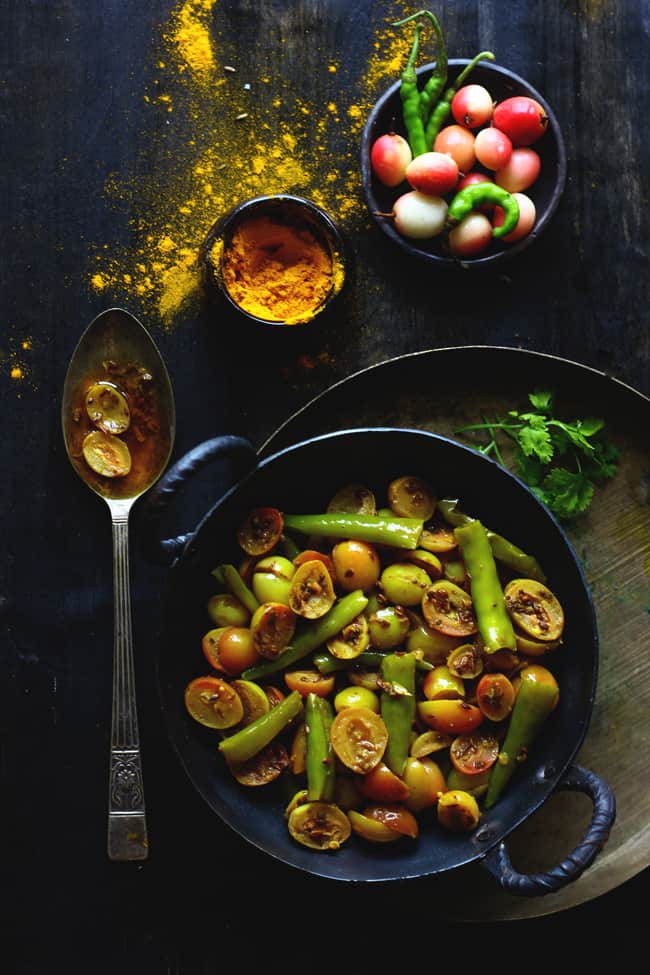
During this entire rainy season, we are enchanted by the craving for spicy food. Yesterday morning I went to the market and came home with beautiful Karonda (natal plum) having natural vermillion shades.
In English, Karonda is known as ‘Carissa Carandas.’ I must admit it is quite a fancy name for a humble wild berry.
It is a local berry mainly found across North India, Western Ghats, and Nilgiri Hills. In India, karonda is mainly used for making pickles, and spicy side-dishes.
The sweet and sour taste of the berry makes it perfect for making pickles.
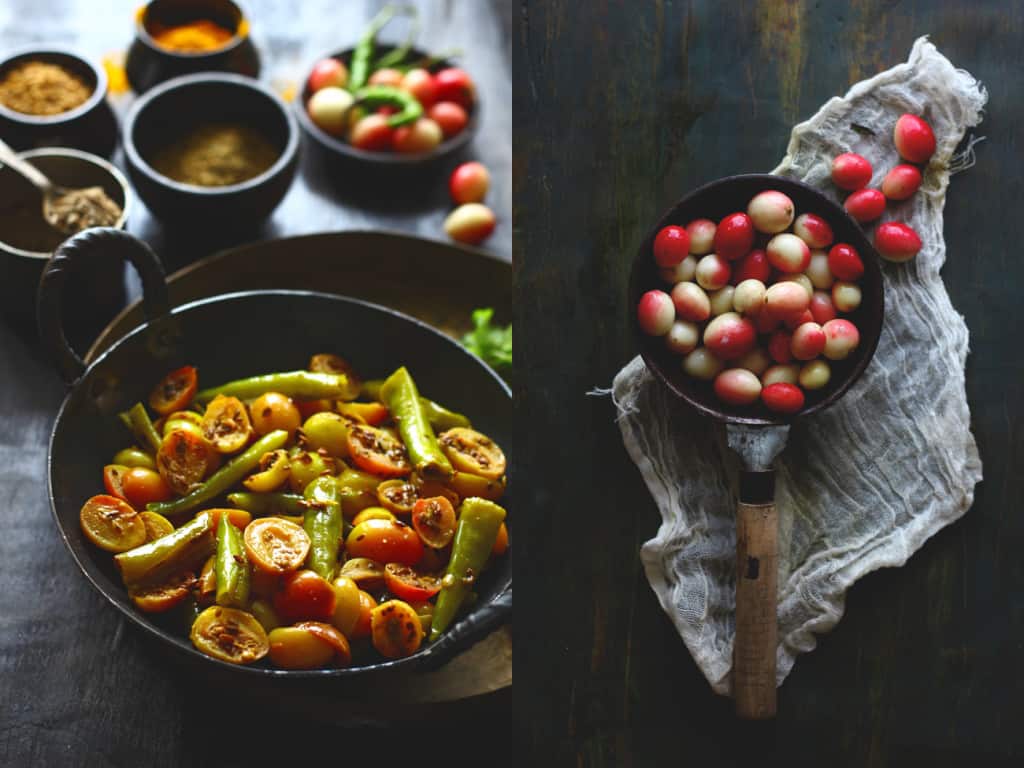
Karonde Ki Sabzi…
Karonde Mirch ki sabzi is a popular monsoon dish across North India. Karonda has a tangy flavor to it which needs to be toned down with the green chilies and spices in this recipe.
The choice of mustard oil for cooking karonde mirch ki sabzi was a good decision. The pungent flavor of mustard oil compliments the spiciness of the chilies and the tanginess of the berries.
Apparently, karonda sabzi is my husband’s childhood favorite side-dish. With a huge karonda shrub in the backyard of his ancestral home, he had enough of them while growing up.
For lunch, we enjoy crisp and flaky triangle parathas, arhar dal with karonde ki sabzi. It was so full of flavors and well suited to the weather. And especially the husband’s face beaming with delight and satisfaction.
More Indian Regional Recipes For You:
Kathal (Jackfruit) Ki Sabzi
Tomato Garlic Rasam
Kamal Kakdi Ki Sabzi
Punjabi Chitt
If you try this recipe and love it, please leave a comment and a rating. This helps us grow and reach many other food lovers like you, who are looking for a perfect tried and tested recipe.
Ingredients
- ▢ 200 gram Karonda (natal plum)
- ▢ 5 – 6 large-size green chili
- ▢ 1 teaspoon cumin seeds (jeera)
- ▢ ½ teaspoon fenugreek seeds (methi dana)
- ▢ ½ teaspoon carom seeds (ajwain)
- ▢ 1 teaspoon fennel seeds (saunf)
- ▢ ¼ teaspoon asafoetida (hing)
- ▢ Salt to taste
- ▢ 1 teaspoon turmeric powder
- ▢ 1 teaspoon coriander powder (dhaniya powder)
- ▢ 1 teaspoon achaar ka masala ( see recipe )
- ▢ ¼ Cup mustard oil
Instructions
- Rinse 2 – 3 times karonda in water to remove all the dirt and mud particles. Wash the green chili as well.
- Transfer karonde and green chili in a metal colander. Let them sit in a metal colander for 10 – 15 minutes to drain all the excess water. Wipe the green chili with a clean, dry kitchen towel.
- Cut each piece of karonda into two equal halves.
- Cut each green chili into two to three pieces. Slit few from center lengthwise.
- Heat mustard oil in a skillet over a high flame. Once the oil reaches the smoking point reduce the heat to medium.
- Add cumin, fenugreek, asafoetida and carom seeds. Fry for 10 – 20 seconds.
- Next add turmeric powder, coriander powder, and fennel powder. Fry for 10 seconds.
- Now add chopped karonda and green chili. Stir to mix.
- Season with salt and cook covered over medium heat for 5 – 6 minutes.
- Open the lid, check for doneness. Sprinkle achaar masala, mix and cook uncovered for 5 more minutes. Turn off the heat.
- Serve karonde mirch ki sabzi with paratha/roti. You can store it in the fridge for a week or so.
Recipe Notes:
Nutrition
We follow a strict NO SPAM Policy

Karonde Mirch Ki Sabzi Recipe
Equipment
- Heavy Bottom Kadhai
Ingredients
- 200 gram Karonda (natal plum)
- 5 - 6 large-size green chili
- 1 teaspoon cumin seeds (jeera)
- ½ teaspoon fenugreek seeds (methi dana)
- ½ teaspoon carom seeds (ajwain)
- 1 teaspoon fennel seeds (saunf)
- ¼ teaspoon asafoetida (hing)
- Salt to taste
- 1 teaspoon turmeric powder
- 1 teaspoon coriander powder (dhaniya powder)
- 1 teaspoon achaar ka masala ( see recipe )
- ¼ Cup mustard oil
Instructions
- Rinse 2 - 3 times karonda in water to remove all the dirt and mud particles. Wash the green chili as well.
- Transfer karonde and green chili in a metal colander. Let them sit in a metal colander for 10 - 15 minutes to drain all the excess water. Wipe the green chili with a clean, dry kitchen towel.
- Cut each piece of karonda into two equal halves.
- Cut each green chili into two to three pieces. Slit few from center lengthwise.
- Heat mustard oil in a skillet over a high flame. Once the oil reaches the smoking point reduce the heat to medium.
- Add cumin, fenugreek, asafoetida and carom seeds. Fry for 10 - 20 seconds.
- Next add turmeric powder, coriander powder, and fennel powder. Fry for 10 seconds.
- Now add chopped karonda and green chili. Stir to mix.
- Season with salt and cook covered over medium heat for 5 - 6 minutes.
- Open the lid, check for doneness. Sprinkle achaar masala, mix and cook uncovered for 5 more minutes. Turn off the heat.
- Serve karonde mirch ki sabzi with paratha/roti. You can store it in the fridge for a week or so.
Notes
Nutrition
Bibikhana Pitha or Bikrampurer Badshahi Pithe is a prestigious and unique Bengali dessert from Bikrampur, Dhaka, Bangladesh. Bibikhana Pitha is a soft delicate cake with ‘melt in your mouth’ kind of texture. It’s a mildly sweet rice cake with an earthy touch from rice flour, crunch from coconut, enriched with thickened milk, sweetened with date palm jaggery and molasses and flavored with ghee (clarified butter) and freshly crushed cardamom.
But the uniqueness of this pitha is the smoky flavour which comes from the kath koyla (burnt charcoal) on which this cake is traditionally cooked. This is why it is also called as pora pithe or Poda Pitha.
As this recipe calls for quite a preparation from preparing flame to cooking, this bibikhana pitha is cooked and enjoyed when some special guests arrive at home. And to make it special for guests it is mixed with milk instead of water like other pitha. That is why Bibikhana Pitha is also known as Badshahi Pithe. Traditionally this classic Bibikhana Pitha is cooked by the bride.
The newly wedded women begin their cooking journey at in-law’s home with this bibikhana pitha right after the wedding. It is said in old days it was a test of the cooking skill of bride; if she could cook it perfectly the responsibility of kitchen would be her onwards.
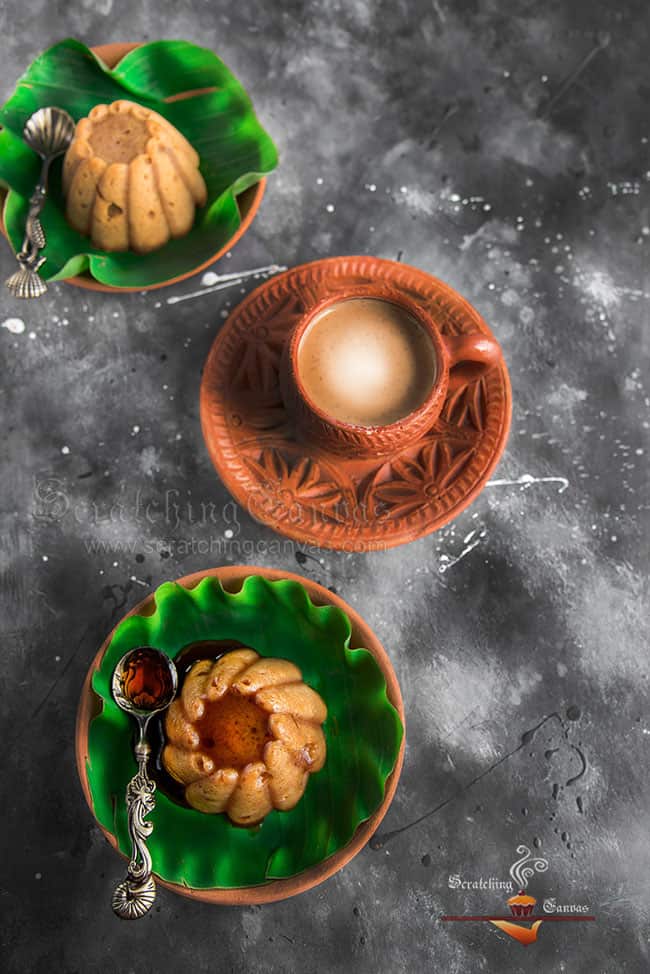
If you wondering how do I know so much about this local dessert, all thanks to Rimli, who is an expert in the Bengali cuisine. She is the only person that comes to my mind if I talk about authentic Bengali recipes. Her each recipe is a labour of hard work and would transport you to a Bengali kitchen in every sense.
While I was compiling the list of guest bloggers for this year she was the first one to make it to the list. I regularly find myself getting inspired by many other Indian food bloggers and Instagrammers who are doing an amazing work and she is one of them. Her blog Scratching Canvas is a treat for any Bengali food lover.
So when I was thinking of making a post for her I knew it has to be something special, very close to my heart; a classic Bengali delicacy – Bibikhana Pitha. So here I have a very unique and traditional dessert in my sleeves, Bibikhana Pitha, straight from the soil of Bangladesh where my soul truly belongs.’
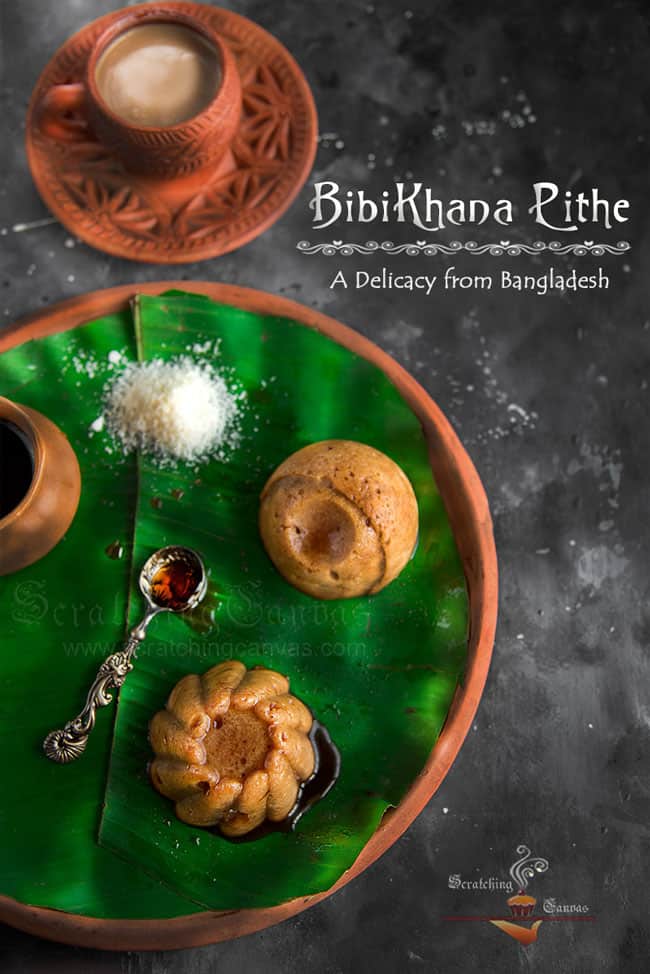
Other Regional Indian Desserts You Might Like To Try:
- Paneer Kheer (Chanar Payesh)
- Chikoo Ka Halwa
- Gulgule (Meetha Pua)
- Vrat Ki Panjiri
How To Make Bibikhana Pitha In Few Simple Steps:
Ingredients
- ▢ 1 Cup rice flour
- ▢ 2 tablespoon all-purpose flour (maida) optional
- ▢ 1 Cup desiccated coconut
- ▢ 1 teaspoon cardamom powder (elaichi powder)
- ▢ ¼ teaspoon black pepper powder
- ▢ a pinch of salt
- ▢ ½ Cup date palm jaggery (nolen gur)
- ▢ 2 tablespoon date palm molasses+ more for serving
- ▢ ¼ Cup clarified butter (ghee)
- ▢ 1 Cup milk
- ▢ 2 eggs
Instructions
- Sieve and sift all-purpose flour and rice flour together. Mix desiccated coconut and ground spices (including salt) with the flour mixture and set aside.
- Whisk egg, ghee, and jaggery together to a fluffy batter. Use a hand blender if required for the purpose.
- Add molasses to milk mixture and whisk briskly.
- Add flour and milk alternately in 3:2 ratios to the egg batter and mix until smooth lump-free batter forms.
- Grease a heatproof pan/bowl with ghee and pour the batter into the pan/bowl.
Gas Stove Method:
- If you are cooking bibikhana pitha on a gas stove/stovetop take a large pan with tightly fitted cover. Place a wire rack inside and place batter filled pan/bowl on the stand. Cover the large pan with the lid and keep on low-medium flame. Cook the pithe this way for 60-70 mins or until a skewer comes out clean once inserted in the middle of the pithe .
Oven Method:
- If cooking in the oven preheat oven @160C and bake the pithe for 55-65 mins or until a skewer comes out clean once inserted in the middle of the pithe. Remove cooked pithe from oven/gastop and keep on a wire rack to bring to room temperature.
- Serve Bibikhana pitha warm freshly made along with nolen gur (date palm jaggery).
Recipe Notes:
- This recipe yields either one pitha of 8 inch or small cupcake size 8 pitha.
- You can use either the gas stive method or the oven one to cook the pitha.
We follow a strict NO SPAM Policy
