A guide for beginners to perfectly stock up an Indian spice box with essential spices for everyday cooking.
Estimated reading time: 6 minutes
- What is Masala Box?
- Additional Spices for Everyday Indian Cooking
- Frequently Asked Questions
What is Masala Box?
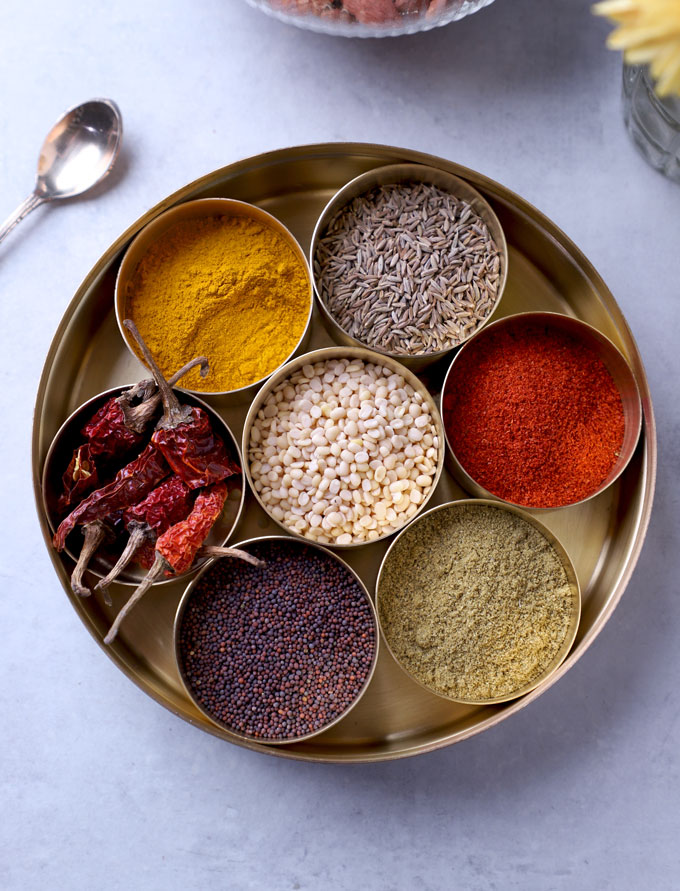
An Indian spice box, or “masala dabba,” is a culinary staple in Indian kitchens, holding the foundational spices that give Indian dishes their unique colour and taste. This round, often stainless steel container usually has small compartments to hold essential spices
Every region, household, and even individual cook has slight variations in their essential spices, but certain staples are ubiquitous.
Here is a spice box guide to help you learn about essential Indian spices and their uses in detail.
Turmeric Powder (Haldi)
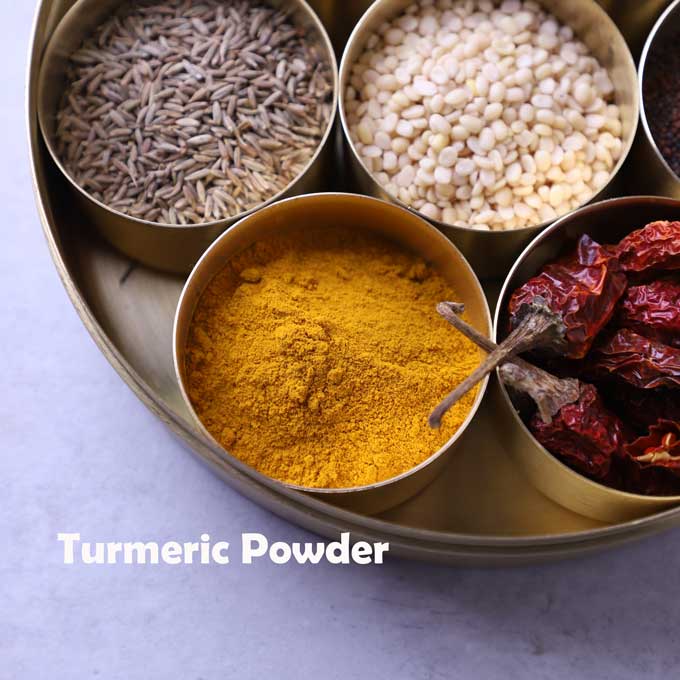
- Flavour Profile : Warm, earthy, and slightly bitter
- Culinary Use : Turmeric is known for lending its signature yellow hue to dishes like dal and curry .
Red Chili Powder (Lal Mirch)
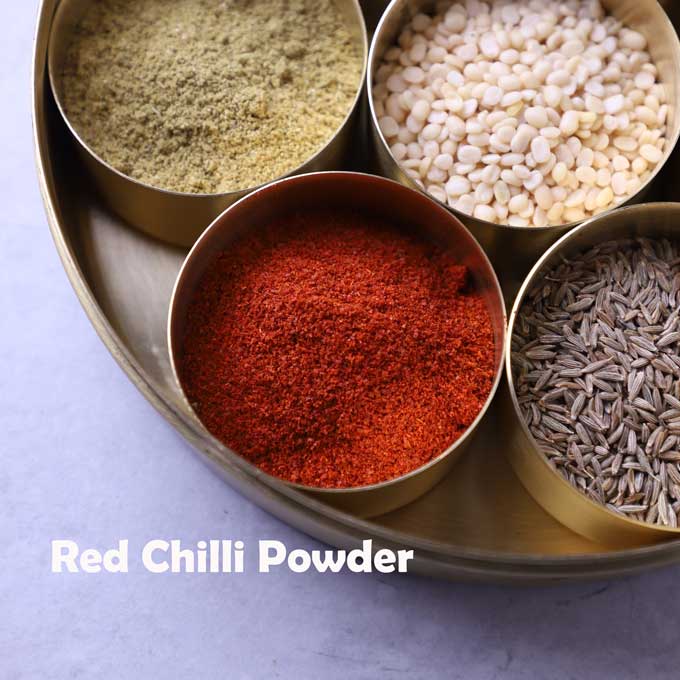
- Flavour Profile : Hot, spicy, with varying levels depending on the type of chilli used to make the powder.
- Culinary Use : Chilli powder adds heat and a vibrant red colour to dishes. It’s used in everything from Indian curries and lentils to vegetable stir-fries.
Coriander Powder (Dhania Powder)
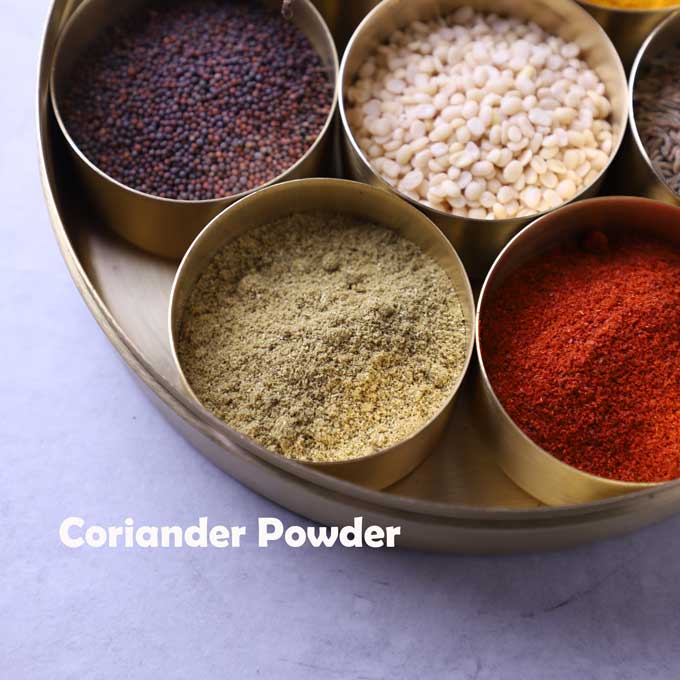
- Flavour Profile : Mildly citrusy and earthy
- Uses : Ground Coriander is a staple in curries and spice blends, contributing a mild flavour that balances stronger spices.
Cumin Seeds (Jeera)
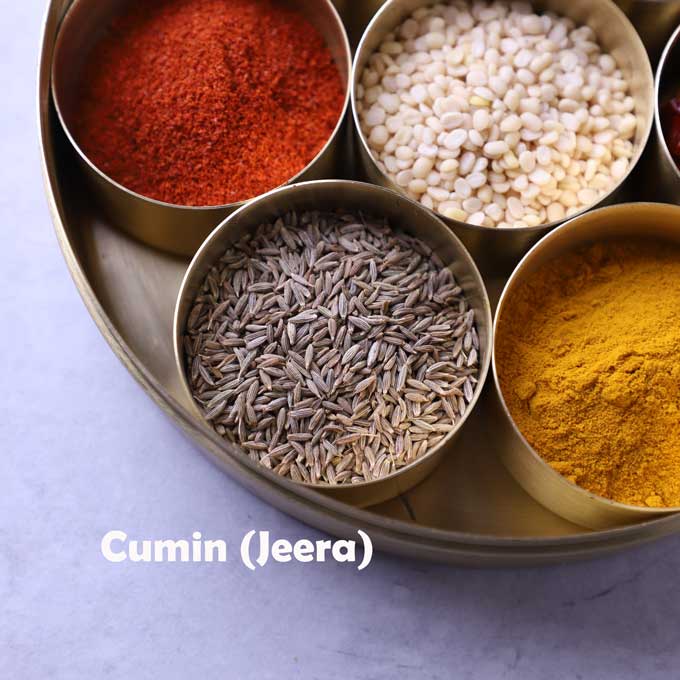
- Flavour Profile : Warm, earthy, with a slightly nutty taste
- Uses : Cumin seeds are often toasted in hot oil for tempering (tadka). They’re used in lentils, curries, and raita . Ground Cumin (powder) is also a commonly used spice in Indian cooking.
BlackMustard Seeds (Rai)
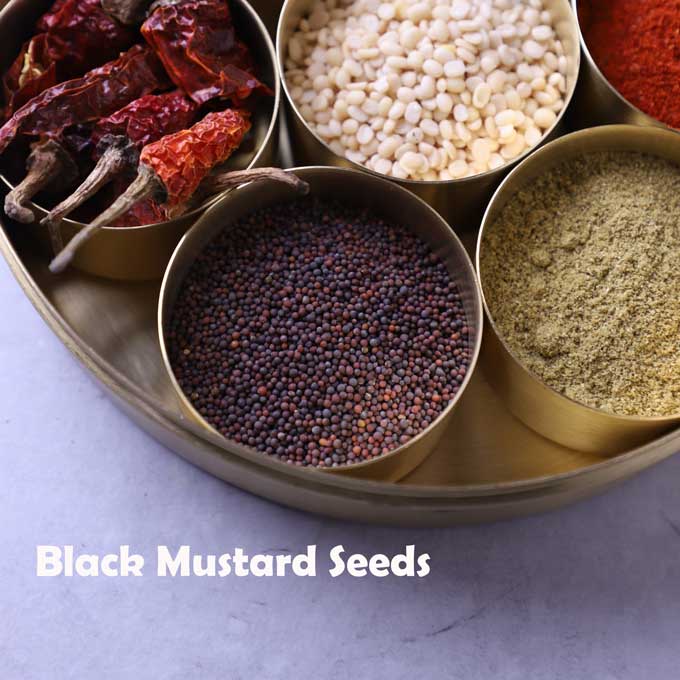
- Flavour Profile : Slightly pungent, sharp, and tangy when fried.
- Uses : These small, black seeds are often added to hot oil to release their flavour. Mustard seeds are common in South Indian cooking like sambar , rasam , lemon rice etc.
Dried Red Chillies (Sookhi Lal Mirch)
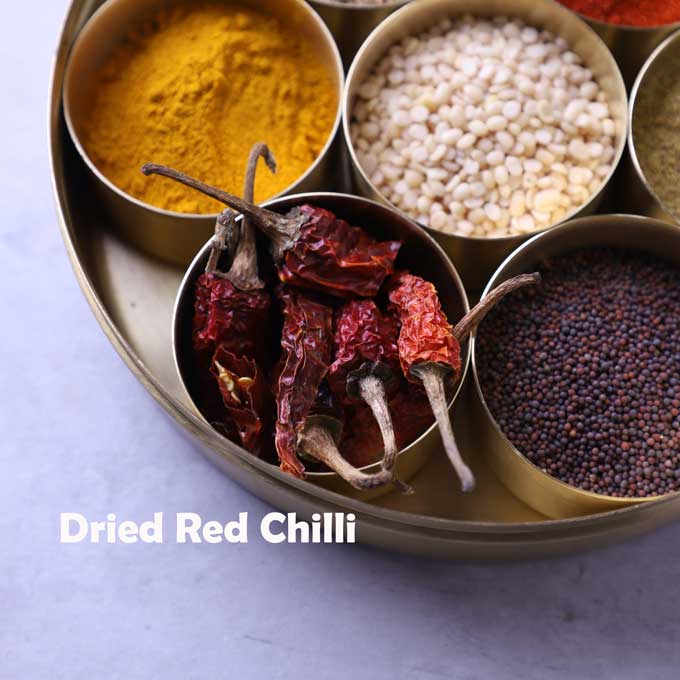
- Flavour Profile : The main feature of dried red chillies is their heat, which can vary widely depending on the variety. Indian varieties like Kashmiri or Byadgi chillies are milder and add gentle warmth, while others like Guntur and Mathania can be quite hot.
- Uses : Dried red chillies are commonly used in tempering Indian dishes like Kadhi , Toor Dal , Curd Rice etc. When fried in oil or ghee along with mustard seeds, cumin, and other spices, they release their flavour and infuse the oil, which is poured over dals, curries, and vegetable dishes.
Split White Urad
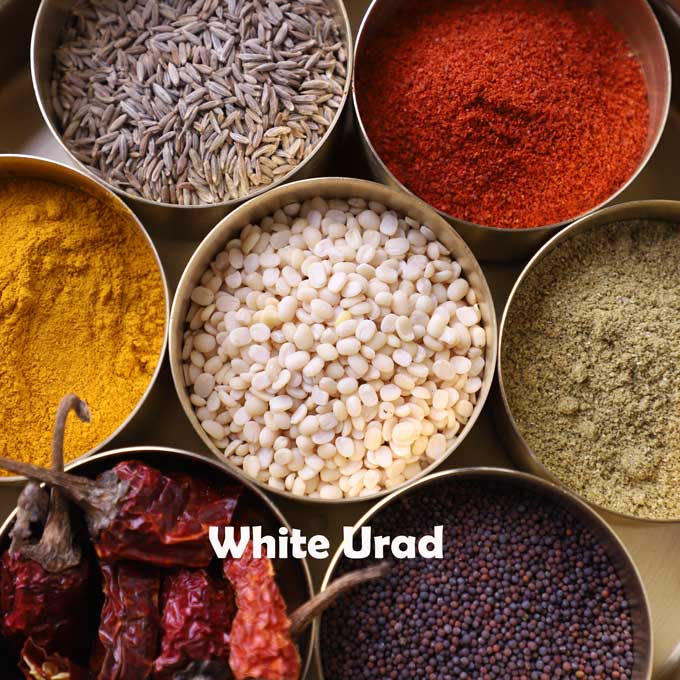
- Flavour Profile : Nutty with a subtle sweet aroma
- Uses : Added sparingly in tempering South Indian dishes like coconut chutney , coconut rice , upma and so on. Urad Dal needs to be fried in oil/ghee to get the crunchiness.
Garam Masala
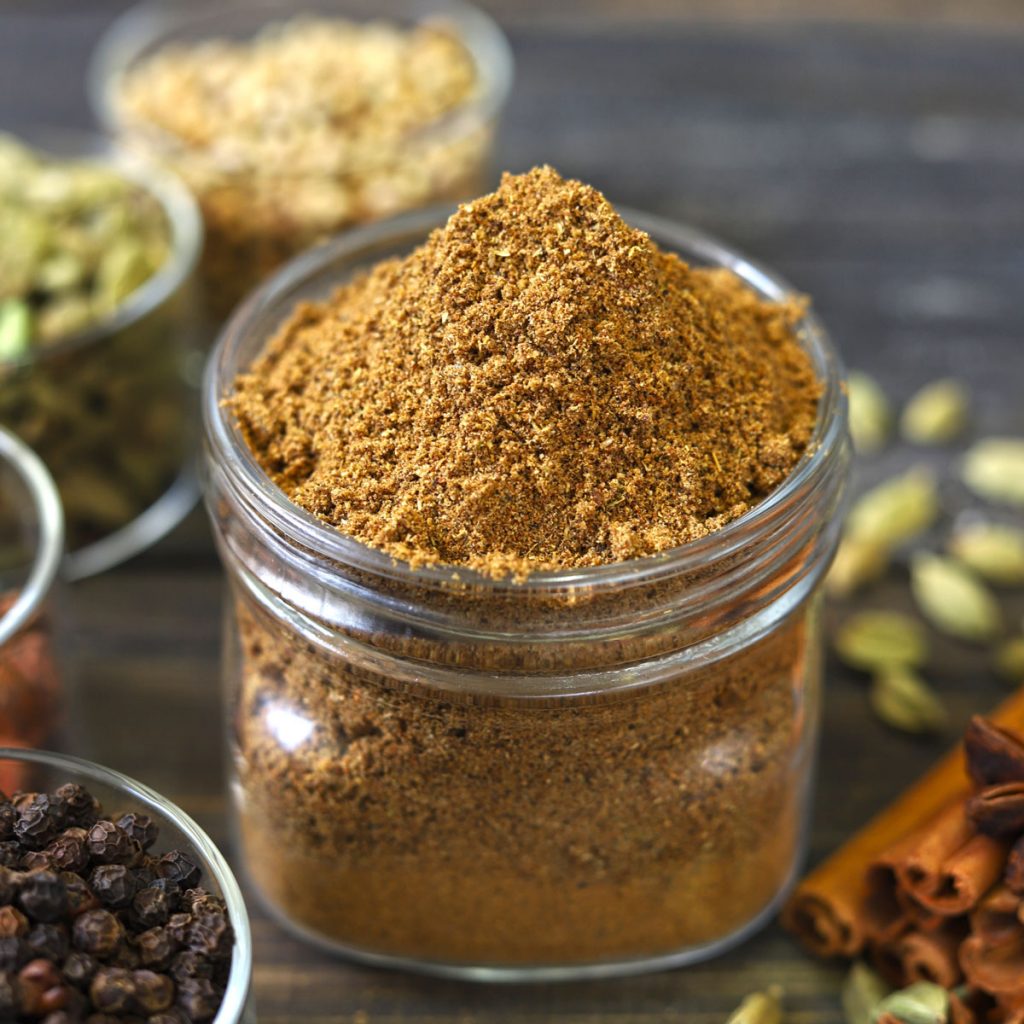
- Flavour Profile : Aromatic, warm, and slightly sweet with a complex flavour
- Ingredients : Garam masala is a blend of spices, mainly including cloves, cinnamon, cardamom, cumin, coriander, pepper, and other whole spices.
- Uses : It is one of the most common seasonings for Indian dishes. Often added at the end of cooking, garam masala enhances the aroma and flavour of the dish. It’s a versatile spice mix used in curries, rice dishes, kebabs, and even in marinades.
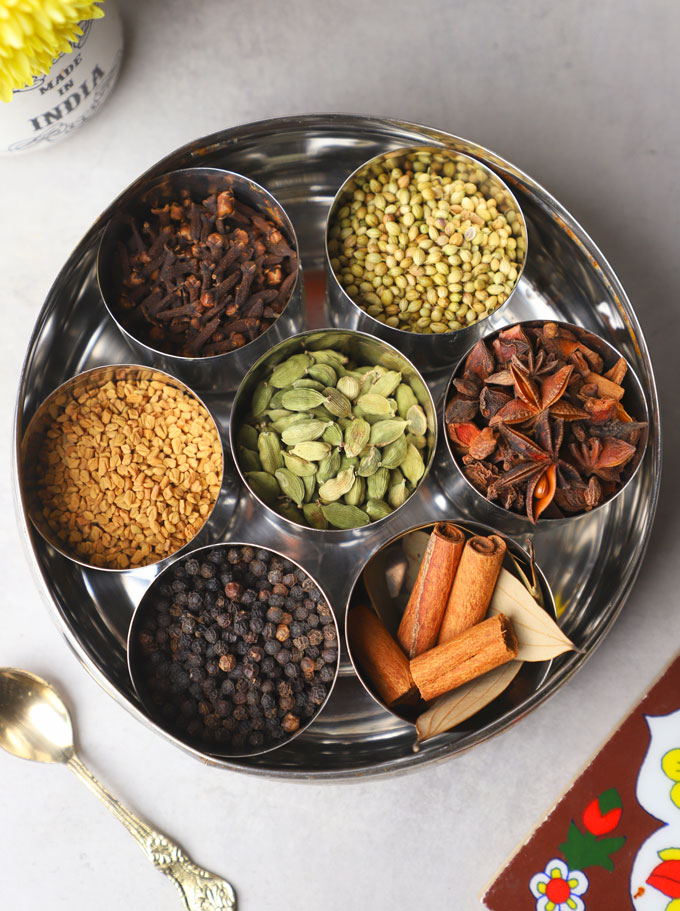
Additional Spices for Everyday Indian Cooking
- Cinnamon (Dalchini) is added to infuse the oil or in spice blends like garam masala, chai masala , and so on.
- Green Cardamom (Elaichi) is a sweet and aromatic spice added to Indian desserts , biryani , meat dishes , curries, and to make other spice blends.
- Black Peppercorns (Kali Mirch) are black gold from South India. It imparts intense aroma, depth, and heat to foods.
- Cloves (Laung) lend a slightly sharp taste and aroma to Indian dishes. It is often used to make a variety of spice mixes.
- Fenugreek Seeds (Methi dana) are small yellow seeds with a bitter taste often added to tadka.
- Bay Leaves (Tej Patta) are used to infuse the oil while cooking.
- Star Anise (Phool Chakra) is famed for its distinct dried flower-like shape, sweet aroma, and delicious savoury taste.
- Coriander Seeds (Sabut Dhaniya) are mainly added to spice blends.
It is best to store smaller quantities in the masala spice box. The remaining spices you can store in airtight glass or steel bottles. I would not recommend using plastic bottles for storing spices.
Although spices do not go bad, over a period of time they lose their flavour or aroma. Ground spices lose their flavour more quickly than whole spices. So it is a good idea to get whole spices in larger quantities and then make ground spices or spice blends in smaller amounts.
The best place to keep your spices is in a pantry or kitchen cabinet that maintains a room temperature and is protected from direct sunlight, moisture or humidity.
We follow a strict NO SPAM Policy
Learn how to make gluten-free Ragi Roti, a healthy and tasty traditional flatbread from Karnataka made with finger millet flour.
Estimated reading time: 6 minutes
- Ingredients You’ll Need
- How To Make Ragi Roti
- Serving Suggestion
- My Tried and True Tips
- Ragi Roti Recipe
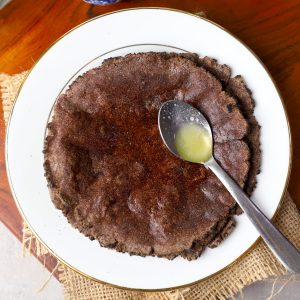
The flatbread, made from ragi (finger millet) flour, is a staple in many Karnataka households. Ragi, known for its impressive nutritional profile, is a powerhouse of calcium, fibre, and essential minerals. Hence, you will find profound use of finger millet in various local dishes like ragi dosa and idli , ragi mudde, sweets, cakes , soup, or ambali.
Known as a “poor man’s grain” due to its affordability, ragi has a strong position in Indian kitchens for its superior nutritional value.
- High Calcium Content is essential for bone health.
- High Fibre content helps in digestion, managing blood sugar levels, and reducing cholesterol.
- High Iron Content is excellent for people with deficiencies, providing an ideal plant-based, natural supplement.
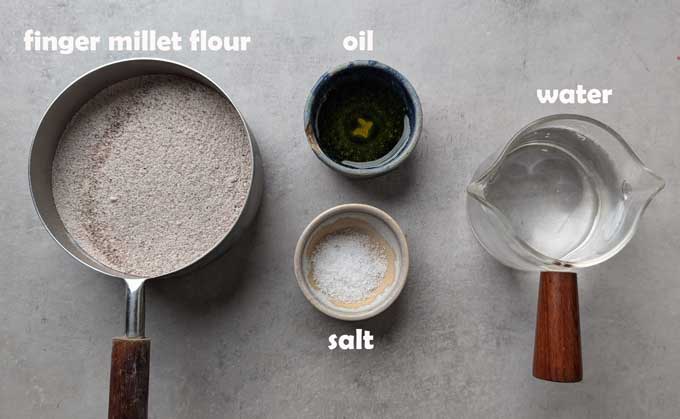
Ingredients You’ll Need
- Finger Millet (Ragi) Flour should be finely milled and not coarse in texture.
- Oil : Use either vegetable refined oil, ghee or coconut oil. It keeps the dough soft.
- Salt, Water
Optional Additions:
- Grated carrot , chopped coriander/spinach/methi/dill, or grated coconut for added flavour and nutrition.
How To Make Ragi Roti
Step 1: Prepare the Dough
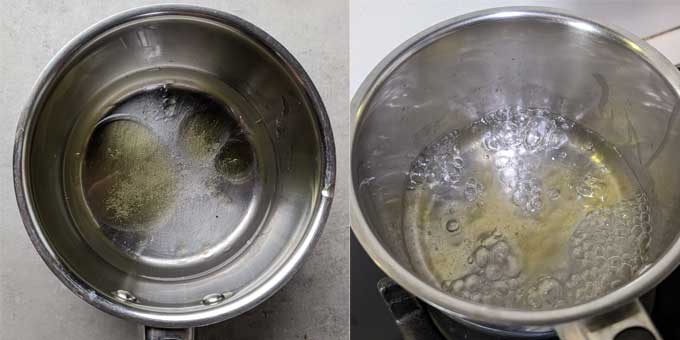
- Add water, salt, and oil to a wide saucepan. If you’re adding any extra ingredients, like grated carrots or greens, add them now.
- Bring it to a boil. Once the water starts boiling, turn off the heat.
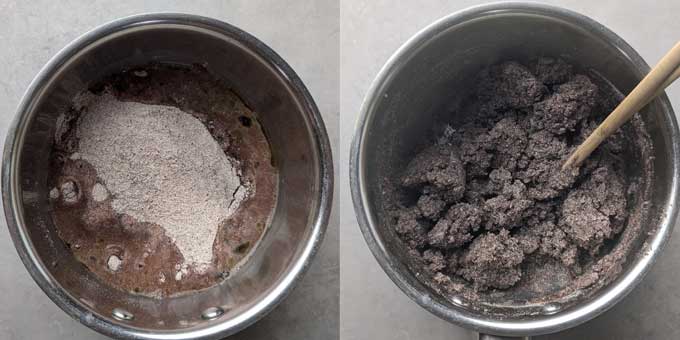
- Add ragi flour. Mix it using chopsticks or a wooden rolling pin. Cover and let it rest for 10 minutes.
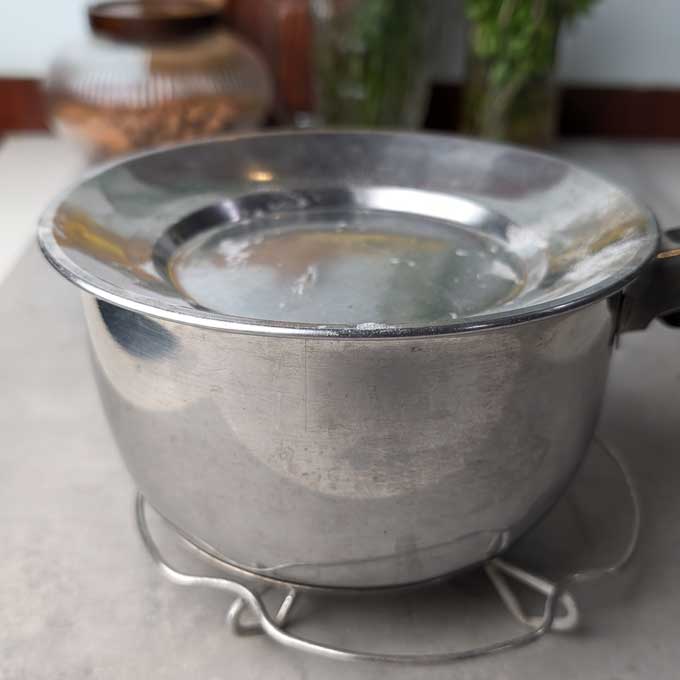
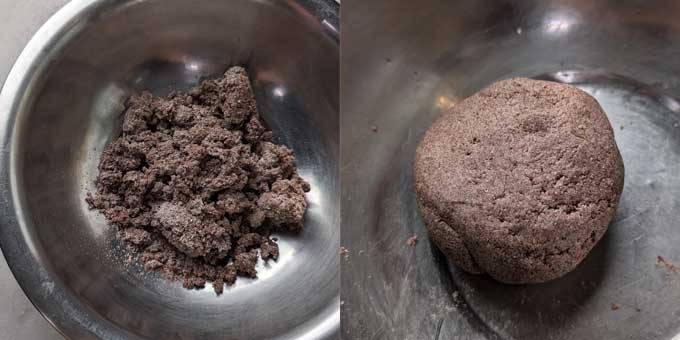
- Once the dough becomes a little easier to handle, transfer it to a wide mixing bowl or clean, flat kitchen counter.
- Bring the dough together and form a smooth, pliable, non-sticky dough. Cover with a clean muslin cloth and let it rest for 10 minutes. This helps the ingredients blend better and makes the dough easier to work with.
Step 2: Shape the Rotis
- Divide the dough into small, equal-sized balls (about the size of a golf ball).
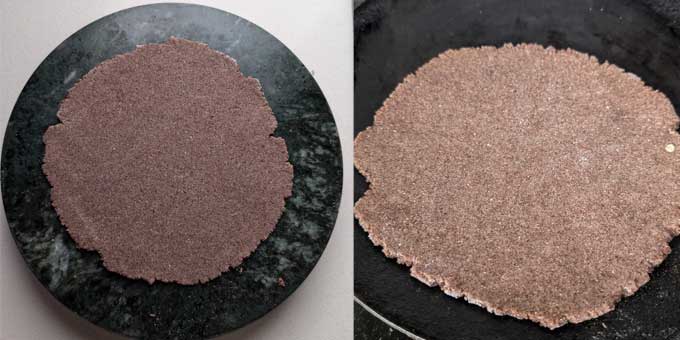
- Take one dough ball and place it on a flat surface. Ragi flour is gluten-free, so it doesn’t roll out as easily as wheat flour. You can either: Roll it between two pieces of parchment paper : Place the dough ball between two sheets and gently press or roll it out with a rolling pin. Flatten it with your hands : Use your fingers to gently press the dough out from the centre, forming a round shape (around 6 inches in diameter).
Step 3: Cook the Roti
- Heat a non-stick skillet or tawa on medium-high heat.
- Gently transfer the rolled-out ragi roti onto the skillet. Cook for 1-2 minutes until you see bubbles forming on the surface.
- Flip the roti, and cook for another 1 – 2 minutes on the other side.
- Press gently with the clean muslin cloth, especially on any uncooked spots, to ensure even cooking.
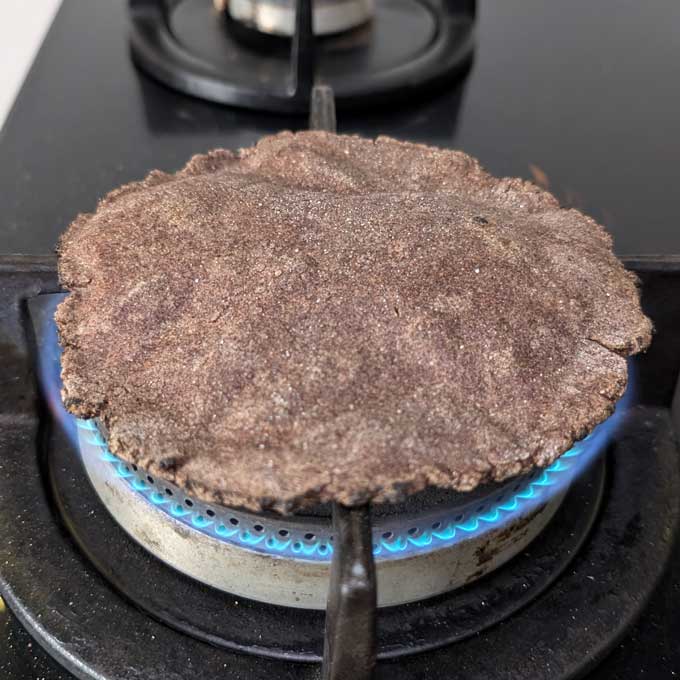
- Flip it back one more time, cooking for 30 seconds to 1 minute until both sides are well cooked with some brown spots. If you want you can puff it directly over the flame.
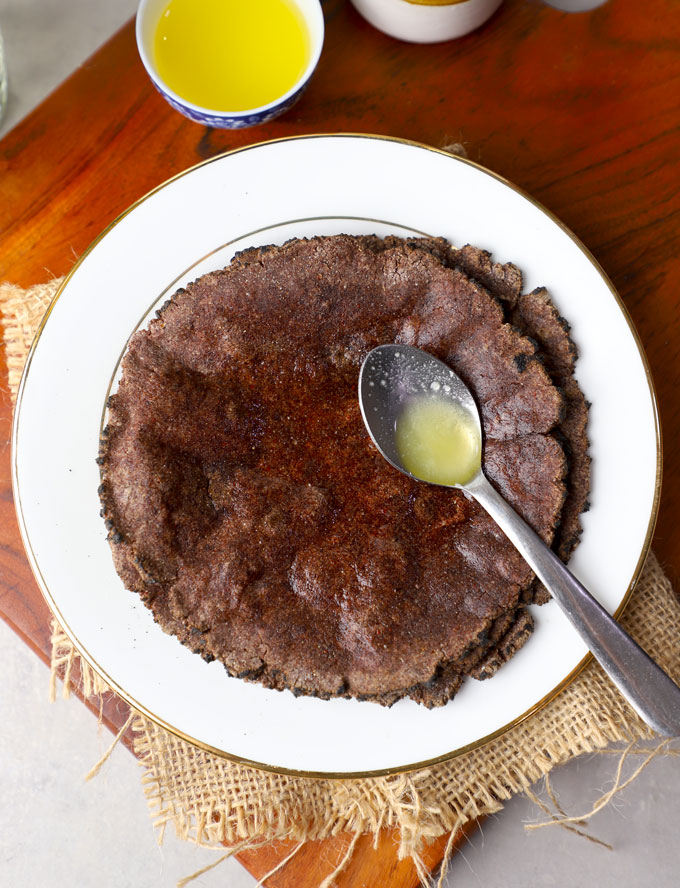
- Remove the roti from the skillet, smear a little bit of ghee (optional) and repeat the process for the remaining dough balls.
Serving Suggestion
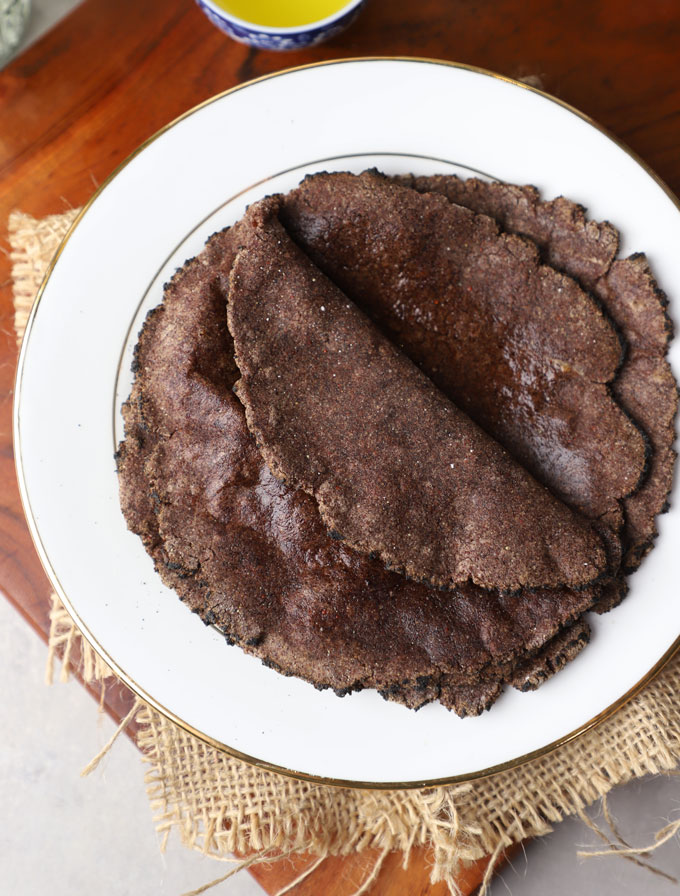
Serve ragi roti as a side dish with Indian main course dishes, dals, and curries . It provides a delightful contrast to rich and flavorful gravy dishes.
Alternatively, use it to make wraps, tacos, or pizza.
My Tried and True Tips
- Measurements play a key role in binding a gluten-free dough – for perfect results request you to follow them to the tee.
- Use finely milled rice flour with a texture like an all-purpose flour.
- Start binding the dough while it is warm unlike, other roti recipes. This step will always yield soft ragi roti.
- Allow the dough to rest for 10 minutes after binding. It helps to hydrate the flour and improve its elasticity.
- If the dough becomes too sticky, add a little more ragi flour; if too dry, add a few drops of water.
- The process of making ragi roti is very similar to rice flour roti . You can watch the detailed video .
More Indian Bread Recipes
- Dal Paratha
- Gobi Paratha
- Methi Paratha
- Rice Flour Roti
- Whole Wheat Naan
Ingredients
- ▢ 1 Cup finger millet flour (ragi/nachini atta)
- ▢ 1 teaspoon refined oil
- ▢ ½ teaspoon salt or to taste
- ▢ 1 Cup water
Instructions
- Add water, salt, and oil to a wide saucepan. If you’re adding any extra ingredients, like grated carrots or greens, add them now.
- Bring it to a boil. Once the water starts boiling, turn off the heat.
- Add ragi flour. Mix it using chopsticks or a wooden rolling pin. Cover and let it rest for 10 minutes.
- Once the dough becomes a little easier to handle, transfer it to a wide mixing bowl or clean, flat kitchen counter.
- Bring the dough together and form a smooth, pliable, non-sticky dough. Cover with a clean muslin cloth and let it rest for 10 minutes. This helps the ingredients blend better and makes the dough easier to work with.
- Divide the dough into small, equal-sized balls (about the size of a golf ball). Take one dough ball and place it on a flat surface. Place the dough ball between two sheets of parchment paper and gently press or roll it out with a rolling pin.
- Heat a non-stick skillet or tawa on medium-high heat. Gently transfer the rolled-out ragi roti onto the skillet.
- Cook for 1-2 minutes until you see the surface puffing up. Flip the roti, and cook for another 1 – 2 minutes on the other side.
- Press gently with the clean muslin cloth, especially on any uncooked spots, to ensure even cooking. Flip it back one more time, cooking for 30 seconds to 1 minute until both sides are well cooked with some brown spots. If you want you can puff it directly over the flame.
- Remove the roti from the skillet, smear a little bit of ghee (optional) and repeat the process for the remaining dough balls.
- Serve ragi roti warm.
Recipe Notes:
- Add g rated carrot , chopped coriander/spinach/methi/dill/curry leaves, or grated coconut for flavour and nutrition to the dough.
- While binding, if the dough is hot, dip your fingers in room temperature water to easily handle the dough.
- While resting the dough, cover it, else it becomes dry and difficult to roll out.
- Ragi dough is not fridge-friendly. Hence, it is best to make a fresh batch each time you want to make chapati.
- You can watch the detailed video of rice flour roti . The process of making these gluten-free rotis is very similar.
Nutrition
We follow a strict NO SPAM Policy
