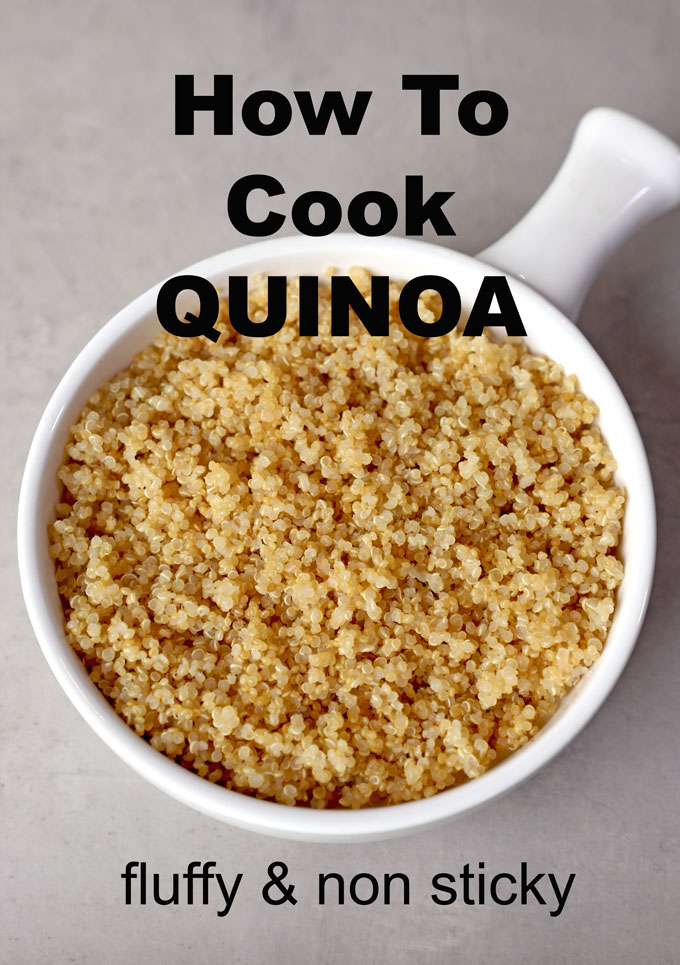
Learn how to cook quinoa that is non sticky and fluffy at home—it just requires a little attention to detail. That’s the secret sauce.
Estimated reading time: 4 minutes
- Why Quinoa Can Turn Out Sticky?
- How to Cook Non-Sticky Quinoa
- Bonus Tips for Even Better Quinoa
- Serving Ideas for Quinoa
- How To Cook Quinoa
Quinoa has earned a permanent place in the kitchens of health-conscious foodies, vegetarians, vegans, and busy home cooks alike. It is incredibly versatile, packed with plant-based protein, naturally gluten-free, and cooks faster than rice.
But here’s the thing: as simple as quinoa sounds, many people still struggle to get that perfect light and fluffy texture. Have you ever ended up with a pot of soggy, sticky quinoa that looks more like porridge than a wholesome grain? You’re not alone.
Why Quinoa Can Turn Out Sticky?
First, let’s talk about what usually goes wrong. Quinoa is actually a seed, not a grain, and it has a natural coating called saponin. It has a bitter taste and can create a soapy or mushy texture if not rinsed properly.
On top of that, many people either:
- Use too much water to cook
- Skip the soaking and resting phase
- Forget to fluff it at the end
All of these small missteps can result in sticky or clumpy quinoa.
How to Cook Non-Sticky Quinoa
1.Rinse and Soak Your Quinoa
This is non-negotiable. Quinoa is naturally coated in saponin, which is bitter and creates a sticky texture. To get rid of it:
- Place the quinoa in a fine mesh strainer.
- Rinse under cold running water for 30 seconds to a minute.
- Use your fingers or a spoon to move the grains around while rinsing.
- Soak it in clean water for at least 30 minutes. It helps in digestion.
2.Toast It in a Dry Pan (Optional but Game-Changing)
Want a subtle nutty flavour and an extra-fluffy quinoa? Toast your soaked (and well-drained) quinoa in the same pot you’ll cook it in.
- Set the pan over medium heat.
- Stir the quinoa frequently for 2 – 3 minutes, until it smells toasted.
Toasting drives off extra moisture and enhances the flavour.
3.Use the Right Water Ratio
The golden rule for fluffy quinoa is a 1:2 ratio — one part quinoa to two parts water or broth.
- Add 2 cups of water (or stock for more flavour) to the pan.
- Add salt and olive oil if desired.
- Bring to a boil over medium-high heat.
4.Simmer Low and Slow—No Peeking!
Once your quinoa reaches a rolling boil:
- Reduce the heat to low and cover the pan with a tight-fitting lid.
- Let it simmer gently for exactly 15 minutes.
- Don’t stir and don’t lift the lid.
Let the steam do its job. Stirring during cooking activates starches and encourages clumping. You can cook it in a stovetop, conventional pressure cooker or on instant pot in pressure cook mode .
5.Let It Sit Off the Heat
Once the timer goes off, resist the urge to dig in. Turn off the heat and let the pot sit, covered, for another 5 to 6 minutes. This resting time allows the steam to finish cooking the quinoa and separate the grains naturally.
6.Fluff with a Fork—Not a Spoon
Uncover the pan and fluff the quinoa gently with a fork. The fork helps lift and separate the grains without mashing them together.
What you’ll see is beautiful, fluffy quinoa—each grain light, tender, and ready to go.
Bonus Tips for Even Better Quinoa
- Flavour It Early : Use stock/broth instead of water, add bay leaves, or garlic in the cooking liquid.
- Don’t Skip the Toasting : It’s optional, but you’ll notice a big difference in taste and texture.
- Use the Right Pot : A medium, heavy-bottomed saucepan with a good lid works best for even cooking.
Serving Ideas for Quinoa
Once you’ve mastered this technique, the possibilities are endless. Use your fluffy quinoa in:
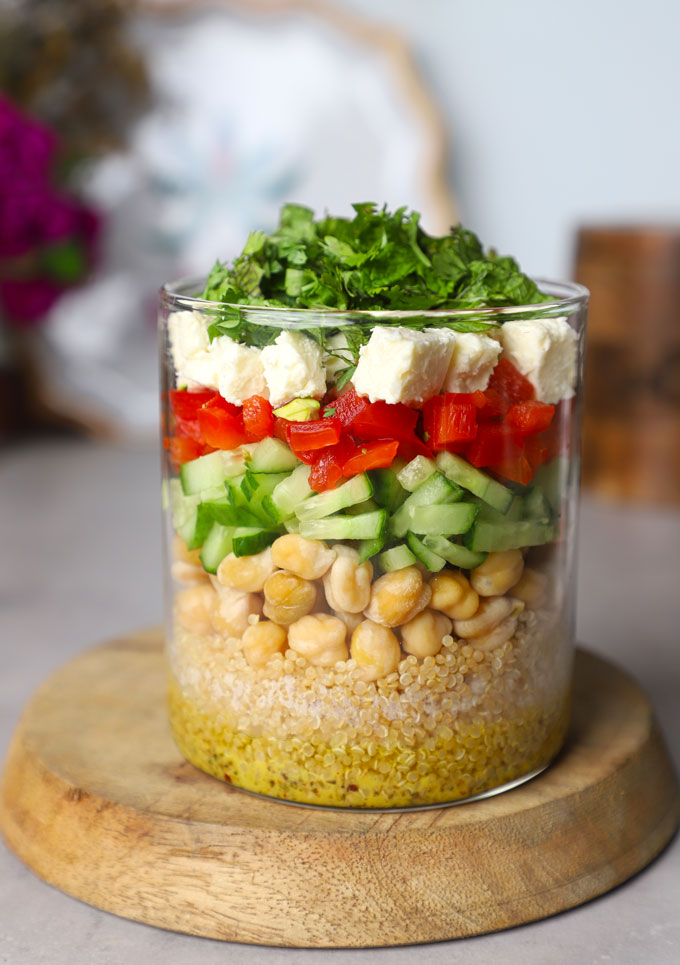
- Mediterranean Quinoa Salad or Pumpkin Salad
- Quinoa Fried Rice as a healthy rice alternative
- Indian Desserts like kheer with almond milk and apple .
- One Pot Mexican Quinoa with beans and roasted vegetables.
- Stuffed peppers or sweet potatoes with quinoa.
Ingredients
- ▢ 1 Cup quinoa
- ▢ 2 Cup water
- ▢ ½ teaspoon olive oil
- ▢ ½ teaspoon salt or to taste
- ▢ 1 bay leaf (optional)
Instructions
- Place the quinoa in a fine mesh strainer. Rinse under cold running water for 30 seconds to a minute to get rid of saponin.
- Soak it in clean water for at least 30 minutes. It helps in digestion.
- Set a heavy bottom pan over medium heat. Drain all the water from the soaked quinoa. Add it to the pan. Stir the quinoa frequently for 2 – 3 minutes, until it smells nutty and toasted. Do not leave it unattended as it might burn fast.
- Add 2 cups of water (or stock for more flavour) to the pan. Add salt and a olive oil if desired. Bring to a boil over medium-high heat.
- Once your quinoa reaches a rolling boil, reduce the heat to low and cover the pan with a tight-fitting lid. Let it simmer gently for exactly 15 minutes. Don’t stir and don’t lift the lid. Stirring during cooking activates starches and encourages clumping.
- Once the timer goes off, resist the urge to dig in. Turn off the heat and let the pot sit, covered, for another 5 to 6 minutes. This resting time allows the steam to finish cooking the quinoa and separate the grains naturally.
- Uncover the pan and fluff the quinoa gently with a fork. The fork helps lift and separate the grains without mashing them together.
- What you’ll see is beautiful, fluffy quinoa—each grain light, tender, and ready to go. At this stage, you can use it immediately or allow it cool down and store in the refrigerator for 4 – 5 days.
Nutrition
We follow a strict NO SPAM Policy
How To Cook Quinoa
Equipment
- stockpot or saucepan
Ingredients
- 1 Cup quinoa
- 2 Cup water
- ½ teaspoon olive oil
- ½ teaspoon salt or to taste
- 1 bay leaf (optional)
Instructions
- Place the quinoa in a fine mesh strainer. Rinse under cold running water for 30 seconds to a minute to get rid of saponin.
- Soak it in clean water for at least 30 minutes. It helps in digestion.
- Set a heavy bottom pan over medium heat. Drain all the water from the soaked quinoa. Add it to the pan. Stir the quinoa frequently for 2 – 3 minutes, until it smells nutty and toasted. Do not leave it unattended as it might burn fast.
- Add 2 cups of water (or stock for more flavour) to the pan. Add salt and a olive oil if desired. Bring to a boil over medium-high heat.
- Once your quinoa reaches a rolling boil, reduce the heat to low and cover the pan with a tight-fitting lid. Let it simmer gently for exactly 15 minutes. Don’t stir and don’t lift the lid. Stirring during cooking activates starches and encourages clumping.
- Once the timer goes off, resist the urge to dig in. Turn off the heat and let the pot sit, covered, for another 5 to 6 minutes. This resting time allows the steam to finish cooking the quinoa and separate the grains naturally.
- Uncover the pan and fluff the quinoa gently with a fork. The fork helps lift and separate the grains without mashing them together.
- What you’ll see is beautiful, fluffy quinoa—each grain light, tender, and ready to go. At this stage, you can use it immediately or allow it cool down and store in the refrigerator for 4 - 5 days.
Video
Nutrition
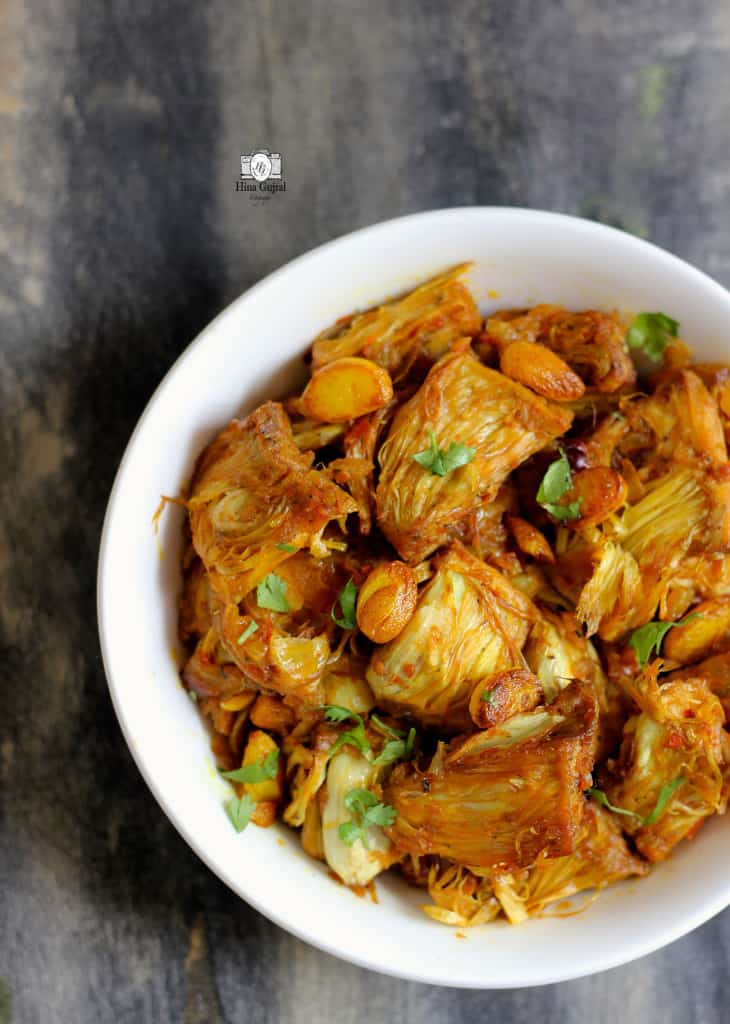
This Punjabi-style kathal ki sabzi is a love at first bite bursting with flavours. Serve it with dal fry, raita, and piping hot chapati for a wholesome lunch.
Estimated reading time: 5 minutes
- Jackfruit for Sabzi
- How To Clean Kathal (Jackfruit)
- How To Store Unripe Kathal (Jackfruit)
- How To Make Kathal Ki Sabzi
- Serving Suggestion
- Kathal (Jackfruit) Ki Sabzi Recipe
Today, jackfruit is widely popular as vegan or mock meat. In India and Southeast Asia, jackfruit is used for ages to prepare a variety of dishes. From sabzi, and pickle to biryani, jackfruit is used in many regional Indian recipes. It is the meaty, fibrous texture, and the delicious taste that always attracted me to this humble fruit.
Kathal Ki Sabzi is a popular dish across North India. It is an authentic Indian style spicy stir fry made with unripe jackfruit. This is a Punjabi-style jackfruit sabzi recipe from my mother-in-law.
Reasons I LOVE it:
- truly tasty
- gluten-free
- vegan and vegetarian
- one pot main course dish
Jackfruit for Sabzi
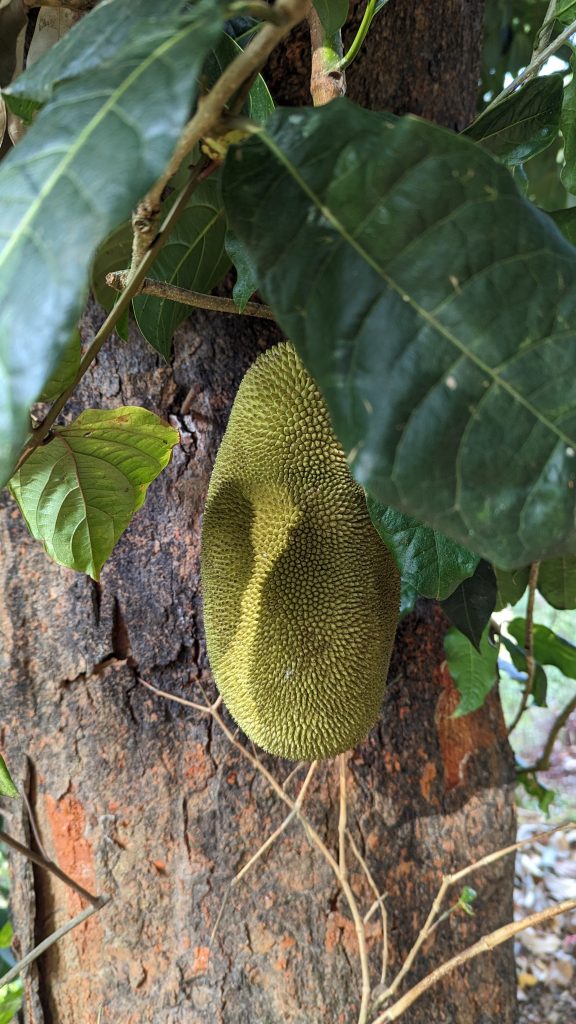
The raw, unripe jackfruit with tender seeds is best for cooking.
The colour of the unripe jackfruit should be milky white and not pale yellow. The ripe and sweet jackfruit with hard seeds should not be used for making sabzi.
The best season to get unripe tender jackfruit is from May – July or before the monsoon/rainy season. In some parts of India, unripe jackfruit is available during the winter season as well.
Fried Jackfruit
How To Clean Kathal (Jackfruit)
Firstly, don’t get intimidated by the complex structure of the fruit. Once you get the technique to clean the jackfruit right, nothing can stop you from making delicious jackfruit recipes every day.
Nowadays, many supermarkets sell cleaned, ready-to-use pieces of jackfruit sealed in plastic bags.
Or you can use the frozen or canned jackfruit as well to make this sabzi. Thaw it as per packet instructions and then follow the recipe steps.
This cleaning process can be used for both ripe/unripe varieties of jackfruit.
- To peel the jackfruit , first, grease your fingers well with mustard oil or cooking oil. Place a bowl of mustard oil next to you while cutting the jackfruit, as you will need to smear your palms with oil from time to time. The oil prevents jackfruit fibre from sticking to your hand.
- With a sharp knife remove the skin of the jackfruit . Cut the inner white-coloured fibrous part into big chunks. Remove any thick stem in the centre, before cutting big chunks into smaller pieces.
- Do not wash the jackfruit after cutting it into small pieces. Wipe off the dirt, if there is any with a clean kitchen towel. The tender seeds inside the jackfruit can also be added to the sabzi, removing the seed skin.
How To Store Unripe Kathal (Jackfruit)
The unripe jackfruit pieces should be stored in the fridge (not freezer) in a ziplock bag and consumed in a day or two. Because after a day or two it starts ripening and not in the best stage to make sabzi or curry.
Even the slightest hint of ripeness in the jackfruit might not result in a delicious kathal (jackfruit) ki sabzi.
You can also wrap up the pieces and keep them in the freezer for up to one month. But the flavour is best enjoyed when eaten as fresh as possible.
How To Make Kathal Ki Sabzi
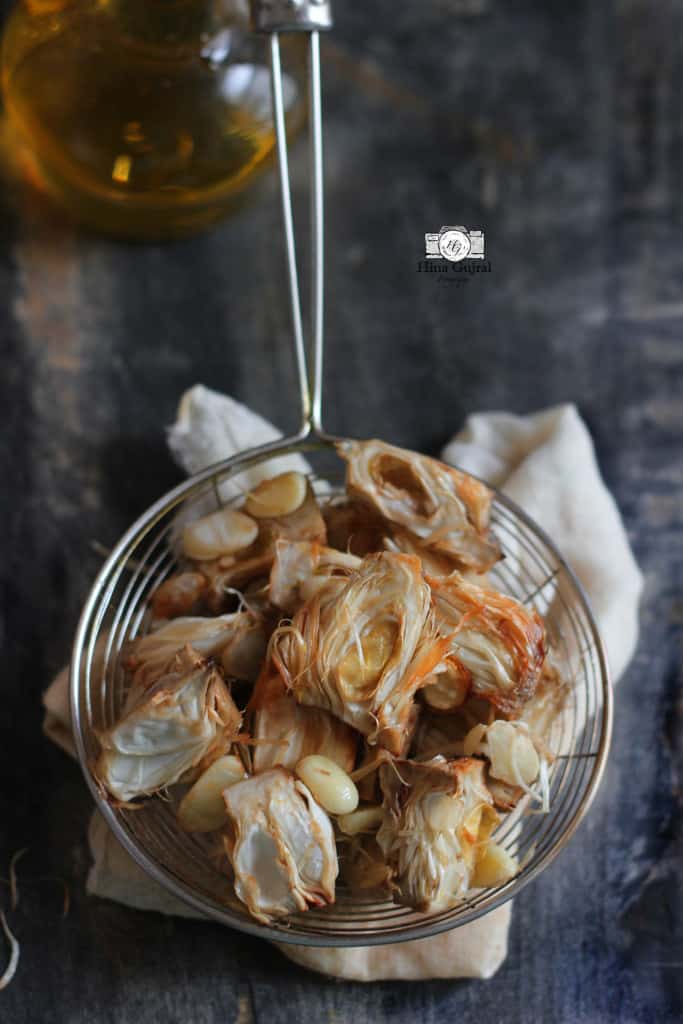
Fry Jackfruit: Start with frying the cleaned, chopped jackfruit in mustard oil till it turns pale brown. Transfer to a metal colander. Set aside. Frying gives jackfruit a delicious texture and reduces cooking time.
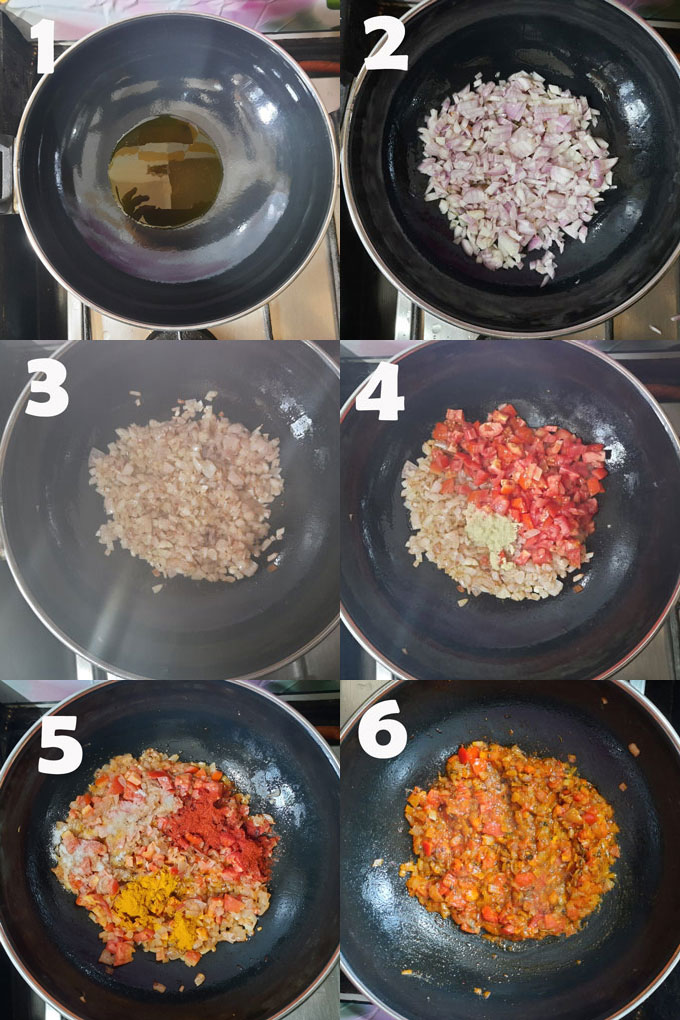
Make Masala: In the same kadhai after frying jackfruit, add the chopped onion. Fry onion till light brown.
Next, add the ginger and garlic paste, chopped tomato, spices, and salt. Fry the masala till the oil separates. This usually takes 5 – 10 minutes over low heat.
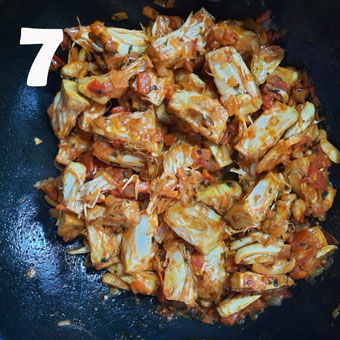
- Add the shallow-fried jackfruit to the kadhai, stir to combine so that jackfruit pieces are evenly coated with the spice mix. Cover with a lid and let the sabzi cook over low heat for 15 – 20 minutes, stirring occasionally in between.
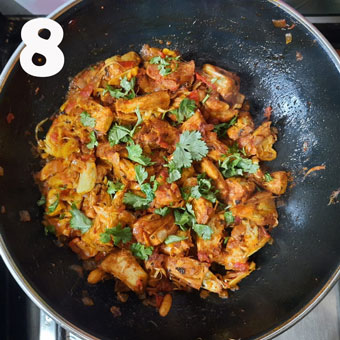
During this time the jackfruit pieces absorb the flavor of the spices. Check for doneness and turn off the heat.
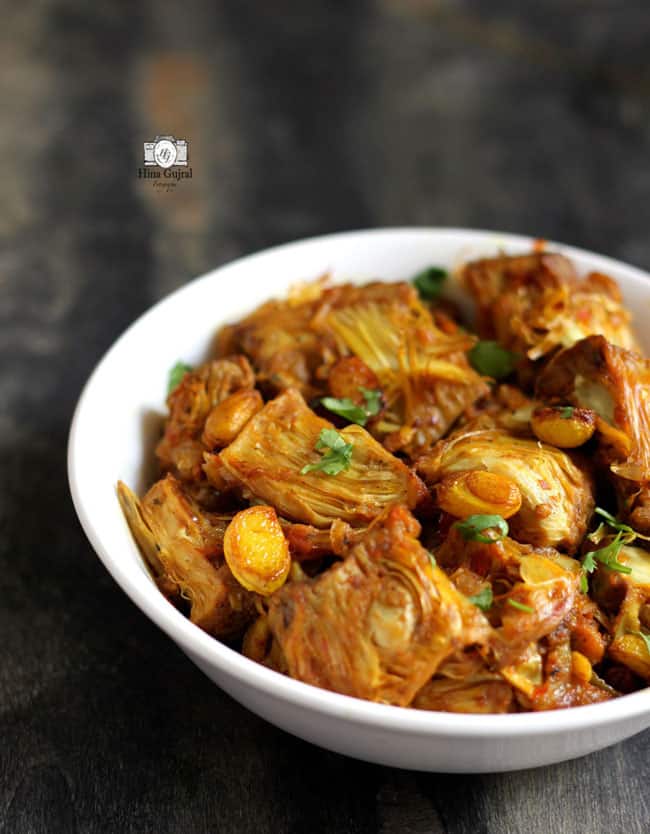
Serve Kathal Ki Sabzi hot, garnished with coriander leaves.
Serving Suggestion
In a Punjabi household, Kathal Ki Sabzi is mainly served with chapati or phulka. Some of our favourite Indian dishes to serve with jackfruit sabzi are:
- Kachumber Salad
- Arhar (Toor) Dal Fry
- Spring Onion Raita
- Pomegranate Raita
- Everyday Masoor Dal
- Punjabi Sookhi Urad Dal
- Panchmel Dal (No Onion/Garlic)
f ollow us on Youtube or Instagram for video recipes.

Ingredients
- ▢ 500 gram unripe jackfruit (kathal)
- ▢ 2 Cup mustard oil, for deep frying
Ingredients For Masala:
- ▢ 1 Cup chopped onion
- ▢ 1 tablespoon ginger – garlic paste ( get recipe )
- ▢ 1 Cup chopped tomato
- ▢ Salt to taste
- ▢ 1 teaspoon coriander powder (dhaniya powder)
- ▢ 1 teaspoon red chilli powder
- ▢ 1 teaspoon turmeric powder
- ▢ 1 teaspoon garam masala see recipe here
Instructions
How To Clean and Chop Kathal (Jackfruit):
- To peel the jackfruit, first, grease your fingers well with mustard oil. Place a bowl of mustard oil next to you while cutting the jackfruit, as you will need to smear your palms with oil from time to time. Oil prevents jackfruit fibre from sticking in your hand.
- With a sharp knife remove the skin of the jackfruit. Cut the inner white coloured fibrous part into big chunks. Remove any thick stem in the centre, before cutting big chunks into smaller pieces.
- Do not wash the jackfruit after cutting into small pieces. Wipe off the dirt, if there any with a clean kitchen towel. The tender seeds inside the jackfruit can also be added in the sabzi, remove the seed skin if you prefer so.
How To Fry Kathal (Jackfruit):
- Heat mustard oil in a kadhai or skillet over medium flame. Once the oil starts fuming, add jackfruit in small batches. Shallow fry the jackfruit pieces till light brown in color. Transfer to a metal colander. Set aside.
How To Make Kathal Ki Sabzi:
- In the same kadhai, add the chopped onion. Fry onion till light brown in color.
- Next, add the ginger and garlic paste, chopped tomato, spices, and salt. Fry the masala till oil separates. This usually takes 5 – 10 minutes over low heat.
- Add the shallow fried jackfruit in the kadhai, stir to combine so that jackfruit pieces are evenly coated with the spice mix. Cover with a lid and let the sabzi cook over low heat for 15 – 20 minutes, stirring occasionally in between. During this time the jackfruit pieces absorb the flavour of the spices. Check for doneness and turn off the heat.
- Serve Kathal Ki Sabzi hot, garnished with coriander leaves.
Recipe Notes:
- See my detailed notes above about how to clean unripe jackfruit for making sabzi.
- The raw, unripe jackfruit with tender seeds is best for cooking . The color of the unripe jackfruit should be milky white and not pale yellow.
- The best season to get unripe tender jackfruit is from May – July or before the monsoon/rainy season. In some parts of India, unripe jackfruit is available during the winter season as well.
- The unripe jackfruit pieces should be stored in the fridge (not freezer) in a ziplock bag and consumed in a day or two. After a day or two, it starts ripening and not in the best stage to make sabzi or curry.
- You can also wrap up the pieces and keep them in the freezer for up to one month. But the flavor is best enjoyed when eaten as fresh as possible.
Nutrition
We follow a strict NO SPAM Policy
