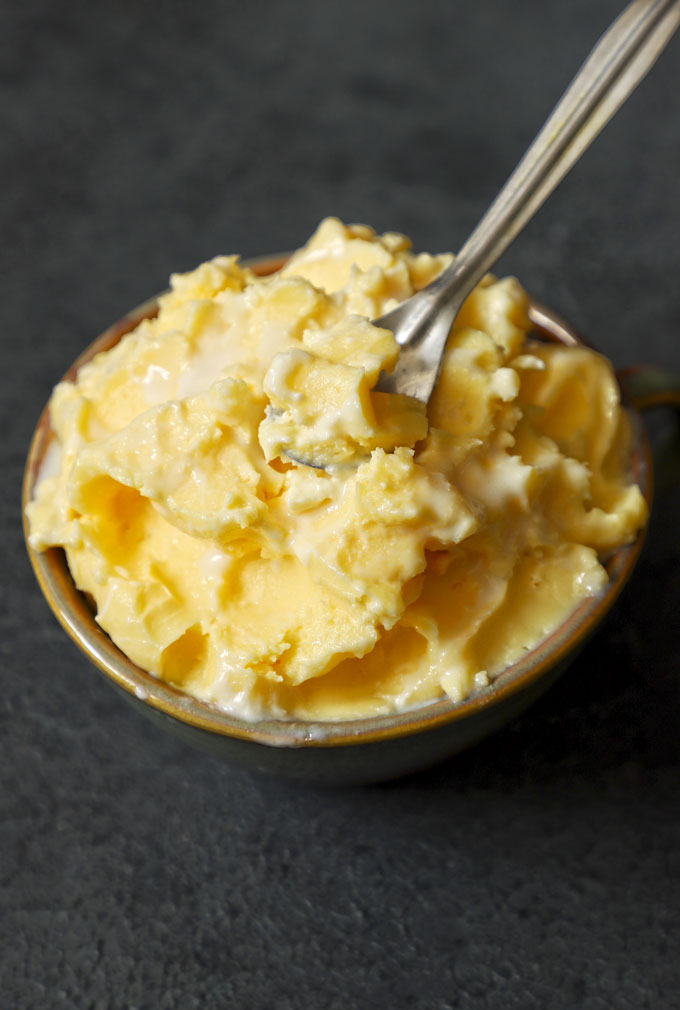
This is a detailed guide for beginners on how to make homemade butter from milk cream (malai) truly Indian style.
Estimated reading time: 7 minutes
- About Homemade Butter
- Malai vs Cream
- How To Collect Milk Malai (Cream)
- Ingredients Required
- Butter Making Process
- Shelf Life and Storage
- Homemade Butter Recipe
About Homemade Butter
In India, homemade butter is a weekly ritual in many households, including mine. For three generations, women in my family have been making butter at home using cream (malai) collected from milk.
The freshly churned butter is served as a condiment with piping hot stuffed paratha , naan , dal makhani , and many other Indian main course dishes. This homemade butter (safed makkhan) is gluten-free, has no added artificial flavour or salt, and has a delicious natural taste.
In the Indian sub-continent, homemade butter is known as safed makkhan or white butter.
You must be wondering why one should bother with making butter from scratch. There are several reasons!
- superior quality product
- taste and texture are unmatched
- it enhances the flavour of the dish
- best way to use the cream collected from milk
- homemade butter is unadulterated and preservative-free
Malai vs Cream
You can make butter at home from both – malai and fresh cream.
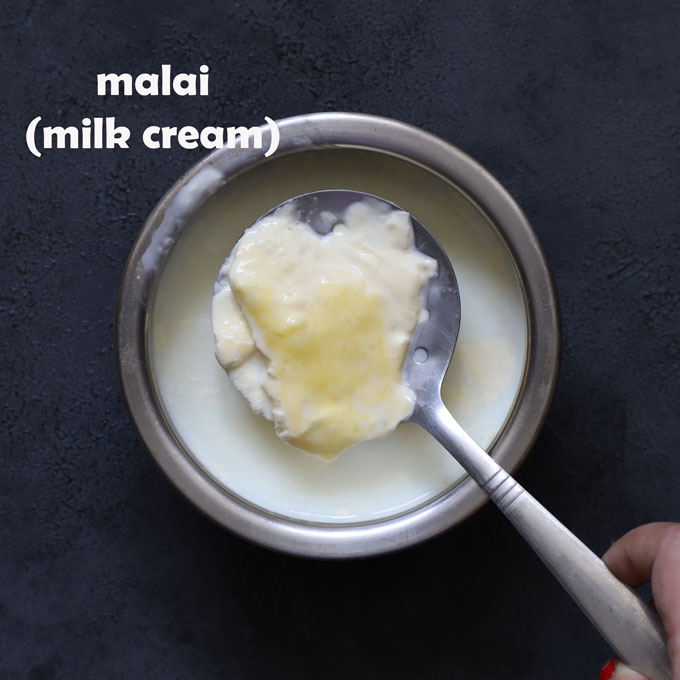
Malai is the Hindi term for a thick layer of cream collected from whole milk. I get 1 litre of whole, full-fat, A2 cow milk daily. Collect the milk cream in a separate bowl (malai) every day after boiling the milk. Keep the bowl in the refrigerator until you are ready to churn butter. Later, add yogurt and churn the butter.
If collecting milk cream seems tedious, you can also make butter from store-bought full-fat cream. Heavy cream with more than 30% fat content works best for churning butter. Do not use low-fat cream with less than 25% fat, cooking, or light creams like Amul.
The reason for using full-fat cream is to churn out maximum butter. Toned milk malai or skimmed cream will not give you butter, no matter how long you whisk or churn it.
How To Collect Milk Malai (Cream)
Collecting milk cream (malai) is an everyday process. It is used for cooking, making butter, and in many other creative ways in Indian cooking.
- Boil the full-fat milk one time. Turn off the heat. Allow the boiled milk to cool down completely at room temperature.
- Once the milk cools down, a thick layer of cream forms. It is called malai (milk cream). Using a broad spoon or spatula, gently remove the layer of cream from the milk and transfer it to a glass bowl with the lid. Keep it in the refrigerator.
- Add 1 tablespoon of curd/yoghurt to the cream (bowl). This helps in reducing odour and increases the shelf life of malai. Repeat this malai collecting process for the next 10 days.
I collect the cream of 1-liter full fat cow milk every day for 10 days to churn 250 grams of butter.
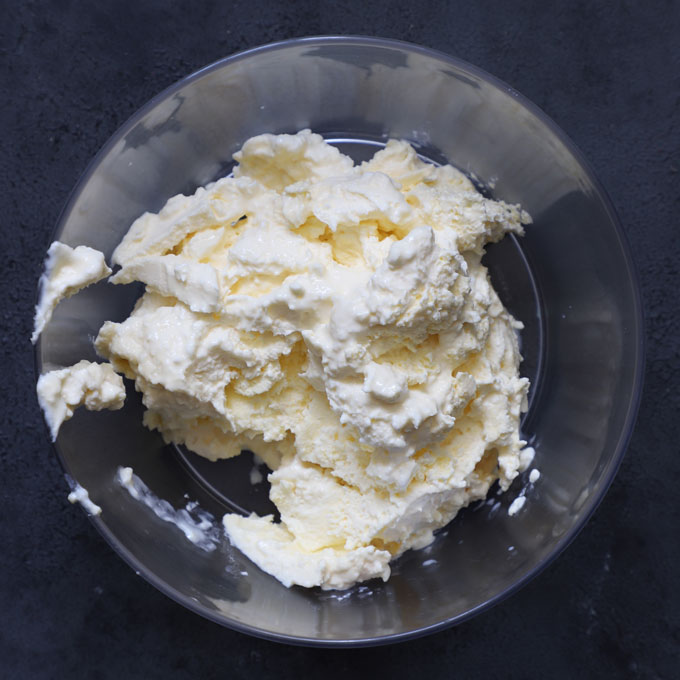
Malai collected for 10 days
Ingredients Required
- Cream: 2 cups of full-fat cream or milk cream (malai)
- Water: 4 cups of iced/chilled water
Equipment: One large, wide, deep mixing bowl, spatula, and hand mixer with the whisk attachment. You can use a stand mixer as well with the whisk attachment. Muslin cloth and a clean bowl to store the butter.
Butter Making Process
Step 1) Bring out cream or malai from the refrigerator. Let it sit at room temperature for 15 minutes. Keep iced water ready.
Step 2) Transfer cream to a stand mixer or a mixing bowl. Start whisking it at medium speed. Initially, the cream will start to thicken, and you will get whipped cream with smooth peaks. This is STAGE 1.
Step 3) Continue to whip the cream. The texture of the cream will now turn grainy, or granules will form. This is STAGE 2 .
Step 4) Keep whipping the cream at high speed – it will look curdled, and you’ll see some liquid (buttermilk) separating from the cream. This is STAGE 3 .
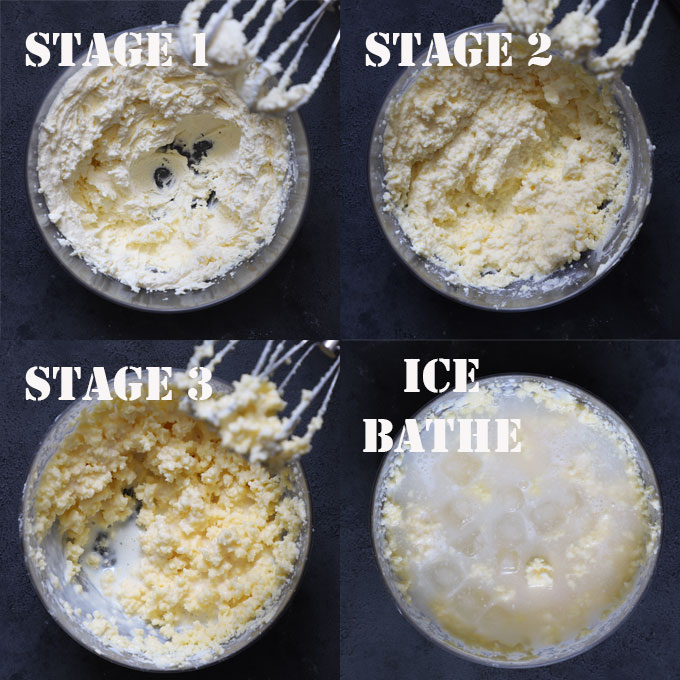
At this point, the buttermilk will begin to splash all around. Cover the bowl with a kitchen napkin or towel to avoid a messy splash all over the place.
Step 5) Continue to whisk until the tiny lumps of butter are separated. The butter will start sticking to the whisk at this final stage. Add 2 cups of ice-cold water. It will solidify the butter. Try to form a ball of butter with your hands.
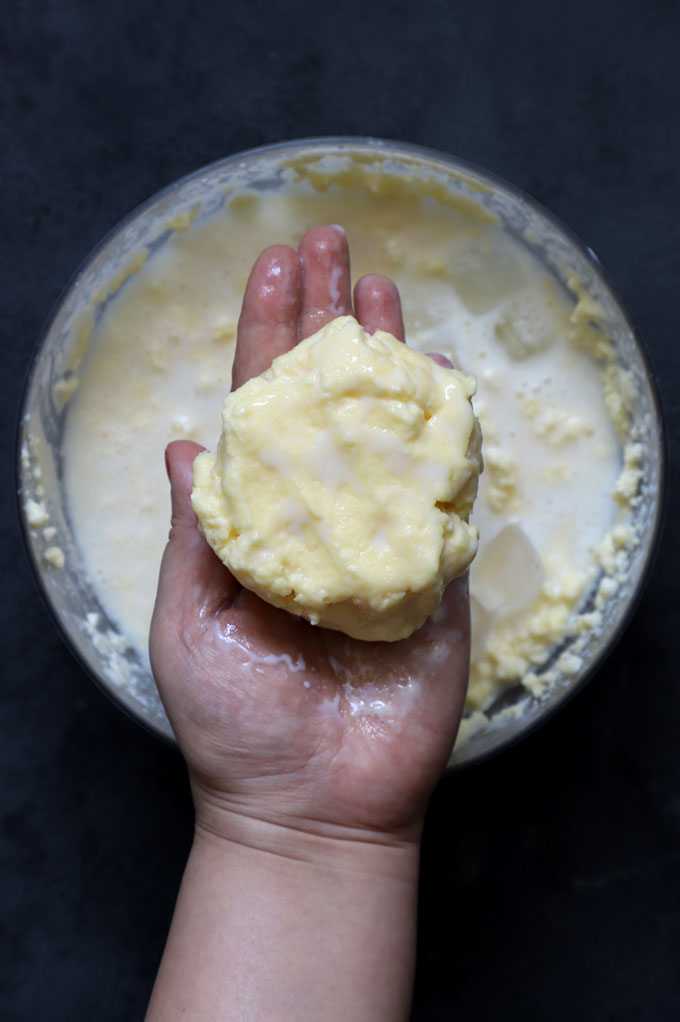
Strain the liquid (buttermilk) using a muslin cloth or strainer.
You can use buttermilk for drinking as chaas , making kadhi , making dough of whole wheat naan , bhatura without using yeast, or for making whole wheat pancake batter. It is excellent for the gut and digestive systems.
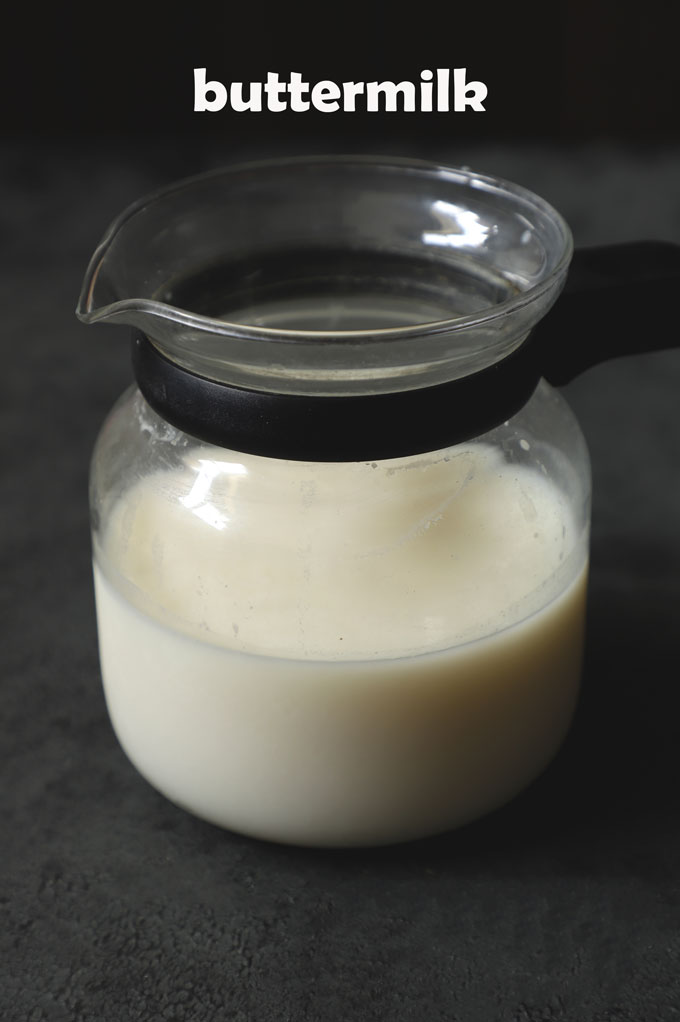
Step 6) Transfer the homemade butter to another bowl filled with clean ice cold water. Wash the butter chunk nicely. You can press it in a muslin or cheesecloth to drain excess liquid.
Shelf Life and Storage
Store homemade butter in an airtight container. Like packaged butter, it is best to store homemade butter in the refrigerator. Or, in cold climatic conditions, you can keep it at room temperature for 1 – 2 days.
The shelf life of homemade butter is not more than 15 days. After that, it starts tasting rancid or slightly bitter, like spoiled fresh cheese. Hence, it is best to make a small batch fortnightly.
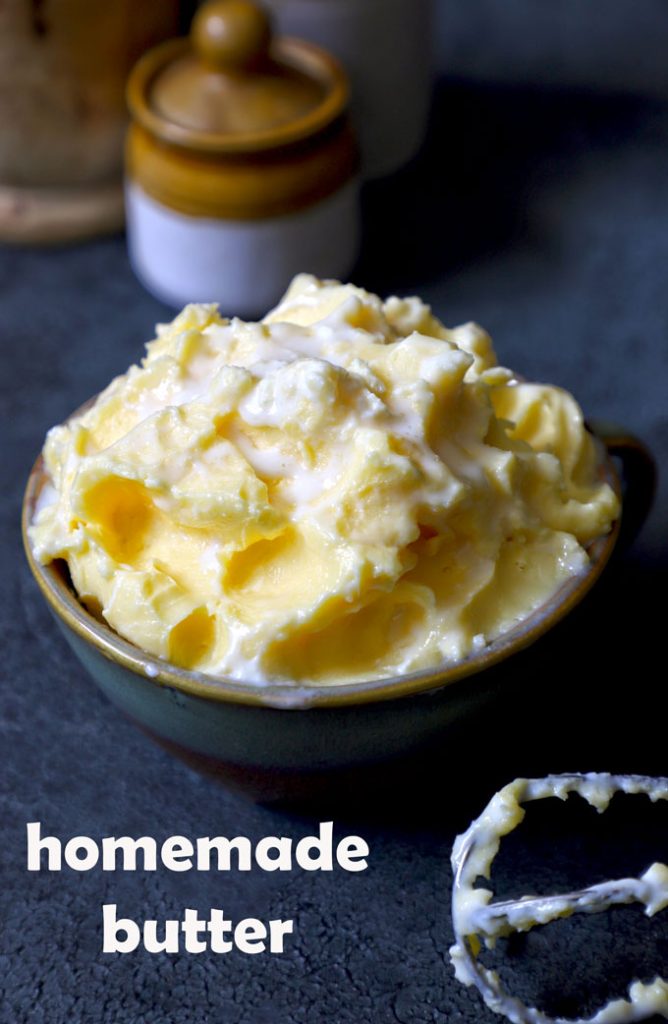
If you make butter by collecting malai (cream) from milk daily and storing it in the refrigerator for more than 10 days, it tastes bitter and develops a smell. Add a spoonful of curd to the malai (cream) on the first day and then store it for 7 – 10 days.
The type of cream or malai defines the colour of the butter. It might be white if you use packaged full-fat milk, whereas unpasteurized organic cow or buffalo milk will give yellow colour to the butter.
More Indian Kitchen Hacks
- Ginger Garlic Paste
- 4 Indian Curry Paste
- Indian Chai Masala Powder
- Homemade Tomato Ketchup
- Homemade Garam Masala Powder
- How To Organize Indian Kitchen Cabinet
- 6 Easy Meal Prep Tips for Indian Kitchen
Ingredients
- ▢ 2 Cup full fat cream or malai
- ▢ 4 Cup iced water, divided
Instructions
- To make butter at home you can buy ready made full cream or else you can use cream (malai) from the milk. However, this fresh cream from the milk has to be collected everyday for 10 days and stored in refrigerator in an airtight container.
- To churn out butter, cream should be at room temperature. Bring out cream or malai from the refrigerator. Let it sit at room temperature for 15 minutes. Keep iced water ready in two separate bowls.
- Transfer cream to a stand mixer or a mixing bowl. Start whisking it at medium speed. Initially, the cream will start to thicken and you will get whipped cream with smooth peaks. This is STAGE 1.
- Continue to whip the cream. The texture of the cream will now turn grainy or granules will form. This is STAGE 2 .
- Keep whipping the cream at high speed – it will look curdled and you’ll see some liquid (buttermilk) separating from the cream. This is STAGE 3 . At this point, the buttermilk will begin to splash all around. Cover the bowl with a kitchen napkin or towel to avoid a messy splash all over the place.
- Continue to whisk until the tiny lumps of butter are clearly separated. At this final stage, the butter will now start sticking to the whisk. Add 2 cups of ice-cold water. It will solidify the butter. Try to form a ball of butter with your hands.
- Transfer the homemade butter to another bowl filled with clean ice cold water. Wash the butter chunk nicely. You can press it in a muslin or cheesecloth to drain excess liquid. Bring the edges of the cheesecloth together and press gently to extract as much buttermilk from the butter as possible.
- Store the homemade butter in a clean, airtight bowl in the refrigerator.
Recipe Notes:
- This is an unsalted homemade butter recipe.
- If the butter is not separating clearly from the cream, then add ½ cup ice cold water to the cream and continue to whip. You can also place the bowl in the freezer for a 10 minutes. Remove and then again begin to whip and churn.
- During the summer season the whole butter making process takes more than 30 minutes. The butter solids will not form that easily. Patience is the only key. Also, maintaining a cool temperature in the kitchen also helps. In short, any kind of heat will slow down the butter making process.
- Make sure to rinse the butter with ice cold water and squeeze out all the liquid using a cheesecloth.
Nutrition
We follow a strict NO SPAM Policy
Homemade Butter Recipe
Equipment
- Mixing Bowl
- Spatula or Wooden Spoon
- Hand Mixer
Ingredients
- 2 Cup full fat cream or malai
- 4 Cup iced water, divided
Instructions
- To make butter at home you can buy ready made full cream or else you can use cream (malai) from the milk. However, this fresh cream from the milk has to be collected everyday for 10 days and stored in refrigerator in an airtight container.
- To churn out butter, cream should be at room temperature. Bring out cream or malai from the refrigerator. Let it sit at room temperature for 15 minutes. Keep iced water ready in two separate bowls.
- Transfer cream to a stand mixer or a mixing bowl. Start whisking it at medium speed. Initially, the cream will start to thicken and you will get whipped cream with smooth peaks. This is STAGE 1.
- Continue to whip the cream. The texture of the cream will now turn grainy or granules will form. This is STAGE 2 .
- Keep whipping the cream at high speed – it will look curdled and you’ll see some liquid (buttermilk) separating from the cream. This is STAGE 3 . At this point, the buttermilk will begin to splash all around. Cover the bowl with a kitchen napkin or towel to avoid a messy splash all over the place.
- Continue to whisk until the tiny lumps of butter are clearly separated. At this final stage, the butter will now start sticking to the whisk. Add 2 cups of ice-cold water. It will solidify the butter. Try to form a ball of butter with your hands.
- Transfer the homemade butter to another bowl filled with clean ice cold water. Wash the butter chunk nicely. You can press it in a muslin or cheesecloth to drain excess liquid. Bring the edges of the cheesecloth together and press gently to extract as much buttermilk from the butter as possible.
- Store the homemade butter in a clean, airtight bowl in the refrigerator.
Notes
- This is an unsalted homemade butter recipe.
- If the butter is not separating clearly from the cream, then add ½ cup ice cold water to the cream and continue to whip. You can also place the bowl in the freezer for a 10 minutes. Remove and then again begin to whip and churn.
- During the summer season the whole butter making process takes more than 30 minutes. The butter solids will not form that easily. Patience is the only key. Also, maintaining a cool temperature in the kitchen also helps. In short, any kind of heat will slow down the butter making process.
- Make sure to rinse the butter with ice cold water and squeeze out all the liquid using a cheesecloth.
Nutrition
I am sharing my absolute favourite recipe for a low-calorie, creamy potato leek soup that won’t derail your healthy eating goals.
Estimated reading time: 6 minutes

- Ingredients You’ll Need
- How to Make Soup
- My Tried and True Tips
- Potato Leek Soup Recipe
What if I told you that you could enjoy that same indulgent, creamy texture and deep, comforting flavour of potato soup without the caloric guilt? It’s not a trick, it’s simply smart cooking!
Myth Debunked: Low-Calorie Doesn’t Mean Low Flavour!
One of the biggest misconceptions about healthy eating is that it has to be bland or unsatisfying. This potato leek soup recipe It’s a testament to how healthy eating can be incredibly delicious and satisfying.
- Potatoes are your Secret Weapon: When cooked until tender and then blended, potatoes (especially starchy varieties like Russet or Yukon Gold) release their starches, naturally thickening the soup into a smooth, creamy consistency without the need for excessive fats.
- Aromatic Foundation: The gentle sautéing of leeks, thyme, and garlic builds a robust flavour base that permeates every spoonful.
- Quality Broth is key: Using a good quality, low-sodium vegetable stock (or chicken broth if you’re not keeping it strictly vegan) is crucial. It infuses the soup with depth right from the start.
- Blender Magic: An immersion blender or a stand blender is essential here. The process of blending emulsifies the ingredients, creating that signature silky texture that mimics a cream-laden soup.
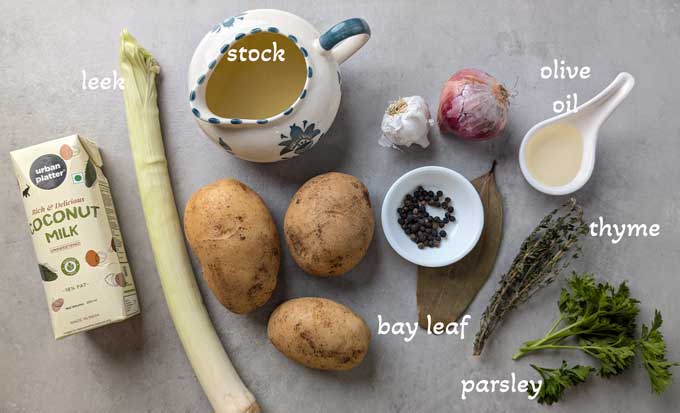
Ingredients You’ll Need
- Potatoes like Russet or Yukon Gold or any other variety with good amount of starch.
- Leek (white and light green parts only) gives the subtle sweetness and caramelised flavour to the soup.
- Aromatics like thyme, onion, bay leaf, and garlic build the flavour profile.
- Olive Oil instead of butter to save calories.
- Vegetable Stock preferably homemade or store bought low sodium
- Seasoning of salt and pepper.
- Optional Garnishes: Fresh chives or parsley (chopped), a swirl of unsweetened plant-based milk (almond, or coconut) if desired for extra creaminess, grated cheddar cheese or a dollop of sour cream.
How to Make Soup
Prep Work:
- Cut off the dark green tops and the root end of the leeks.
- Finely chop the white and light green parts.
- Place the sliced leeks in a colander and rinse them thoroughly under cold running water, separating the layers to remove any trapped dirt or grit. Drain well.
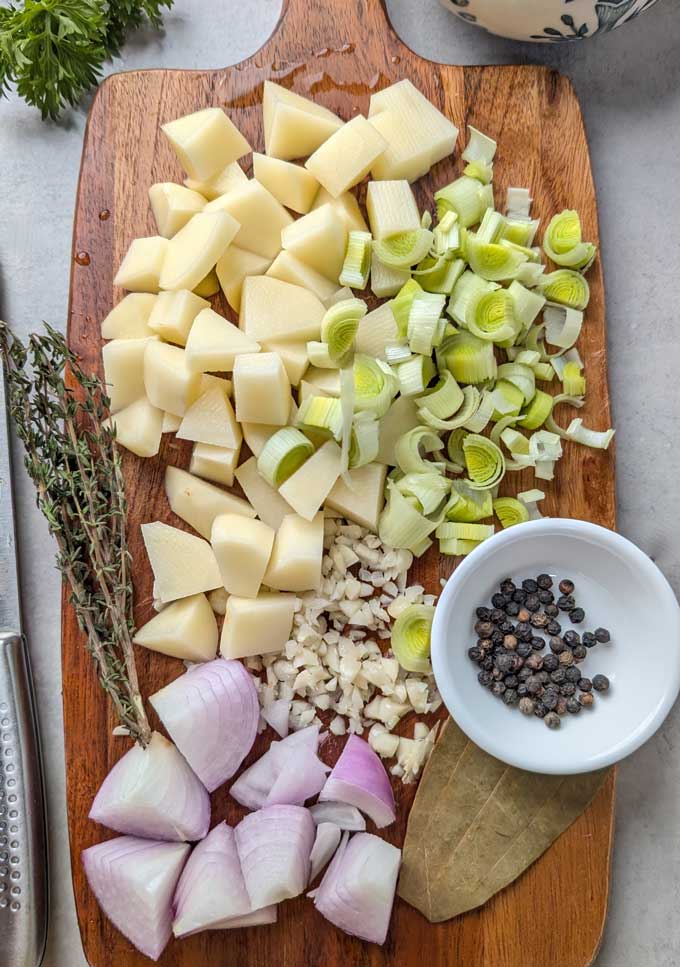
- Remove the skin of potatoes and dice them into bite size pieces.
- Finely chop garlic and onion.
Sauté Aromatics:
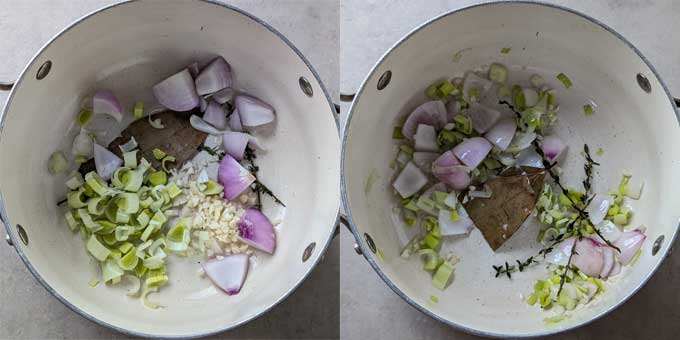
- In a large, heavy-bottomed pot or Dutch oven, heat the olive oil.
- Add chopped leeks, onion, garlic, bay leaf, and thyme. Cook, stirring occasionally, until softened, translucent, and a sweet aroma is released about 2 – 3 minutes. Do not let them brown.
Add Potatoes and Liquid:
- Add the diced potatoes to the pot.
- Pour in the vegetable stock.
- Season with salt and black pepper to start.
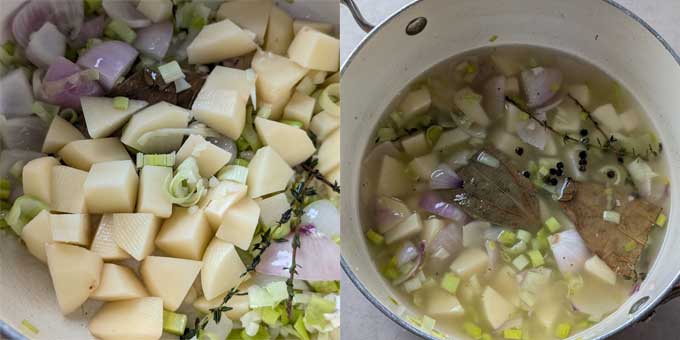
Simmerand Blend:
- Bring the soup to a boil, then reduce the heat to low, cover, and simmer for 20 minutes, or until the potatoes are fork-tender.
- Remove the pot from the heat. Discard bay leaf and thyme (if using sprig). Carefully use an immersion blender to blend the soup directly in the pot until it is completely smooth and creamy.
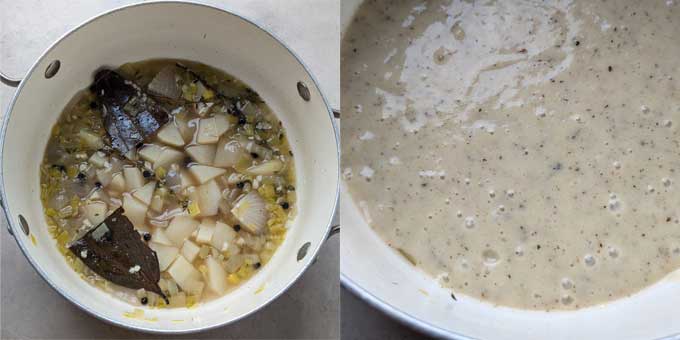
- If you don’t have an immersion blender, carefully transfer the soup in batches to a regular blender (never fill a blender more than halfway with hot liquid) and blend until smooth, then return to the pot.
Season and Serve:
- At this stage, stir in the nutritional yeast (if using), or coconut cream or plant based milk.
- Taste the soup and adjust the seasoning as needed – you might need a little more salt, pepper, or even a splash of lemon juice for brightness.
- If you prefer a slightly thinner consistency, add a little more hot broth.

Garnish and Enjoy: Ladle the hot soup into bowls. Garnish with fresh chives or parsley, a swirl of coconut cream, or a dash of smoked paprika. Serve immediately and savour!
- Make it Heartier: For a more substantial meal, consider adding cooked white beans, chickpeas, or even roasted vegetables like carrots or parsnips.
- Crispy Toppings: A sprinkle of homemade croutons (baked, not fried), roasted chickpeas , or crispy fried onions (use an air fryer for a healthier option!) can add wonderful texture.
My Tried and True Tips
- Proper Leek Cleaning is Non-Negotiable: Don’t skip this step! Leeks are notorious for holding grit.
- Seasoning Throughout: Adding salt and pepper at different stages helps build layers of flavour. Always taste and adjust before serving.
- For Extra Creaminess (Still Low-Cal): A small amount (¼ to ½ cup) of unsweetened cashew milk, almond milk, sour cream, or coconut cream can be stirred in at the end for an even richer mouthfeel without significant calorie impact.
More Soup Recipes
- Green Goddess Soup
- Vegetable Barley Soup
- Tomato Couscous Soup
- Healthy Mushroom Soup
- Vegan Thai Coconut Soup
- Creamy Cauliflower Soup

Ingredients
- ▢ 3 large size potatoes, peeled and diced
- ▢ 1 tablespoon olive oil
- ▢ 1 medium size onion, diced
- ▢ 1 whole leek, chopped
- ▢ 2 sprigs thyme
- ▢ ½ tablespoon minced garlic
- ▢ 1 bay leaf
- ▢ 4 Cup vegetable stock ( get recipe )
- ▢ 1 teaspoon black peppercorns
- ▢ ½ teaspoon salt or to taste
- ▢ Handful of parsley, chopped
Instructions
- Cut off the dark green tops and the root end of the leeks. Finely chop the leek. Place the sliced leeks in a colander and rinse them thoroughly under cold running water, separating the layers to remove any trapped dirt or grit. Drain well. Remove the skin of potatoes and onion and dice them into bite size pieces. Finely chop garlic.
- In a large, heavy-bottomed pot or Dutch oven, heat the olive oil. Add chopped leeks, onion, garlic, bay leaf, and thyme. Cook, stirring occasionally, until softened, translucent, and a sweet aroma is released about 2 – 3 minutes. Do not let them brown.
- Add the diced potatoes to the pot. Pour in the vegetable stock. Season with salt and black pepper to start.
- Bring the soup to a boil, then reduce the heat to low, cover, and simmer for 20 minutes, or until the potatoes are fork-tender.
- Remove the pot from the heat. Discard bay leaf and thyme. Carefully use an immersion blender to blend the soup directly in the pot until it is completely smooth and creamy.
- At this stage, stir in the nutritional yeast (if using), or coconut cream or plant based milk. Taste the soup and adjust the seasoning as needed.
- Garnish with fresh chives or parsley, a swirl of coconut cream, or a dash of smoked paprika. Serve warm!
Recipe Notes:
- Refrigerator: Store in an airtight container in the refrigerator for up to 3-4 days. Freezer: This soup freezes very well! Pour cooled soup into freezer-safe containers or bags, leaving some headspace. It can be frozen for up to 2-3 months. Thaw in the refrigerator overnight and reheat gently on the stovetop, adding a splash of broth or water if needed to adjust consistency. Spice it Up: A tiny pinch of white pepper or a dash of cayenne pepper can add a subtle kick. If you don’t have an immersion blender, carefully transfer the soup in batches to a regular blender (never fill a blender more than halfway with hot liquid) and blend until smooth, then return to the pot.
Nutrition
We follow a strict NO SPAM Policy
