Are you also struggling to set the perfect curd at home? Here is my honest review of curd maker for Indian kitchens. Be sure to watch the video!
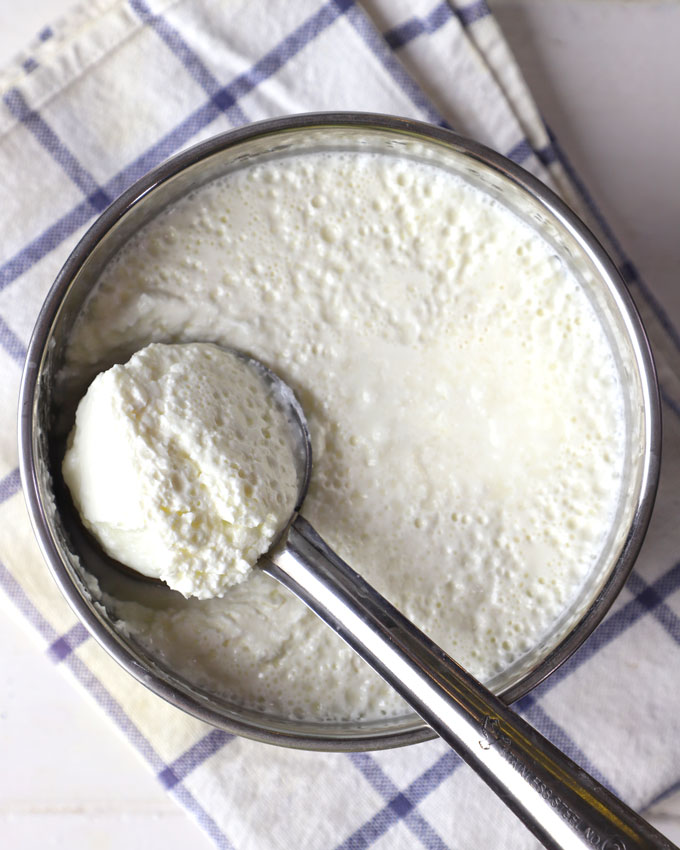
Curd is an essential ingredient in Indian cooking and everyday meals . While traditional methods of curd making at home involve careful temperature monitoring and precise timing. For our modern Indian kitchens, curd maker is the perfect appliance for the task.
- What is Curd Maker?
- How Does Curd Maker Work?
- Watch How To Use Curd Maker
- My Honest Review
What is Curd Maker?
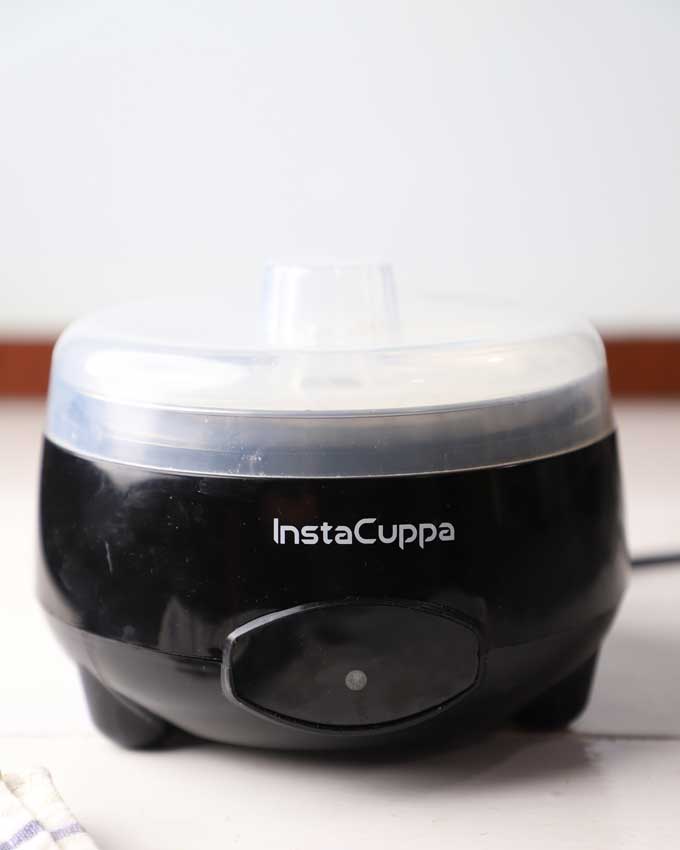
A curd maker, also known as a yoghurt maker, is a kitchen appliance designed to facilitate the fermentation of milk into curd. The core task of a curd maker is to provide the perfect temperature for setting curd using a culture (jamun/khatta).
It typically consists of a container for holding the milk, a heating element to maintain the temperature, and sometimes a timer or indicator to monitor the fermentation process.
Here are my two favourite curd/yogurt makers – Agaro and Instacuppa . Both are durable, budget-friendly, and easy to use. You can use the yoghurt function of instant pot also to set curd/yoghurt at home. It works exactly like a curd maker.
How Does Curd Maker Work?
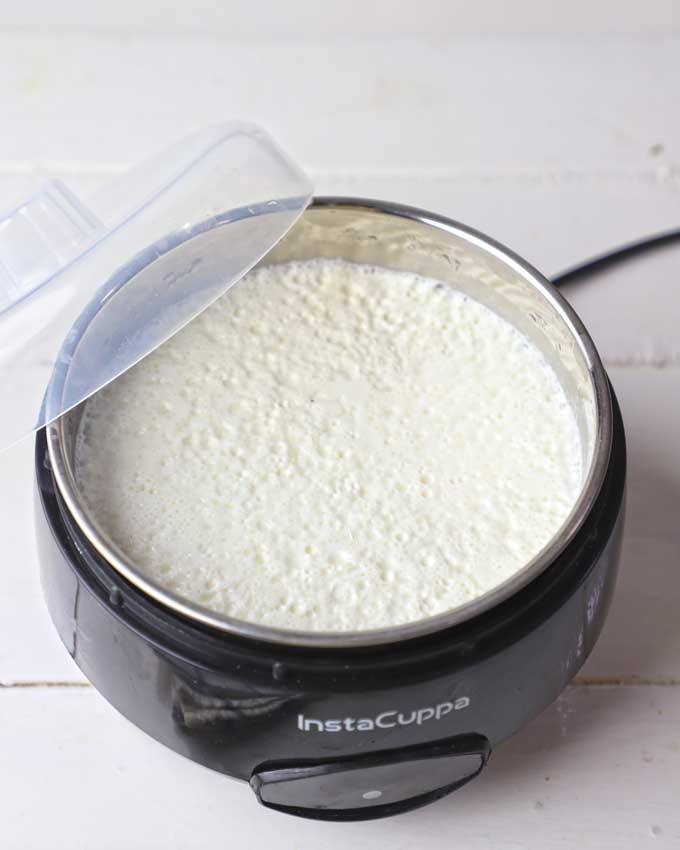
Here’s a detailed breakdown of how a curd maker works:
- Container is where you pour the milk to ferment into curd. It’s usually made of stainless steel and comes in various sizes to accommodate different quantities of milk.
- Heating Element is at the base or around the sides of the container. This heating element is responsible for maintaining the optimal temperature for the fermentation process, usually around 110°F to 115°F (43°C to 46°C). This temperature range provides the ideal conditions for the growth of curd cultures, which ferment the milk and turn it into yoghurt or curd.
- Temperature Control : Some curd makers have built-in temperature controls that allow you to set and maintain the desired temperature throughout the fermentation process. This ensures consistent results and prevents the milk from overheating or cooling down too much, which could affect the fermentation process.
- Timer or Indicator helps you keep track of the fermentation time. Fermentation typically takes anywhere from 4 to 12 hours, depending on the desired thickness and tartness of the yoghurt.
Let’s delve into the pros and cons of this kitchen appliance.
Pros of Curd Maker:
1. Convenience:
Curd makers simplify the process of curd preparation, requiring minimal manual intervention. Once the ingredients are mixed and poured into the appliance, it takes care of the rest. This convenience is beneficial for busy individuals, novice cooks, or those with limited culinary skills.
2. Consistent Results:
One of the primary advantages of using a curd maker is its ability to maintain a constant temperature throughout the fermentation process. Consistent temperature is crucial for the growth of beneficial bacteria and the formation of creamy curd.
3. Time-Saving:
Traditional methods of curd making often involve lengthy waiting periods and frequent temperature checks. Curd makers accelerate the fermentation process, yielding freshly prepared curd in a fraction of the time.
4. Customization Options:
Curd makers offer versatility in terms of flavour and texture customization. Whether you prefer a thick Greek-style yoghurt or a tangy, probiotic-rich curd, the curd maker allows for ample experimentation.
5. Hygienic:
Curd makers are designed with hygiene in mind, featuring removable parts that are easy to clean and maintain. Unlike traditional methods that may involve multiple utensils and containers, curd makers minimize the risk of contamination.
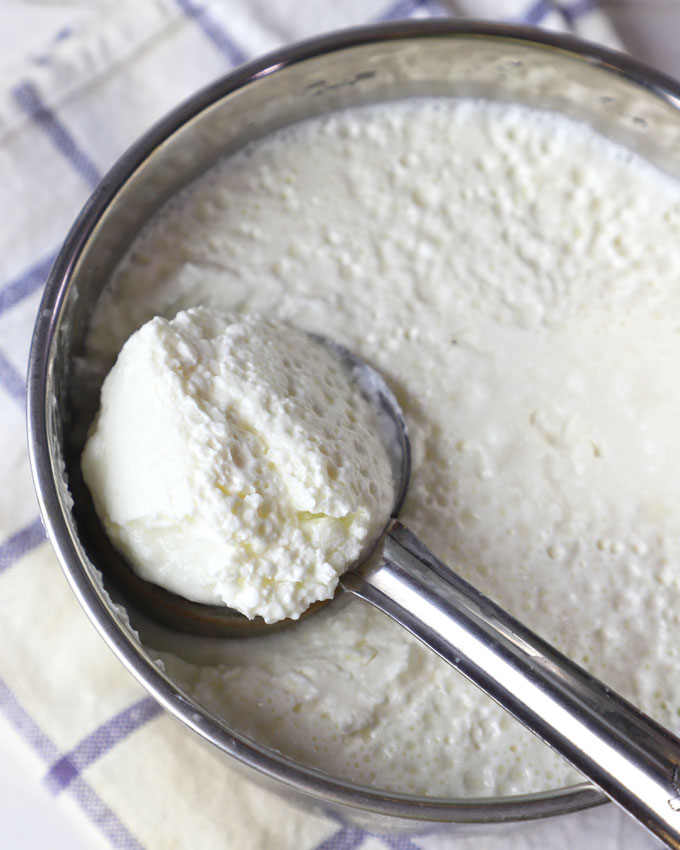
Cons of Curd Maker:
1. Initial Cost:
While curd makers offer long-term savings in terms of time and convenience, the initial investment may deter some consumers. In India, they start from INR 999 and onwards.
2. Dependence on Electricity:
Curd makers rely on electricity to function, making them unsuitable during power outages.
3. Lack of Control:
While curd makers offer convenience and consistency, some users may miss the hands-on approach of traditional curd making. The automated nature of curd makers leaves little room for manual intervention or adjustments during the fermentation process.
4. Risk of Malfunction:
Like any electronic appliance, curd makers are susceptible to malfunctions or technical issues over time. Components such as heating elements or temperature sensors may degrade with use, compromising the appliance’s performance.
5. Space Consumption
Like any other kitchen appliance, curd maker also requires space in your kitchen counter or pantry – which might be a challenge for many of us.
Watch How To Use Curd Maker
My Honest Review
- A curd maker simplifies the process of making curd at home, especially in moderate to colder climates like Bengaluru or Pune.
- It provides consistent temperature control and a convenient container for fermentation.
- It’s a handy appliance for those who enjoy homemade curd and want to have control over the quality of ingredients and curd.
- In my opinion, the curd maker presents a modern solution to the age-old practice of curd making, offering convenience, consistency, and customization options to new enthusiasts like me.
Conclusion: However, potential buyers should weigh the pros and cons carefully to determine if a curd maker aligns with their needs and preferences. Ultimately, whether you opt for the simplicity of a curd maker or the traditional charm of manual preparation, the joy of indulging in homemade curd remains unparalleled.
f ollow us on Youtube or Instagram for video recipes.
If you try this recipe and love it, please leave a comment and a rating. This helps us grow and reach other food lovers like you.
We follow a strict NO SPAM Policy
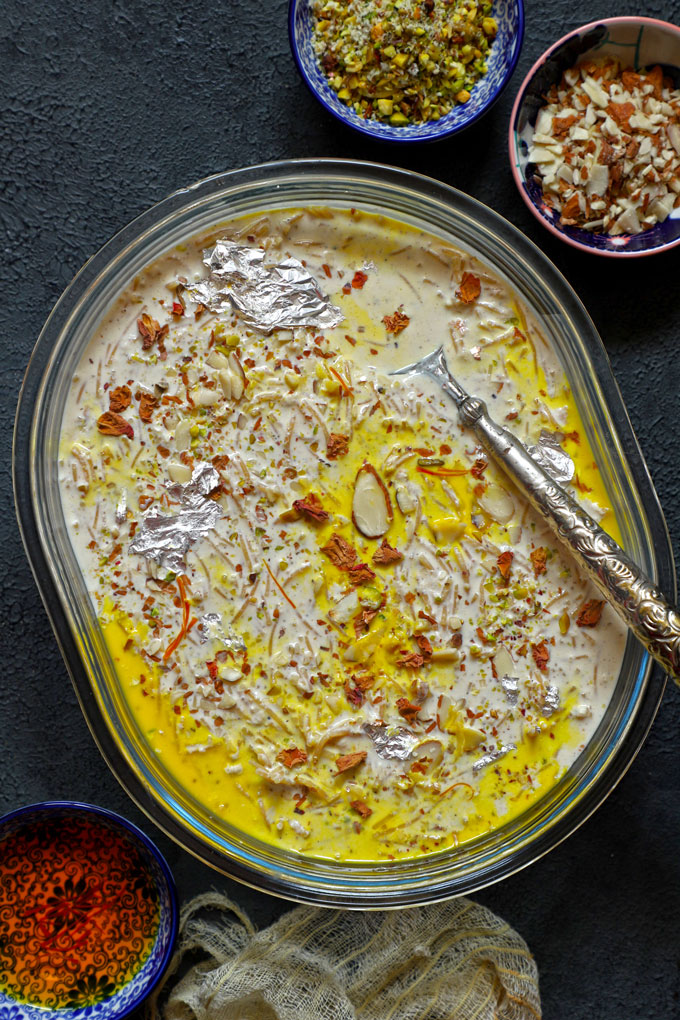
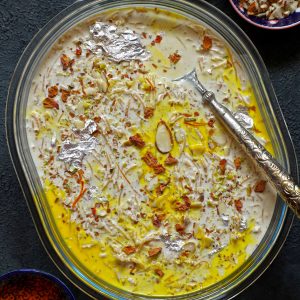
Seviyan Kheer is a Mughlai-style dessert prepared on the auspicious occasion of Eid. It is a rich and creamy vermicelli milk pudding.
- About Seviyan Kheer
- What is ‘vermicelli’?
- How To Make
- Storage Suggestion
- My Tried & True Tips
- More Eid Special Recipes
- Seviyan Kheer Recipe
About Seviyan Kheer
In the Urdu language, the term ‘seviyan’ refers to vermicelli noodles. Hence across the Indian subcontinent, the milk pudding made with vermicelli and milk is known as seviyan kheer. It is also called – sevai ki kheer, seviyan payasam, vermicelli kheer, or semiya kheer.
Seviyan Kheer is very similar to a Persian dessert Sheer Khurma. The difference between these two desserts is Sheer Khurma is made with very thin thread-like vermicelli and sweetened with dates.
The humble dates hold pious importance during the holy month of Ramadan. And to celebrate the festival of Eid a rich and creamy sheer korma sweetened with dates is prepared.
This seviyan kheer recipe of mine might not be an authentic heirloom recipe. But over the years it never fails to yield a gratifying bowl of pudding perfect for festive feasts.
What is ‘vermicelli’?
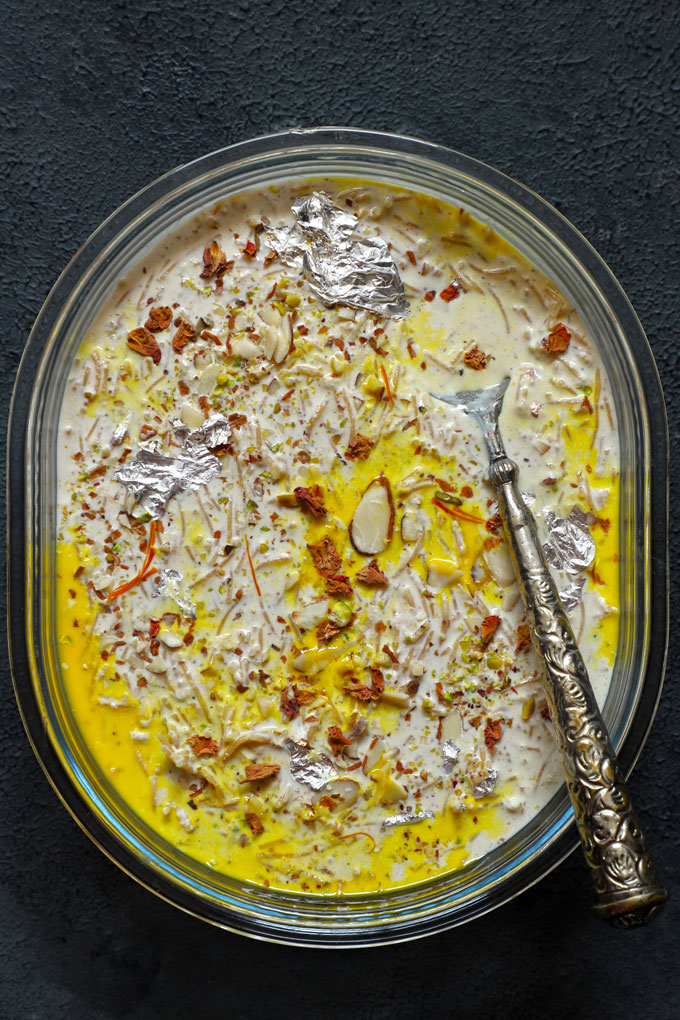
Vermicelli is a thin, thread-style noodle or pasta. In the Indian sub-continent, it is known as ‘semiyan’, ‘seviyan’, or ‘semiya’. Apart from making kheer, the vermicelli is used to make upma , cutlet, and a variety of other Indian dishes.
Semiya is made of a variety of flour like all-purpose flour, rice, wheat, or even semolina .
These days there are gluten-free vermicelli noodles made with ragi, jowar, or rice flour easily available in the supermarket.
How To Make
Making seviyan kheer is an easy, fuss-free process.
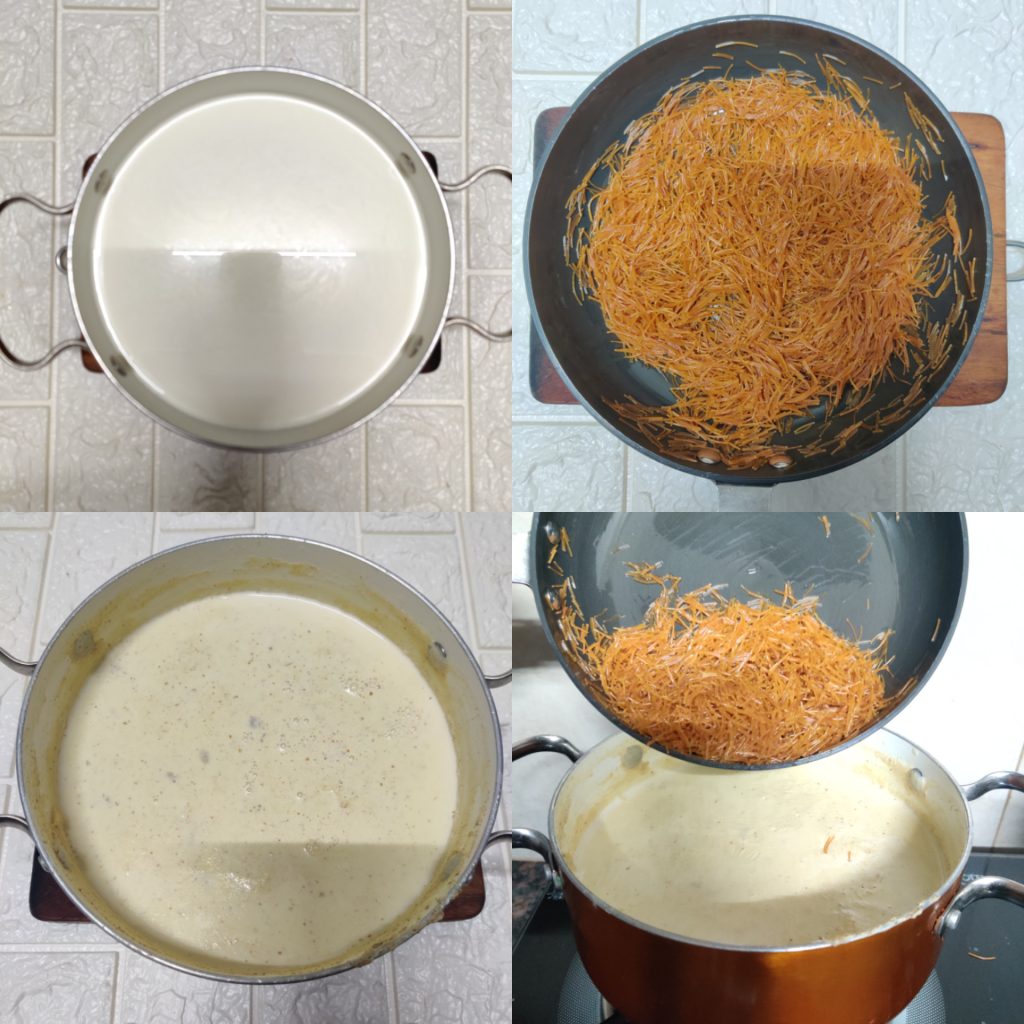
Step 1) Soak saffron in two tablespoons of warm milk. Stir and keep it aside.
Step 2) Boil milk in a thick-bottomed dish. Use full-fat milk to get the desired creaminess. Add cardamom powder, and simmer till it reduces to half the original amount.
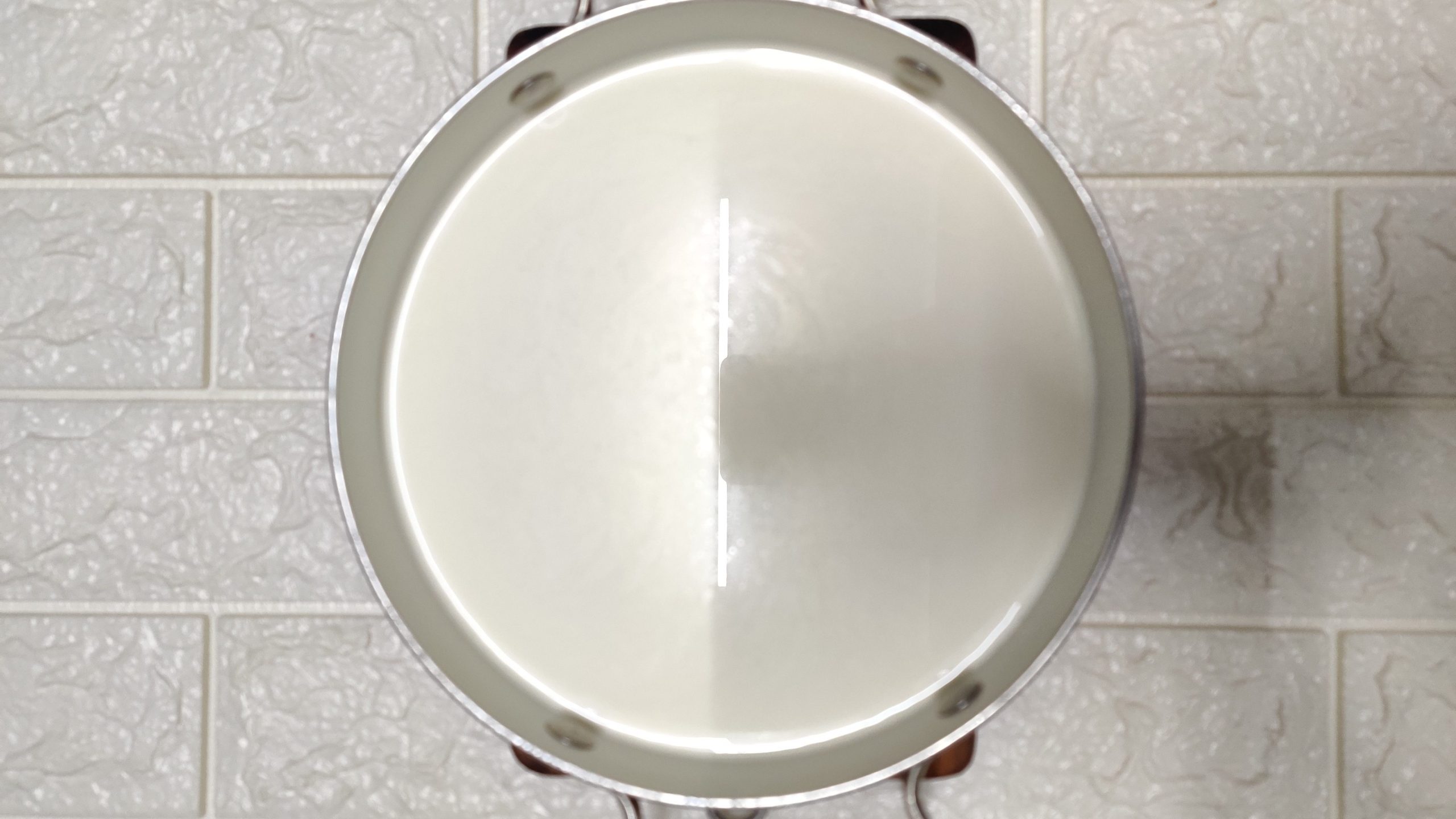
Step 3) Meanwhile, in a frying pan heat ghee. Add nuts like almonds, pistachio, and cashews and fry them till golden. Transfer to a plate. These fried nuts are used for garnishing the kheer.
Step 4) In the same frying pan add more ghee and add vermicelli. Fry the seviyan (vermicelli) for 2 – 3 minutes over low heat. They will become golden and slightly crisp. Turn off the heat.

Step 5) Add ghee-roasted vermicelli to the thickened milk, sugar, and half of the soaked saffron. Stir to combine.
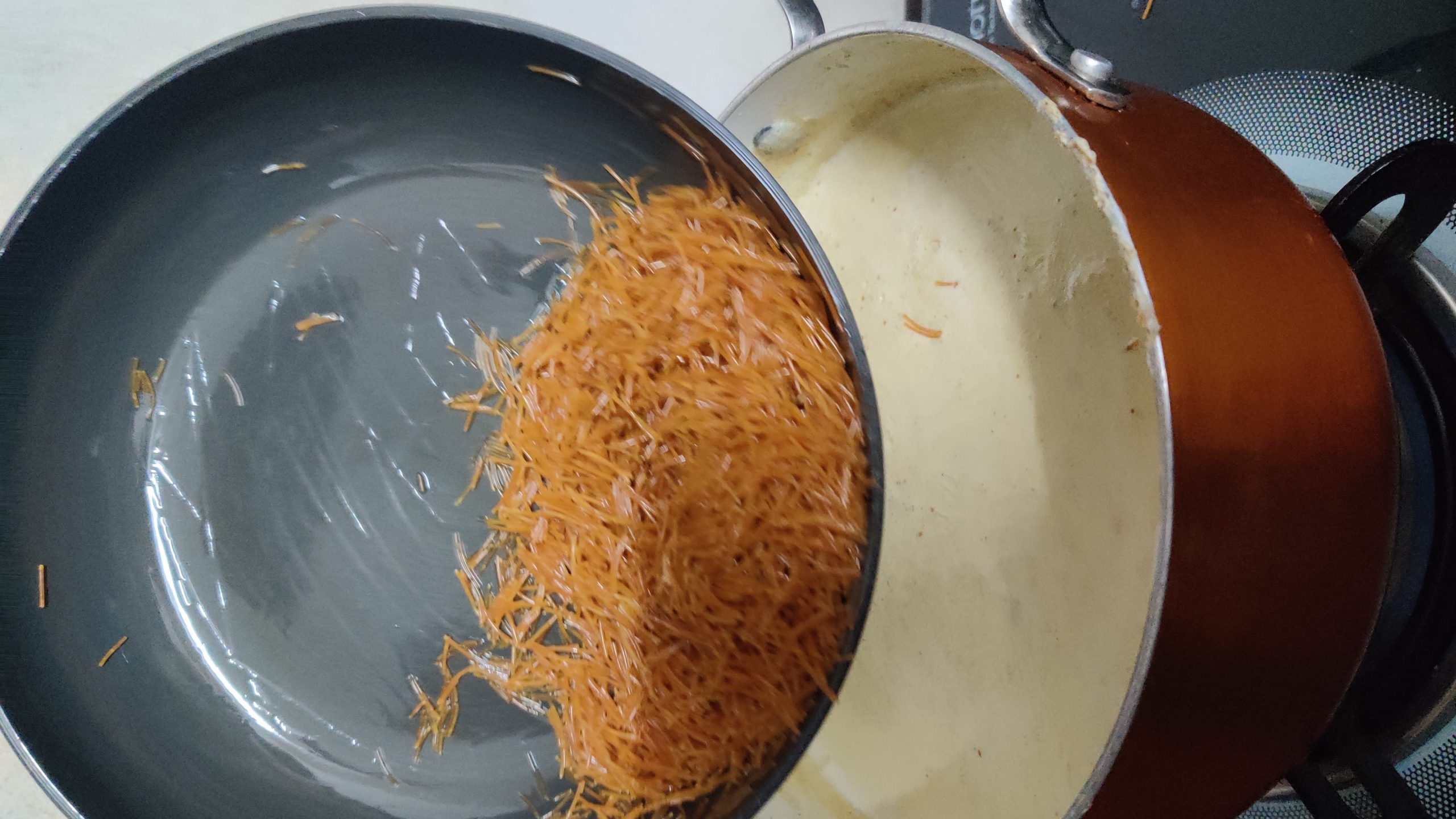
Step 6) Cook the kheer till seviyan are soft, and the sugar is dissolved. Turn off the heat.
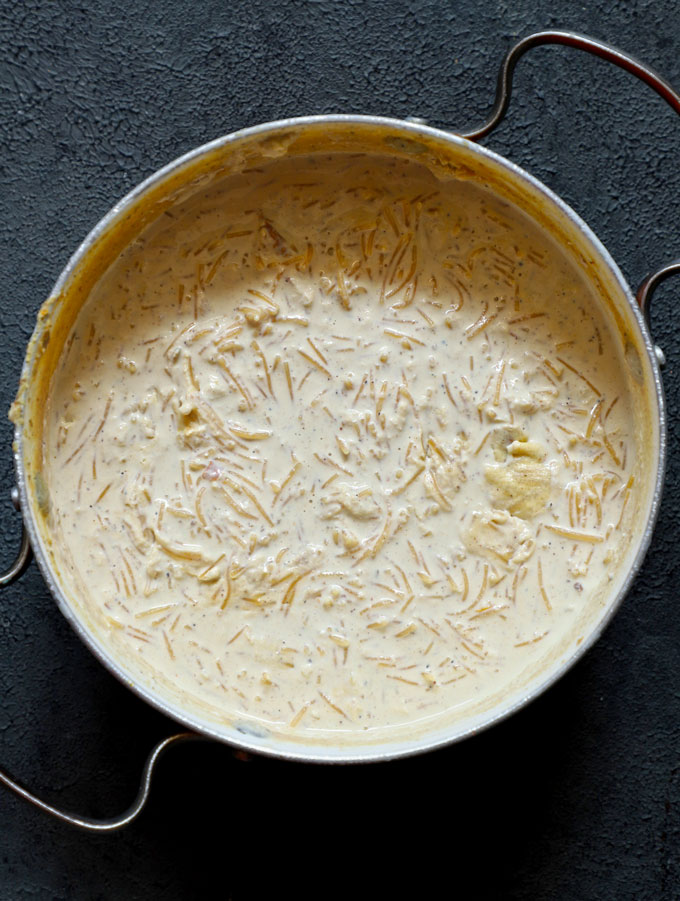
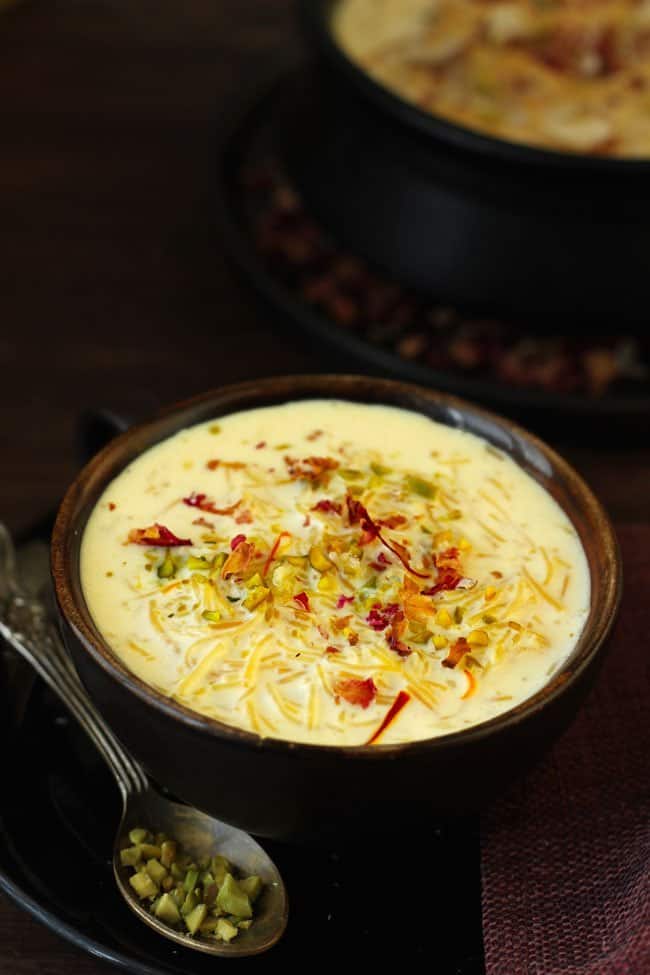
Step 7) Transfer the seviyan kheer to a serving bowl. And allow it to cool down completely at room temperature.
Step 8 ) Garnish with ghee-fried nuts, saffron milk, edible silver leaves, and rose petals.
Storage Suggestion
Allow the seviyan kheer to cool down completely at room temperature. Transfer it to an airtight container. Store it in the refrigerator for 3 – 5 days.
You can serve it cold or warm. If you like to serve the kheer hot, reheat it in a microwave or on the stovetop in a saucepan.
If you are planning to serve it chilled, transfer the pudding to an earthen bowl, and garnish with dry fruits and rose petals. Keep in the fridge for 2 – 3 hours. Bring it out just before serving.
My Tried & True Tips
It is always best to use full cream/fat milk to make any rich and creamy Indian kheer. The same rule applies to the seviyan kheer as well.
Roasting vermicelli and dry fruits for the kheer is an essential step. It enhances the taste of the pudding.
Do not roast vermicelli or dry fruits for too long as they might burn and taste bitter.
Do not add sugar or vermicelli before the milk is thickened or reduced in quantity.
If you like to serve seviyan kheer chilled , please note, that the texture of the kheer thickens a bit more after cooling down. Hence, while cooking adjust the consistency accordingly.
A dash of aromatic ingredients like saffron, rose petals, kewra essence, or rose water gives a rich Mughlai-style taste and aroma to the kheer.
More Eid Special Recipes
- Phirni
- Zarda Pulao
- Chicken Pulao
- Vegetable Cutlet
- Baked Shahi Tukra
- Hyderabadi Double Ka Meetha
If you try this recipe and love it, please leave a comment and a rating. This helps us grow and reach other food lovers like you.
Ingredients
- ▢ 1 litre full cream milk
- ▢ ¼ teaspoon saffron (kesar)
- ▢ 1 teaspoon cardamom powder
- ▢ 4 tablespoon ghee (clarified butter)
- ▢ 2 tablespoon almonds, sliced
- ▢ 1 tablespoon pistachio, sliced
- ▢ 150 gram (approx 1 ¼ cup) seviyan (vermicelli)
- ▢ ⅓ Cup granulated white sugar or as per taste
Ingredients For Garnish
- ▢ edible rose petals
- ▢ edible silver leaf
Instructions
- Soak saffron in two tablespoons of warm milk. Stir and keep it aside.
- Boil milk in a thick-bottomed dish. Use full-fat milk to get the desired creaminess. Add cardamom powder, and simmer till it reduces to half the original amount. Keep stirring milk at regular intervals and add back the layer of cream (malai) forming on top to the milk.
- Meanwhile, in a frying pan heat 2 tablespoons of ghee. Add nuts like almonds, pistachio, and cashew and fry them till golden. Transfer to a plate. These fried nuts are used for garnishing the kheer at a later stage.
- In the same frying pan heat the remaining 2 tablespoons of ghee and add vermicelli. Fry the seviyan (vermicelli) for 2 – 3 minutes over low heat. They will become golden and slightly crisp. Turn off the heat.
- Once the milk is thick and reduced to half of the original amount, add ghee roasted vermicelli, sugar, and half of the soaked saffron. Stir to combine.
- Stir to combine. Allow the kheer to simmer till the seviyan is nicely cooked and the sugar is dissolved. Add half of the ghee roasted nuts and stir to combine. At this stage taste the kheer, and add more sugar if required. Turn off the heat.
- Transfer the seviyan kheer to a serving bowl. And allow it to cool down completely at room temperature.
- Garnish with ghee-fried nuts, saffron milk, edible silver leaves, and rose petals.
- Serve seviyan kheer warm or chilled.
Recipe Notes:
- The sweetness of the kheer reduces a notch after cooling down in the refrigerator. Hence, adjust the sweetness of the kheer accordingly.
- You can add ¼ teaspoon kewra essence or rose water as well once the kheer is ready for the sweet aroma.
- Garnishing kheer with edible silver leaf or rose petals is totally optional. They do not affect the taste of the pudding.
Nutrition
We follow a strict NO SPAM Policy
