Should I buy an instant pot for Indian cooking? I am sharing the 5 uses of instant pot in the Indian kitchen and why you should buy it.
- Pressure Cooker and Indian Cooking
- Pressure Cooking
- Slow Cooking
- Steam and Stew
- Fermenting Batter
- Setting Yogurt/Curd
- why you SHOULD BUY INSTANT POT
- Most Frequently Asked Questions
- More Useful Hacks for Indian Kitchen
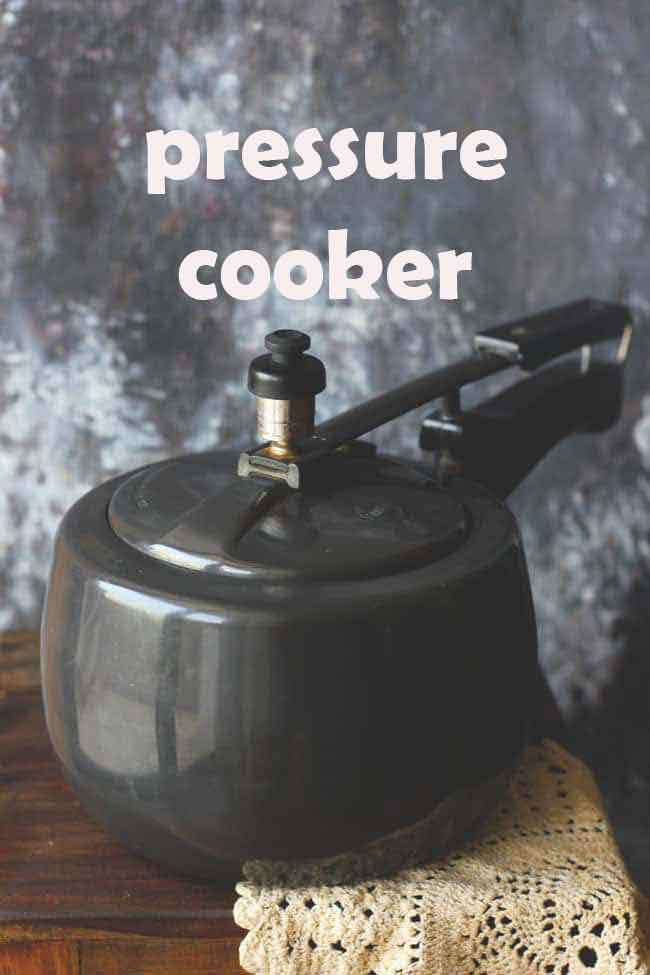
Pressure Cooker and Indian Cooking
A traditional stovetop pressure cooker is the essential cookware in the Indian kitchen. It is used at least once or twice to cook various dishes daily. The loud railway engine-like whistles of the pressure cooker are part of our daily humdrum of life.
I could not have imagined my life without a stovetop pressure cooker until I met the Instant Pot a few years back. While many would swear by their traditional stovetop pressure cooker, I love my instant pot for Indian cooking.
Instant Pot vs. pressure cooker can be a lengthy discussion, so I decided to share a detailed guide with all the pointers and my final verdict. In that guide, you can find:
- Which is easier to use?
- Which is safer to use?
- Which is a smart choice?
Today in my Indian kitchen, an instant pot has become an essential gadget. And I am sharing with you how I use it for everyday cooking.
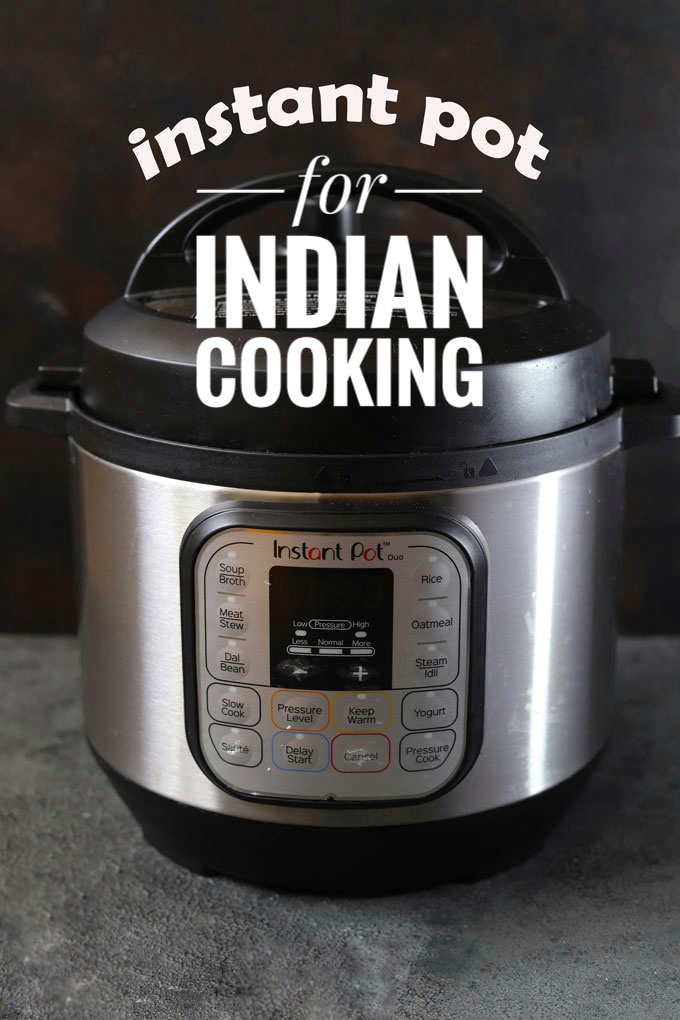
1) Pressure Cooking
Pressure Cooking is one of the many cooking modes in an instant pot. But it is far more efficient, less noisy, technology-driven, safer to use, and, more importantly, does not require babysitting. You can dump the food in it, set the pressure cooking time temperature, and forget about it. The result is always a gratifying bowl of comfort food.
I use the pressure cooking mode of Instant Pot for making Indian curries, pulao, fluffy basmati rice, and one-pot meals like Ven Pongal or khichdi .
I am happy to declare that the pressure cooker is the most frequently used mode of instant pot in my kitchen.
2) Slow Cooking
As we all know, many Indian dishes like dal makhani, langar wali dal, kheer, or a traditional mutton curry require slow cooking. And it is so complex and nearly impossible to slow cook the food on a stovetop without overcooking it. Plus, it requires continuous monitoring.
The slow-cook mode of the instant pot is perfect for Indian cooking. The impressive heat distribution in the slow cook mode will always give you the creamiest bowl of slow-cooked dal makhani or the most tender, fall-of-the-bone mutton curry. Then, all you have to do is set the time (e.g., 1 hour, 2 hours, or 8 hours), heat level, and forget about it.
I cook all my meat dishes in slow cook mode of the instant pot. And trust me, after using it, you will never go back to the traditional pressure cooker for making meat curries.
3) Steam and Stew
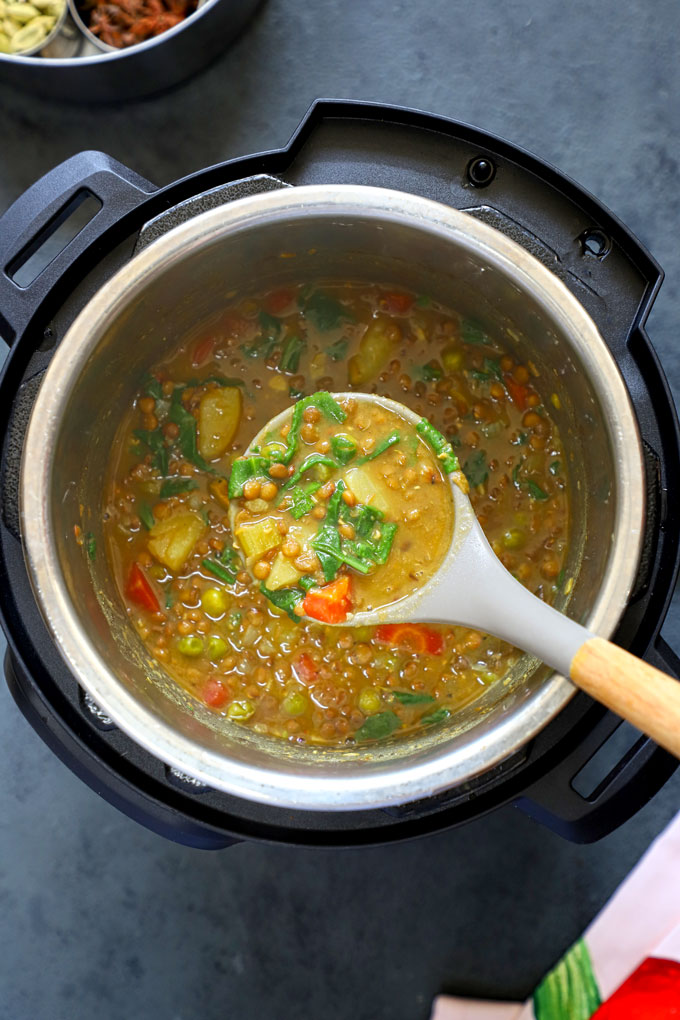
Whether it is steaming the perfectly soft and spongy idli / dhokla or stewing a delicious bowl of sambar sadam, the instant pot is my one-stop solution. Now I don’t need a separate steamer and a million other gadgets.
The steam and stew modes of instant pot are extremely helpful for Indian cooking.
4) Fermenting Batter
You will be surprised to know that the idli/dosa batter ferments perfectly in an instant pot. The instant pot makes fermenting any kind of batter foolproof – even during colder months. For example, I use the instant pot to ferment my traditional dhokla batter, naan , focaccia , or pizza dough .
Now, there is no need to wrap the dough in blankets or keep your fingers crossed while praying for a perfectly fermented batter. From the batter fermenting process to steam cooking, you can do it all in one gadget, i.e., an instant pot.
5) Setting Yogurt/Curd
We all know how curd is essential for cooking everyday Indian meals. But did you know that instant pot has the function of setting yoghurt? This functionality takes out the guesswork from the equation and will give you the best homemade curd.
Instant Pot Yogurt function assures each time to yield failproof thick and creamy yogurt or curd.
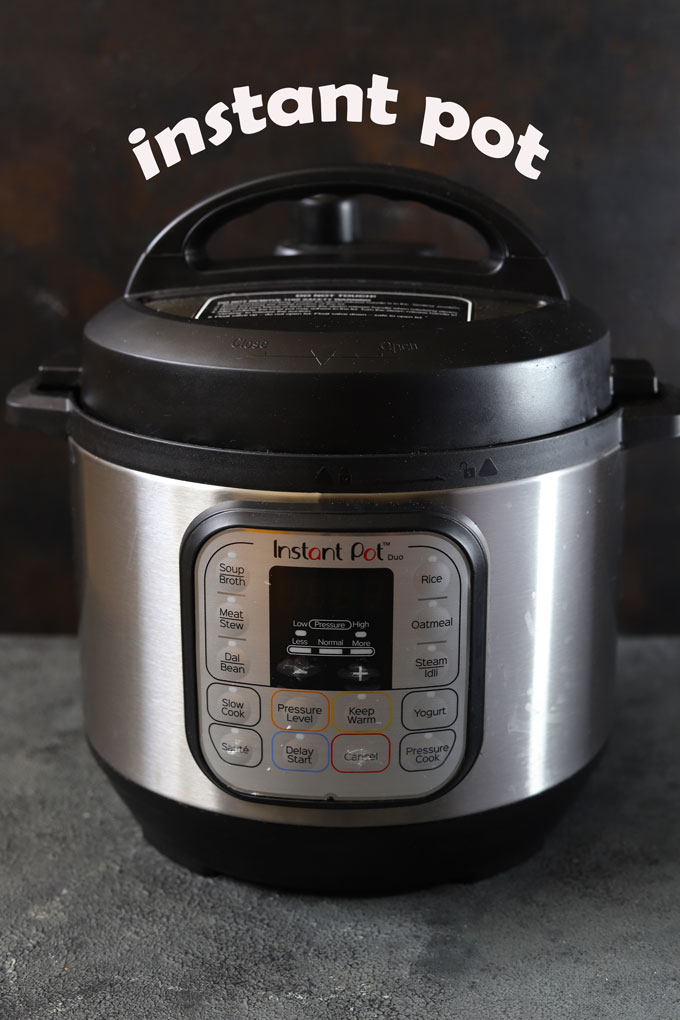
Apart from these five functions, I use instant pot in my Indian kitchen to make soups, hard-boil eggs and potatoes, cook a variety of one-pot meals, and bake cakes. Then, of course, you can check out my easy, delicious instant pot recipe collection .
Here are more reasons:
why you SHOULD BUY INSTANT POT
- “Set and leave” – no babysitting needed!
- Safe to use for everyone- no worrisome accidents or burns.
- Multi-function – replaces a lot of small kitchen appliances in one.
- Delivers perfectly cooked dishes 100% – it has never failed me.
- Easy to clean – you can put inner cooking pot in the dishwasher!
- Portable – bring it with you anywhere.
- Sleek and silent – elegantly designed to fit a small kitchen.
- Comes in different sizes and models- choose what works for you best.
- No need for a cooking gas supply – all you need is an electricity socket.
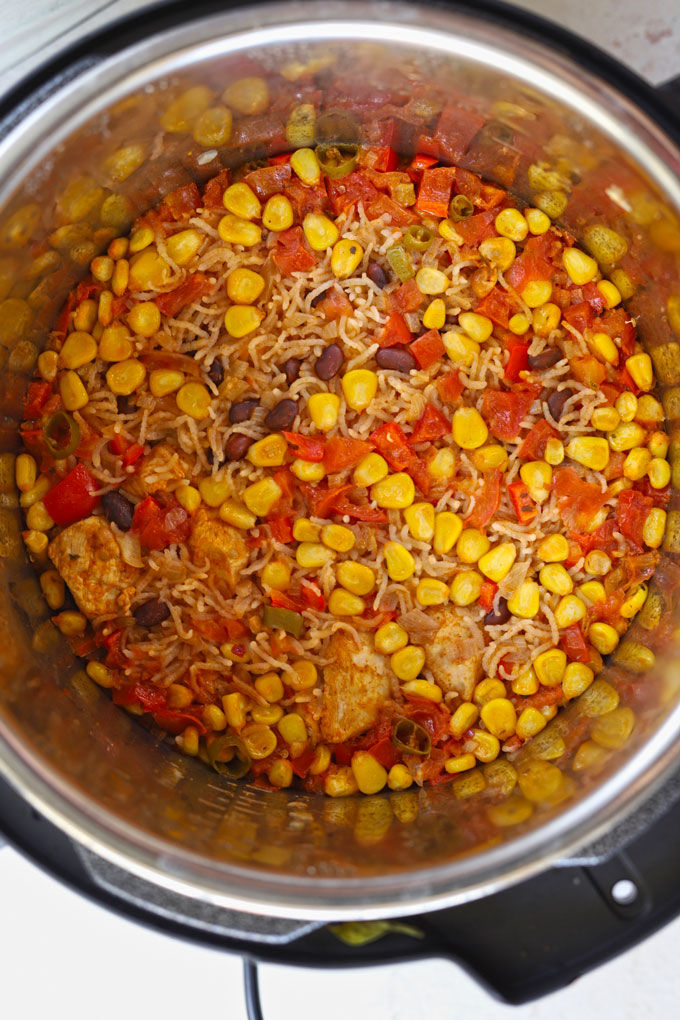
Yes, it is very useful and a better replacement for traditional stovetop pressure cookers. You can cook almost all Indian curries, rice dishes, and desserts in the instant pot.
Yes. The taste and texture of the Indian dishes turn out much better in the instant pot than in the stovetop pressure cooker, especially dals, curries, rice, and meat dishes.
Yes. You can find my detailed review of this topic here .
In India, instant pots and a variety of multi-pots from other brands start at INR 6000.
But don’t take my word for it; buy one and experience it yourself. Once you have it, my Instant Pot 101: Guide for Beginners will tell you everything you need to know about first-time use and its functions.
More Useful Hacks for Indian Kitchen
- Should I Buy Curd Maker?
- Meal Prep Ideas for Indian Kitchen
- Indian Kitchen Cabinet Organization
- 5 Uses of Hand Mixer for Indian Cooking
We follow a strict NO SPAM Policy
This is a guide to instant pot terminology and cooking modes you should know to use an instant pot like an expert. These terms are helpful to understand instant pot recipes in a better way.
Unlike electric or stovetop pressure cooker, an instant pot works in a peculiar way. When you are a beginner or a novice user of an instant pot it is all very confusing and intimidating.
Hence, I highly recommend you start with my Instant Pot 101 Guide for Beginners before understanding the terminology. From getting started to knowing how to use its different functions, you will be a pro in no time!
Here is a list of the most common Instant Pot Terminology , or abbreviations , you will come across in my Instant Pot recipes collection and while using the gadget on a daily basis.
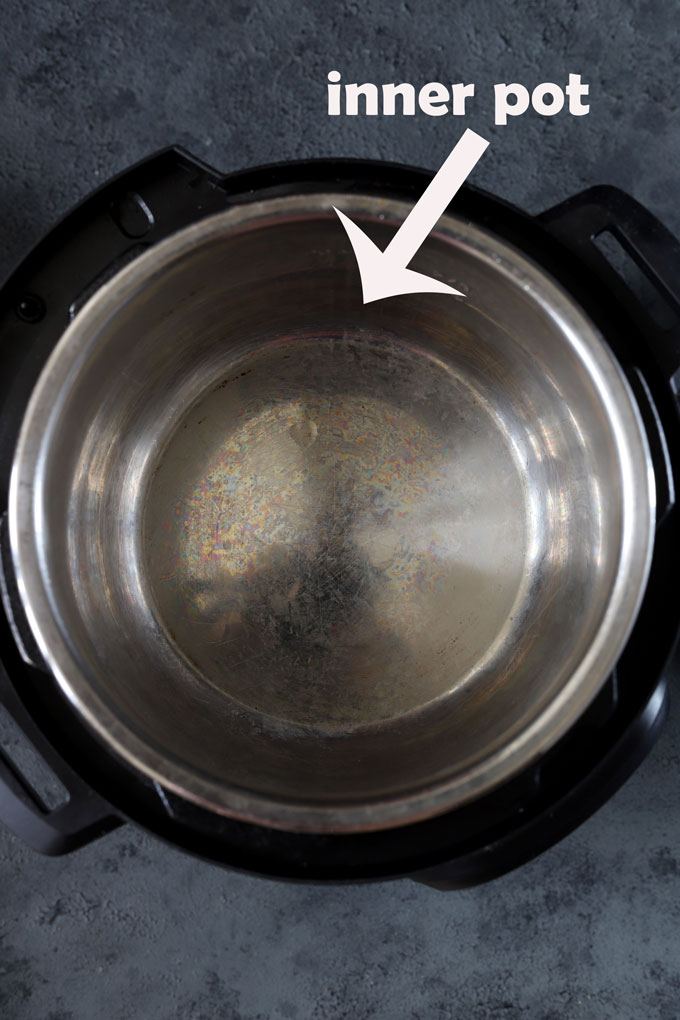
- IP: Instant Pot
- Inner Pot: The stainless steel cooking pot
- Lid: The opaque lid to seal the instant pot
- Glass Lid: A transparent glass lid that comes to cover instant pot in case to avoid spluttering, splashing while using the SAUTE mode.
- Trivet: It is a stainless steel stand on which you can stack something for steam cooking.
- PC: Pressure Cooker Mode
- SC: Slow Cooker Mode
- HP/Hi: High Pressure
- LP/Low: Low Pressure
- Steam/Pressure Valve: A whistle like knob in the lid of an instant pot.
- The Pin: Float Valve). It is located right next to the pressure valve on the lid.It pops up once the pressure is built inside the instant pot.
- Sealing Ring: You place it underneath the lid which locks in pressure and steam. It is not removed regularly except for cleaning.
- Venting: It is the term for releasing the steam by moving the steam valve to VENTING position.
- Sealing: It is the term for sealing the steam inside the instant pot by moving the steam valve to SEALING position.
- QR: Quick Release. This term means that you can manually release the steam quickly by moving the steam valve from SEALING to VENTING position.
- NR: Natural Release. As the name suggest, let the steam slowly and naturally release from the pot without touching the steam valve.
- PIP: Pot-In-Pot . When you’re cooking multiple dishes stacking multiple pots inside the Instant Pot.
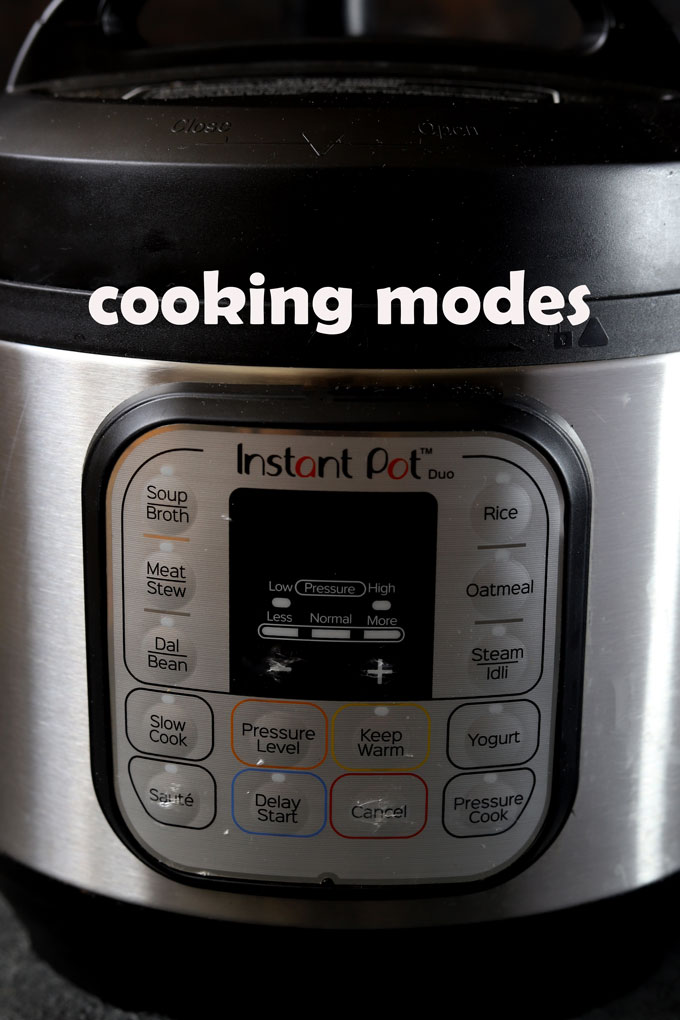
Instant Pot Common Cooking Modes Terminology
- SAUTÉ – Yes, you can sauté food in your Instant Pot just as you would in a pan while controlling the time and heat. It is one of the most commonly used instant pot function.
- PRESSURE COOK/MANUAL – This setting exactly works like a pressure cooker. The temperature, pressure levels, and cooking times can be controlled through the operation keys on the control panel. Read about my thoughts on instant pot vs pressure cooker .
- SLOW COOK – Slowly cooks the food from 1 hour to 8 hours. In this mode, an instant pot works like a slow cooker.
- SOUP/BROTH – For a gentle simmer mode or to avoid rigorous boiling use SOUP mode. It is perfect for cooking soups, clear broth, or Indian Kadhi .
- MEAT/STEW – Best for cooking large cuts of meat at high pressure. I use it for cooking mutton curries, and lentil stew .
- RICE – This program cooks on low pressure, and is best used for white rice or any other grains like quinoa, brown rice, red rice etc. Many instant pot models have a separate multigrain function for cooking other grains.
- BEAN/CHILI / DA L – Using this program results in different doneness levels for beans. You can use it for cooking Indian dals, rajma masala , or other lentil curries.
- PORRIDGE – Use the mode for a porridge/congee/ khichdi /oatmeal/ sweet dalia that contains a mixture of grains
- CAKE – This high-pressure mode creates a very moist, dense cake such as cheesecake.
- STEAM – Always use the steam rack/trivet to elevate food above the water.
- YOGURT – The mode is for fermenting milk when making yogurt, or for pasteurizing milk. It is one of my favorite and frequently used modes in an Indian kitchen .
- DELAY START – It delays the cooking time before the program starts. Like, if you want to start the cooking mode after 1 hour.
- KEEP WARM – The Instant Pot switches to this mode “automatically” after the cooking time is done.
If you are new to Instant Pot cooking, my best advice is to start with simple recipes. Check out a few of my favorite instant pot recipe collections.
We follow a strict NO SPAM Policy
